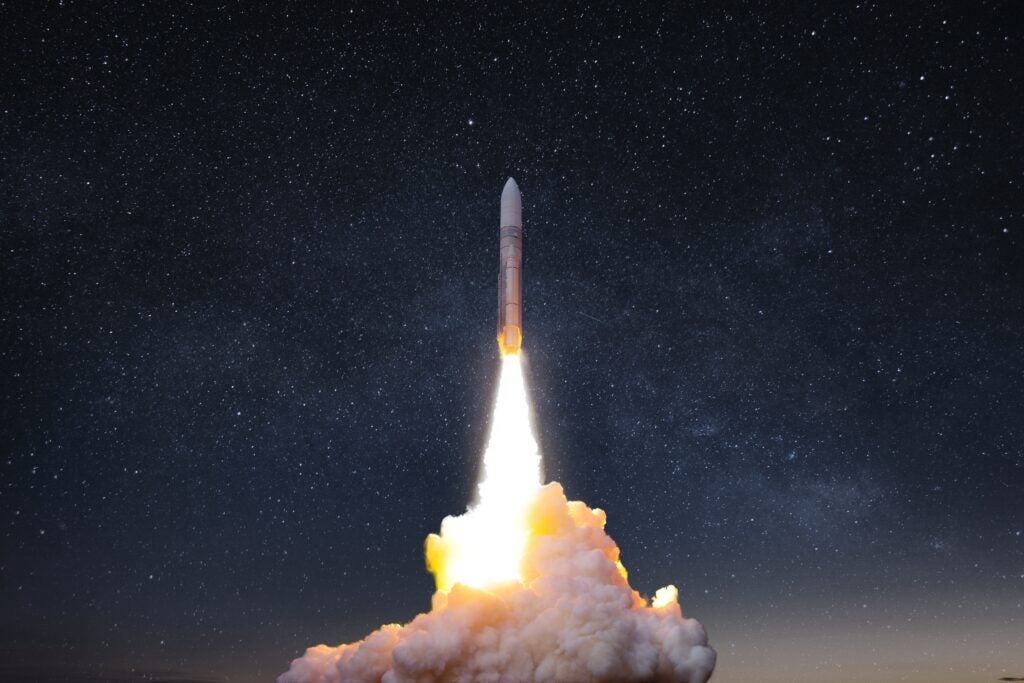

Computational Fluid Dynamics (CFD) plays a pivotal role in analyzing and optimizing the aerodynamic performance of supersonic rockets. It enables us to study airflow behavior, shock wave structures, pressure distribution, and temperature gradients around the rocket body and fins at high Mach numbers. By simulating these extreme aerodynamic conditions, CFD helps improve performance metrics such as thrust generation, stability, and drag reduction, ensuring the rocket's success in high-speed flight.
This course will guide you through the complete process of performing a CFD analysis of a supersonic rocket. We will start by focusing on preparing and optimizing the rocket's geometry for simulation. Then, we will move on to generating a high-quality mesh, setting up the simulation with appropriate physics models in Ansys Fluent® fluid simulation software, and post-processing the results to extract meaningful insights. Finally, we will explore parametric studies to evaluate the rocket's performance under varying flight conditions and design iterations.
By the end of the course, you will have a thorough understanding of how to model and analyze supersonic aerodynamics using Ansys Fluent software, enabling you to optimize rocket designs with confidence and precision.
-
Cost: FREE
- Course Duration: 2-4 HOURS
- Skill Level: Student Teams
- Skills Gained: Geometry preparation for CFD simulations, mesh generation and optimization, post-processing aerodynamic data, parametric studies for design optimization.
No reviews available for this learning resource.