















[FreeFlow FAQs] What are the main benefits of using SPH Adaptive Size, and what types of applications benefit most from it?
-
-
May 14, 2026 at 9:03 pm
FAQParticipant
What are the main benefits of using SPH Adaptive Size, and what types of applications benefit most from it?
Key benefits include:
- Improved accuracy in critical flow regions;
- Reduced computation time compared to uniform fine resolution;
- Lower memory usage, especially for large 3D problems.
These advantages are most noticeable in problems with localized flow complexity.
SPH Adaptive Size is particularly useful for:
- Nozzles and spray flows;
- Free‑surface impacts and splashing;
- Hydraulic components and valves;
- Flows over complex obstacles;
- Narrow gap or clearance flows (e.g., e‑motor or lubrication cooling).
Any application where high gradients exist only in limited regions is a strong candidate.
Ansys FreeFlow™ smoothed-particle hydrodynamics (SPH) simulation software
Janaina Oliveira
Technical/Product Publications
-
Introducing Ansys Electronics Desktop on Ansys Cloud
The Watch & Learn video article provides an overview of cloud computing from Electronics Desktop and details the product licenses and subscriptions to ANSYS Cloud Service that are...
How to Create a Reflector for a Center High-Mounted Stop Lamp (CHMSL)
This video article demonstrates how to create a reflector for a center high-mounted stop lamp. Optical Part design in Ansys SPEOS enables the design and validation of multiple...
Introducing the GEKO Turbulence Model in Ansys Fluent
The GEKO (GEneralized K-Omega) turbulence model offers a flexible, robust, general-purpose approach to RANS turbulence modeling. Introducing 2 videos: Part 1 provides background information on the model and a...
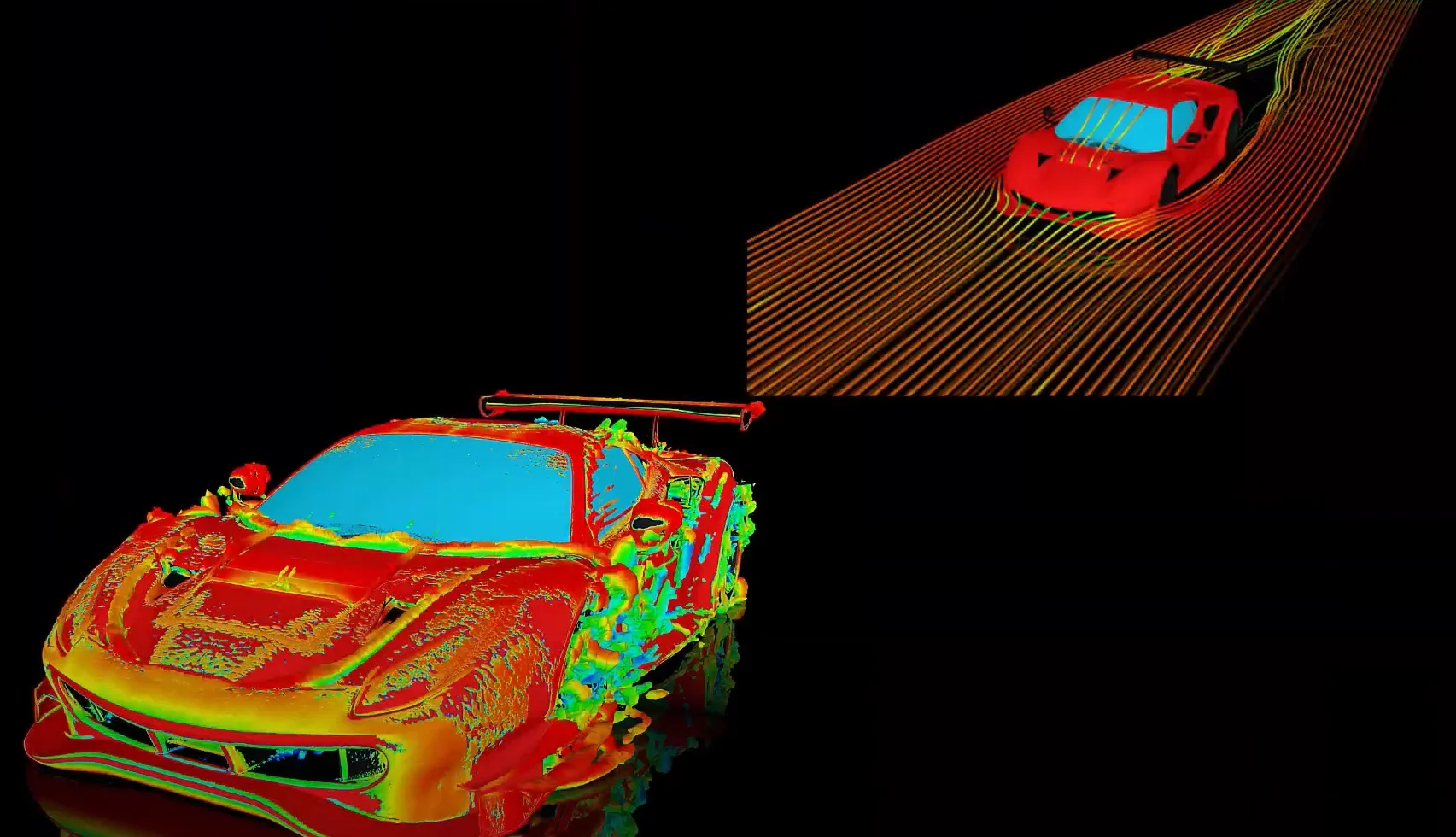
Postprocessing on Ansys EnSight
This video demonstrates exporting data from Fluent in EnSight Case Gold format, and it reviews the basic postprocessing capabilities of EnSight.
- Fluent GPU Solver Hardware Buying Guide
- Is there a way to get the volume of a register using expression ?
- How to overcome the model information incompatible with incoming mesh error?
- Skewness in ANSYS Meshing
- What are the requirements for an axisymmetric analysis?
- What are pressure-based solver vs. density-based solver in FLUENT?
- How to create and execute a FLUENT journal file?
- What is the cause of the floating point error message during Fluent simulation and how can it be addressed?
- How to get information about mesh cell count and cell types in Fluent?
- What is a .wbpz file and how can I use it?
© 2026 Copyright ANSYS, Inc. All rights reserved.