















-
-
December 10, 2025 at 6:35 pm
SolutionParticipant
Rocky FAQs & Tips
Welcome to Ansys Rocky FAQ and Tips Center.
Navigate through contents below and find answers and tips from our team of experts to enhance your Ansys Rocky engineering simulations. Â
Â
/General Topics
What is Point Cloud in Ansys Rocky?
Point Clouds enable you to import a simple text file containing field data to define points in space. They are very useful to… Read full FAQ
How Does DEM Work?
The fundamental working principle of every DEM code is to detect particle collisions and compute the contact force… Read full FAQ
What is the importance of particle shape in DEM simulation?
The flow of particles can be significantly affected by their shape. While spheres allow for… Read full FAQ
What is the role of GPU processing and coarse-grained modeling in DEM simulation?
GPU processing is a vital aspect of DEM simulation. Given that DEM tracks every particle at every time step, GPU processing can… Read full FAQ
What are the applications of the Discrete Element Method using Ansys Rocky?
Ansys Rocky provides a unique platform for engineers across the spectrum of bulk material handling industries to computationally analyze their process by… Read full FAQ
What is SPH and how does it work?
SPH is a mesh-free Lagrangian method for simulating fluid flow and other physical phenomena. It represents fluids as… Read full FAQ
Where is SPH commonly applied?
SPH is widely used in fluid dynamics simulations, including ocean modeling, astrophysical simulations (such as galaxy formation and star formation), and… Read full FAQ
Can SPH be used with other physics?
The SPH method can be used with other physics such as the DEM method (Discrete Element Method). The SPH-DEM approach allows… Read full FAQ
What are the advantages of using SPH over traditional grid-based methods?
SPH offers several advantages, including natural handling of free surfaces, adaptability to complex geometries, and… Read full FAQ
What are the advantages of using SPH over traditional grid-based methods?
SPH offers several advantages, including natural handling of free surfaces, adaptability to complex geometries, and… Read full FAQ
What is smoothed particle hydrodynamics kernel function?
The kernel function is the core of the SPH method as it dictates how a local fluid property is computed based on the neighboring SPH elements… Read full FAQ
/Rocky Knowledge & Documentation
Where Can I find Rocky Tutorials?
The 25 Rocky tutorials are currently available on… Read full FAQ
Is there a Rocky User Manual or user’s guide?
Yes, Rocky currently has a User Manual with everything you need to know to start using Rocky, plus… Read full FAQ
Are there free Ansys Rocky courses?
Yes, Rocky currently has four Free Courses in the… Read full FAQ
Are there Webinars about Rocky? Where I find?
Yes, Rocky has a series of Webinars on various topics related to Rocky, they can be found on… Read full FAQ
What learning materials are available for Ansys Rocky?
Rocky has a wide range of learning materials, from the 25 Rocky Tutorials and Manuals to free courses and… Read full FAQ
Where can I find Rocky content?
Through AIS Rocky you can access all Rocky content in one place, in addition to… Read full FAQ
Is there any document explaining more about the performance of Ansys Rocky with GPUs?
Yes, Rocky has the GPU Buying guide that is a material written by Rocky’s Technical Team with… Read full FAQ
/Rocky Couplings
What is CFD-DEM coupling, and how does it work?
CFD-DEM coupling refers to the integration of two distinct computational modeling methods: Computational Fluid Dynamics (CFD) and Discrete Element Method (DEM)… Read full FAQ
What are the key applications of CFD-DEM coupling?
In essence, CFD-DEM coupling allows you to simulate scenarios where the behavior of particles in a fluid, like… Read full FAQ
Â
What are the advantages of using CFD-DEM in simulations?
The CFD-DEM coupling simulation provides a powerful tool for simulating and optimizing systems where… Read full FAQ
What software tools or platforms are commonly used for CFD-DEM simulations?
The CFD-DEM coupling simulation provides a powerful tool for simulating and optimizing systems where… Read full FAQ
Can CFD-DEM be used for both academic research and industrial applications?
Yes, CFD-DEM can be used for both academic research and industrial applications… Read full FAQ
Where can I find resources or training to learn more about CFD-DEM coupling?
You can find more learning material about the CFD-DEM coupling method on Ansys platforms, such as… Read full FAQ
/Rocky Customization with Solver SDK
What is Ansys Rocky Solver SDK, and how to get it?
Ansys Rocky™ Solver SDK enables the development of custom modules for Rocky. The package includes… Read full FAQ
How do modules interact with Ansys Rocky Solver SDK?
The modules developed with Ansys Rocky Solver SDK are written using… Read full FAQ
How do I create my own module using Ansys Rocky Solver SDK?
You can use the Integrated Development Environment (IDE) of your choice, such as… Read full FAQ
/Rocky Automation with PrePost Scripting
What are Rocky Scripts for and where can I download them?
Rocky Scripts are Pre- and post-processing actions in Rocky that can be fully automated with… Read full FAQ
How does an Ansys Rocky script work?
Ansys Rocky™ PrePost script is a file written in Python that allows users to… Read full FAQ
What are the advantages of using Ansys Rocky scripts?
The advantages of using Ansys Rocky scripts include… Read full FAQ
Where can I find Ready-to-use scripts?
Find examples of Ready-to-use scripts downloading the Additional Package on… Read full FAQ
How to save and run a Script?
Find the Scripts folder into the downloaded package → Extract which script for Documents folder…
Read full FAQHow to create a Script?
You can use the Integrated Development Environment (IDE) of your choice, such as…
Read full FAQ
/Rocky Modules
What are Modules in Ansys Rocky and where can I find them?
The Modules are additional features that have been developed to… Read full FAQ
Why should I use Ansys Rocky Modules?
By using your own custom modules, you can add specific features for… Read full FAQ
Where can I find Rocky modules published by Ansys?
The modules published by Ansys are available at the SDK and Modules package on… Read full FAQ
-
Introducing Ansys Electronics Desktop on Ansys Cloud
The Watch & Learn video article provides an overview of cloud computing from Electronics Desktop and details the product licenses and subscriptions to ANSYS Cloud Service that are...

How to Create a Reflector for a Center High-Mounted Stop Lamp (CHMSL)
This video article demonstrates how to create a reflector for a center high-mounted stop lamp. Optical Part design in Ansys SPEOS enables the design and validation of multiple...
Introducing the GEKO Turbulence Model in Ansys Fluent
The GEKO (GEneralized K-Omega) turbulence model offers a flexible, robust, general-purpose approach to RANS turbulence modeling. Introducing 2 videos: Part 1Â provides background information on the model and a...
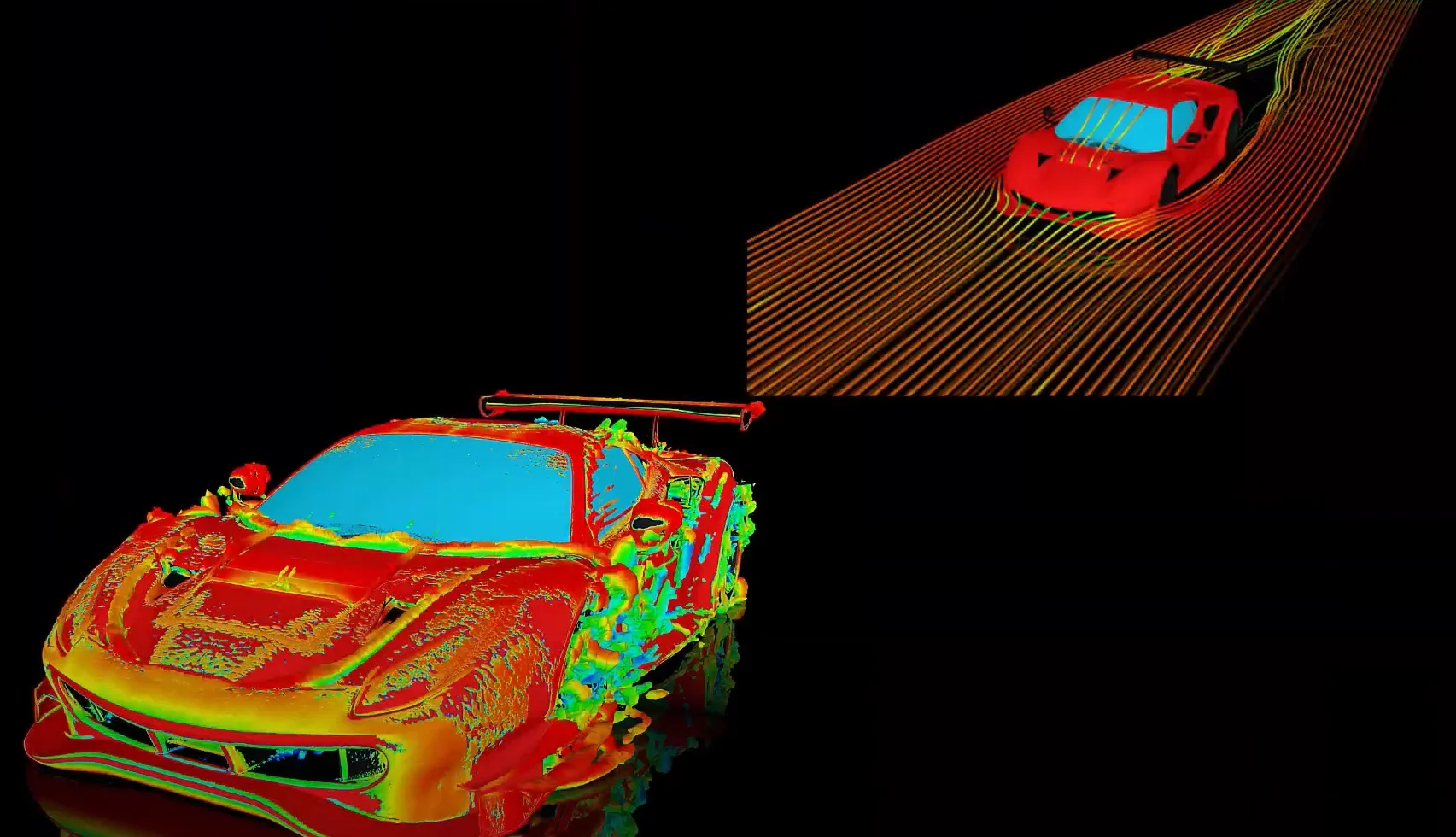
Postprocessing on Ansys EnSight
This video demonstrates exporting data from Fluent in EnSight Case Gold format, and it reviews the basic postprocessing capabilities of EnSight.
- Rocky GPU Buying Guide
- Enhance your simulations with Rocky Ready-to-use Modules
- Ansys Rocky 2024 R2 Release Highlights
- Automate with Rocky Ready-to-use Scripts
- Ansys Rocky 2025 R1 Release Highlights
- Ansys Rocky 2024 R1 Release Highlights
- Customize with Ansys Rocky Solver SDK Package
- Ansys Rocky 2025 R2 Release Highlights
- Ansys Rocky + Ansys EnSight: Leveraging Simulation Postprocessing to new levels
- 5 FAQs about automating with Ansys Rocky™ PrePost scripting tool
© 2025 Copyright ANSYS, Inc. All rights reserved.