Ansys Assistant will be unavailable on the Learning Forum starting January 30. An upgraded version is coming soon. We apologize for any inconvenience and appreciate your patience. Stay tuned for updates.
Ansys Products

Ansys Products

Discuss installation & licensing of our Ansys Teaching and Research products.

Workbench – Thermal-electric – problem

    • udvardyszabokrisztian
      Subscriber

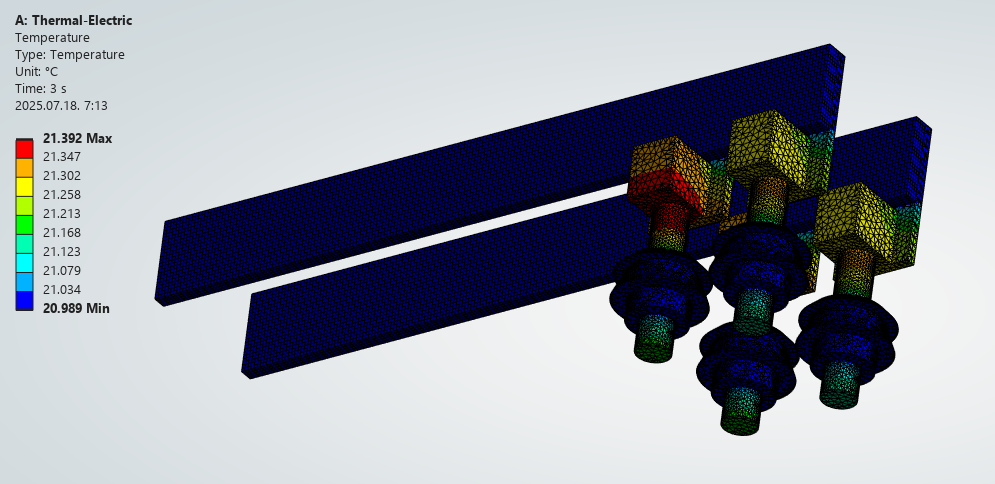
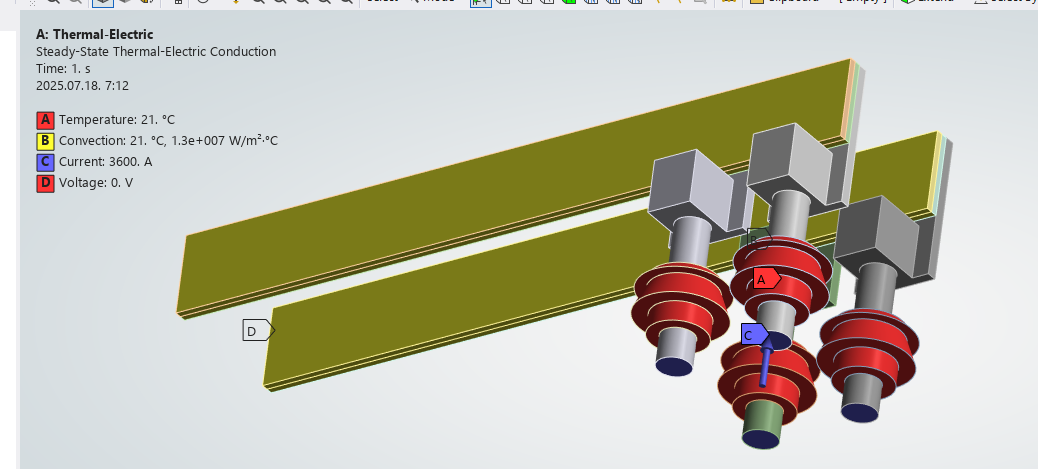
      Hello, I would like to create a simulation in Workbench (Thermal-Electric) with the following boundary conditions (image attached).

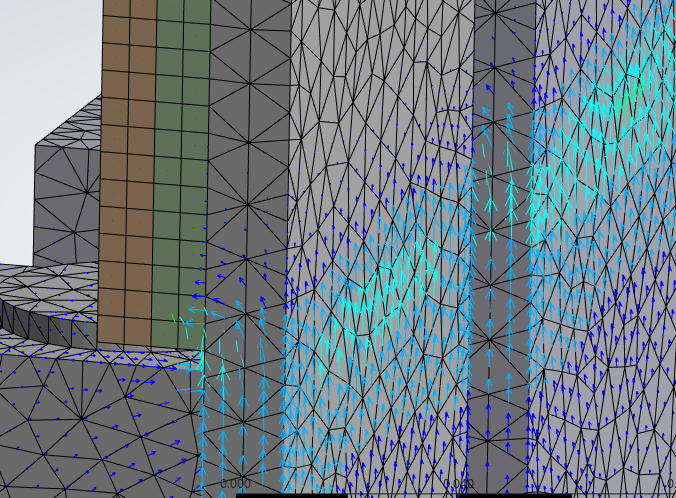
      The vector heat flux shows that for some reason the heat flux does not transfer to the busbars. How is this possible?

      The flag and the support rod form a single body in the geometry (same material), I set a share topology between the two 10 mm thick busbars in Spaceclaim. The connection between the flag and the inner busbar is bonded (it does not allow anything else).

      The busbars and the flags are made of different materials (brass and copper), so I had to define them as separate bodies.

      I set the 0 V voltage on the far side surfaces of the busbars (it is not visible in the image).

      Did I set something wrong? The result looks pretty incredible (the busbars do not heat up to a temperature higher than the ambient temperature).

      Thank you for your help!

      Regards,
      Krisztián


    • Gary_S
      Ansys Employee

      First, make sure the bodies are well connected. 
      I often use a simple thermal analysis. 
      Apply 0 deg on one end of model, then 100 deg on other and make sure you can get a proper gradient. 

      My guess is that there is a small gap between contact faces. 
      If bonded contact you can manaully increase the pinball radius to cover the gap.

    • udvardyszabokrisztian
      Subscriber

      hi, thanks for the answer!

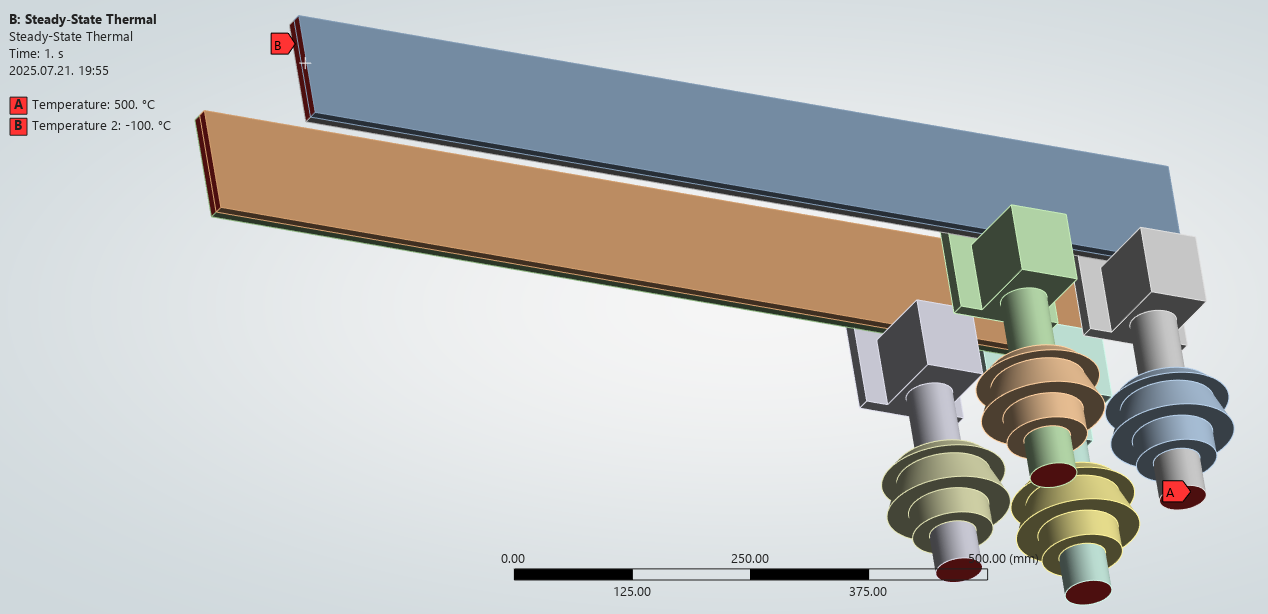
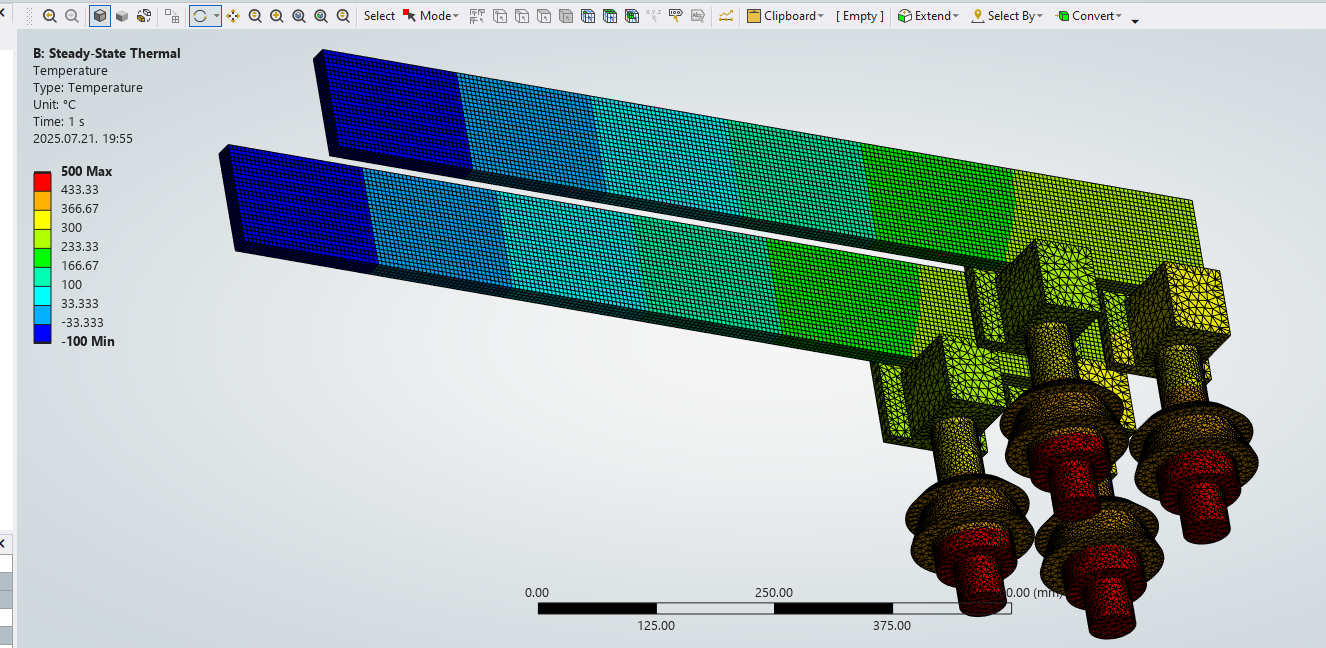
      I tried as you suggested, with the same model, using the following boundary conditions and it looks like the gradient works in this case. Why not in the thermal-electric study?


    • Gary_S
      Ansys Employee

      Hello. 

       OK. Perhaps materials are not proper?
       Try setting all to Structural steel, then try a simple current analsys 0v  and +5v and see if it looks OK. 
       

    • udvardyszabokrisztian
      Subscriber

      Unfortunately, the result is the same if I set everything to structural steel and set 0 V at one end of the model and 3600 A at the other end.

    • Matthew Middleton
      Ansys Employee

      I made a crude model with similar setup so I could try some things, such as change what's in contact, and the electric and thermal conductance on the contacts and other contact settings. Although this did make difference temperature contours, nothing approached your result, until I noticed your very high convection coefficient. In my test model, I made something closer to your result by using a high convection coefficient and manually specifying thermal and electric conductance value from the busbar to the post. Can you verify all these values in your model? As a sanity check, try setting the thermal and electric conductance to program controlled on the contacts, and lower the convection coefficient to see what you get.

Viewing 5 reply threads
  • You must be logged in to reply to this topic.
[bingo_chatbox]