Hi,
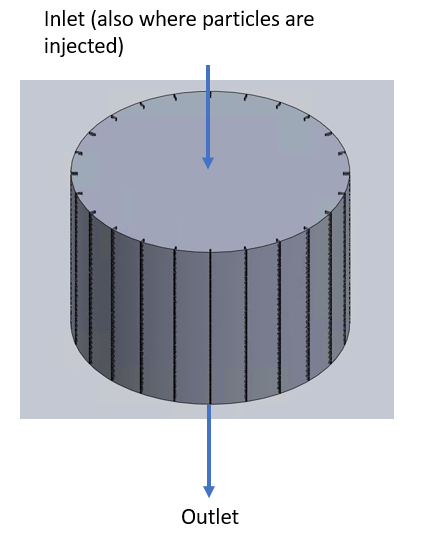
I am trying to measure the velocity and concentration boundary layer thickness of particles from dpm injection in a cylinder:
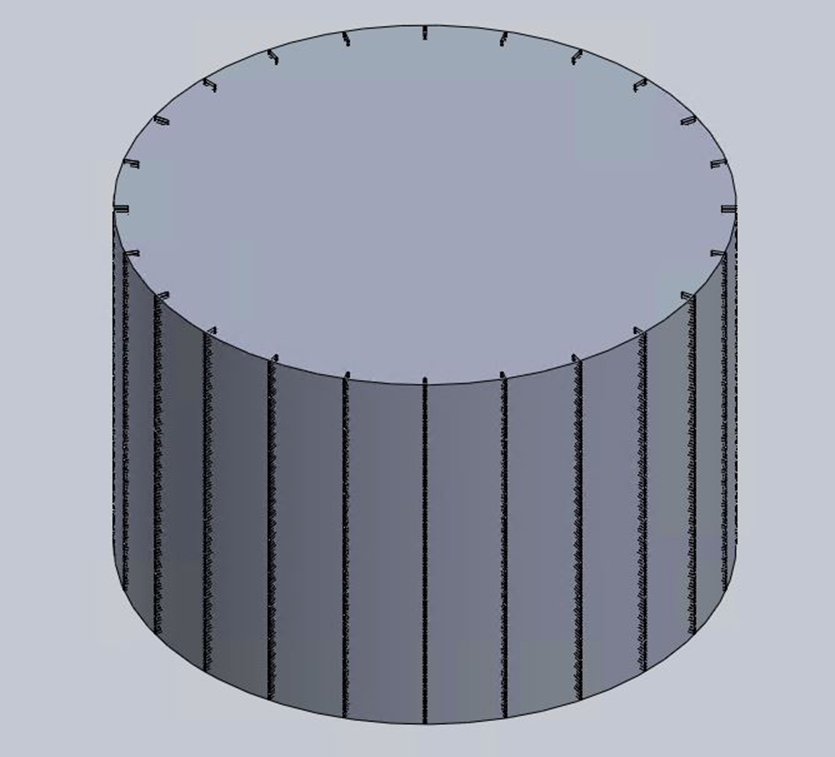
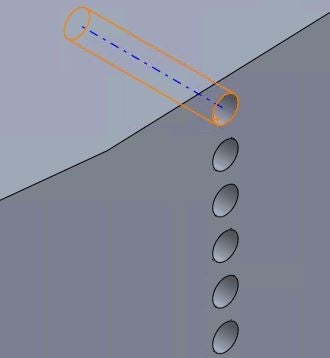
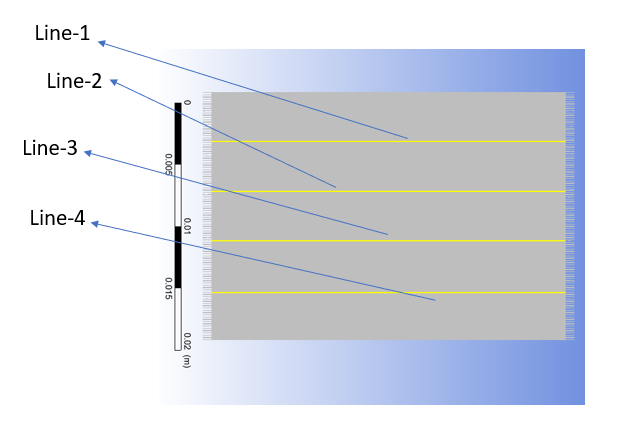
The cylinder has internal protrusions on the surface of the wall. Flow is in the axial direction from the top to bottom and gravity acts perpendicular to the direction of flow. No slip boundary along with trap boundary condition is applied at the wall of the cylinder along with the protrusions. At first a steady-state flow is simulated in the cylinder for approximately 450 iterations until convergence is reached. This is done to establish a flow inside the cylinder before injection since the velocity of the flow is around 10E-5 m/s (laminar flow regime). After the steady-state flow, dpm injection is applied at the inlet for 1 iteration, this too is for steady-state. In cfd-post, a 2D plane is generated in the axial direction and four lines are drawn from the tip of one protrusion to the opposite side containing the other protrusion:
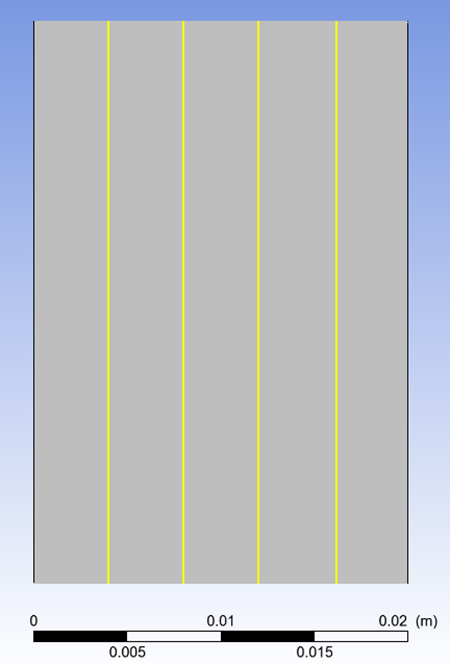
Around 200 data points are taken from each each line and the radial distance vs axial velocity is plotted:
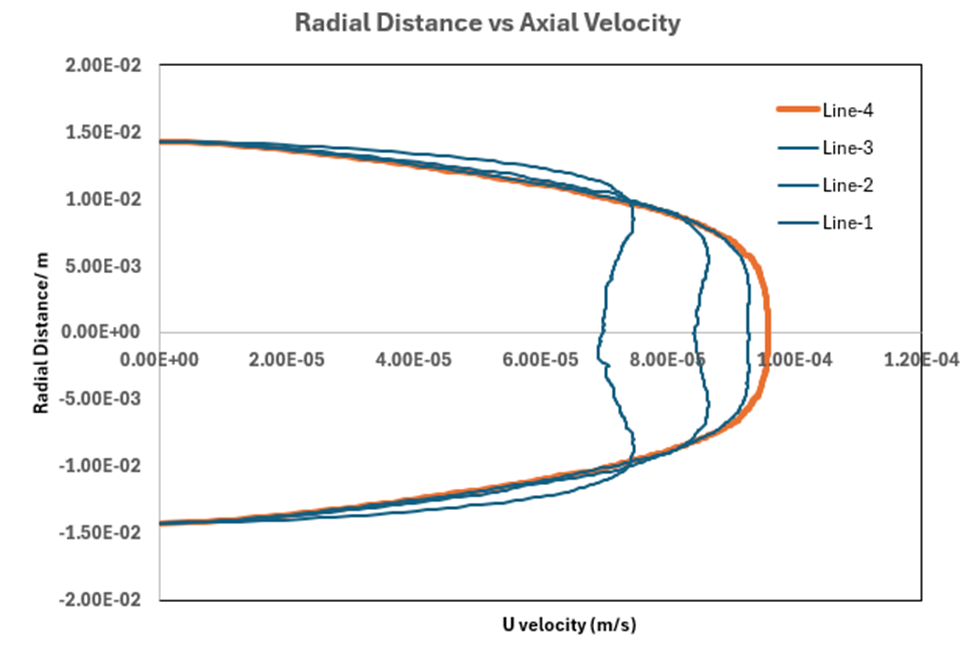
The data points from line-4 are considered and the distance from the tip of a protrusion to the point where the velocity is 99% and 95% of the maximum radial velocity is measured. The corresponding values at 99% and 95% thresholds turn out to be ~1 cm and ~0.8 cm. But if you look at the velocity surface plot these numbers might not be accurate:
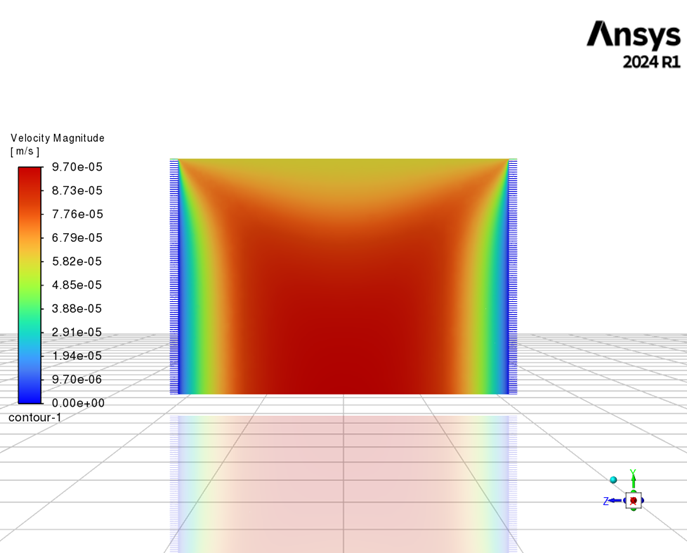
The radius of the cylinder is approximately 1.5 cm. If the boundary layer thickness based on 99% and 95% threshold are incorrect, what is the correct way to estimate the boundary layer thickness in this case?
Lastly, the following are the particle residence times for different sized particles:
For 300nm:
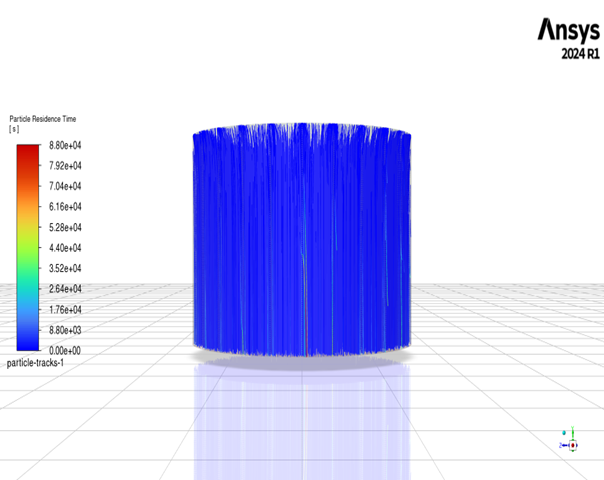
For 10 micron:
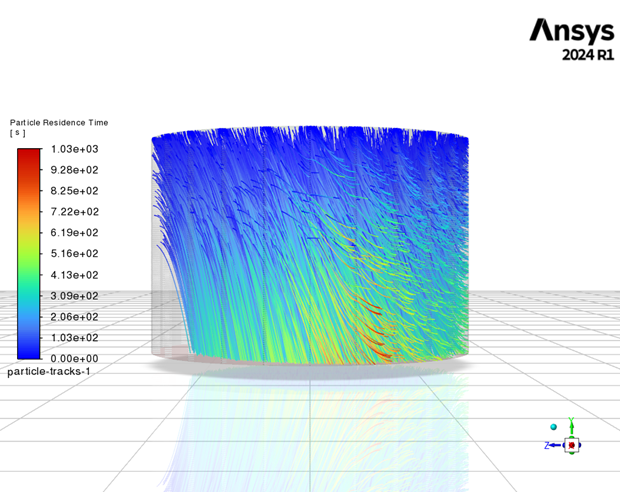
For 300nm most of the particles leave the domain due to stokes law where gravity has negligible effect whereas for 10 micron, almost 30% of the partciles have been trapped. Now, based on the retention of particles, how can one determine the concentration boundary layer thickness?
Thank you!!


















 You are navigating away from the AIS Discovery experience