-
-
January 16, 2026 at 8:09 pm
eme5512
SubscriberI would like to create a geometry a bit similar to the one attached, particles of 150 microns will be falling through the inlet of the pipe at the top then making contact with the heat flux in the form of rays of light that will be passing through the hole and across the pipe then comes a heat transfer from the heat flux to the particles as they are dropping down, while the charged particles leave through the pipe outlet at the bottom.
-
January 21, 2026 at 1:58 pm
Rob
Forum Moderatorhttps://innovationspace.ansys.com/forum/forums/topic/creating-rays-of-light-passing-across-a-pipe-2/
-
January 21, 2026 at 3:47 pm
eme5512
SubscriberCan you help with this please?
-
January 21, 2026 at 3:50 pm
Rob
Forum ModeratorMaybe read the other threads? Yes, we can do this, and you can use the DO model & a DPM Scalar in Fluent.
Have you done the tutorials yet to understand how the particles will fall through the hole in your fluid zone?
-
January 21, 2026 at 3:50 pm
eme5512
SubscriberThe other thread is closed
-
January 21, 2026 at 3:54 pm
eme5512
Subscriberthanks for your response. I have gone through bunch of youtube videos but not helping. do you mind sharing some link for the specific tutorial on this
Also I need some help creating the geometry
-
January 21, 2026 at 4:04 pm
Rob
Forum ModeratorThere are no specific tutorials.
I think cylinder creation is covered in the geometry basics, either as sketch & extrude or primitives. The only slight complication is setting the emitter surface(s) or cell zone, which will depend on how you plan on implementing the approach.
If you follow the trail of your topics you'll find where I answered you back in mid-December. Look in https://innovationspace.ansys.com/learning-library/ you'll need Geometry (SpaceClaim or Discovery depending on campus licence, hopefully the latter), Meshing (Ansys Meshing or Fluent Meshing; former may be easier for what you need but latter will serve you better in the longer term) and Fluent (basics, DPM and UDFs).

-
January 22, 2026 at 2:06 am
eme5512
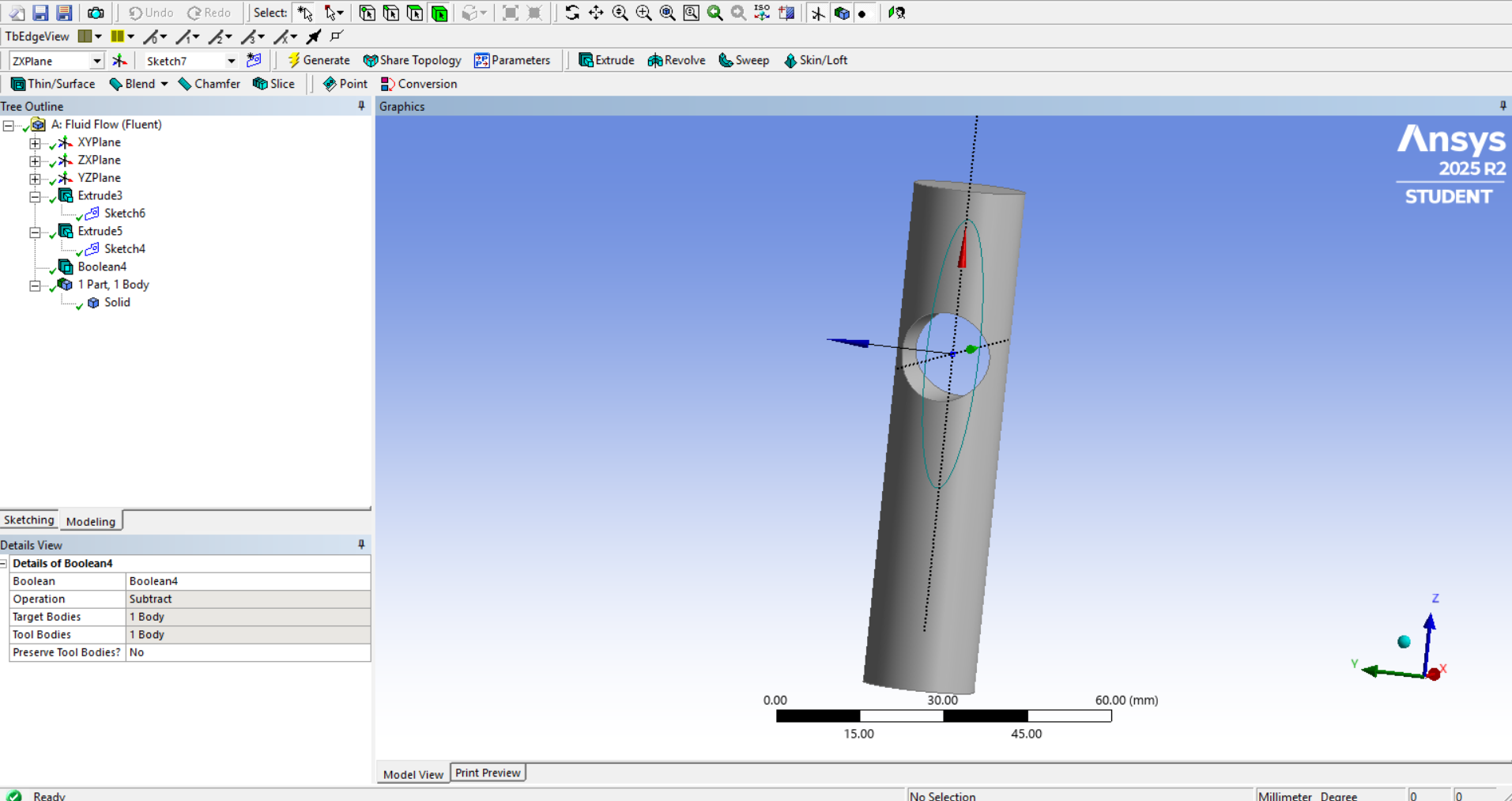
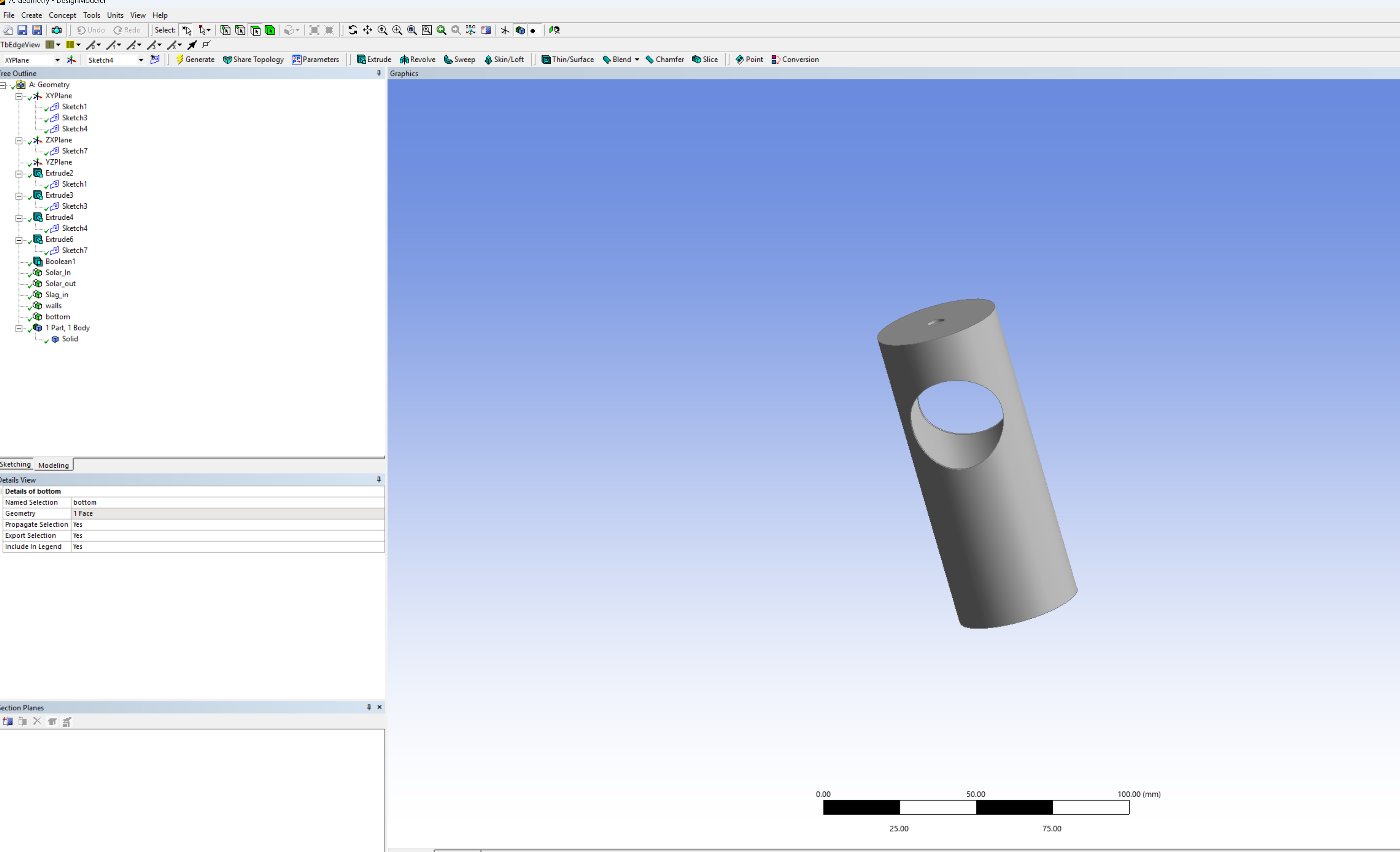
SubscriberThis is what I have made, solid fine particles will be dropping from the hole on the top, then passing through the sun rays as they get heat and settles at the bottom. The sun rays enters from the one hole by the side and exit from the other. Do you think that this geometry is making sense, what do you think?

-
January 22, 2026 at 10:07 am
Rob
Forum ModeratorIt's not going to work. How will the particles fall through the hole? Have you run the tutorials in https://ansyshelp.ansys.com/public/account/secured?returnurl=/Views/Secured/prod_page.html?pn=Fluent&pid=Fluent&lang=en ?
-
January 22, 2026 at 2:05 pm
-
January 22, 2026 at 2:08 pm
Rob
Forum ModeratorI suspect you grabbed a Component and not a Workflow.
-
January 22, 2026 at 2:12 pm
eme5512
Subscriberok this helps, am sorted with that now.
Again, please help me with the geometry because I have gone through the tutorials and YouTube videos. I will appreciate that
-
January 22, 2026 at 2:20 pm
Rob
Forum ModeratorYou need to create a pipe. If there isn't a volume present (ie your hole) there is nothing to solve the flow on: your geometry becomes your mesh. The heat/whatever then needs adding from the side (face) of the domain or from a separate cell zone depending on the approach taken.
CFD geometry is different to Mechanical (and CAD) in that we use the "wet" bit of the domain and generally don't worry about the metal bits. So a pipe would be the region with the water in it, and we'd not usually model the casing.
-
January 22, 2026 at 2:28 pm
eme5512
SubscriberI can easily create a pipe for the hole for the passage of the sun rays but my challenge is how to make it in such a way that the particles falling from the top will penetrate through this sun rays rather than dropping on the walls of the pipe.
-
January 22, 2026 at 2:33 pm
Rob
Forum ModeratorYes. So the mesh need to be continuous down the whole pipe.
-
January 22, 2026 at 2:40 pm
eme5512
SubscriberYou mean creating the pipe across the cylinder, the particles from the top of the cylinder penetrate the pipe, and not falling on the wall of the pipe?
-
January 22, 2026 at 2:47 pm
Rob
Forum ModeratorYes. You need to have fluid wherever you want to calculate anything. So, you need to have the WHOLE pipe modelled. But, does it need to be one or two volumes? Think about how you're going to add the sunlight, and talk to your project supervisor too. Staff can't give detailed workflows, and given time zones you may find yourself waiting overnight for replies (assuming I'm on the Forum during my working day).
-
January 22, 2026 at 2:52 pm
eme5512
SubscriberSo I will have one volume for the pipe and another volume for the tank. The sun rays will have to pass through the pipe
I am the supervisor of the work
-
January 22, 2026 at 7:17 pm
-
January 23, 2026 at 9:43 am
Rob
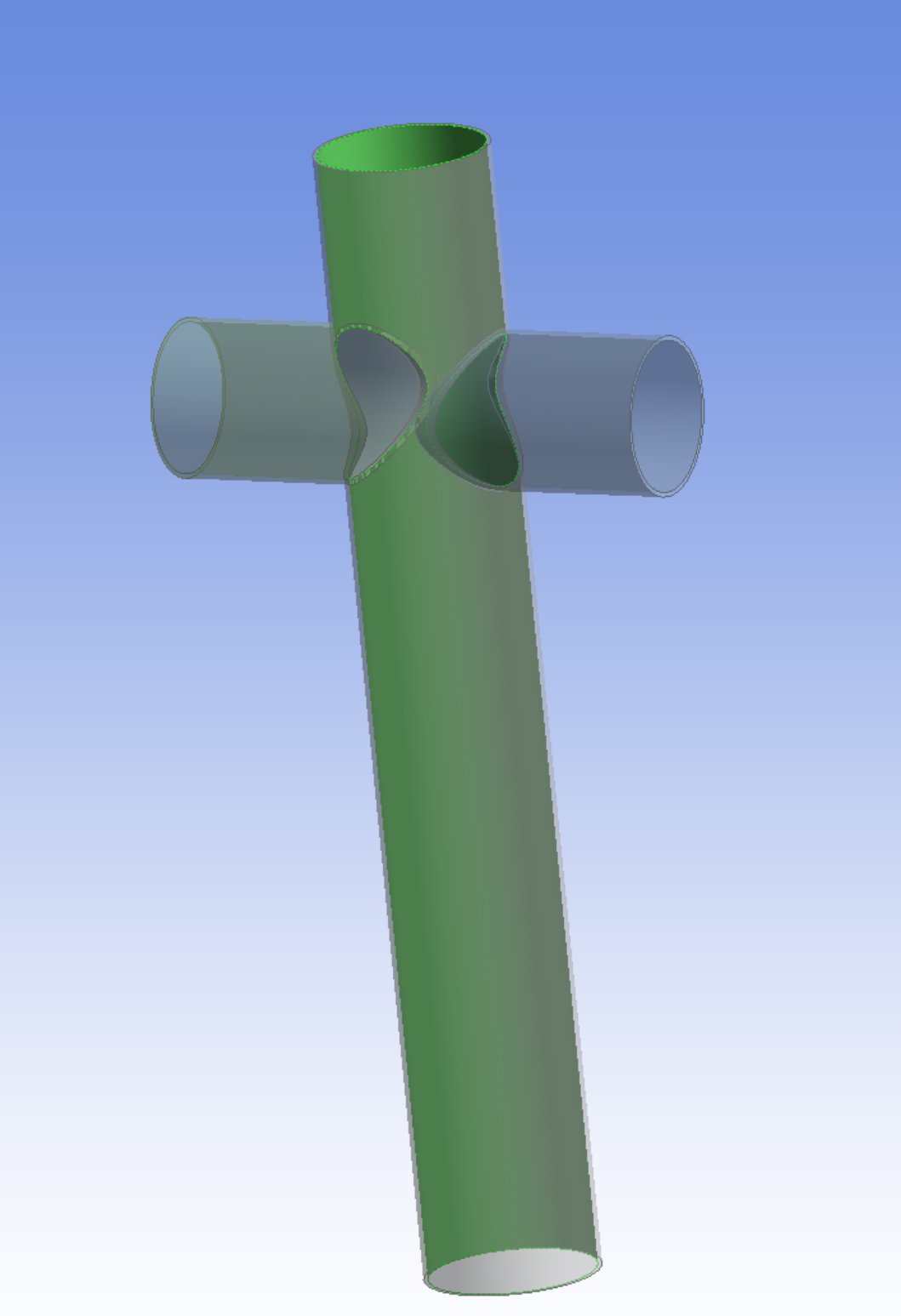
Forum ModeratorThat's the metal part. So, if you extract the fluid then yes, that will work.
If you're trying to create a tutorial/project for your students some regions have additional resources. Your account manager should be able to advise.
-
January 27, 2026 at 3:21 pm
eme5512
SubscriberUnfortunately not working out pretty well. The geometry is all hollow. You mean I should extract the volume and not use the fill to create the fluid region?
-
January 27, 2026 at 3:23 pm
Rob
Forum ModeratorYou need to have mesh in the fluid parts. So you will need a volume (solid) there.
-
- You must be logged in to reply to this topic.
-
5069
-
1787
-
1387
-
1248
-
1021
© 2026 Copyright ANSYS, Inc. All rights reserved.