

-
-
August 13, 2021 at 2:06 pm
nathmoses
SubscriberHi everyone,
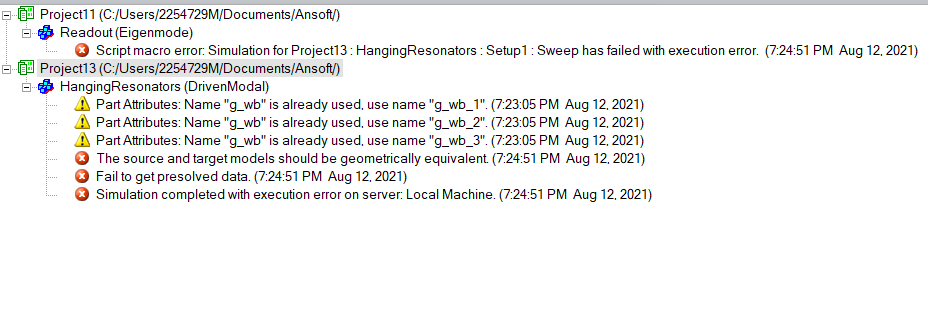
I am trying to import a mesh from an eigenmode solution into a drivenmodal solution. The design is a coplanar waveguide resonator coupled to a feedline. The method I am trying with the drivenmodal setup is HFSS->Analysis Setup->Add Solution Setup...->Advanced->Import Mesh. The current result of the mesh is shown below and the wanted mesh from the eigenmode solution is shown last. I have also added the error I retreive from analys is first below. Any help is much appreciated.
August 20, 2021 at 6:12 pmPraneeth
Ansys Employee
I think the meshing depends on the type of solution that the model is being designed.
I would suggest you to use the adaptive meshing which will be more effective instead of importing the meshing across solution types.
All the very best.
August 20, 2021 at 6:22 pmSubscriber
Thanks a lot for your response. The reason I am importing this mesh is that the eigenmode solution actually provides the desired mesh I want with the mesh being denser around the resonator as shown in the last picture. The second picture I believe is the adaptive meshing for the drivenmodal solution but does not provide a good mesh hence poor S-Parameter results. This is why I am trying to seed the mesh from eigenmode to drivenmodal unless there is another way to achieve the same goal. I think that the geometry error lies with the lumped ports on the drivenmodal solution not appearing on the eigenmode model as excitation ports cannot be rendered in eigenmode but I am still trying to figure out how to work around this.
August 20, 2021 at 6:32 pmAnsys Employee
You can give denser mesh as well as increase the accuracy of the meshing by tightening the convergence criteria.
Can you share the results comparison for your claim?
If you find any discrepancy in the results, then I would suggest you to check the port assignment in the driven terminal solution type.
All the very best.
August 20, 2021 at 7:20 pmSubscriber
Thanks again for your timely response.
How can I provide a denser mesh around the important areas? I'm aware of increasing mesh resolution but that does not provide the sought after geometry.
Which results comparison? The S-Parameter results?
August 23, 2021 at 11:50 amAnsys Employee
You can go through "defining mesh operations" chapter from the HFSS help document to see all the details for improving the mesh if required.
Also you have more stringent convergence criterion for the adaptive pass.
Can you highlight the resonator in your model?
You have mentioned that the S-parameter result of driven modal is not as good as the eigen mode one. Please share the comparison plot of both.
Best regards.
August 25, 2021 at 2:54 pmSubscriberHi thanks again for your reply Yes I think I shall refer to the help document and explore with setting more strict convergence criteria.
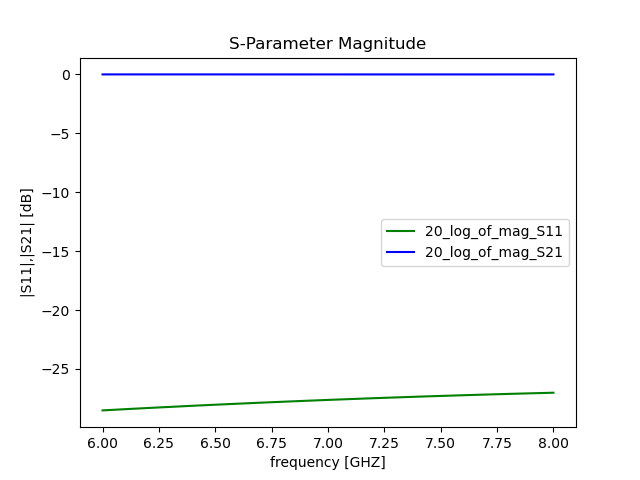
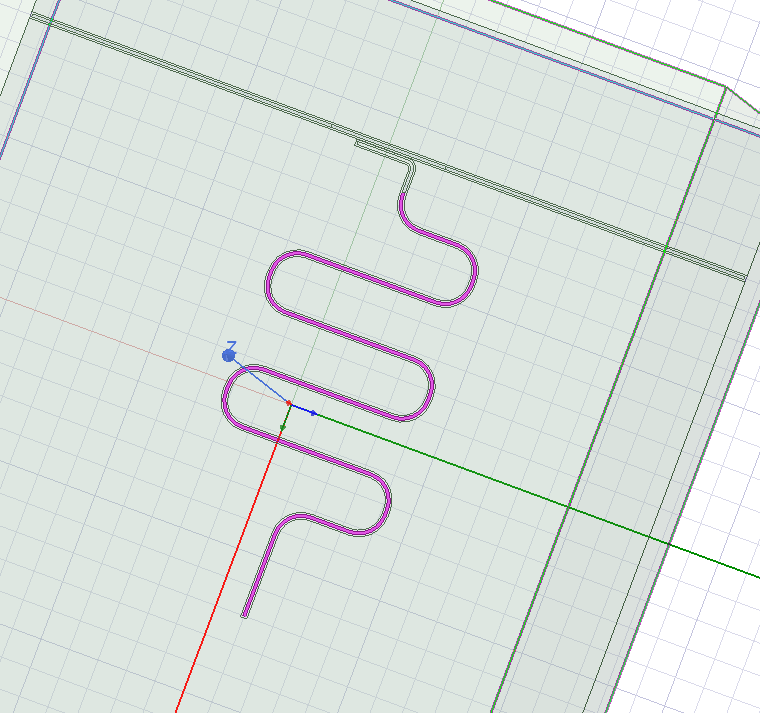
I have attached the resonator highlighted and the S-Parameter results for the driven modal analysis. I am expecting a dip in magnitude at around 7.1GHz , as that is the resonant frequency of the resonator yet there is a flat line for the S21 and S11 parameter.
I am not necessarily comparing the S-parameter results between eigenmode and drivenmodal, I just wish to use the mesh from the eigenmode as it is focussed around the resonator and coupling component, not the feed line.
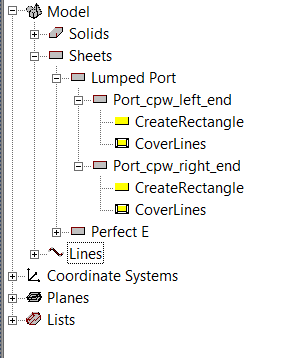
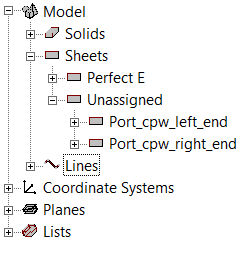
August 25, 2021 at 3:02 pmSubscriberSo far I have been trying to resolve the geometrical error at the ports. I have attached images of the differences under the model sheets, perhaps the issue is due to the cpw ends in the eigenmode design are unsassigned?
Viewing 7 reply threads- The topic ‘HFSS seed mesh from eigenmode to drivenmodal’ is closed to new replies.
Innovation Space Trending discussions
 Top Contributors
-
peteroznewman
 5969
5969 -
scabo
 1906
1906 -
Dennis Chen
 1420
1420 -
javat33489
 1307
1307 -
Shyam Prasad V Atri
1021
Top Rated Tags
© 2026 Copyright ANSYS, Inc. All rights reserved.
Ansys does not support the usage of unauthorized Ansys software. Please visit www.ansys.com to obtain an official distribution.
-


The Ansys Learning Forum is a public forum. You are prohibited from providing (i) information that is confidential to You, your employer, or any third party, (ii) Personal Data or individually identifiable health information, (iii) any information that is U.S. Government Classified, Controlled Unclassified Information, International Traffic in Arms Regulators (ITAR) or Export Administration Regulators (EAR) controlled or otherwise have been determined by the United States Government or by a foreign government to require protection against unauthorized disclosure for reasons of national security, or (iv) topics or information restricted by the People's Republic of China data protection and privacy laws.

 You are navigating away from the AIS Discovery experience