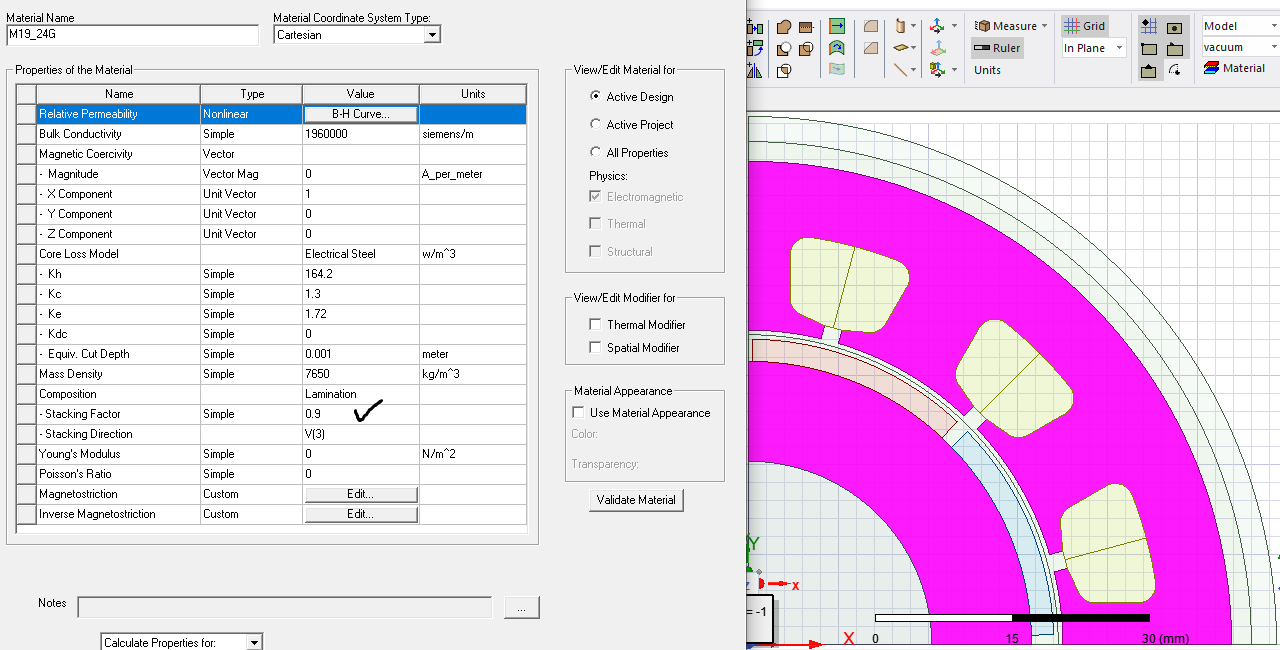
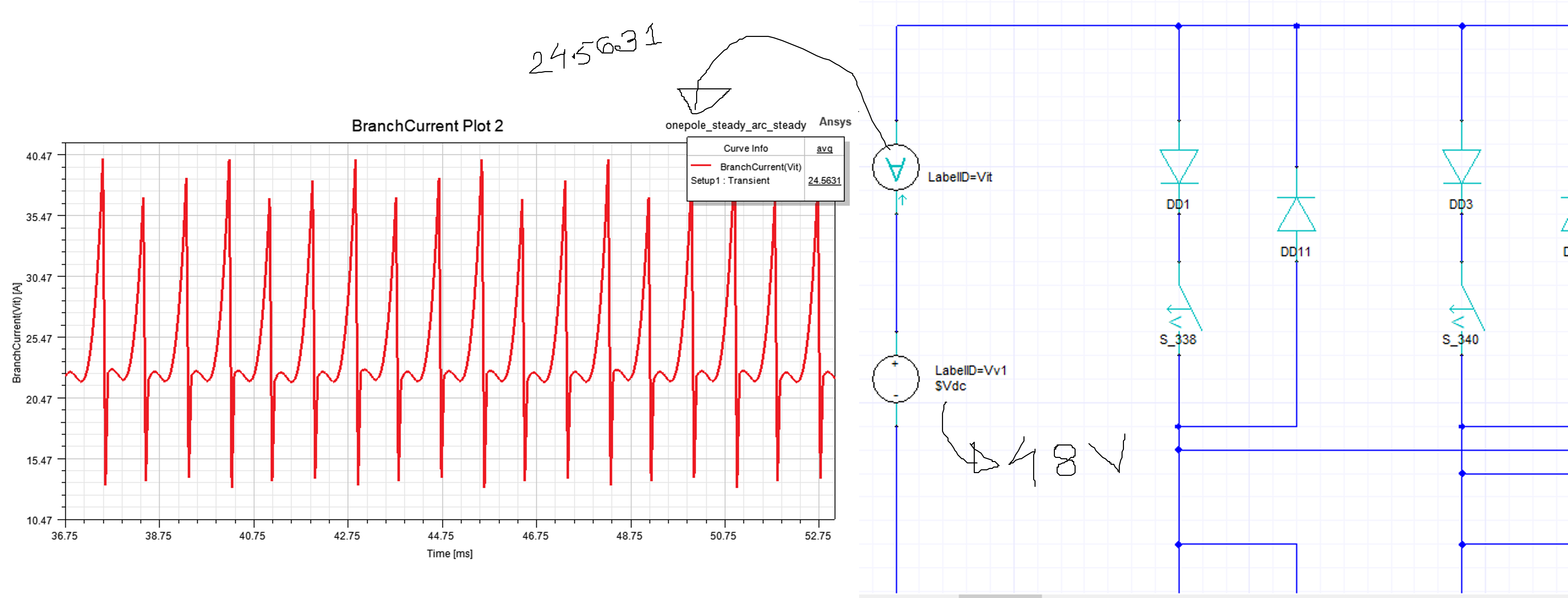
Hello. I designed a 2-D FE BLDC motor and the windings are excited with an external circuit (fig 1).I tried to calculate the motor actual input power with three volt meter and three ammeter and I used the formula to calculate the motor input power Pin_motor = Average (Ia*Va+Ib*Vb+Ic*Vc).The result is shown in fig 2. I assigned core loss in rotor and stator (result in fig3) and eddy effects in magnets and with estimated phase resistance (rph) I calculated copper loss with the formula Pcopper = Average ((Ia^2+Ib^2+Ic^2)*rph). The motor power value I receive by subtracting all losses (Coreloss, solidloss, Copperloss) from Pin_motor is close to the value of electromagnetic power which is Moving1.Torque*Moving1.speed. Should it not be equal to Shaft power? I learnt from a previous post in forum is that the shaft power is calculated by subtracting Coreloss from Moving1.Torque*Moving1.speed. But here the power I am getting by subtracting all losses from motor input power is a value close to electromagnetic power not Shaft power. Shouldn't be the output is shaft power? The moving1.torque curve is shown in figure 4 and I am summerizing all corresponding values with used formula in table 1.
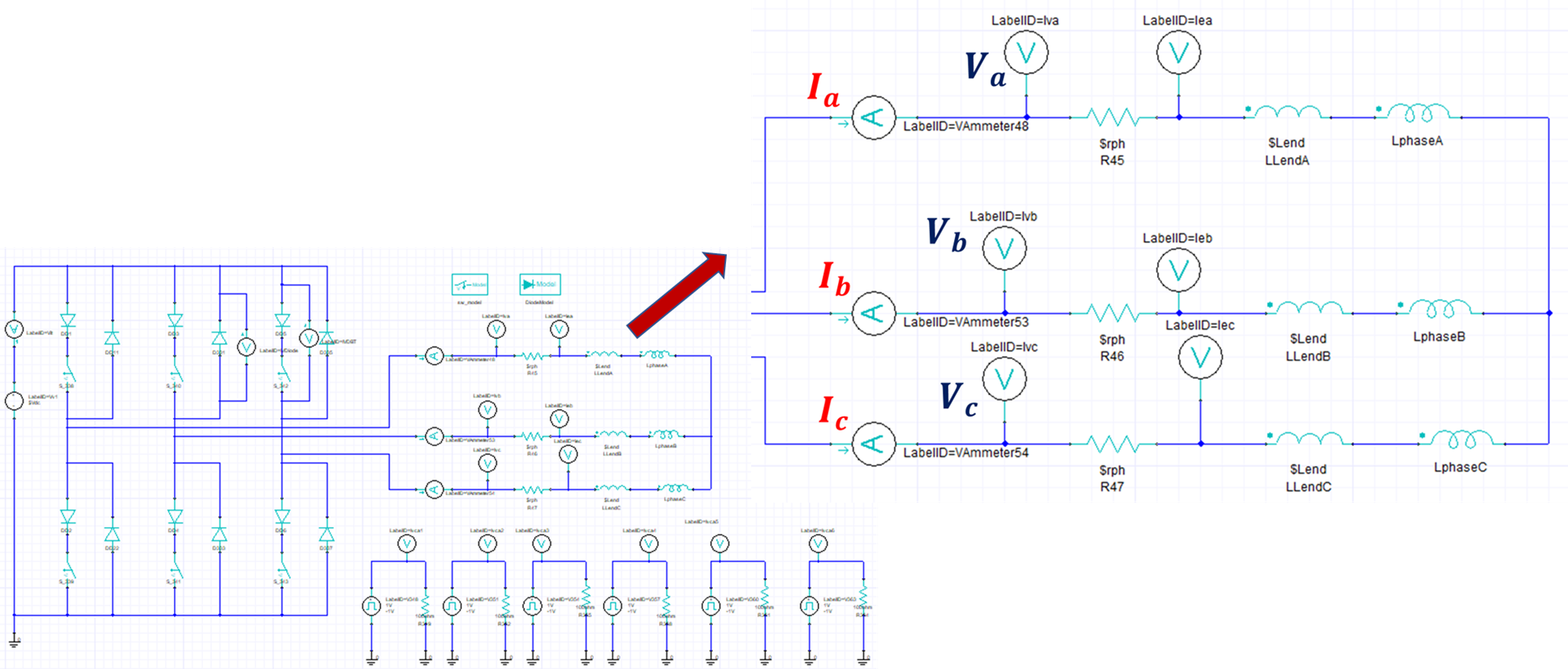
Fig 1: External Circuit
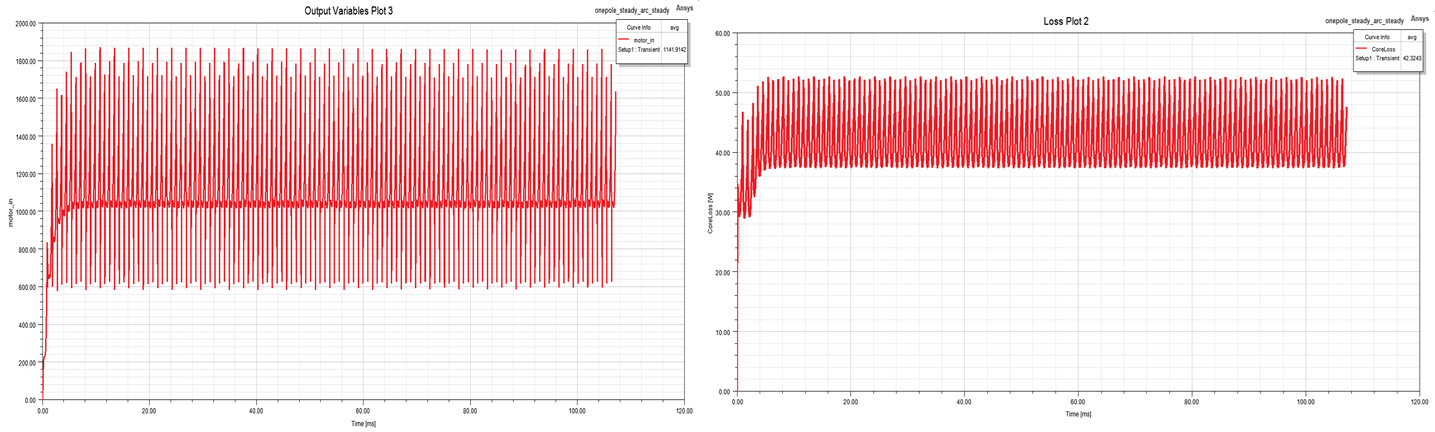
Fig 2: Motor input power Fig 3: Coreloss (Assigned in rotor and stator)
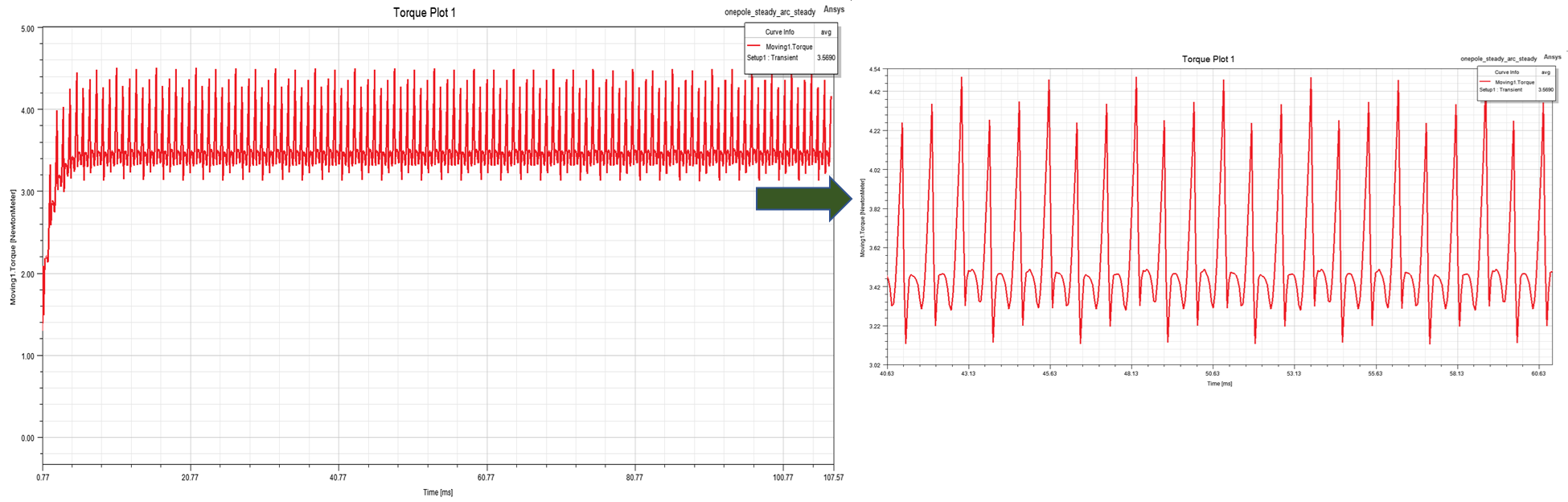
Fig 4: Moving Torque
Table: 1
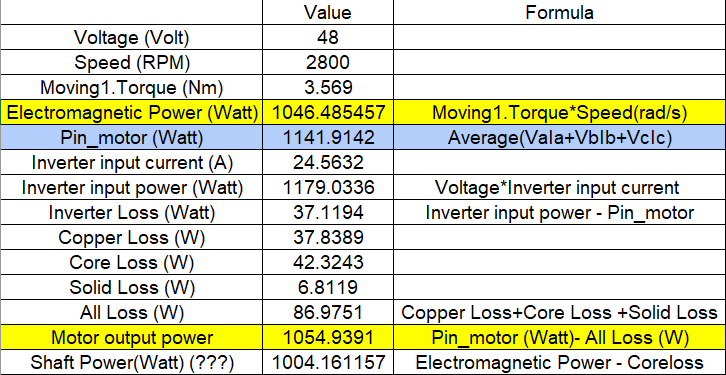
You can download and check the calculation from the google drive link: Calculation_table
Sorry for the long post. In one sentence, the output power = input power - loss matches only if I consider the moving1.torque is shaft torque(which is motor output power). Kindly let me know where I may have mistaken.


















 You are navigating away from the AIS Discovery experience