Hi Matthew,
Motor-CAD is effectively running a series of independent 2d electromagnetic calculations for each slice, with the rotor starting angle depending on that slice's skew angle. The results are combined by simple addition. For example, the transient torque for the whole machine is simply the sum of the torque from each slice. Similarly the terminal voltage or back emf for the whole machine is a simple addition of the single slice results. Of course if the slices are of different lengths, this is considered.
This is an example with the default BPM model in Motor-CAD, with 2 skew slices (at +-2.5 degrees):
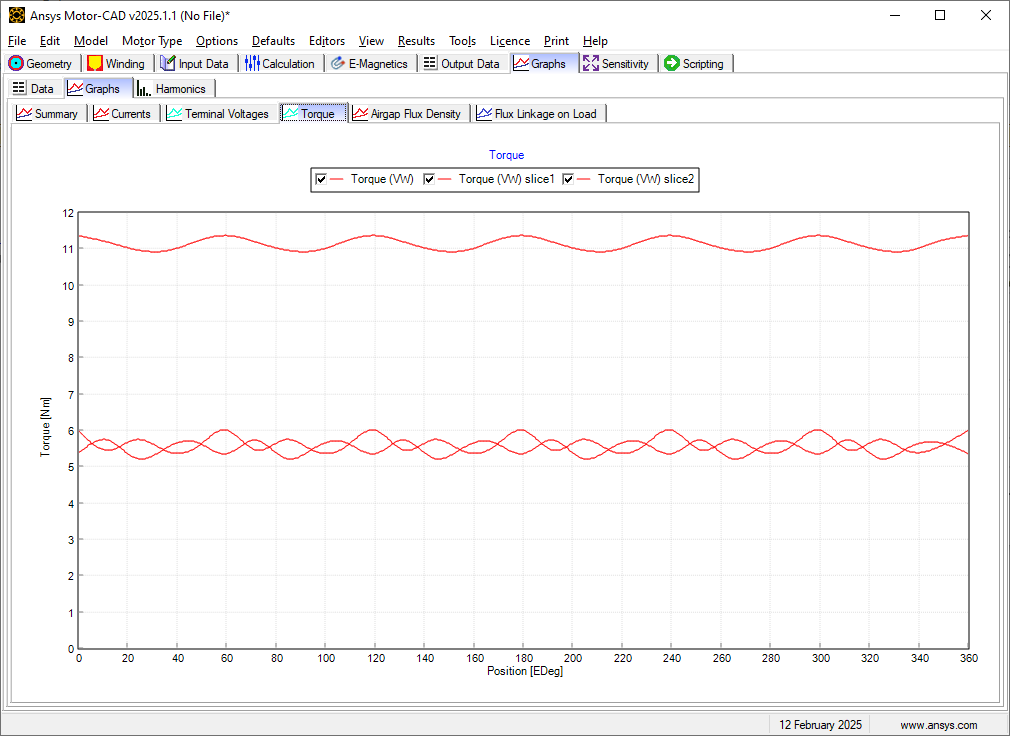
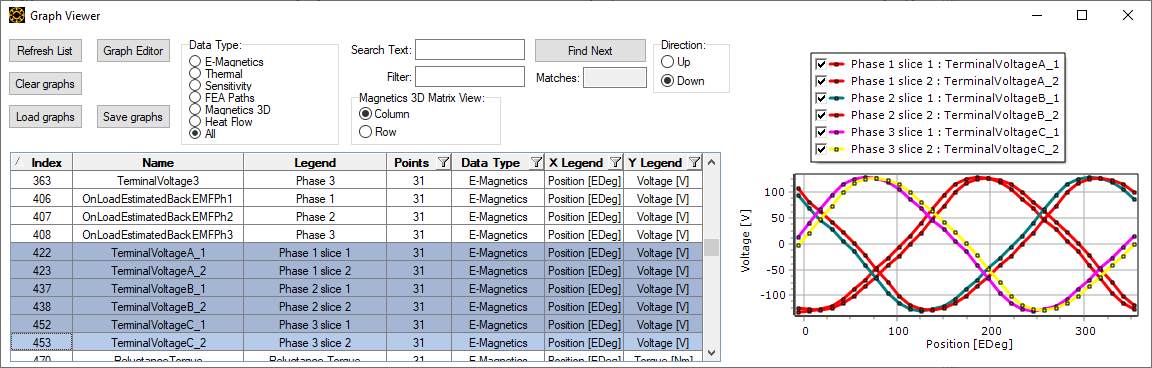
If you want to see the individual slice results for other results (for example the terminal voltages), the graph data is normally available in the graph viewer. For example here you can see the terminal voltages are slightly shifted between slice 1 and 2:
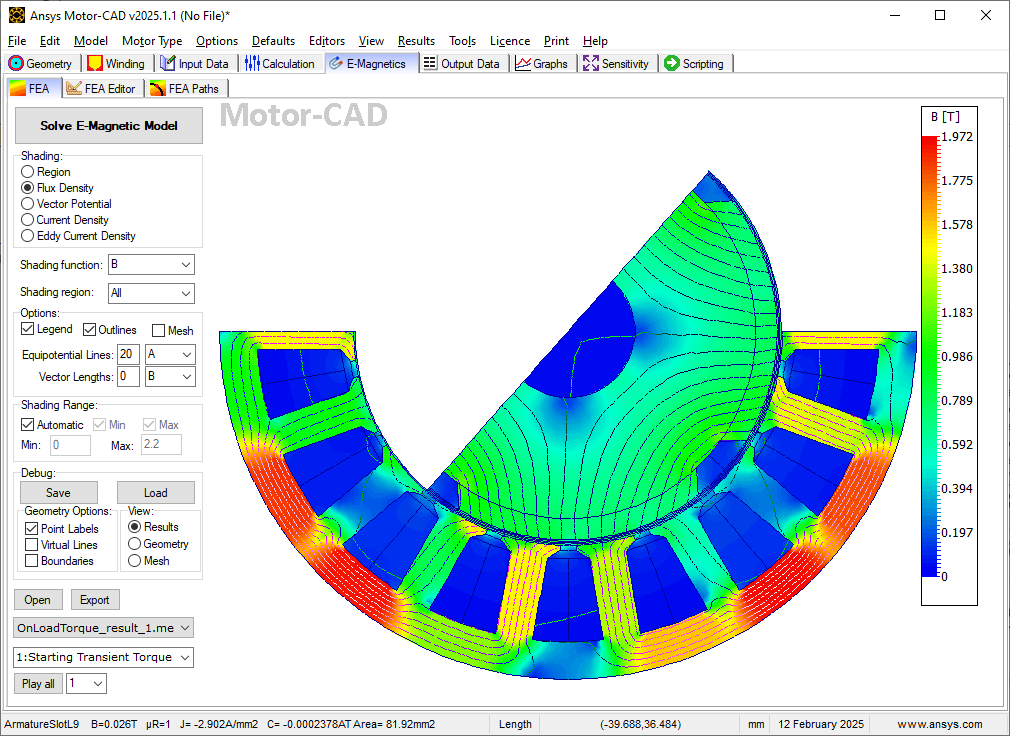
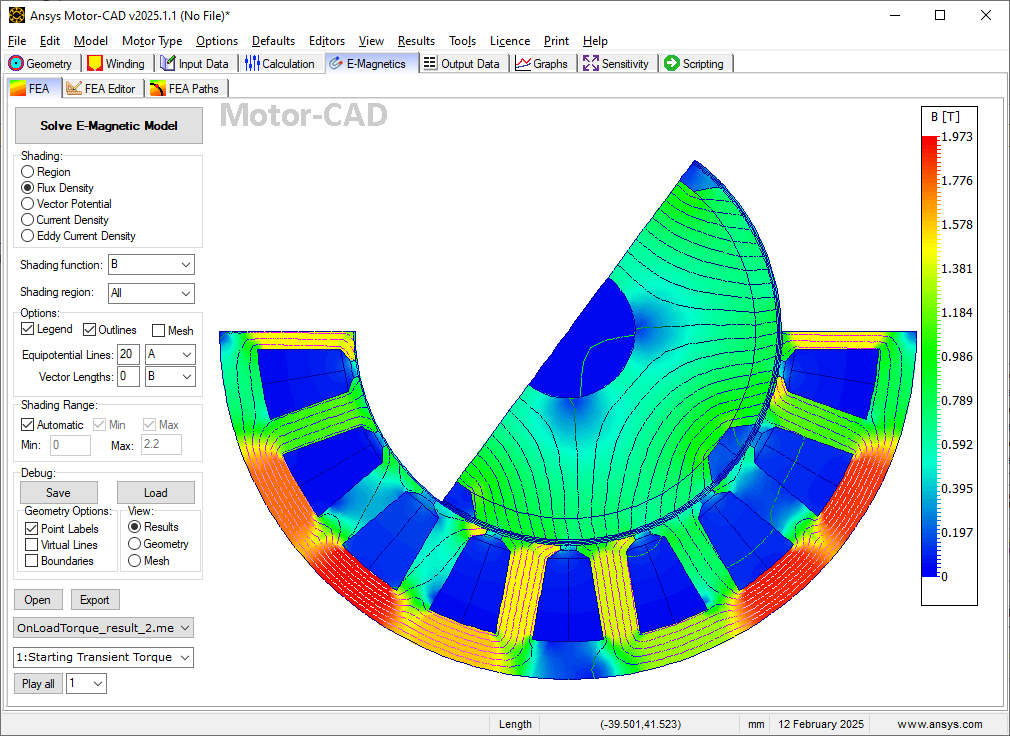
You will be able to see the FEA results independently for each slice, which will also show the rotor angle difference between slices, in this case the initial step of the transient (on load torque) calculation, where you can see the different rotor slice angle at the same timestep.


















 You are navigating away from the AIS Discovery experience