Ansys Assistant will be unavailable on the Learning Forum starting January 30. An upgraded version is coming soon. We apologize for any inconvenience and appreciate your patience. Stay tuned for updates.
Electronics

Electronics

Topics related to HFSS, Maxwell, SIwave, Icepak, Electronics Enterprise and more.

Receiver design setup Ansys HFSS

    • Manu007
      Subscriber

      I am designing a receiver-transmitter setup in HFSS.
      How do i setup the port configuration for receiver antenna?
      How is the simulation environment created?
      And is this even possible ?
      to setup Rx-Tx design


    • hawaslsh
      Subscriber

      I would try  this on the IE side of HFSS. You dont need an air box or anything of the sorts with MoM solving. It looks like you can drive your strip line with lumped ports too. It shouldn't matter which antenna you designate as the transmit or receive, you are simply looking for S21?

    • Sorceress Gia
      Ansys Employee

      In the case of your model as shown in the screenshot you uploaded - you can assign the outside of each air box as a Hybrid 'FE-BI' boundary. Alternatively you can just add one large region around both antennas and assign it as a 'Radiation' Boundary.

    • Manu007
      Subscriber

      I used a single radiation box of air, with lumped ports for excitation
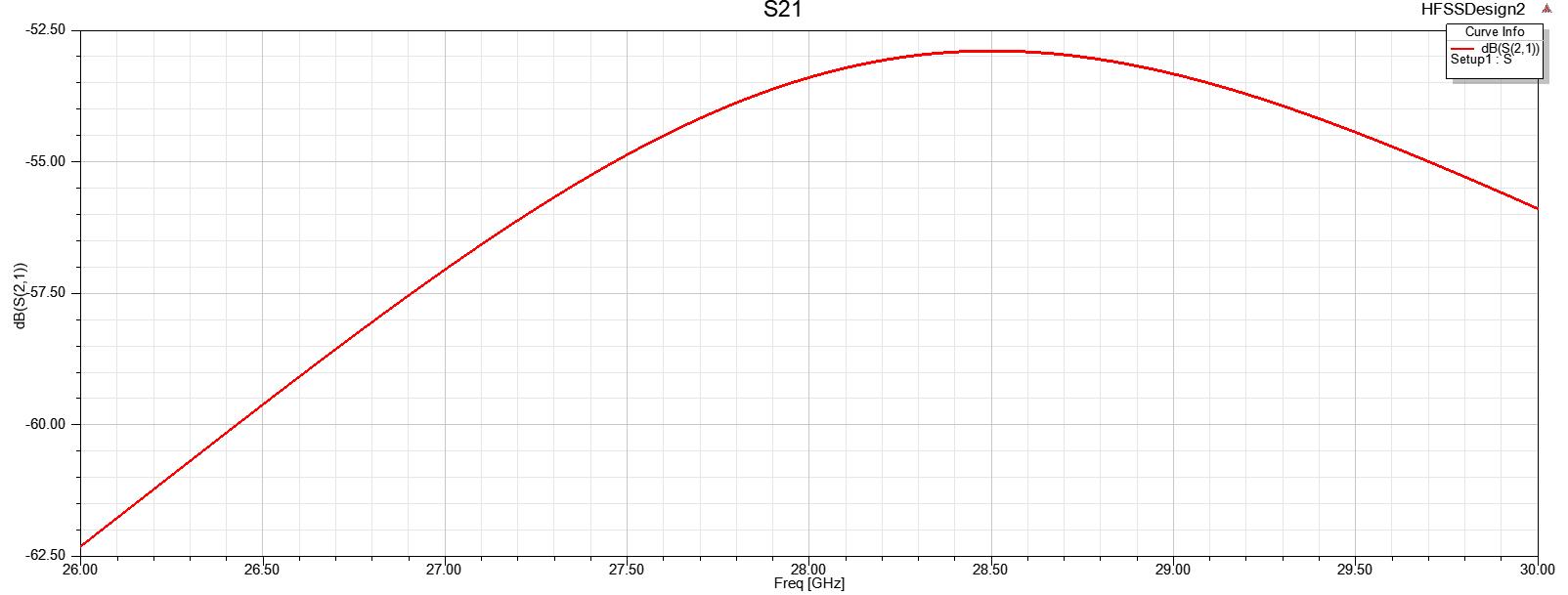
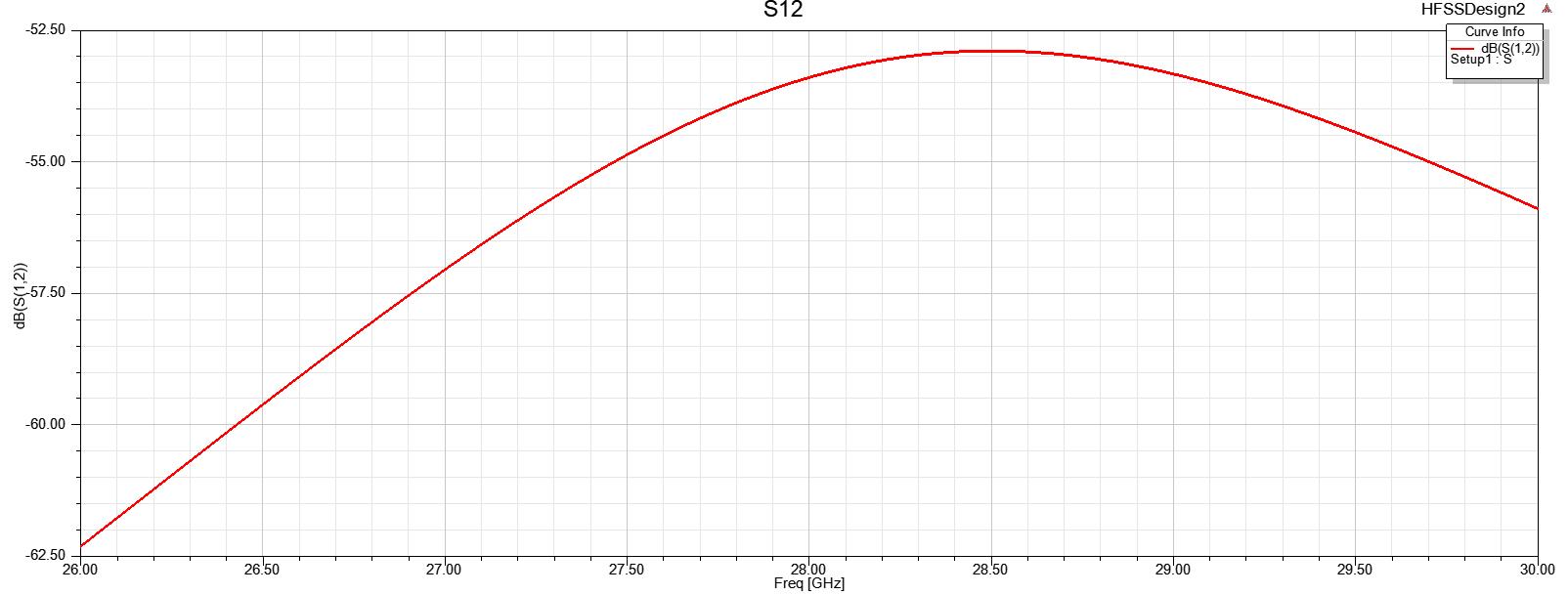
      But the problem is I am getting both S12 and S21 same .
      Also edited the source excitations to 1W for port 1 and 0W for port2.
      Also recently used separate hybrid regions to check , but still same results
      I simply want to make one antenna has transmitting and other receiver.
      Thanks for replying


    • Manu007
      Subscriber

      Hi peter 
      I actually tried both .
      Still same results.
      How do i make a antenna has receiving antenna to plot S21 plot


      1-Tx
      2-Rx


    • Manu007
      Subscriber


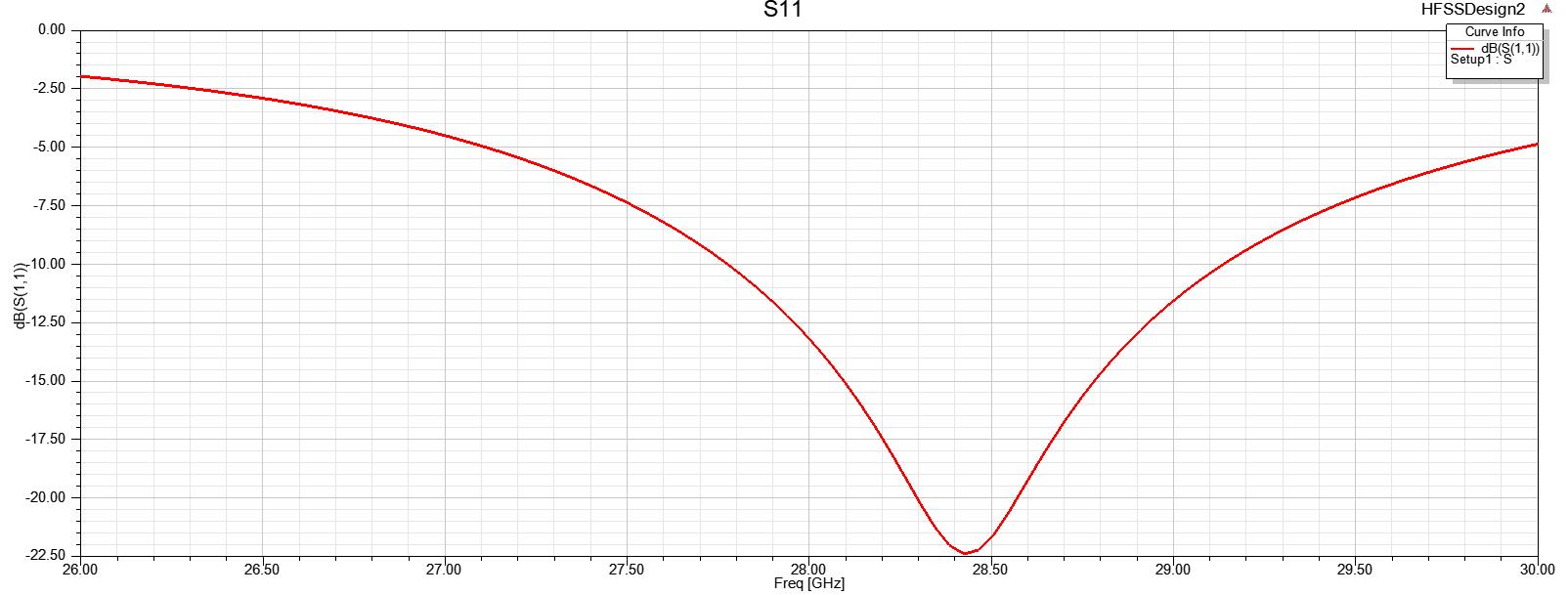
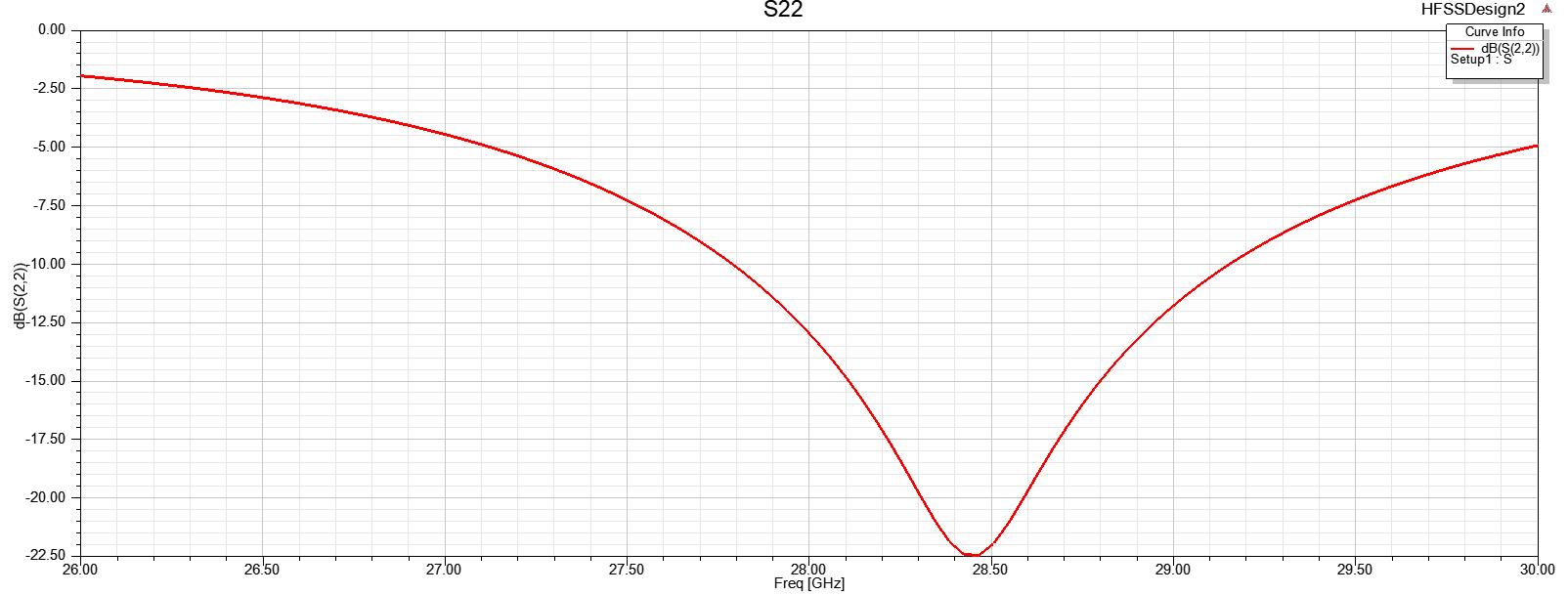
      Here are the graphs
      It would be very helpful for our team degree project if u guys help me out .
      Thanks

    • Sorceress Gia
      Ansys Employee

      These results are correct - you are looking at S parameters - which are calculated by exciting one port at a time while the others are terminated by 50 ohms.


      S21 is the transfer of energy when the Tx antenna is excited and the Rx antenna port is terminated with 50 ohms. S12 is the transfer of energy when the Rx antenna is excited and the Tx antenna port is terminated with 50 ohms.


      You are using the same antenna for both Tx and Rx - spaced equally apart - so it makes perfect sense that S21 = S12.


      S-Parameters are independent of any particular driving condition. - They are like the frequency response of a linear system - they do not change depending on what is input into the system - which is why you don't see any changes when you change the power levels in the 'Edit Sources' dialog.


      Generally antennas are not modeled in the way you are doing - since due to the "theory of reciprocity" - the Tx profile and Rx profile of an antenna are inherently the same - if an antenna is tuned and matched to a particular frequency, it will work as either a transmitter or receiver - which is why only a single antenna is typically modeled.


       

    • Manu007
      Subscriber

      I get what your saying , so there is no way i can measure S21 without both the antennas being excited.
      As said earlier i want just one antenna to excited for the whole run of simulation.


    • Sorceress Gia
      Ansys Employee

      The excitation is meaningless. S21 does not change whether you are exciting one, both, or NEITHER of the antennas! - Even if you are transmitting from both simultaneously, they will both receive energy from the other antenna at the level described by S21/S12.


      Consider an analogy to LTI system theory: HFSS is solving for the system's transfer function. - You are asking for the output of the transfer function when excited with a given input. - Which you can do and see the change in fields by setting the power level of each port in the 'edit sources' dialog. But, by definition of what S-Parameters are, they do not change based on the excitation - so you are asking for something that does not exist.


      I believe I understand what you are thinking - you are expecting S21 to be closer to 0dB when transmitting and -50dB when receiving but this is just not how S-Parameters work. S-Parameters fully describe the transfer of energy from one port to another for any infinite combinations of power being excited into any ports of the system.

Viewing 8 reply threads
  • The topic ‘Receiver design setup Ansys HFSS’ is closed to new replies.
[bingo_chatbox]