TAGGED: cfd, convergence, fluent, fluentmeshing, mesh
-
-
December 26, 2023 at 11:18 am
akndnzmn
SubscriberHello,
Â
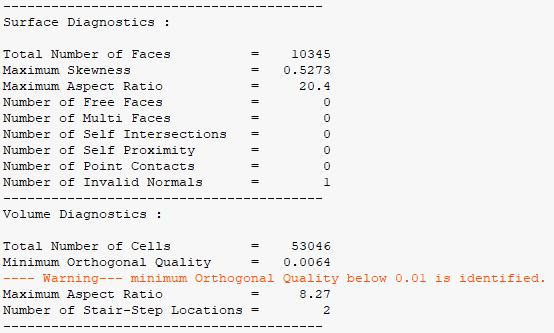
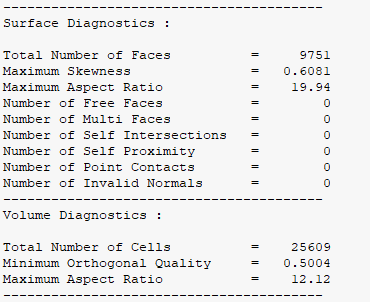
I have done two almost identical analyses. The only difference between the two analyses is the mesh quality. While mesh with worse quality and stair-steps converges, mesh with better quality does not converge. What could be the reason?Â
I add the mesh qualities below. Also I use Fluent Meshing.
Â
Analysis Setup
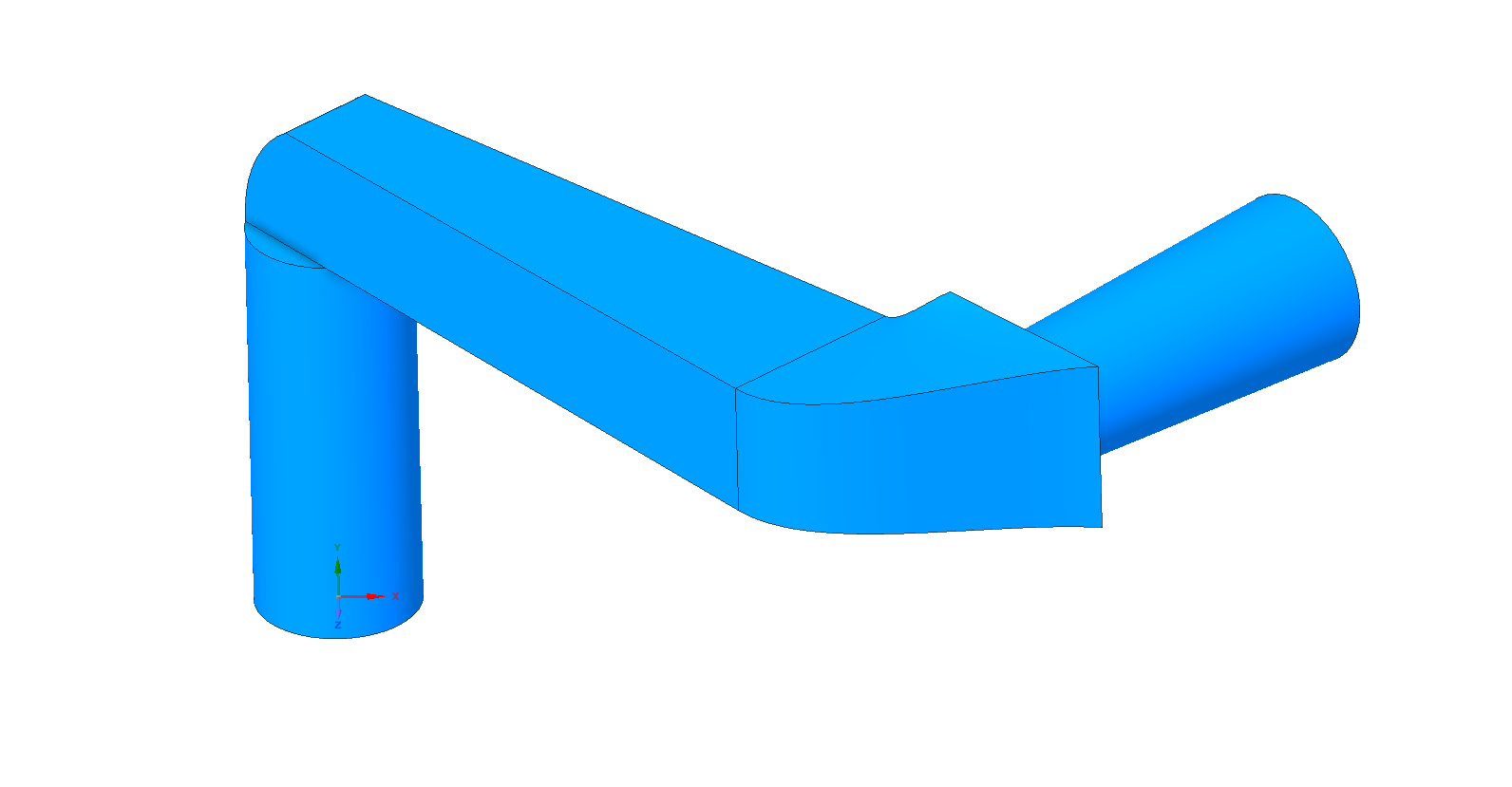
Simple Ventilation Structure Performance
Viscous Model : k-w (GEKO)
Â
Â
Converged Model                                                                  Not-Converged Model
                          
Â
-
December 28, 2023 at 10:11 am
V.P
Ansys EmployeeHi Akin,
Higher-quality meshes have a higher level of refinement and more nodes/elements, resulting in a more detailed representation of the geometry. This increased complexity might require more iterations for convergence.
What parameter did you use to judge convergence?
-
December 28, 2023 at 12:53 pm
akndnzmn
SubscriberHello,
Â
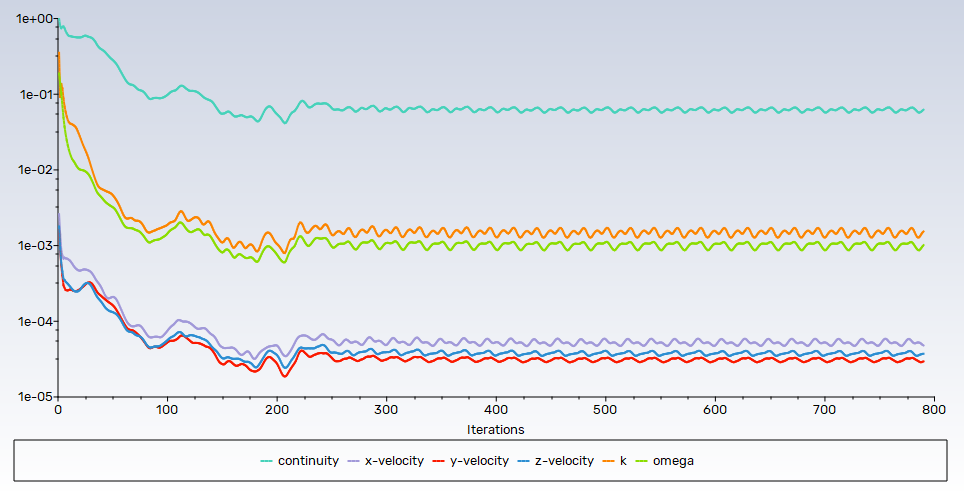
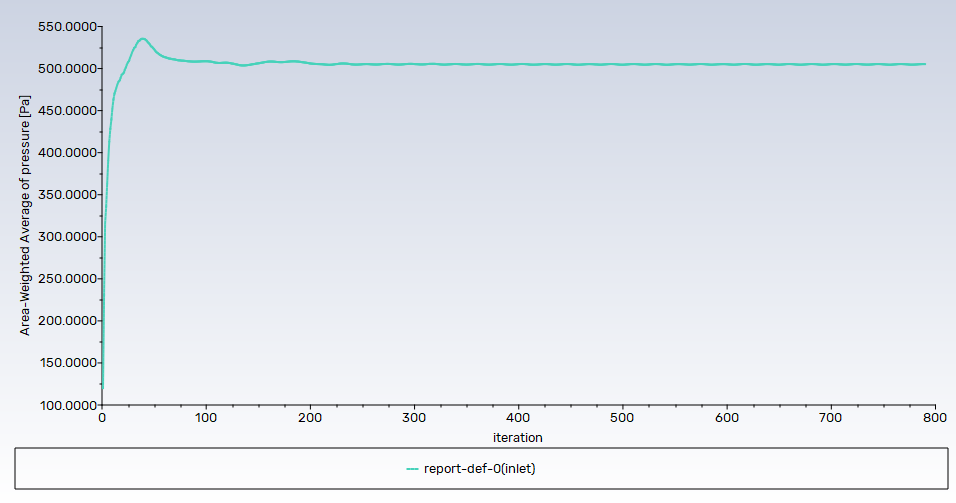
I usually check 3 different variable for convergence. First one is mass flow rate. Whether other variables converge or not, mass flow rate is always conserved in the systems. Other variables that I got convergence problem are scaled residual and result monitors. After few iterations my scaled residual oscillates. On the other hands, my pressure result is starting to become stable. There is no reverse flow in the system and I am improving the mesh quality with the fluent meshing auto node move command, but I can't understand why this problem occurs? Also when I analyze with worse or better meshes, sometimes residual graph converges in 300-400 iterations. Even though I solved the model in approximately 20 thousand iterations last, the residual graph did not converge. I don't know if the stabilization of the pressure results ,while oscillating the scaled residual, would be enough for me to accept the analysis results as correct.
Â
Â
-
-
December 28, 2023 at 1:50 pm
V.P
Ansys EmployeeHi Akin,
The pressure plot appears to have stabilized, indicating a potential convergence, although certainty cannot be confirmed without further examination.
Using this result, consider generating pressure and velocity contours and look for regions exhibiting high gradients. Try creating a new mesh with increased mesh resolution in these critical areas.
In Fluent meshing, the Body of Influence (BOI) method proves valuable for localized mesh sizing. Utilizing this technique allows you to tailor the mesh to specific regions of interest. Also, using the 'Improve volume mesh' option in Fluent Meshing after volume mesh generation can enhance the orthogonal quality of the mesh. Maintaining an orthogonal quality above 0.1 is considered a best practice, ensuring numerical stability and accuracy in the simulation results. A grid independence study will also be beneficial.
-
January 2, 2024 at 4:06 pm
Rob
Forum ModeratorThe residuals suggest you may have some transient features in the flow, so have a look at using monitor points in regions with higher gradients: surface integrals tend to mask subtle changes where a separation point or the like moves.Â
-
- The topic ‘Why does a model with bad mesh converge, but not with good mesh?’ is closed to new replies.

-
5869
-
1906
-
1420
-
1306
-
1021
© 2026 Copyright ANSYS, Inc. All rights reserved.