-
-
January 28, 2020 at 9:54 am
venugopal4048
SubscriberHello experts,
Could you tell me what are the necessary properties that required to do nonlinear analysis?
I have used young's modulus, density, yield strength, ultimate tensile strength, poisson's ratio, true stress vs plastic strain(material nonlinearity).
Is it ok? or anything else?
Thanking you
RegardsÂ
Venugopalb
-
January 28, 2020 at 10:42 am
peteroznewman
SubscriberIt is also common to have non-perfect geometry in the model. Either add a small amount of the shape of mode 1 from a Modal analysis to the initial geometry, or simply apply a tiny load to cause the geometry to not be perfectly straight.
-
January 29, 2020 at 4:26 am
venugopal4048
SubscriberThank you for your reply.
I have already included some imperfection in my model and also these material properties. The nonlinear buckling analysis does not give converged solution (Arclength method). My opinion is, there may be chances of unconverged solution due to improprer(unstructured) meshing and also improper element chosen. I need to choose proper shell element for my model. How can i choose proper element in workbench.
Give me some suggestion on mesh. my structure is ellipsoidal dome shell.
Thanking you
regards
Venugopalb
-
January 29, 2020 at 12:12 pm
peteroznewman
SubscriberIt is normal for a nonlinear buckling solution to fail to converge. If you plot the force vs displacement of the dome, if the solution got to a point where the force-displacement curve went horizontal, that is the critical buckling load.
Using the arclength method can allow the solution to go beyond the critical buckling load. Do you need to have the solution in the post buckled state where the dome has reversed its curvature? That is typically only of interest when using hyperelastic materials that can return to their original shape. It is generally not of interest when using plasticity.
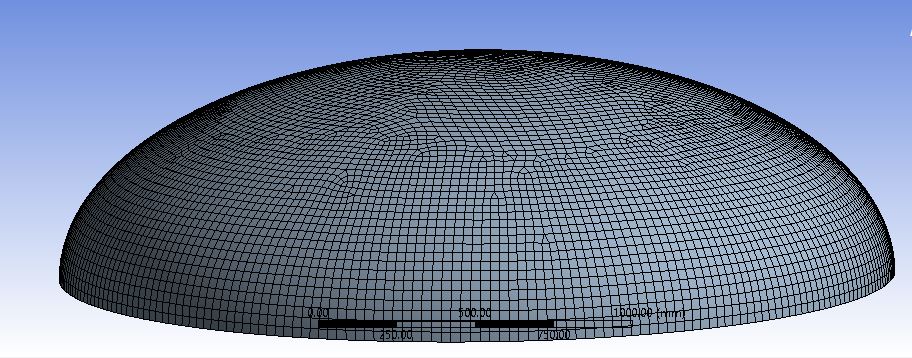
The default shell element is appropriate for this analysis. Show an image of your mesh.
-
February 4, 2020 at 4:47 am
venugopal4048
SubscriberThank you for your reply and sorry for my late response.
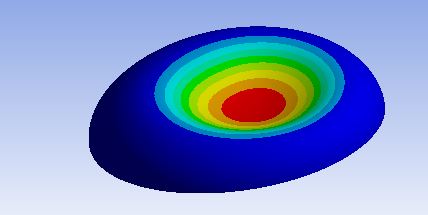
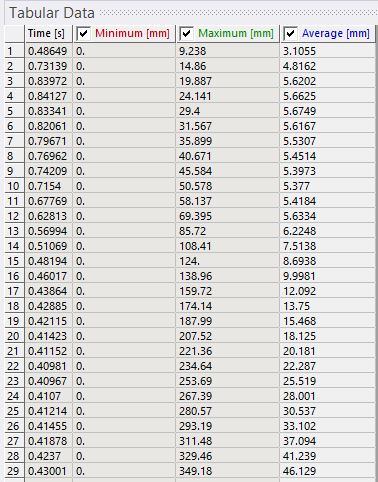
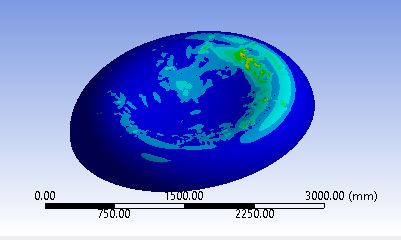
In my case I am using arc length method, but it does not show any convergence. I am interested in post buckling behavior, because after buckling some structures can retain their load carrying capacity up to some extent. So I need to know how my structure behaves after critical buckling load. I have attached some of the images here.


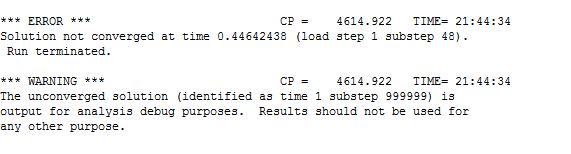
after 29th step the convergence error occurs. mostly peoples suggests that arc length will converge solution for nonlinear buckling analysis. But in my case it does not give the converged solution. why?
How to fix this solution? Here I did not added any material non linearity only 0.2 geometric imperfection.
Thanking you
regards
VenugopalbÂ
-
February 4, 2020 at 8:28 am
venugopal4048
SubscriberPeter,
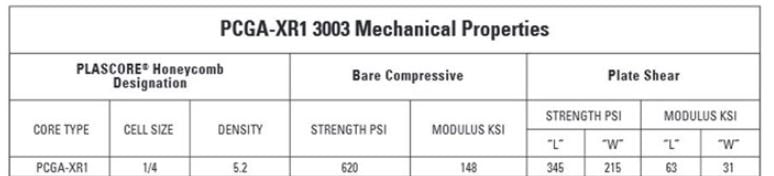
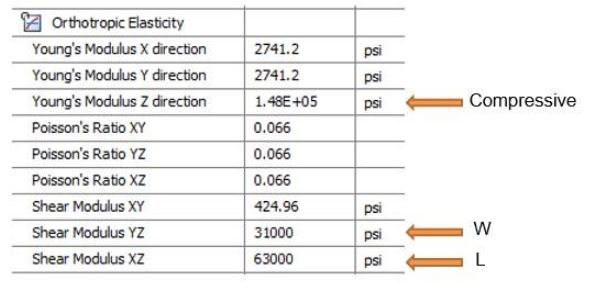
I already asked you in another post relevent post about sandwich core material properties which is attached here.


In the plascore datasheet, they did not mentioned any poisson's ratio value. You are taken it in all direction as 0.066. Then how it acts as a orthotropic material?
If the poissons ratios are equal, it will be a isotropic material. I want more clarificaton sir.
Thanking you
Venugopalb
-
February 4, 2020 at 10:38 am
peteroznewman
SubscriberOn the convergence question, it is important to look at the Solution Output text to see what was written to the file when the solver stopped. It is also important to have entered a nonzero value into the Solution Information folder for Newton-Raphson Residual Plots and so be able to look at the NR Residual Force Plot to see the location of the maximum value. Smaller, better shaped elements are often required to allow the solution to continue past the point where it stopped. Another tool that can sometimes help is to insert the command NEQIT,100 into the model. This is useful when the NR Force Convergence Plot shows that the Force line was trending toward crossing the Criteria line and looked like the lines would have crossed, except the solver ran out of allowable iterations, which is 26 by default. The NEQIT command allows it to continue iterating to a higher number.
Â
On the question of the orthotropic material, it is orthotropic because the Young's Modulus ratio between Z and X or Y is 54, which is much bigger than 1. Similarly, the Shear Modulus ratio between XZ or YZ and XY is 148 or 73, which again is much bigger than 1. The Poisson's ratio is basically zero (but you can't use zero) and has an insignificant effect on the behavior of the sandwich.
The link you provided doesn't seem to point to a relevant question.

-
February 5, 2020 at 4:11 am
venugopal4048
SubscriberSorry sir.
The relevant link is modified now. you check it.
However, you have mentioned the young's modulus ratio of z and x. In the datasheet they have given only the z direction young's modulus(1.48e5) alone. I did not find young's modulus in x and y directions. Similarly for shear stress also. could you tell me, without young's modulus in other two directions, how the poisson's ratio assumptions applicable. May be I understood it wrong. Please correct me.
-
February 5, 2020 at 4:25 am
venugopal4048
Subscriber
-
- The topic ‘What are the material properties required for nonlinear buckling analysis?’ is closed to new replies.
-
6485
-
1906
-
1458
-
1308
-
1022
© 2026 Copyright ANSYS, Inc. All rights reserved.