Hi Jess, a few quick comments and then a little bit of a detailed comments
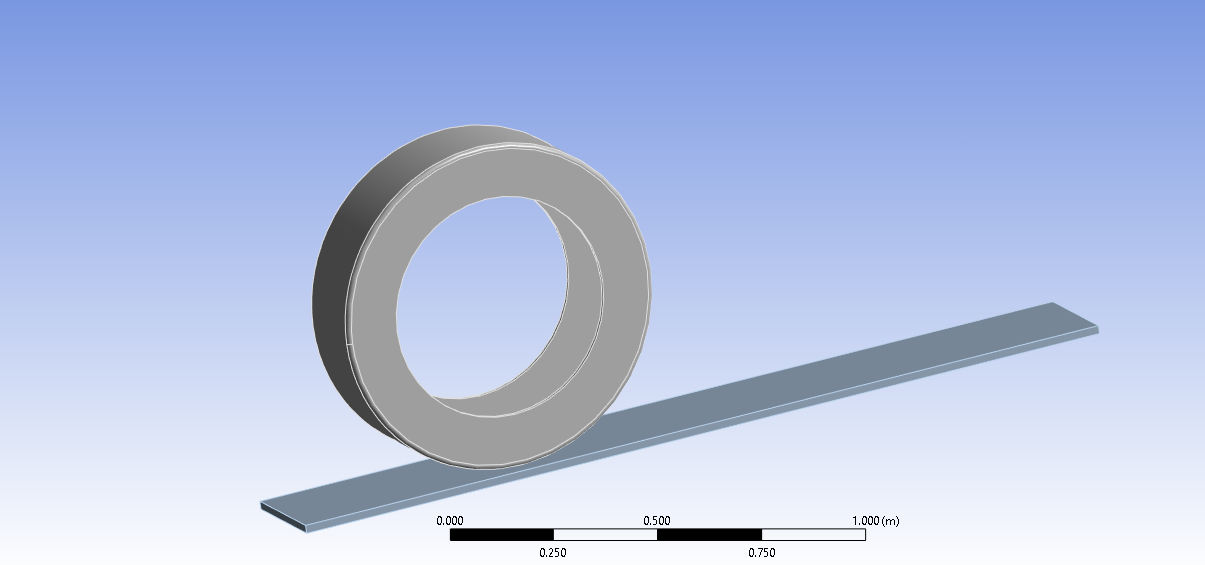
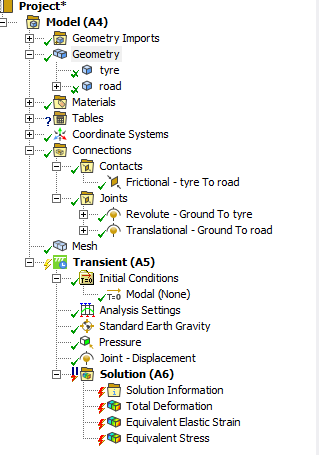
To quickly help you, avoid using joints becasue joints, depending on how you set it up, could lock certain Degree of Freedom that should’t be locked. For example, revolute joint, as you have it, would lock any DOF perpendicular to the road but in reality, wouldn’t you want the tire to have traction? The translational joint you have is also contradictory to the contact, isn’t it? contact exists so the weight of the wheel would create traction with the floor but translation joint would lock all DOF except for that one direction translation.
To give more detail, the first question I would ask is how does a tire rolling on a floor actually work. is the tire itself rotating or translation or both? In a car, where is the energy coming from that’s causing the tire to do what to cause the vehicle to move forward? Model that input energy (in the form of force/displacement/velocity/angular_velocity, etc) as a boundary condition in your model is perhaps a good way to think about it.
What about the weight of the tire/vehicle, what about the material of the tire? How do a steel tire behave relative to a rubber tire with air inside? Do you need to consider these varaibles in your modelling approach?
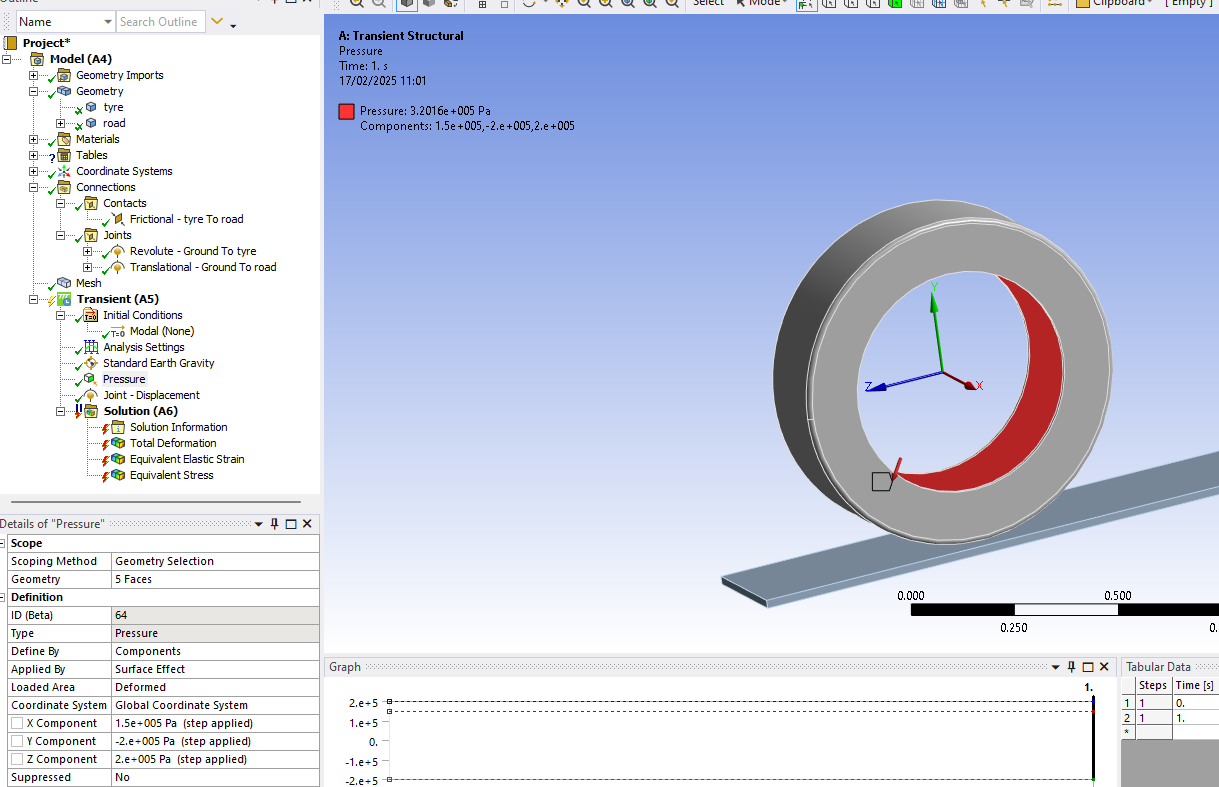
The problem gets a lot simpler if you break it down to as many questions/answers pair as possible and then start thinking about which variable is important to your problem statement. For example, if all you want is a cartoon of a tire rolling with traction, then it’s probably ok not to include a rubber tire with an inflatoin pressure within it (which can all be done inside LS-Dyna very easily).
I hope this helps you and I consider myself having spent way too much time obsessing about simulation and I still don’t consider a tire rolling a trivially simple model because there can be a lot to it.



















 You are navigating away from the AIS Discovery experience