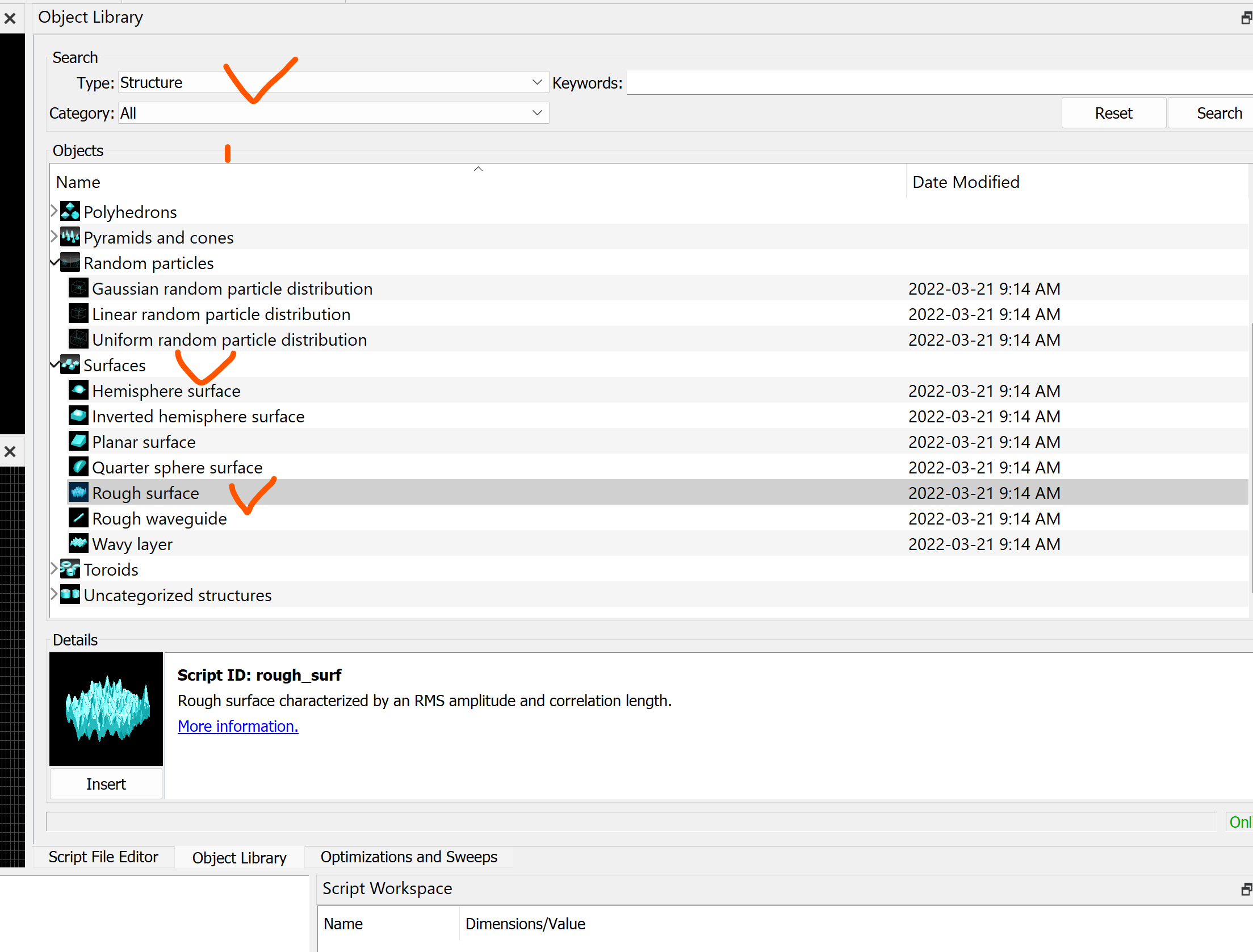
In such case, you first need to create roughness surface, which can be found in the object library:
you will need to know quatities describing the surface roughness, such as sigma and spatial correlation length. You may need to find some reference papers for more insight.
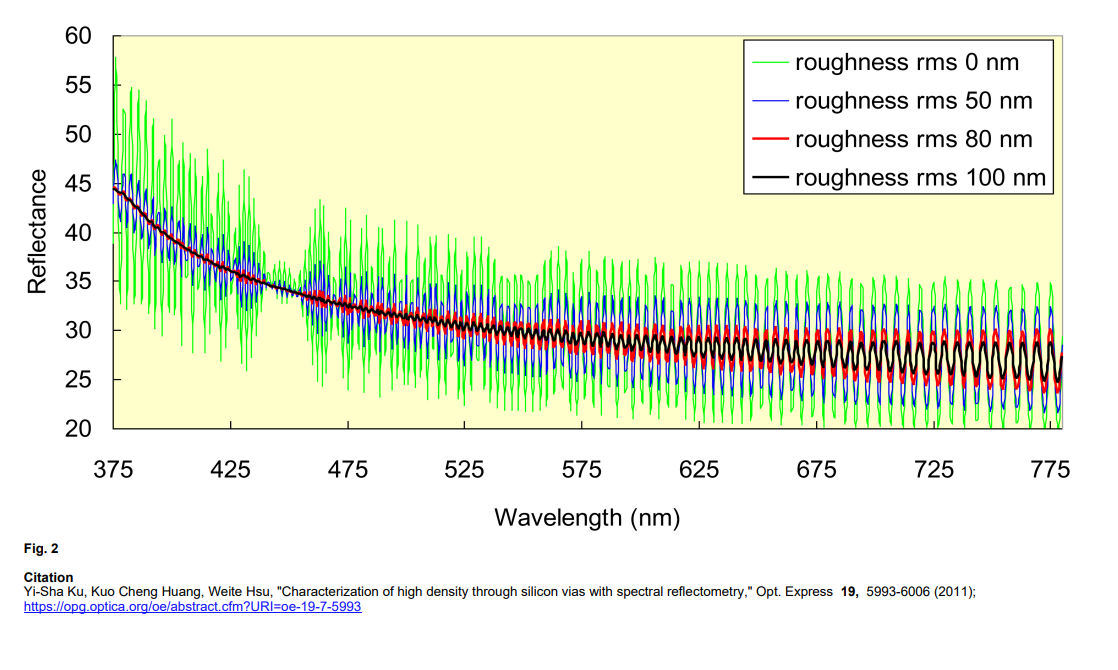
then you will need to set certain periodicity in order to measure the reflection correctly. The periodicity should be much larger than the correlation length. I would suggest at least more than 50 to 100 times larger. Then you change the radomness and get the statistical result, which might be different from the published result. eg, you should simulate at least more than 6 different randomness seeds to create different rough surfaces with the same roughness rms.
a small note that you may disregard:
I would say there might be some misconceptions in quatifying the rough surface with reflection. eg, the refectance should be in a range for given roughness rms, not simply from one simulation, or a statistcal mean of the reflection results from different simulation files with the same roughness rms but different random seeds. This is because we cannor accrately describe the surface roughness for large area. Each realization of different random seeds for the same rms is just one sample.

















 You are navigating away from the AIS Discovery experience