Ansys Assistant will be unavailable on the Learning Forum starting January 30. An upgraded version is coming soon. We apologize for any inconvenience and appreciate your patience. Stay tuned for updates.
General Mechanical

General Mechanical

Topics related to Mechanical Enterprise, Motion, Additive Print and more.

Nonlinear Isotropic Hardening Beam Deflection Yield Stress and Strain

    • lewisliu
      Subscriber

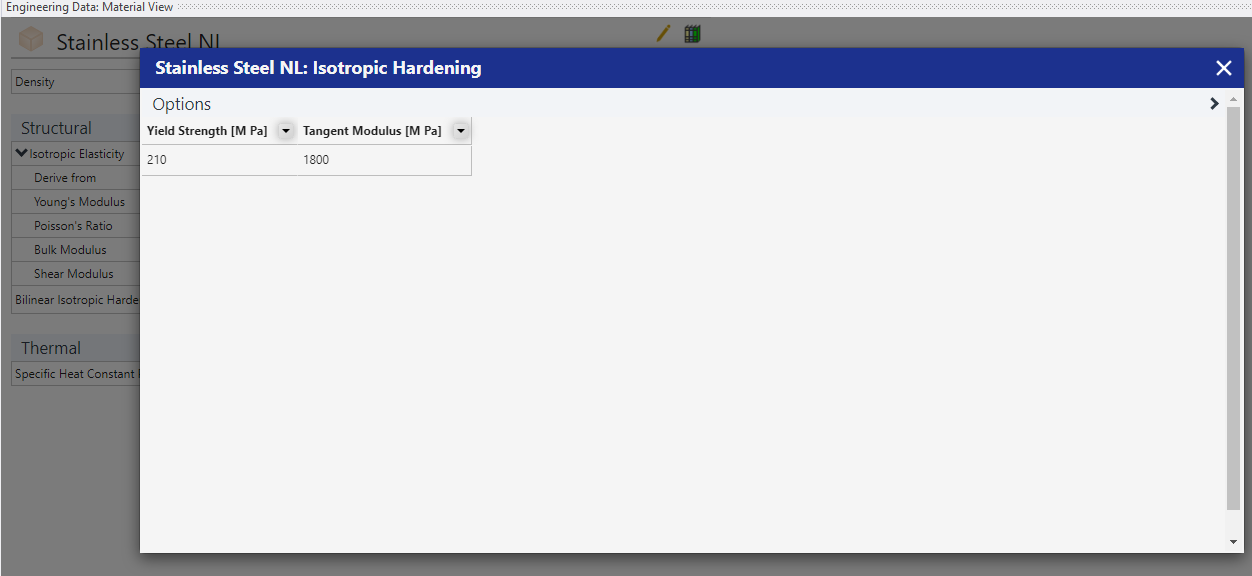
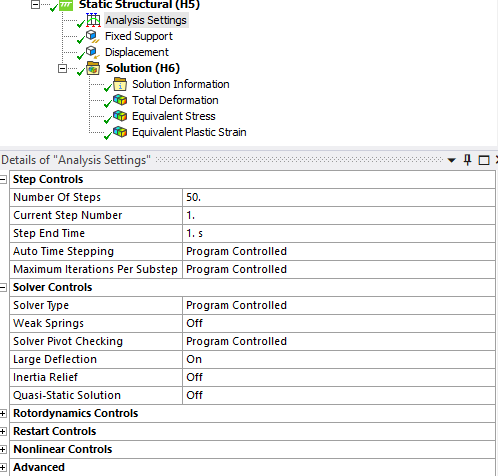
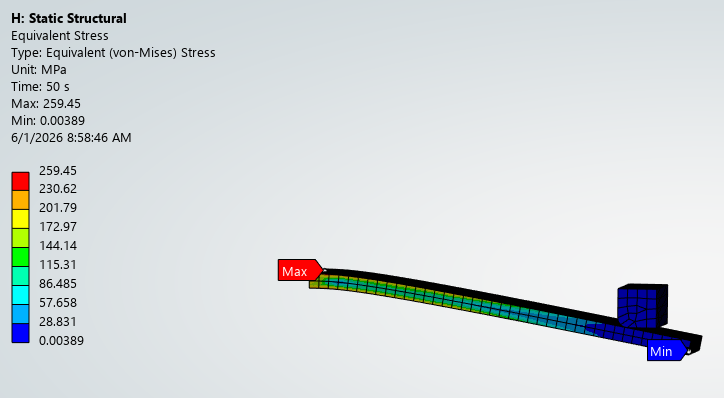
      Hi, I am running a simple cantilever beam deflection with one end of the beam fixed and the other side free. I used a 2nd block to trigger a displacement (like using finger to push the free-end of the beam). Large deflection is "ON". I have tested 2 materials so far, the Ansys built-in Stainless Steel NL and my custom added Copper C19910.


      Results and Issues:

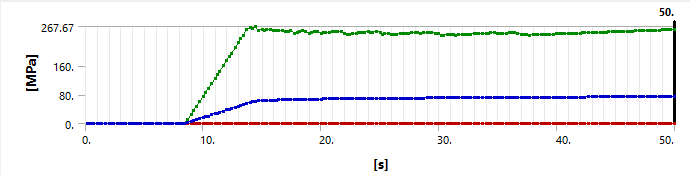
      Both materials in the results yield at a point significantly above the yield strength defined in the NL isotropic hardening data. Depending on the beam geometry, I have seen Stainless NL yield at 260MPa and 380MPa vs the 210MPa yield strength in the material data. The copper is yielding at 1600MPa vs the 1000MPa in the material data.

      The equivalent von-Mises stress curve does not show any non-linear behavior after the yield as the max stress seens to flat out.

      Any reason why they are showing a much higher yield strength in this cantilever beam study? 

      Why the results have stress flat out without any further increase as the plastic strain is still increasing?
    • peteroznewman
      Subscriber

      Hi lewislui,

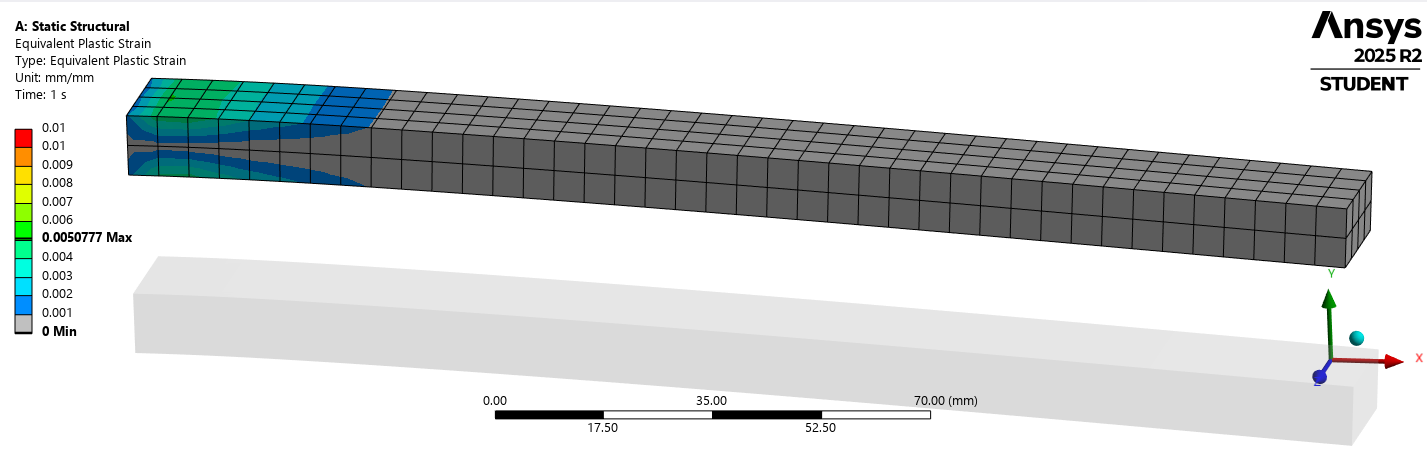
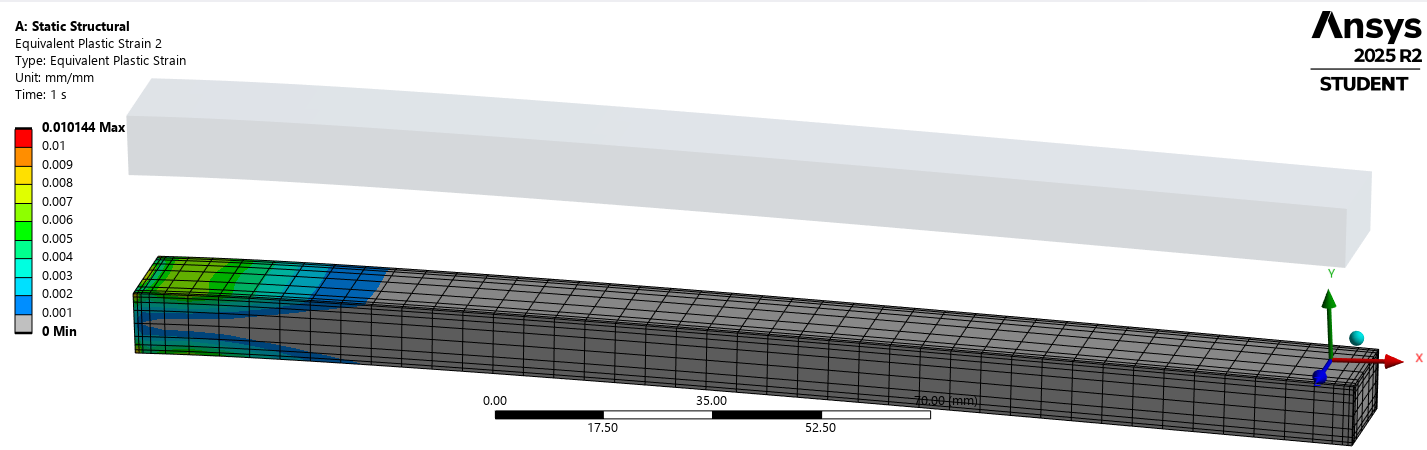
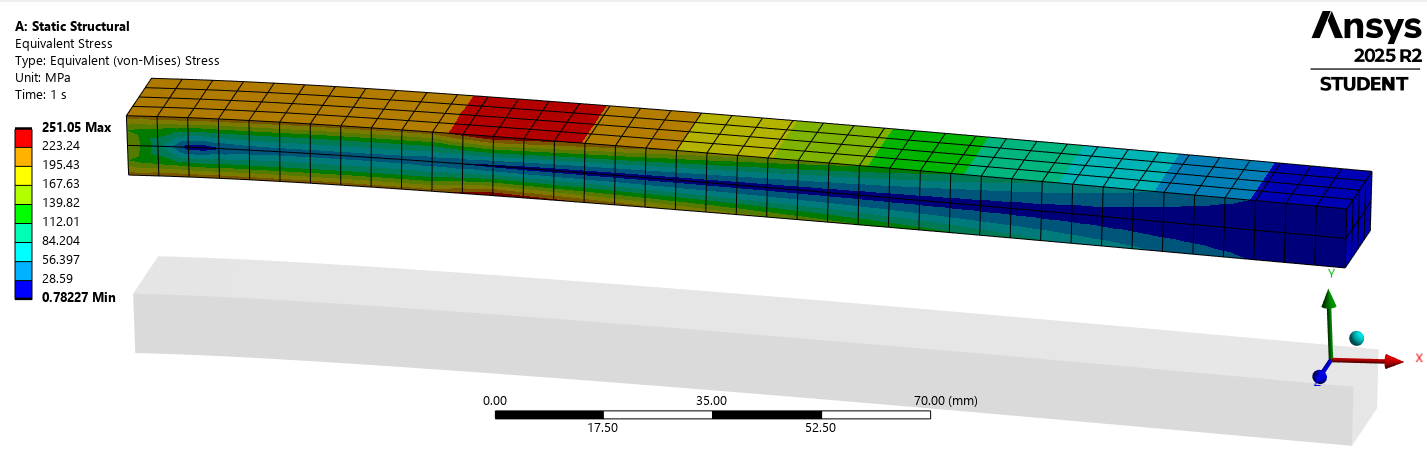
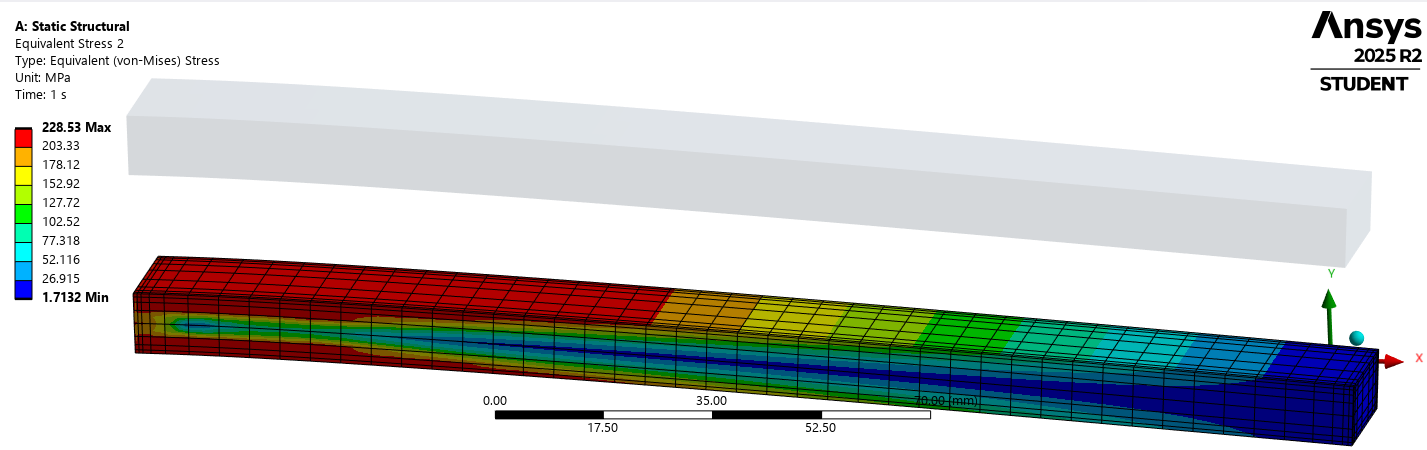
      The reason for the discrepancy is due to the mesh being way too coarse.  In the images below, the identical geometry, materials and boundary conditions are applied to each body. The material is Stainless Steel NL. The only difference is the size of the elements near the outer surface of the body.  The top body has two elements through the thickness while the bottom body has 8 element through the thickness with a Bias Factor of 4 to make the elements near the top and bottom faces much thinner than the elements near the center of the thickness.

      Notice that only half the plastic strain develops in the coase mesh because the elements are too large and the integration points are too far from the surface.  This affects the stress in the bodies as shown below.

Viewing 1 reply thread
  • You must be logged in to reply to this topic.
[bingo_chatbox]