I am currently trying to simulate light propagation thru a Mach Zehnder Interferometer (MZI) polymer based waveguide for heavy metal sensing.
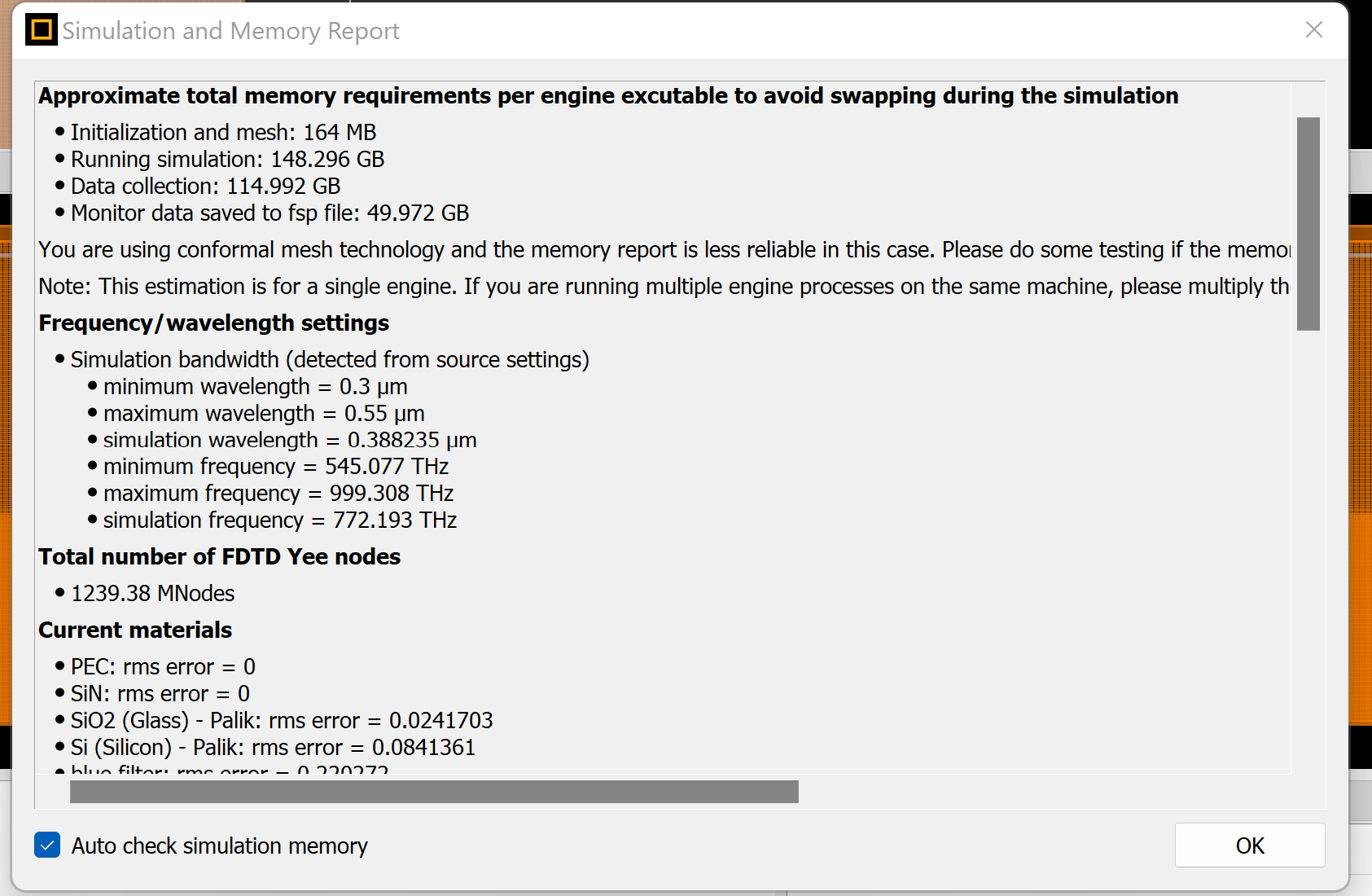
Right now, i am facing problem when trying to simulate a 5000 um x 5000 um and bigger design sizes. My workstation laptop became so laggy or at certain time, it ran out of memory and unable to complete the simulation.
My workstation laptop spec is as follows:
Lenovo P14S Gen 2
Intel i5 11th gen 1135G7 CPU (4 cores 8 threads) | 40GB DDR4 RAM | Nvidia T500 4GB DDR5 discrete graphics card
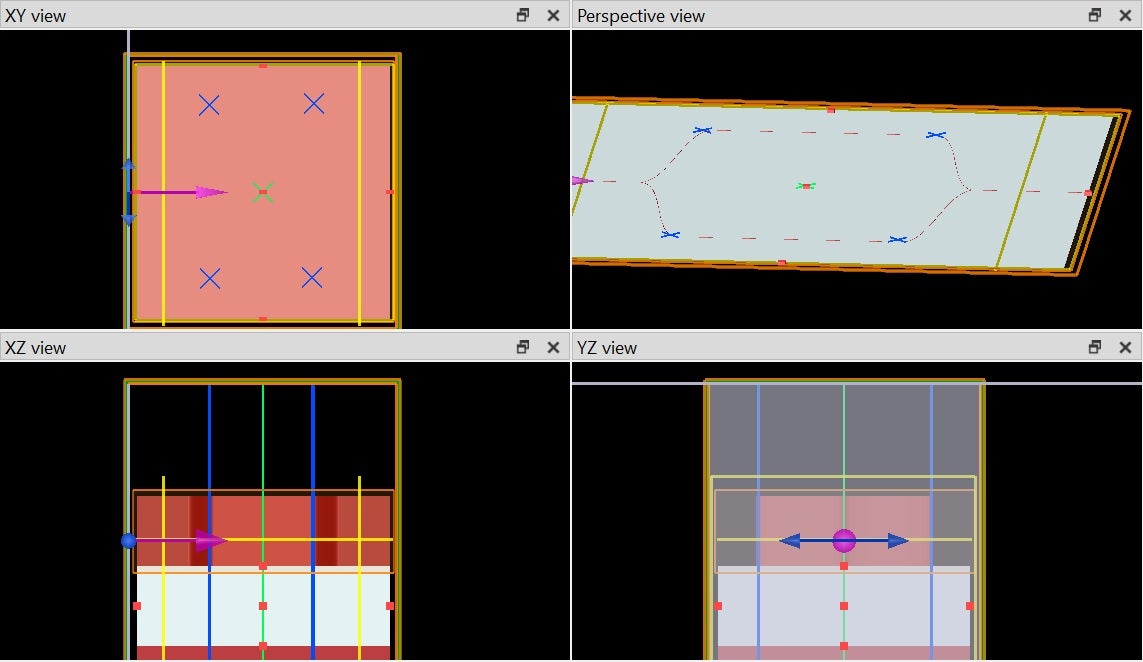
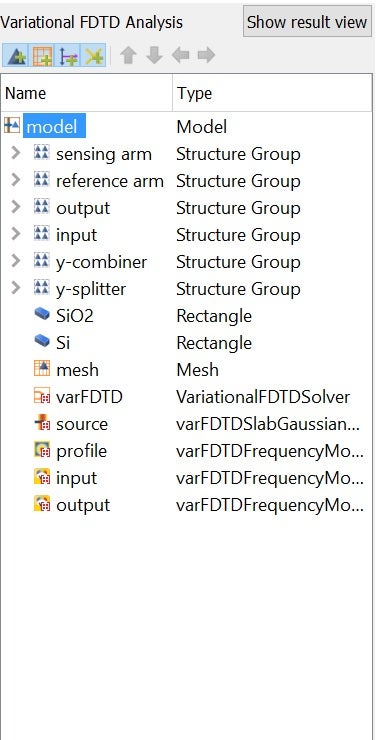
Here are some parameters that i used for the simulation:
Substrate Silicon (Si) = 5.5 um thick | Silicon Dioxide (SiO2) = 4.5 um thick
core - SU8 = 4 um width, 4 um height
cladding - air
i've tried changing the settings in varFDTD - Mesh step from 1e-6 right up to 0.1.
is there any other parameters that i should look into? or varFDTD has device size limitation for the simulation to run successfully? or i need to get a better workstation spec?
Appreciate your help. Thanks.

















 You are navigating away from the AIS Discovery experience