Ansys Assistant will be unavailable on the Learning Forum starting January 30. An upgraded version is coming soon. We apologize for any inconvenience and appreciate your patience. Stay tuned for updates.
Materials

Materials

Topics related to Granta Design and more.

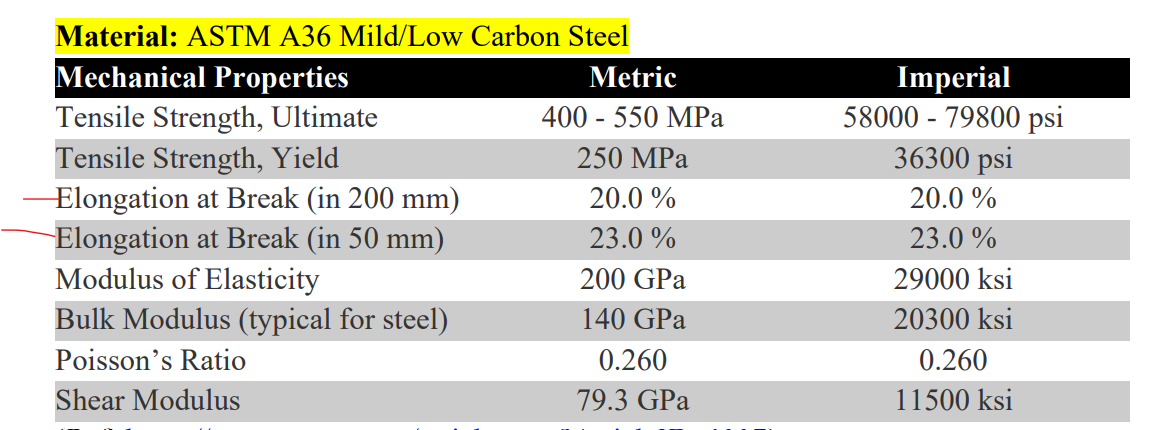
How to define below material property (Elongation at Break in 200 mm& 50 mm)?

TAGGED: 

    • g202202120
      Subscriber

    • Chris Quan
      Ansys Employee

      First of all, Elogation is an Engineering Strain. If you want to include it in material models in Engineering Data (for example, plasticity), you may need to convert it to True Strain.

      Usually, a larger or longer specimen may contain more material defects and thus is easier to break than a smaller or shorter specimen. That may explain why the elongation is lower in a 200 mm specimen than that in a 50 mm specimen. 

      If you want to include the elongation in your material properties, I would suggest you using the value at 200 mm for conservative solution.


    • g202202120
      Subscriber
      thank you Chris
    • David Mercier
      Ansys Employee

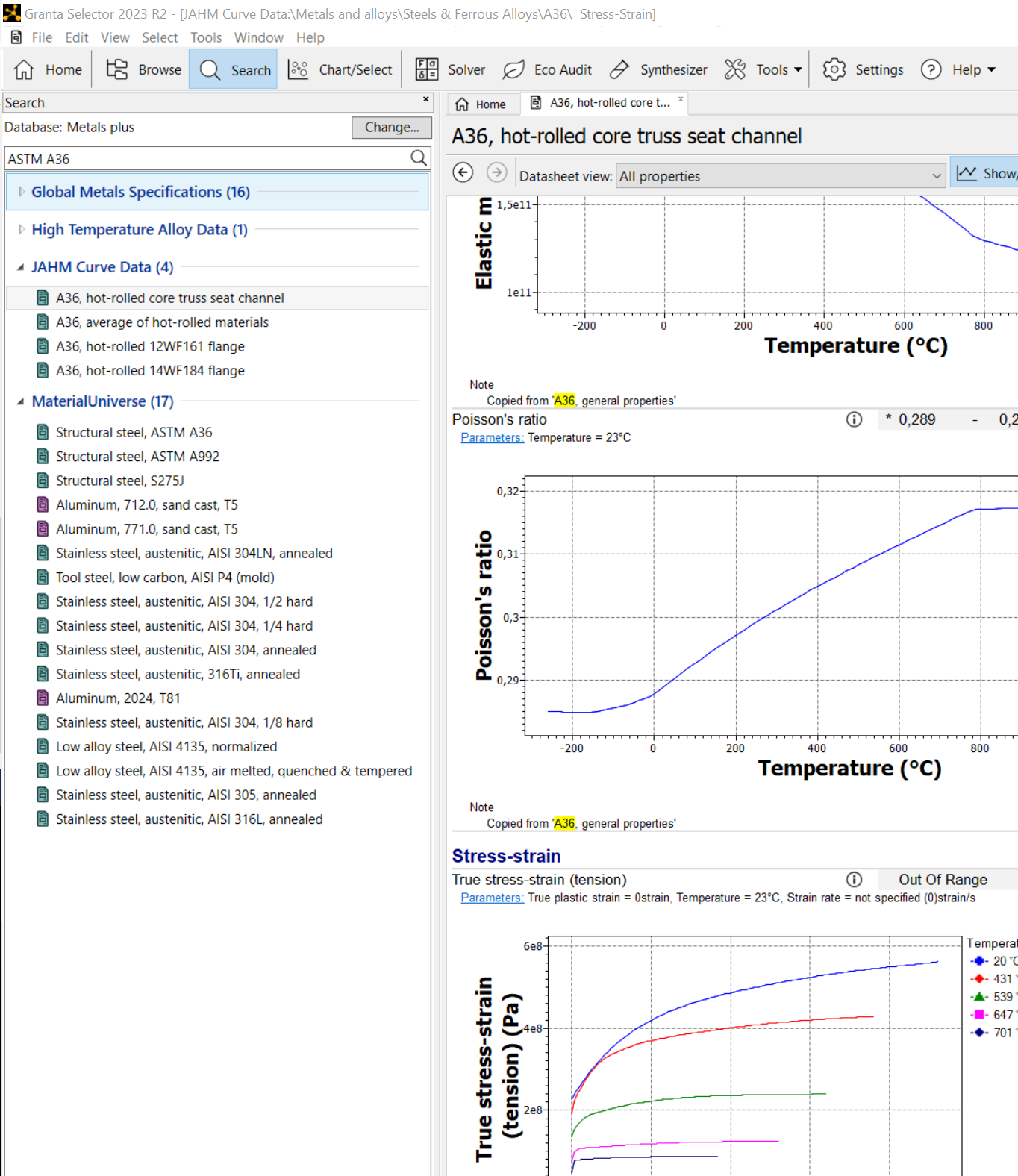
      You can have much more data in the Granta products (MaterialUniverse, Jahm databases...) related to this material if necessary. Like stress strain curves at different T, and already well formatted to be exported into Mechanical.

Viewing 3 reply threads
  • The topic ‘How to define below material property (Elongation at Break in 200 mm& 50 mm)?’ is closed to new replies.

[bingo_chatbox]