

TAGGED: pressure
-
-
November 17, 2020 at 1:45 pm
markfea
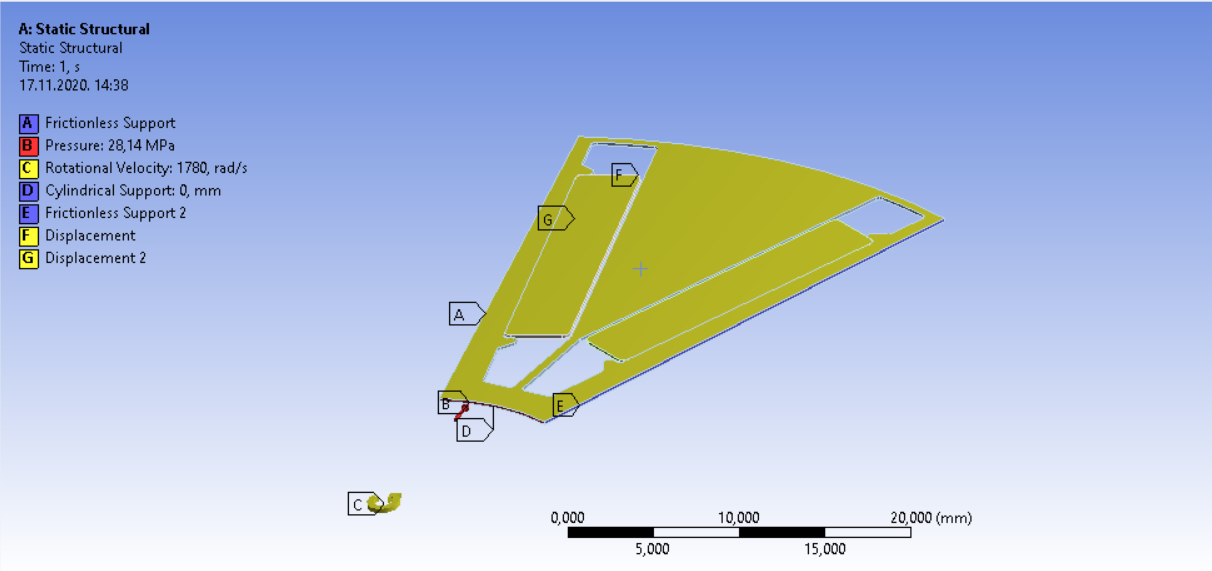
SubscriberI have 1/10 rotor segment of an IPM electric motor and I want to simulate pressure load resulting from an interference fit on the inner cylindrical surface and centrifugal force from the rotor rotating with 18000 rpm.
This is how I've set up the model:
November 23, 2020 at 10:44 amRahul Kumbhar
Ansys EmployeeYou should have constraint in radial direction as some place to avoid rigid motion in that direction. May be you can constraint outer surface in radial direction. Since the magnets are glued to the rotor, bonded contacts are correct choice.nNovember 25, 2020 at 8:00 pmSubscriberThat would solve the problem, but it doesn't make sense since the outer surface has to be able to deform radially. Thanks for the contacts advice. nNovember 25, 2020 at 9:47 pmpeteroznewman
SubscribernI often see the Warning on properly constrained models. You can ignore the warning if the results look reasonable.nThe two Frictionless Supports on the radial cut faces create an overall radial constraint on the whole sector because they have an angle between them.nViewing 3 reply threads- The topic ‘How to apply pressure and rotational velocity on a rotor segment?’ is closed to new replies.
Innovation Space Trending discussions
 Top Contributors
-
peteroznewman
 6535
6535 -
scabo
 1906
1906 -
Dennis Chen
 1463
1463 -
javat33489
 1311
1311 -
Shyam Prasad V Atri
1022
Top Rated Tags
© 2026 Copyright ANSYS, Inc. All rights reserved.
Ansys does not support the usage of unauthorized Ansys software. Please visit www.ansys.com to obtain an official distribution.
-


The Ansys Learning Forum is a public forum. You are prohibited from providing (i) information that is confidential to You, your employer, or any third party, (ii) Personal Data or individually identifiable health information, (iii) any information that is U.S. Government Classified, Controlled Unclassified Information, International Traffic in Arms Regulators (ITAR) or Export Administration Regulators (EAR) controlled or otherwise have been determined by the United States Government or by a foreign government to require protection against unauthorized disclosure for reasons of national security, or (iv) topics or information restricted by the People's Republic of China data protection and privacy laws.

 You are navigating away from the AIS Discovery experience