TAGGED: #fluent-#ansys, #fluent-#cfd-#ansys, cfd-post, cfd-udf-fleunt
-
-
August 17, 2022 at 9:30 pm
Shubham Sathe
SubscriberHello,
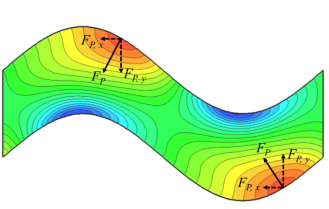
I am simulating an airflow in the wavy channel. I am trying to find the pressure (from) drag along the wall. As seen from the image attached, I am interested in finding Fp ( pressure force along the wall) Which is normal to the wave surface. Further, I want to decompose this force and get its x-component(Fpx).
I am doing a 3D simulation in Ansys fluent. How do I get this pressure force, which is a normal pressure force vector to the wavy surface? Is there a way to get this directly in the fluent? Can someone help me with this?
Thanks in Advance,
Shubham -
August 18, 2022 at 2:02 pm
Danica
Ansys EmployeeHi, You can use a force report to investigate the pressure and pressure coefficients for a specified vector.
Have a look at:Â 36.5. Forces on Boundaries (ansys.com)
and 44.20. Reports Task Page (ansys.com)
However, these are for a whole surface not a particular facet
-
August 18, 2022 at 2:32 pm
Shubham Sathe
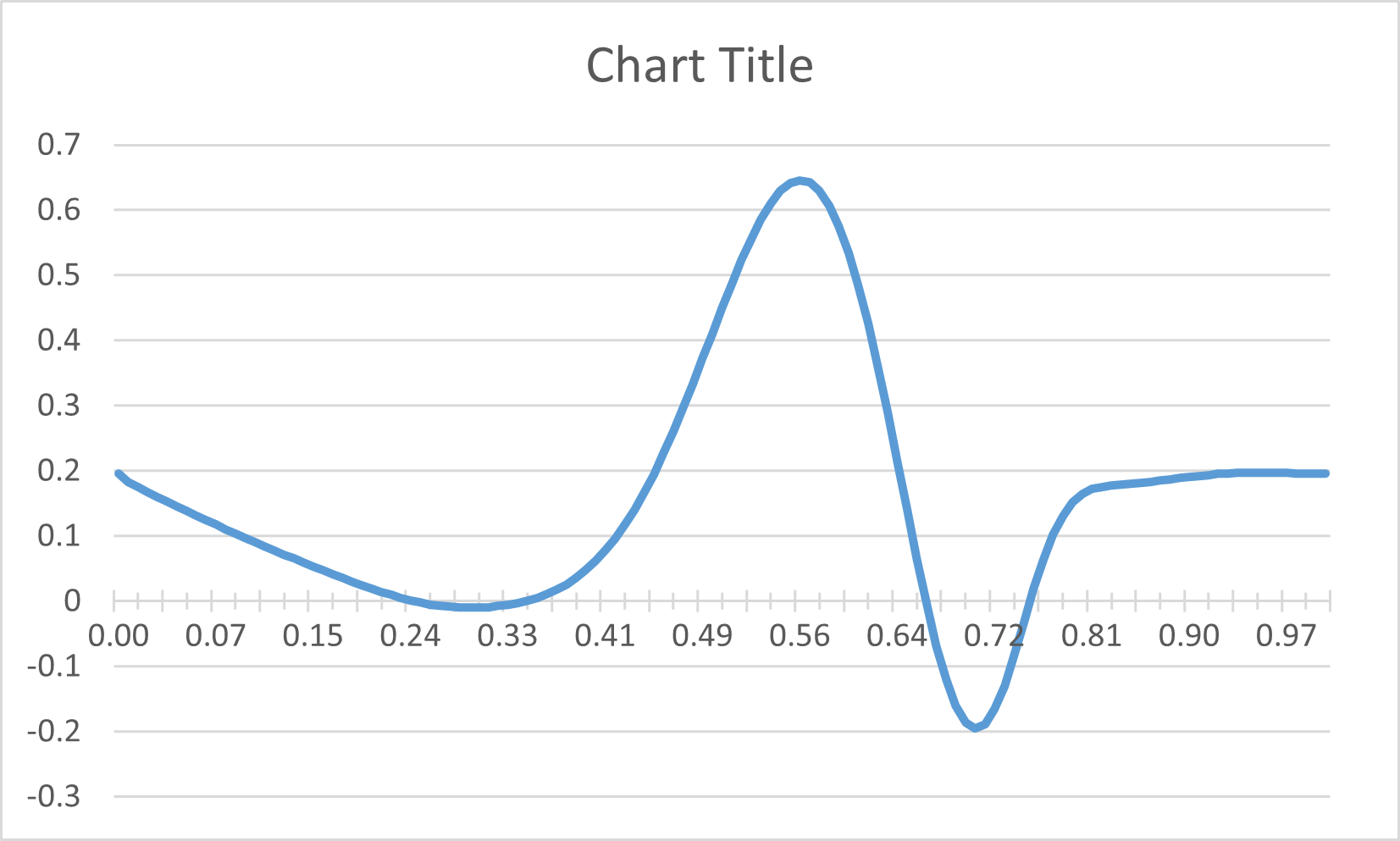
SubscriberThank you so much for the response. Maybe I framed the question wrong. I am looking to get pressure force at multiple locations on the wavy wall. I have created an iso-surface; at half the height of the wavy wall. I need to plot the scalar value of the pressure force along this iso-surface.Â
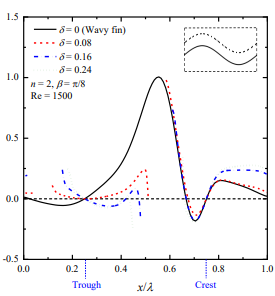
So far, I have tried to plot this by using : Pressure* (x-facet-area/((x-facet-a ^2)+(y-facet-a^2)^0.5)). Further, I decomposed this to get the x component. The profile of this plot is similar to the one I am comparing it with, but the scale is way off. The excel graph in the image attached is my plot and I am comparing it with the dark black line in the other plot.Â
Can someone please help me? I have been struggling with this plot for months.
-
August 18, 2022 at 2:55 pm
Danica
Ansys EmployeeThe profile looks very close, is the experimental data definitely pressure force or just pressure? Also might be worth looking at your mesh for issues and double checking boundary conditions.
-
August 18, 2022 at 3:04 pm
Shubham Sathe
SubscriberThank you for the response. I have validated the model and all results match the results that I am comparing with, except this plot. So, I am pretty confident that my boundary conditions and mesh are correct. Also, this is computational data, the person used Ansys 17 to get the results. It's the pressure force, as I need its x-component and pressure being a scalar quantity, it cannot be decomposed.Â
Is there any other way to get the pressure force along the wave wall? what am I doing wrong?
-
August 19, 2022 at 2:32 pm
Rob
Forum ModeratorI assume by Ansys 17 you mean Fluent? Otherwise check you're comparing like with like.Â
-
August 19, 2022 at 2:54 pm
Shubham Sathe
SubscriberThank you for the response. Yes, I meant Ansys Fluent 17.Â
Â
-
August 19, 2022 at 3:01 pm
Rob
Forum ModeratorIf it's the same model, with the same post processing I'd expect about the same answer. Are you sure you're creating the same report?Â
-
August 19, 2022 at 3:05 pm
Shubham Sathe
SubscriberI am trying to validate the plot. I am not sure how the original graph was plotted. I am sure the model is the same. I managed to get the profile by: Pressure* (x-facet-area/((x-facet-a ^2)+(y-facet-a^2)^0.5)). Is there any other way to get the pressure force? Also, is this the approach right?Â
-
August 22, 2022 at 6:07 am
DrAmine
Ansys EmployeeÂ
You have the face area vector at the wall then it is easy to create a custom vector for the pressure vector pointing out of the wall :)
Â
Â
-
August 22, 2022 at 10:54 pm
Shubham Sathe
SubscriberHello,
Thank you so much for the response. How do I get this face area vector? Do I have to create a UDF for it? Or is there any other way to get it? Once, I get this area vector, multiplying it with pressure will give me the pressure force right?Â
Also, because we are multiplying pressure and facet area to get the pressure force, won't this pressure force be mesh-dependent? Looking forward to hearing from you.Â
Thanks,
Shubham
Â
-
August 23, 2022 at 5:54 am
DrAmine
Ansys EmployeeThe face area vector components are available on externa boundaries for post-processing: you do just need to use them.
The force will for sure depend on your discreization of the are but I assume you have done a mesh sensitvity and the wall forces are not variying anymore (a smaller area will have have a smaller pressure force contribution compared to a larger "meshed" area).
-
- The topic ‘How do I get the pressure force vector which is normal to the surface?’ is closed to new replies.

-
6369
-
1906
-
1457
-
1308
-
1022
© 2026 Copyright ANSYS, Inc. All rights reserved.