-
-
December 16, 2021 at 10:56 am
Yahyaalkaisi
SubscriberHello,
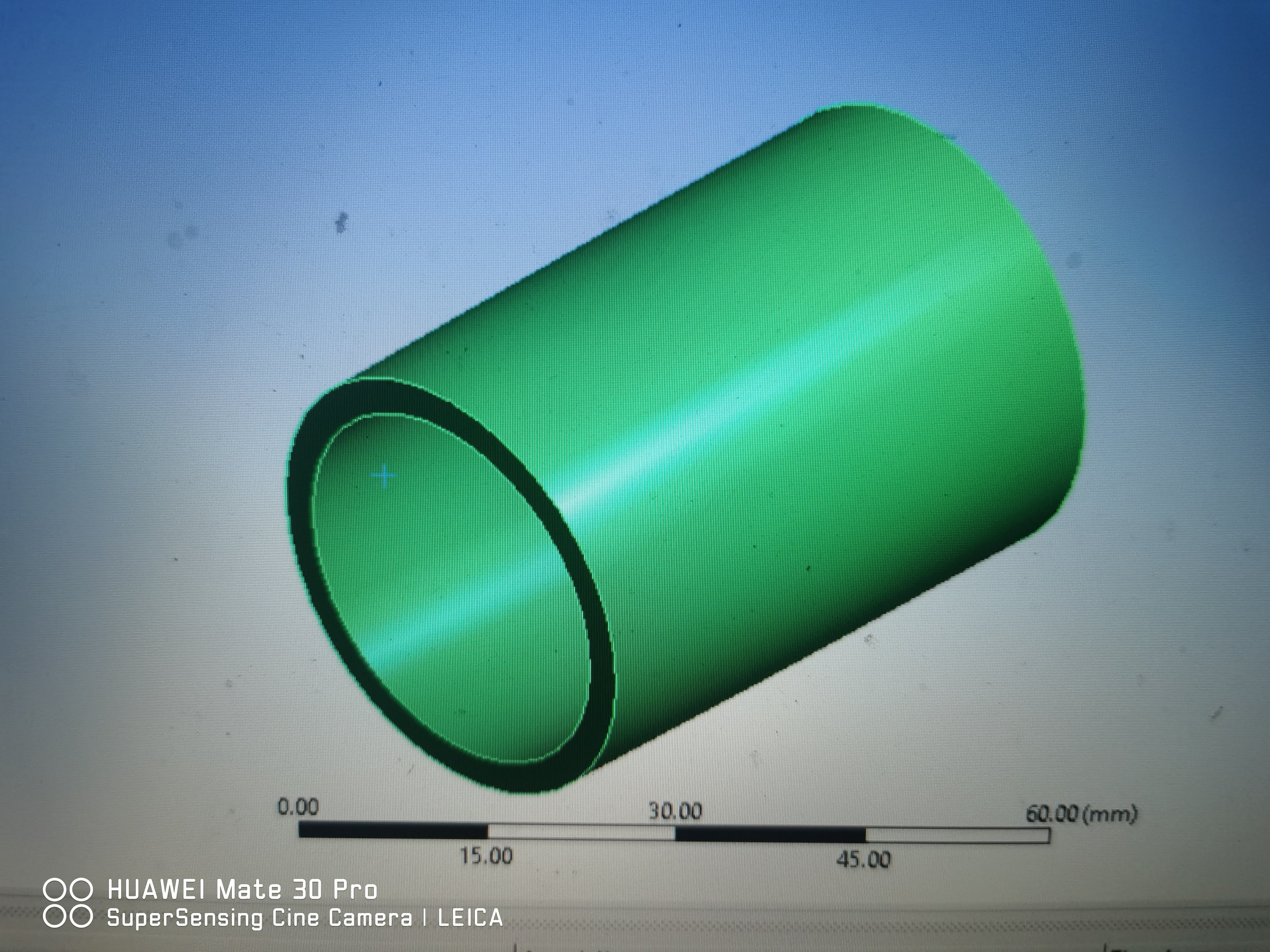
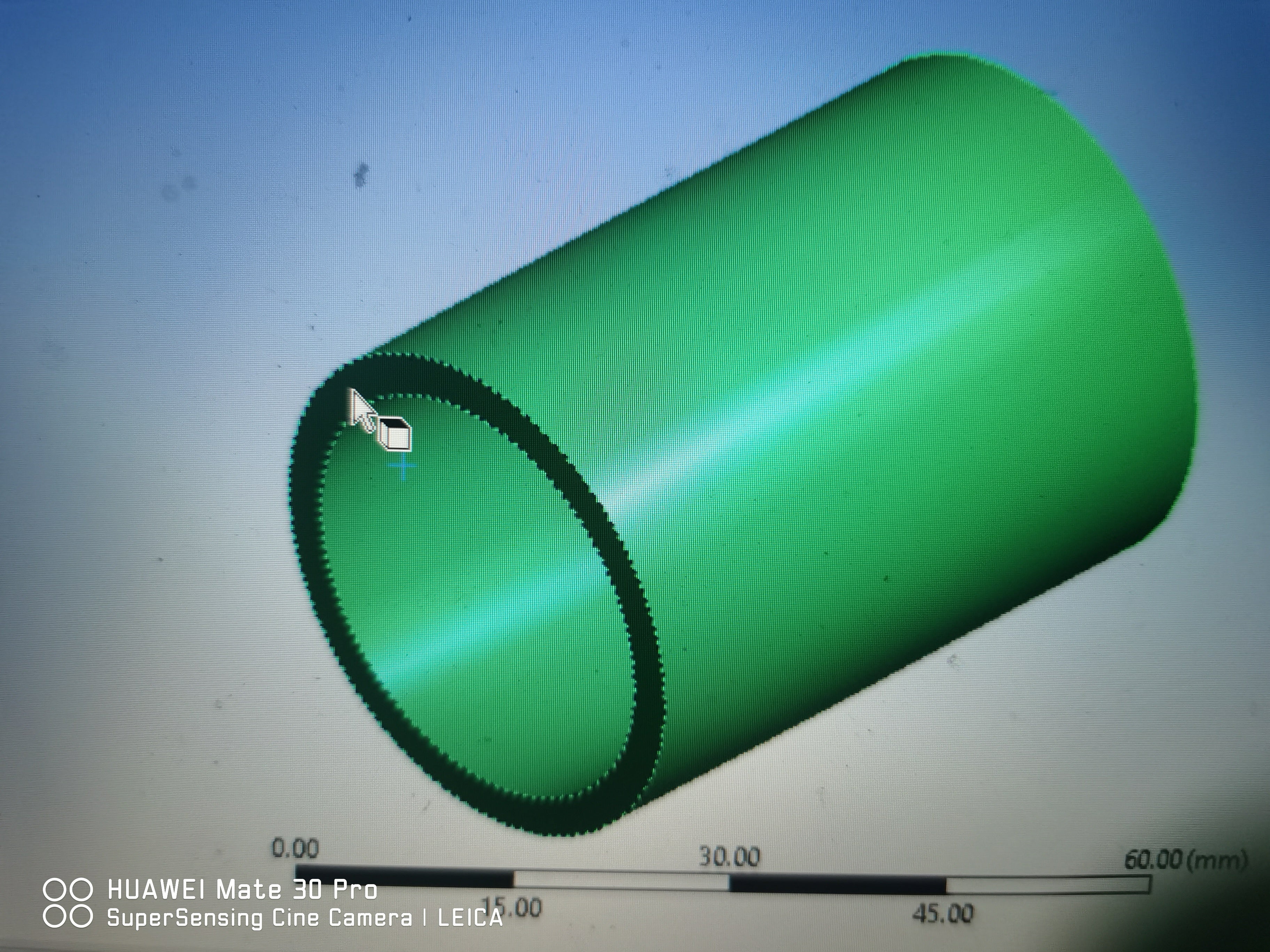
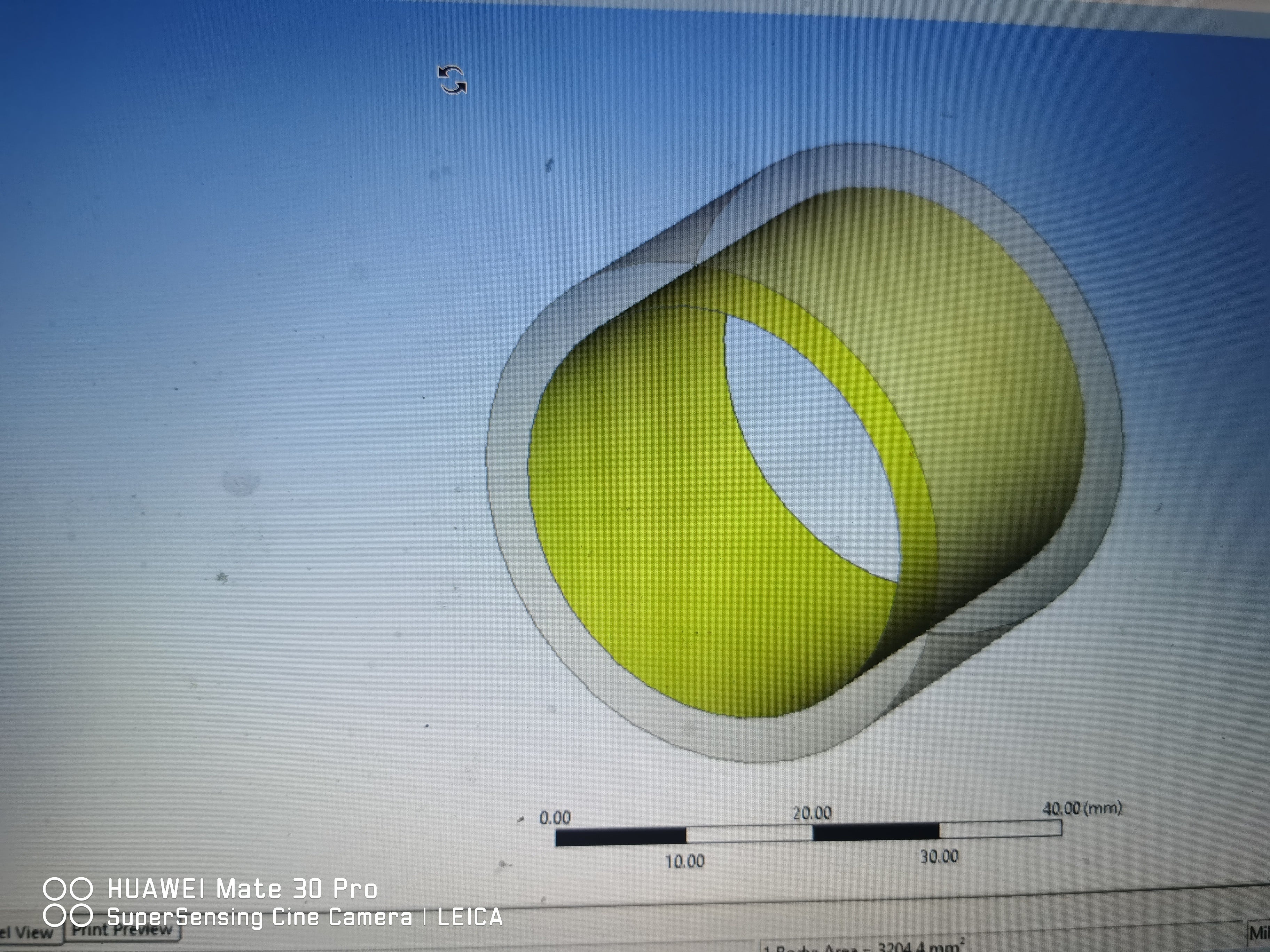
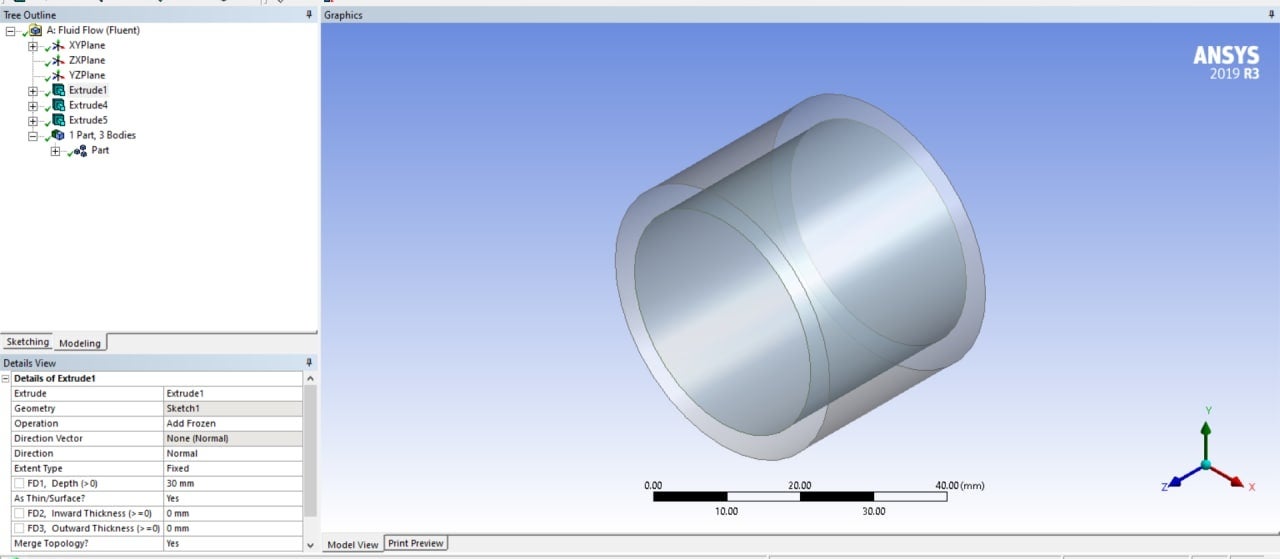
I have evacuated tube solar collector . The evacuated tube consists of two tubes, one external and the other internal. The tubes are made of borosilicate. The first tube is transparent, while the second tube is covered with a solar absorbent material.
There is a space between the two tubes to avoid wasting the energy gained in the second tube.
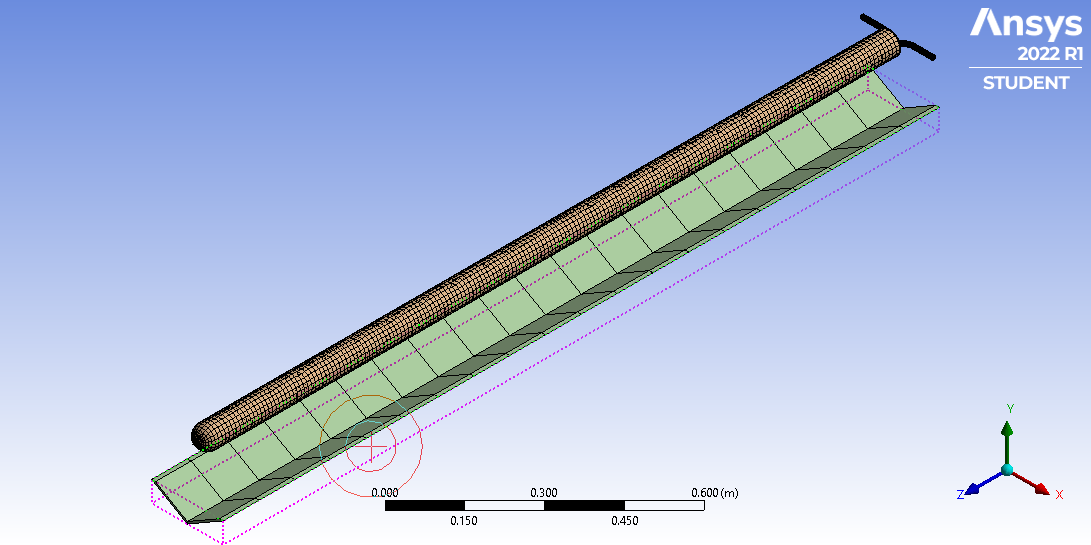
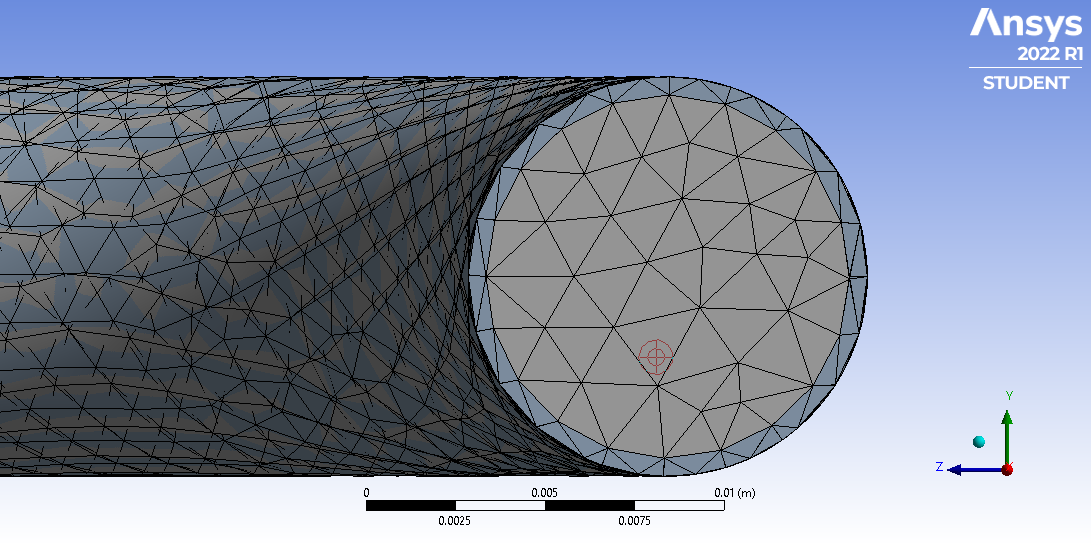
How we will apply a mesh to the region between two tube that is a vacuum. how to model thermal radiation in ANSYS. if temperature at a surface is 500 degree celcius and the other surface is at 20 degree. there is a vacuum between two surfaces . how we will mesh the region between two boundaries
December 16, 2021 at 11:02 amYahyaalkaisi
SubscriberDecember 16, 2021 at 2:19 pmpeteroznewman
SubscriberI would guess that there is no need for a mesh where there is a vacuum. There is nothing that needs calculating in the volume that is the vacuum.
December 17, 2021 at 2:11 pmYahyaalkaisi
Subscriberthanks for your reply
The vacuum isolates the heat produced in the inner tube from the outer tube. The outer tube stays cool while the inner tube reaches 150┬░C.
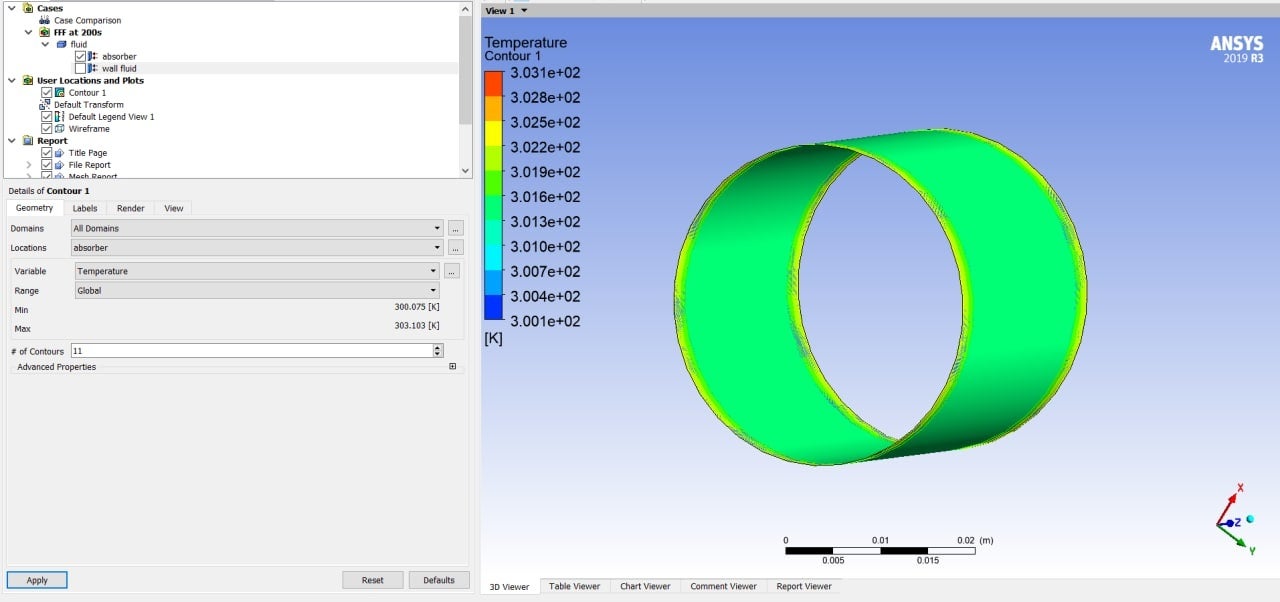
In the results the temperature of the two tubes was equal so I asked. Is there any advice to make this vacuum?
December 17, 2021 at 4:57 pmpeteroznewman
SubscriberIf it wasn't a vacuum, but filled with air, then you would need to mesh the air so that it would conduct heat from the inner to the outer.
But since it's a vacuum, there is no conduction except at each end of the tube. The thermal radiation is what you are interested in.
-
May 15, 2023 at 12:31 pm
sumeet94
SubscriberSir, If this annulus domain is filled with air, and after initialization, this domain pressure is patched to a value of 0.001 millibar (approx. vacuum pressure) in the Patch tab, then it will consider as vacuum domain or not? Â
Â
-
May 15, 2023 at 3:05 pm
peteroznewman
SubscriberSumeet94, I was describing how to model the heat transfer using the Mechanical solver.
When you say "Patch" I recognize you are describing the Fluent solver which can also solve for heat transfer. Patching implies there are cells to represent the air, even at a low pressure, but I was saying that in the Mechanical solver, we don't need to mesh the air.
-
December 17, 2021 at 8:28 pmDecember 18, 2021 at 12:51 ampeteroznewman
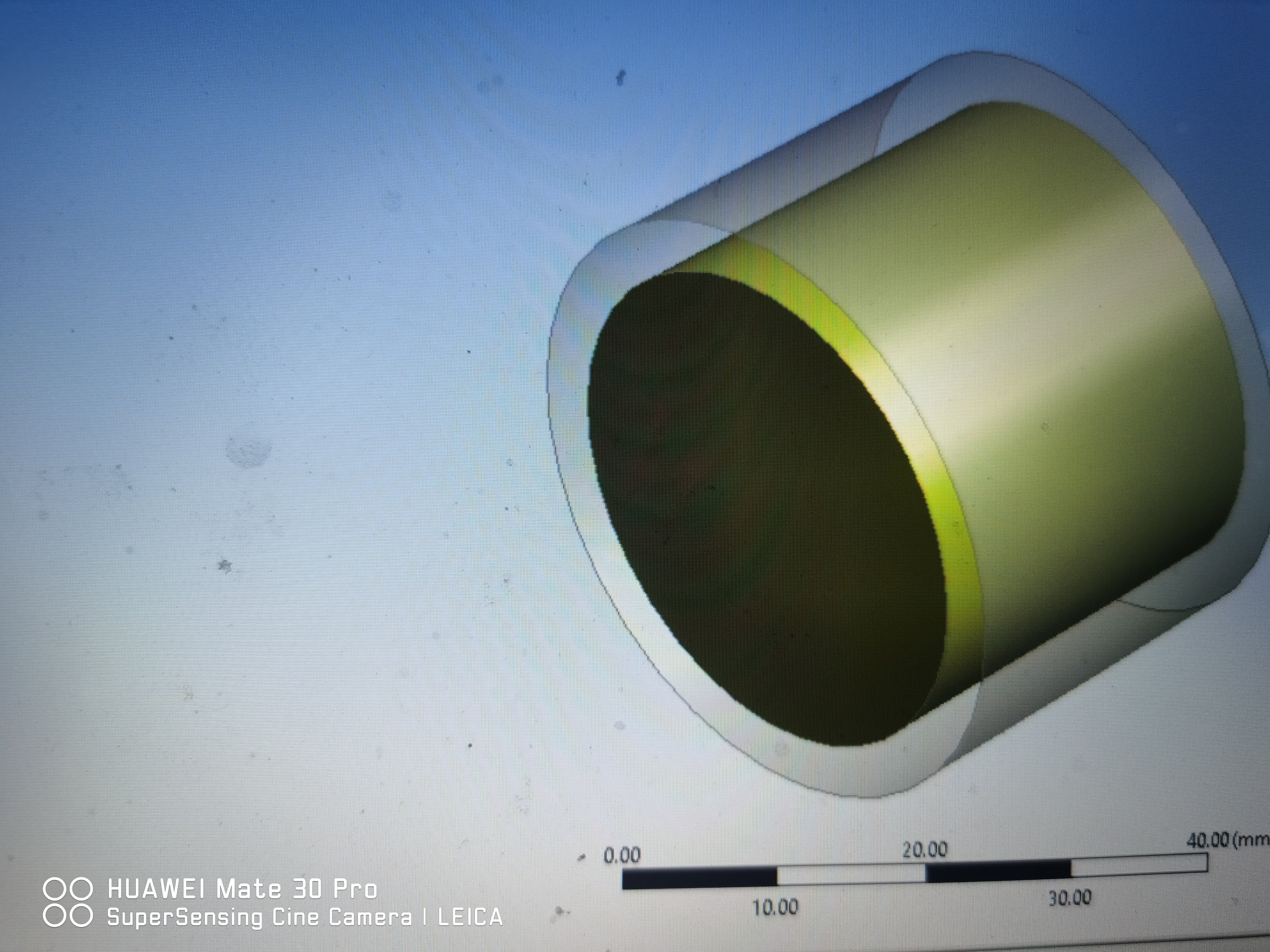
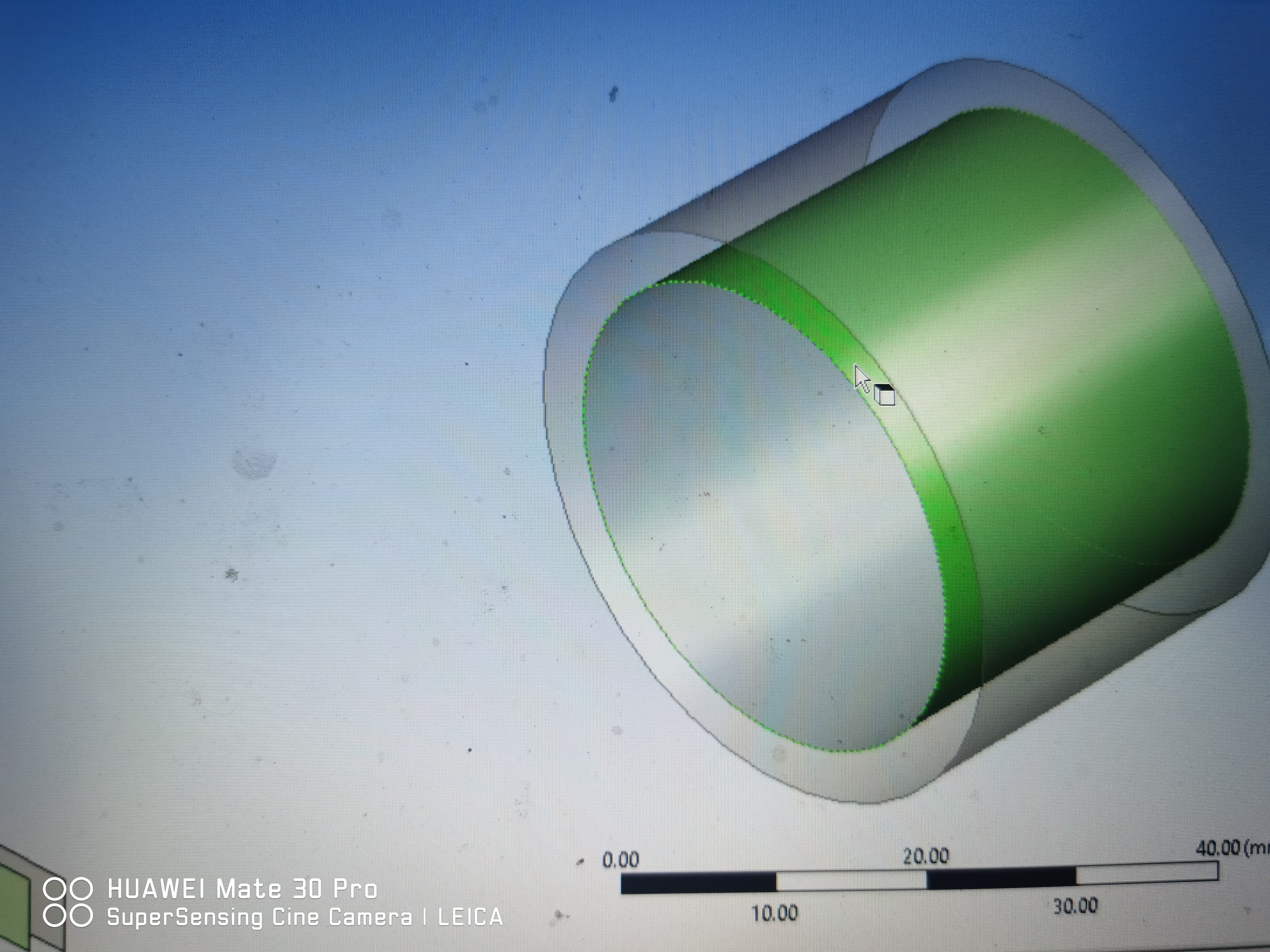
SubscriberIn SpaceClaim, on the Design tab, use the Select button and click on the inner face of the tube, hold the Ctrl key down and click on the outer face of the tube. Keyboard Ctrl-C and then Ctrl-V to execute a Copy/Paste. Now you will have two surfaces. Delete the solid.
December 18, 2021 at 6:52 pmDecember 18, 2021 at 10:26 pmpeteroznewman
SubscriberPlease use Windows Snipping Tool or the new Snip & Sketch to get screen images to paste into your replies. The cell phone jpg images take a long time to download because they have way too many pixels, most of which are wasted.

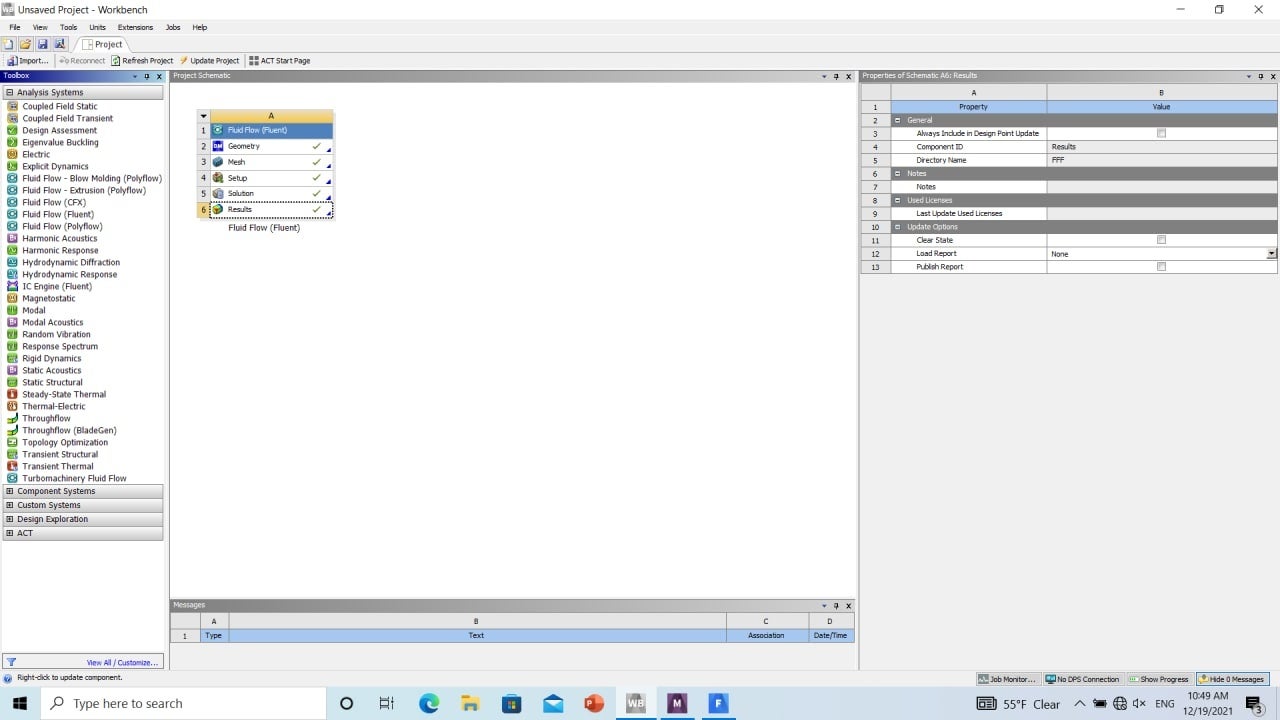
Do you have Structural solvers like Steady State Thermal analysis or only Fluent?
What version of ANSYS are you using?
December 19, 2021 at 7:55 amDecember 19, 2021 at 7:56 amYahyaalkaisi
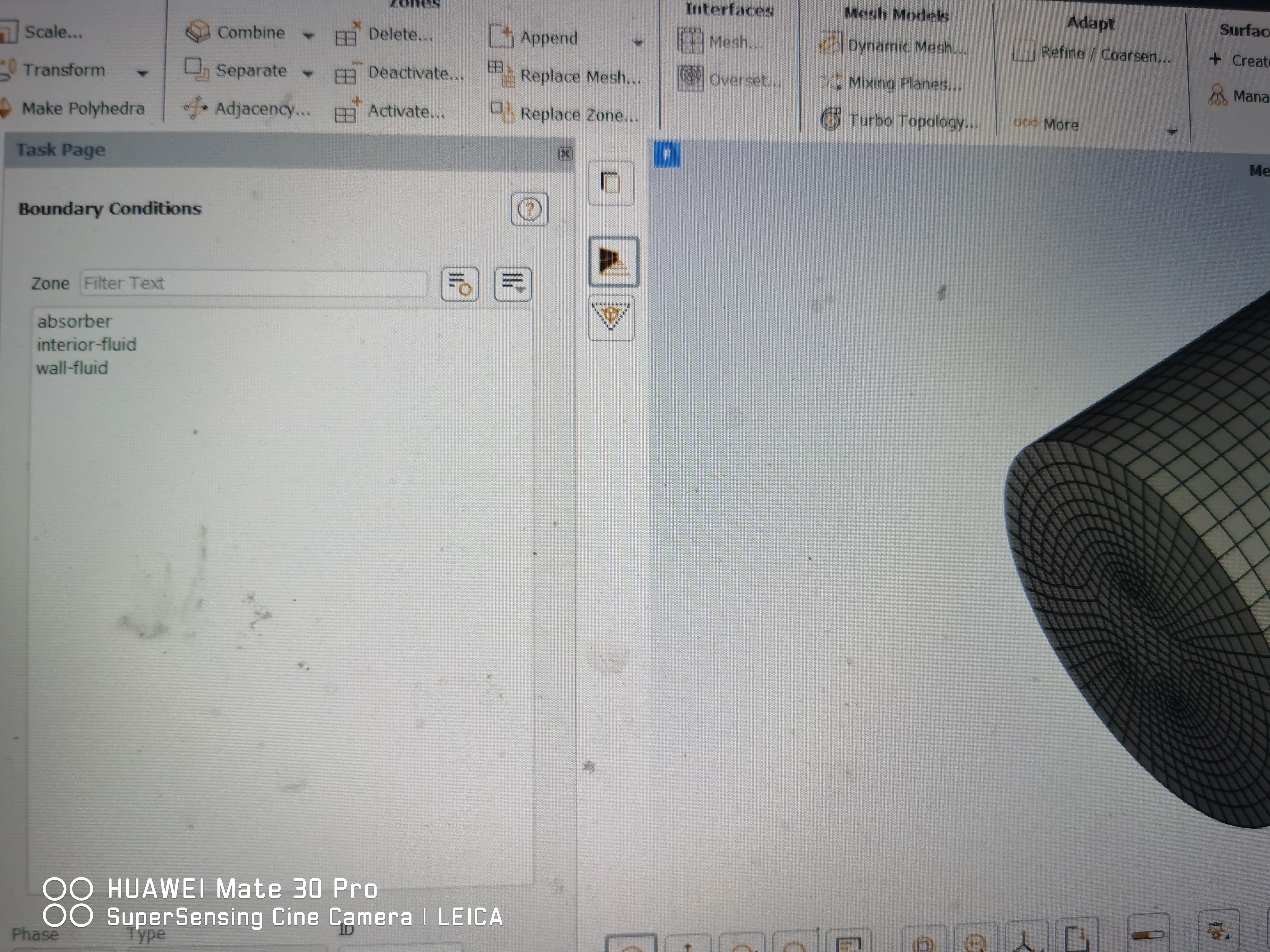
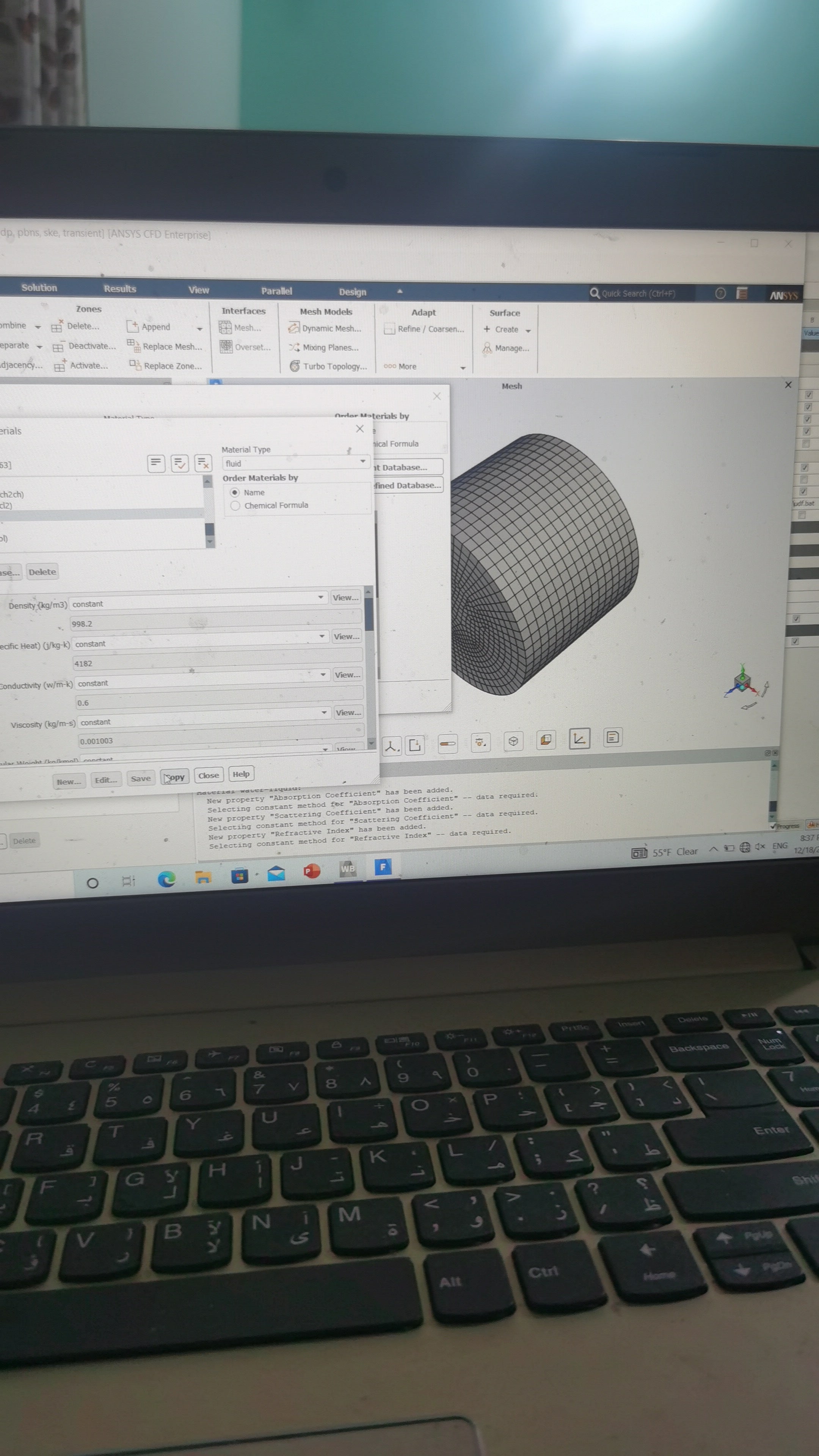
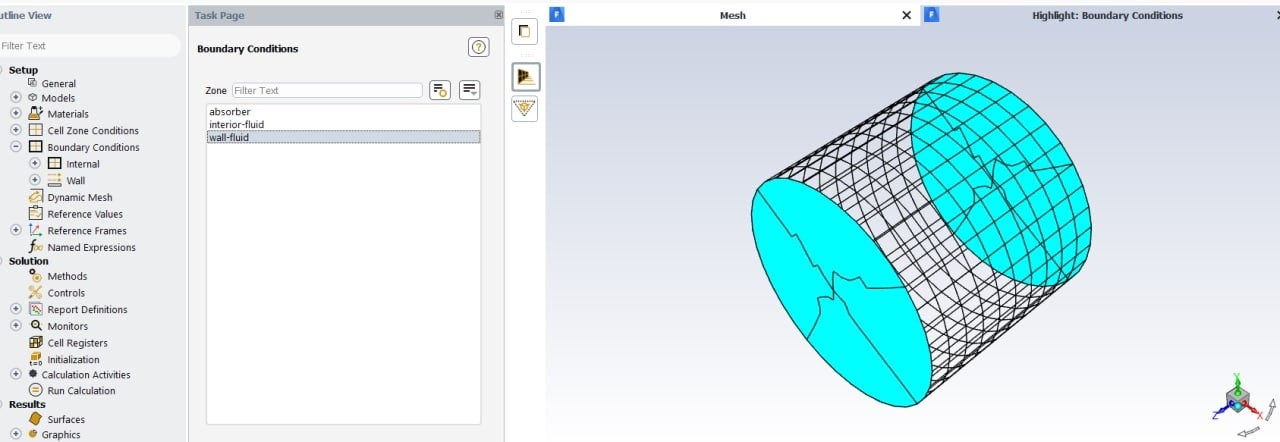
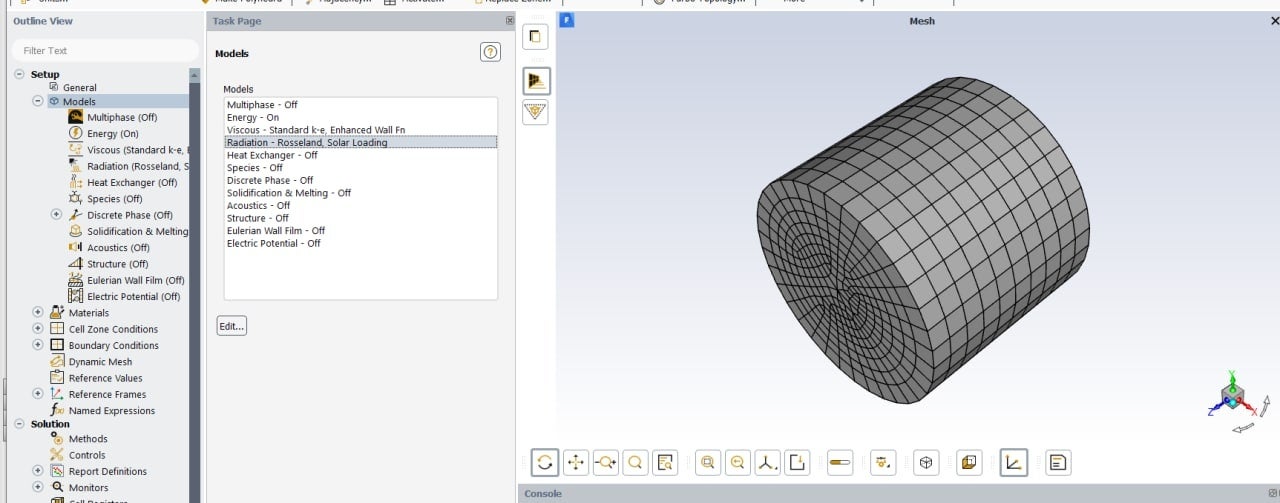
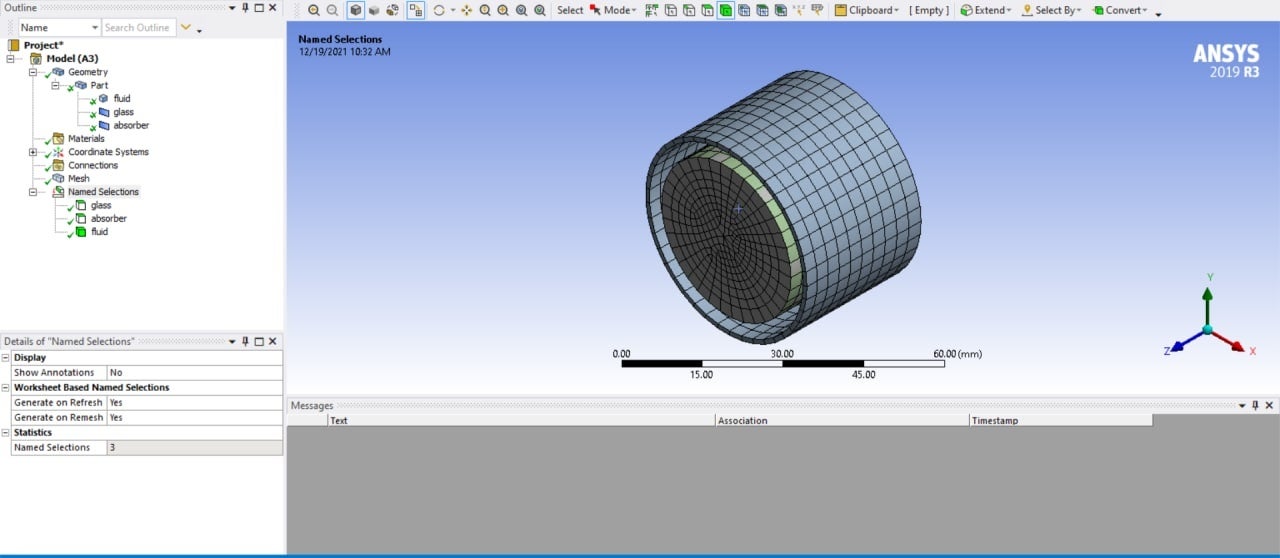
SubscriberThe solution only for fluid
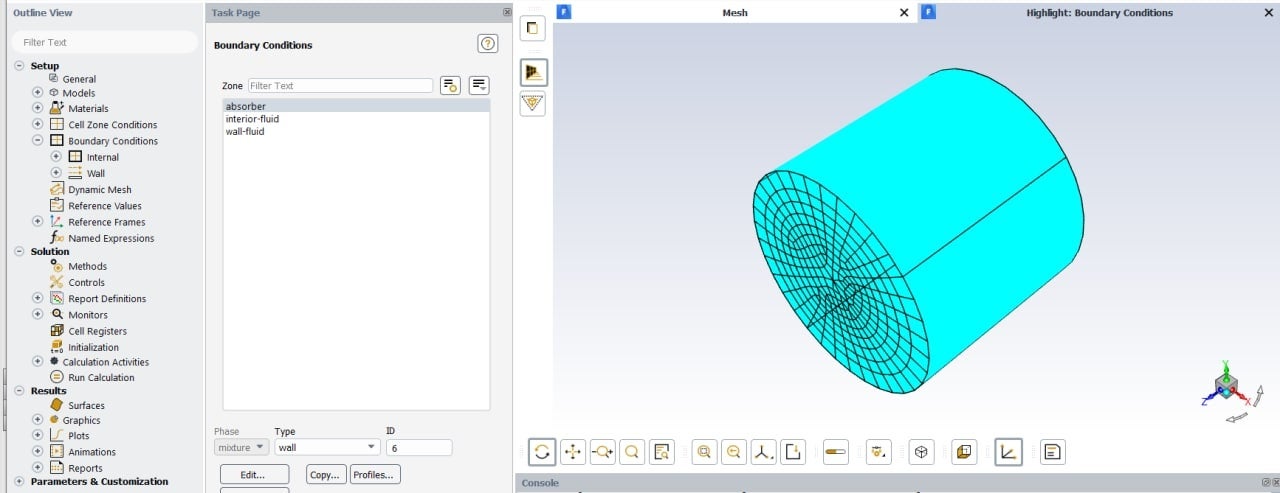
The absorber material not appear in results.
The glass surface not appear in boundary conditions.
December 19, 2021 at 2:16 pmpeteroznewman
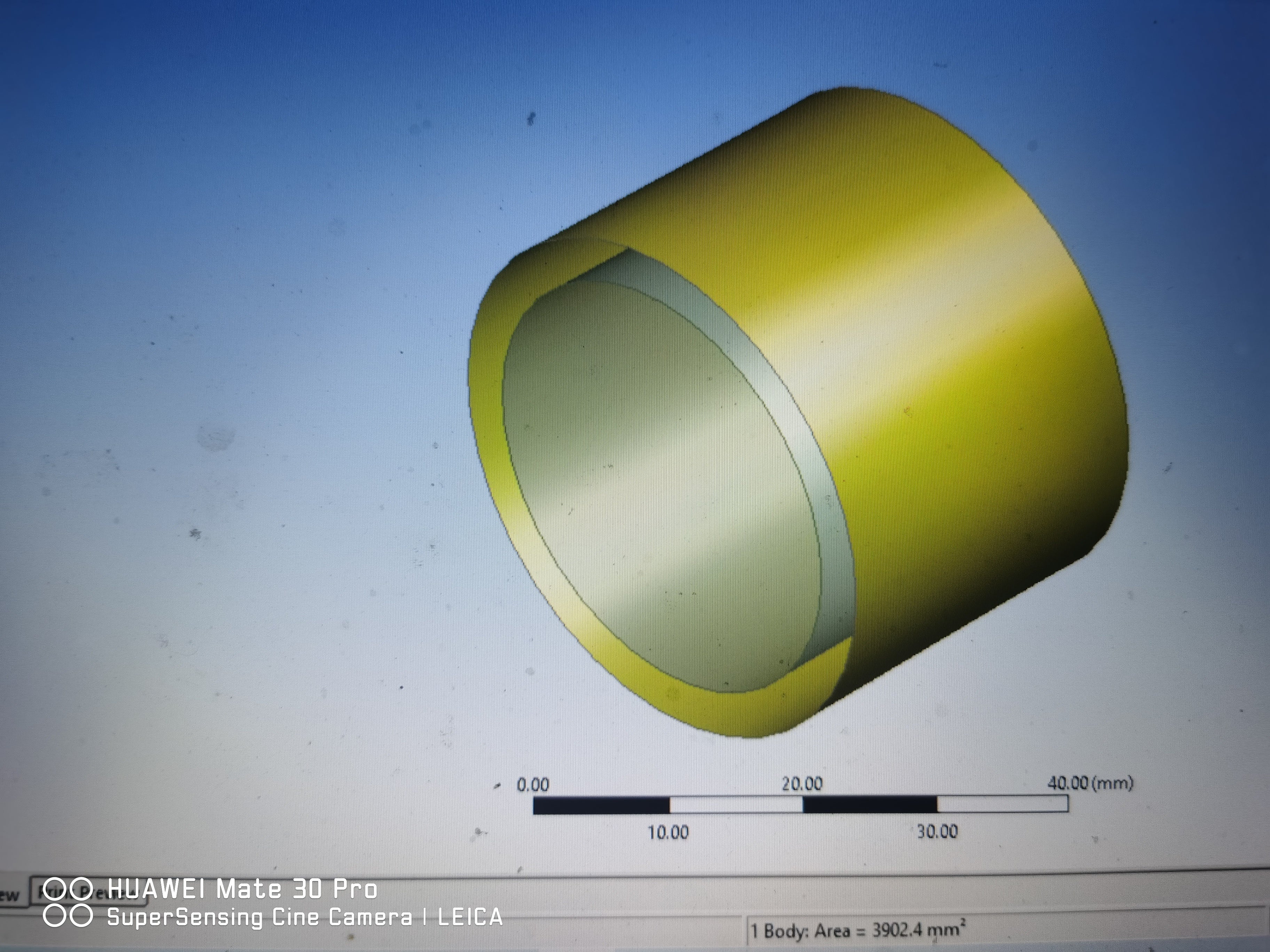
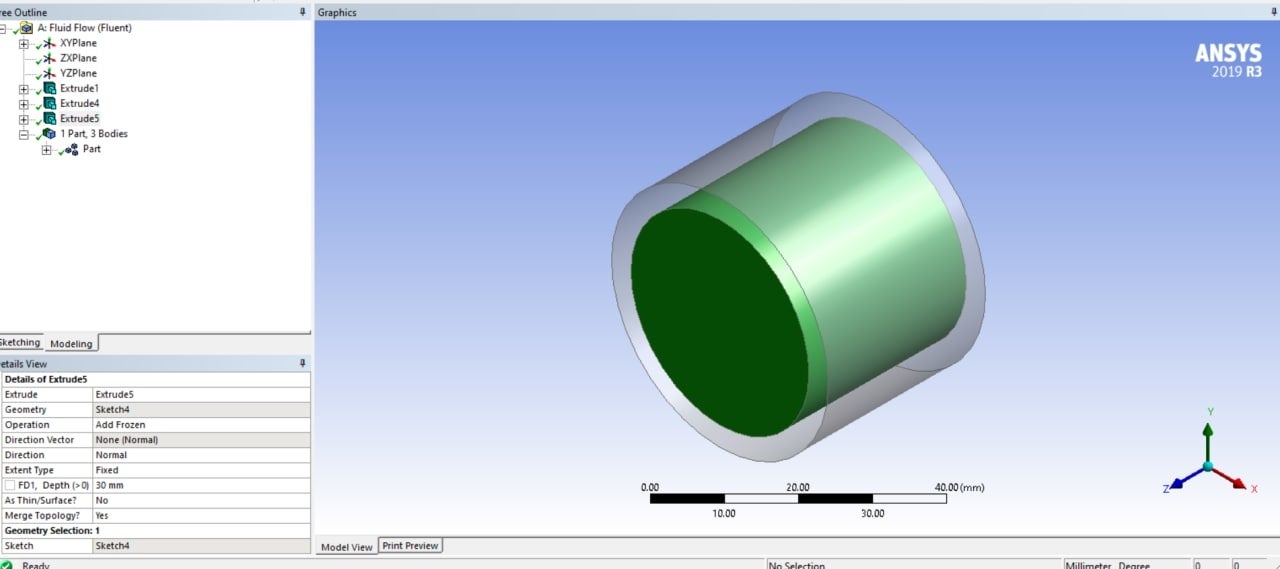
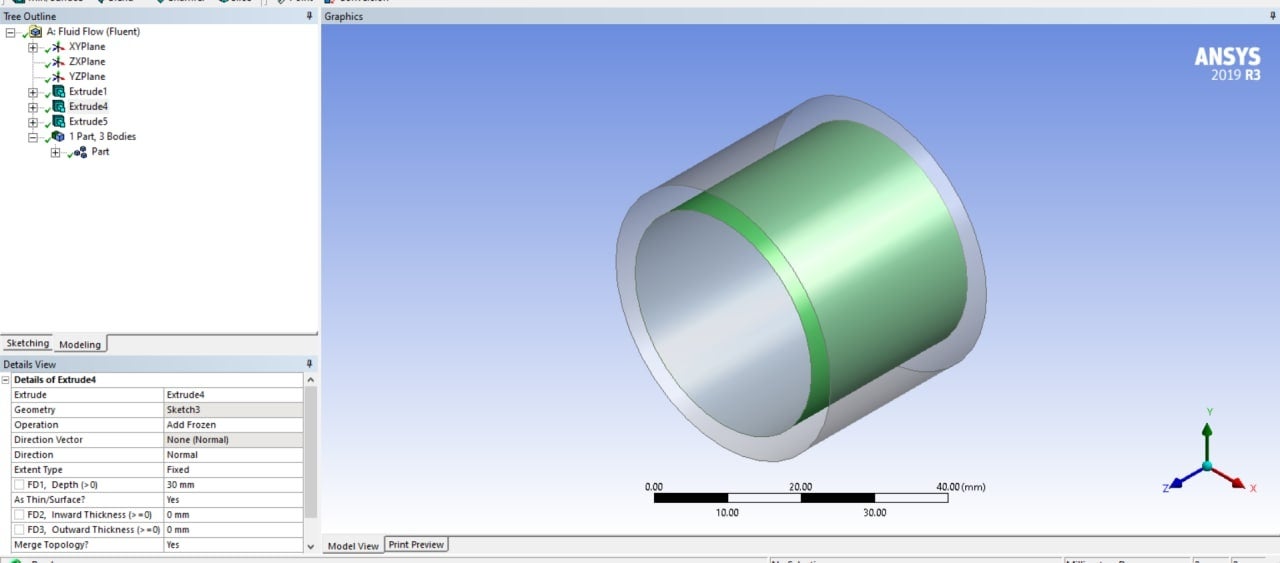
SubscriberOpen the geometry in DesignModeler. The last item in the Outline shows one Part. Right click on that Part and select Explode from the pop-up menu. Now you will have three parts and three bodies.
Select the Fluid and Absorber items in the outline, Right Click and select Form New Part from the pop-up menu.
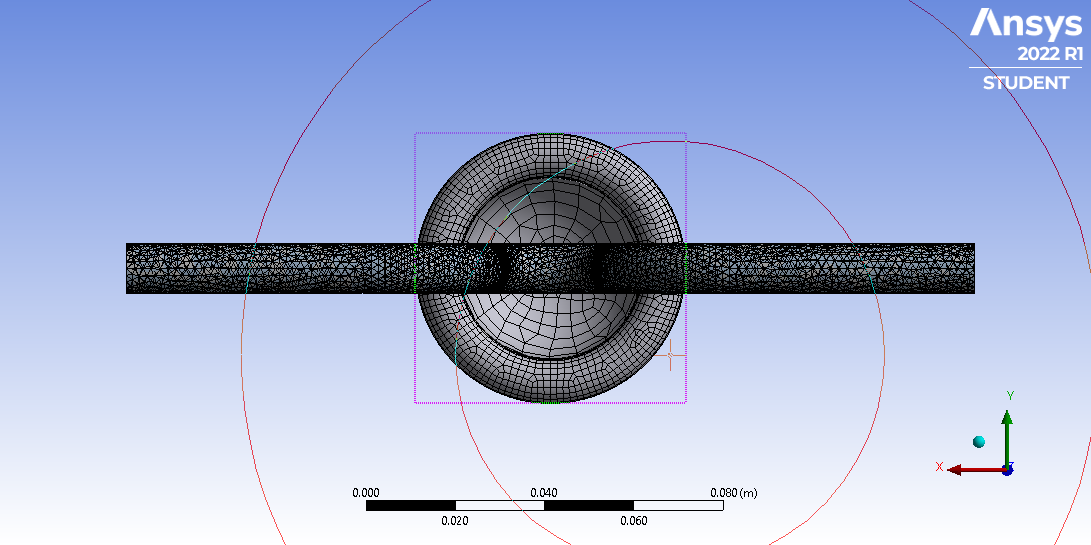
Bring that into Meshing. You can mark the solid body as fluid, and the two surface bodies as solid.
See if bringing that into a fresh copy of Fluent gives you what you want.
Don't use the initial Fluent analysis, because it can be difficult to clean out the old things created from the initial geometry.
December 20, 2021 at 8:46 amYahyaalkaisi
Subscriberthank you
I am drawing both the glass and the absorbent material to a certain thickness and the idea worked.
I am a PhD student and I am trying to model my project. The project is a evacuated tube solar water heater.
Can you give me your email? Now I'm trying to connect the tank with the tube.
December 21, 2021 at 10:51 pmpeteroznewman
SubscriberGlad to hear you have something working. You are better off posting here than sending me email because I check this site more frequently than my email and other people may help you. I am not a CFD expert.
December 22, 2021 at 5:50 amYahyaalkaisi
Subscriberthank you. I'm glad there are people like you who love to help others
January 16, 2022 at 1:30 pmRowland
Subscriberand others, please is it compulsory I mesh the glass cover?, I'm trying to model using ICEM CFD, I had a previous geometry where I didn't include the glass cover, and the mesh in ICEM CFD was perfect. Thank You, In advance.
January 18, 2022 at 10:25 pmami
Subscriberhow you make the vacuum in your project
May 25, 2022 at 5:37 pmShewaZenergY
SubscriberMay 25, 2022 at 5:44 pmShewaZenergY
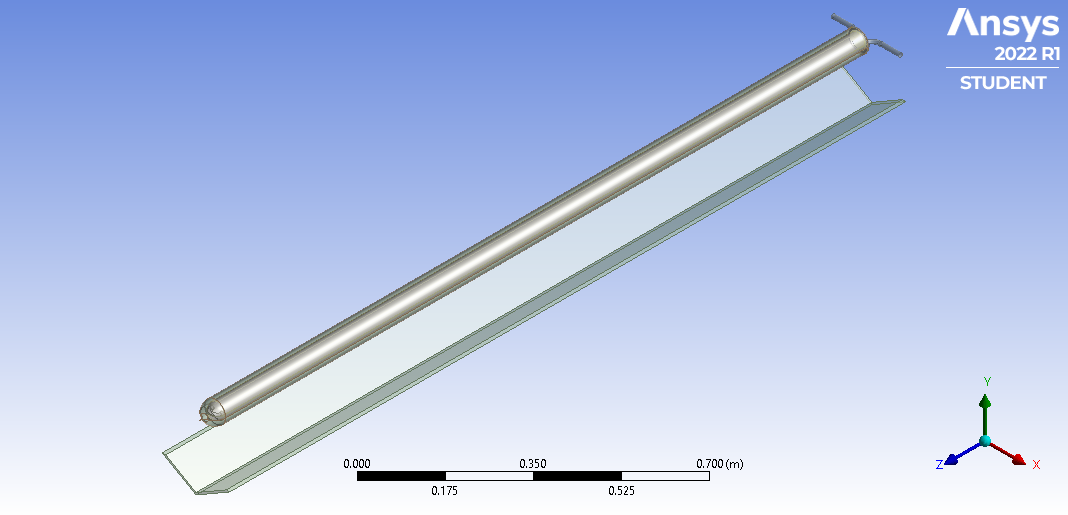
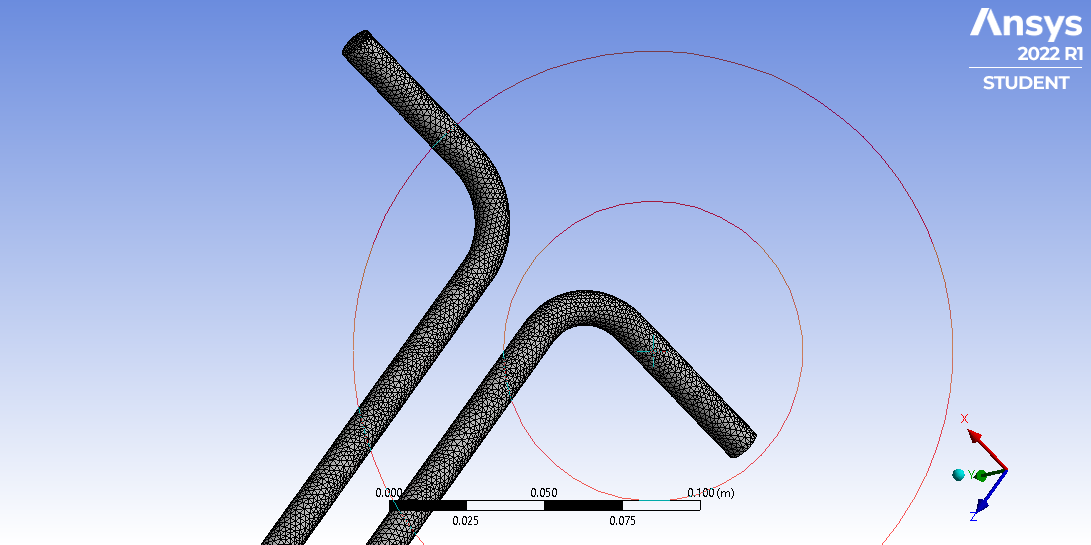
SubscriberIts working principle is, the nanofluid enters in the U tube copper tube. This copper tube is inserted on the hole of the evacuated tube glass. The bottom part of this evacuated glass is get additional heat flux by the V-shape concentrator. then the fluid is heated to certain temperature. this temperature is used for cooking purpose. That is it!
May 25, 2022 at 11:09 pmpeteroznewman
SubscriberStart a New Discussion that can focus on the specifics of your problem.
I suggest you draw a diagram of all the heat transfers in a typical cross-section of the system.
You need the V-shaped trough to have radiation reflected onto the glass tube.
The glass and copper tubes will transfer heat by conduction.
The copper tube in the vacuum of the glass tube will only get heat by radiation.
The fluid will get heat by convection from the copper tube.
Viewing 19 reply threads- The topic ‘How can we simulate a vacuum region like a vacuum gap between two shells. ?’ is closed to new replies.
Innovation SpaceTrending discussionsTop Contributors-
6465
-
1906
-
1458
-
1308
-
1022
Top Rated Tags© 2026 Copyright ANSYS, Inc. All rights reserved.
Ansys does not support the usage of unauthorized Ansys software. Please visit www.ansys.com to obtain an official distribution.
-
Ansys Assistant will be unavailable on the Learning Forum starting January 30. An upgraded version is coming soon. We apologize for any inconvenience and appreciate your patience. Stay tuned for updates.