Hello everyone,
I am currently working on a heat transfer simulation in ANSYS Fluent, and I would like some advice on how to properly model my physical problem.
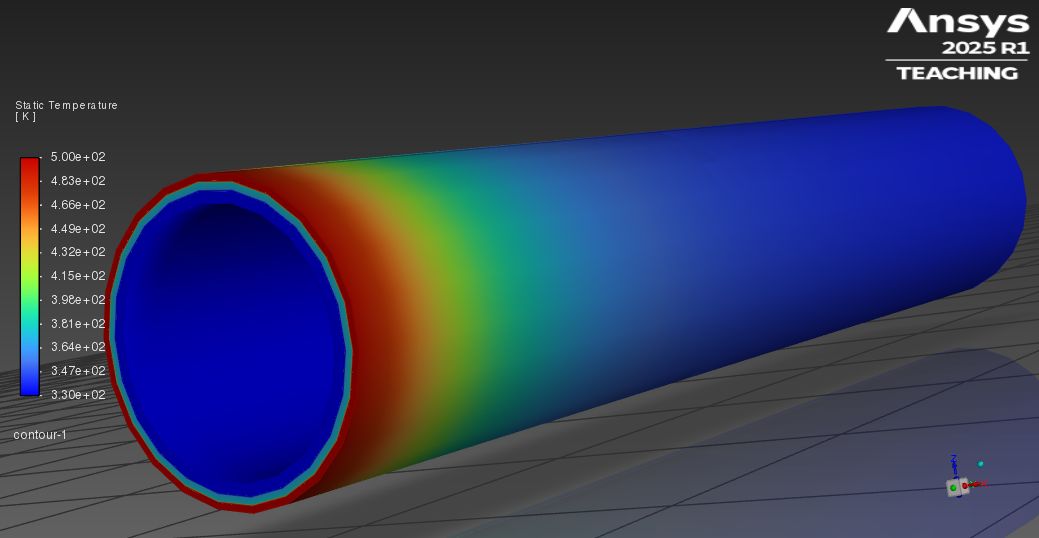
The goal of my model is to simulate the heat exchange between a molten polymer flowing through a cylindrical metal pipe and a cooling water flow circulating inside an internal sealed channel. The water and the polymer never mix.
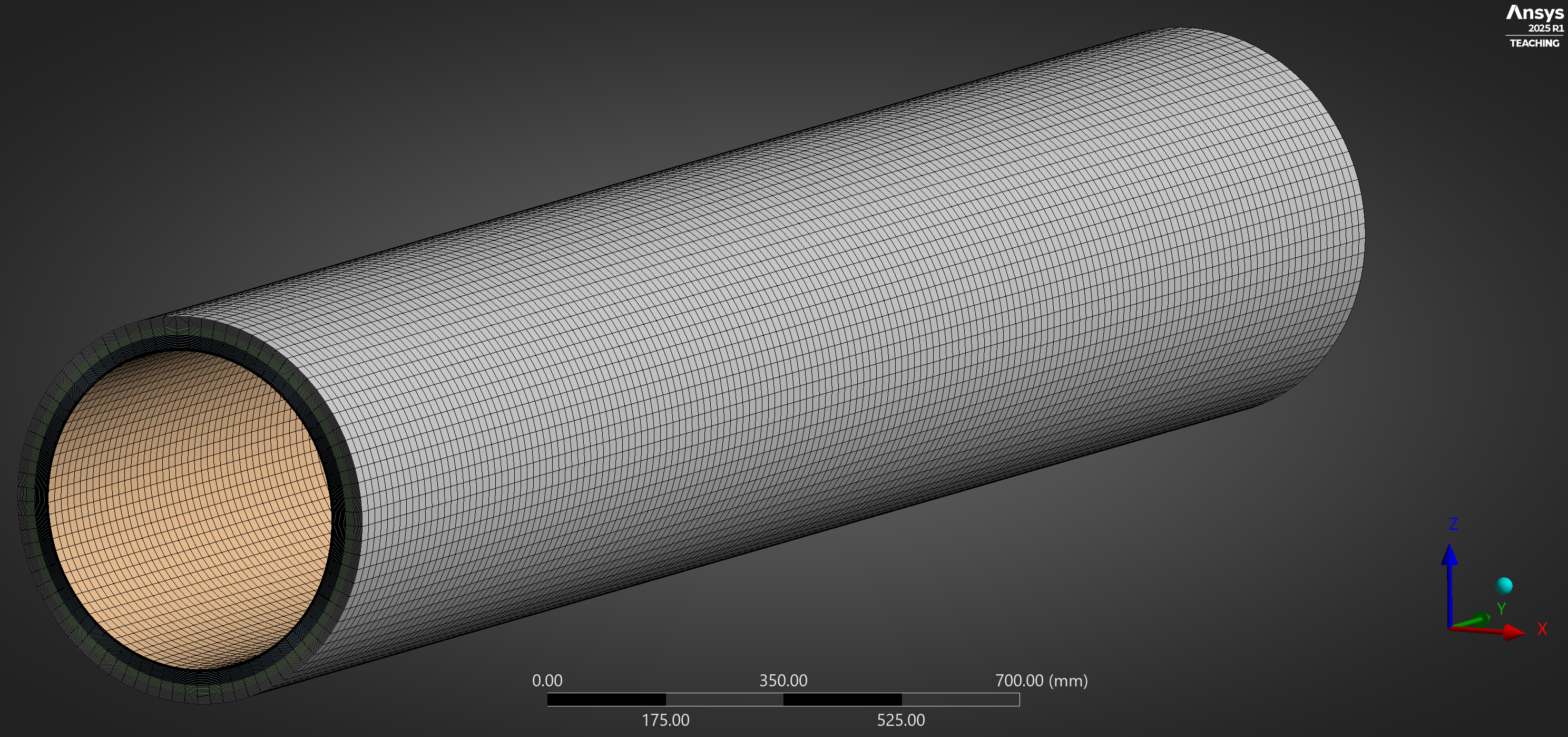
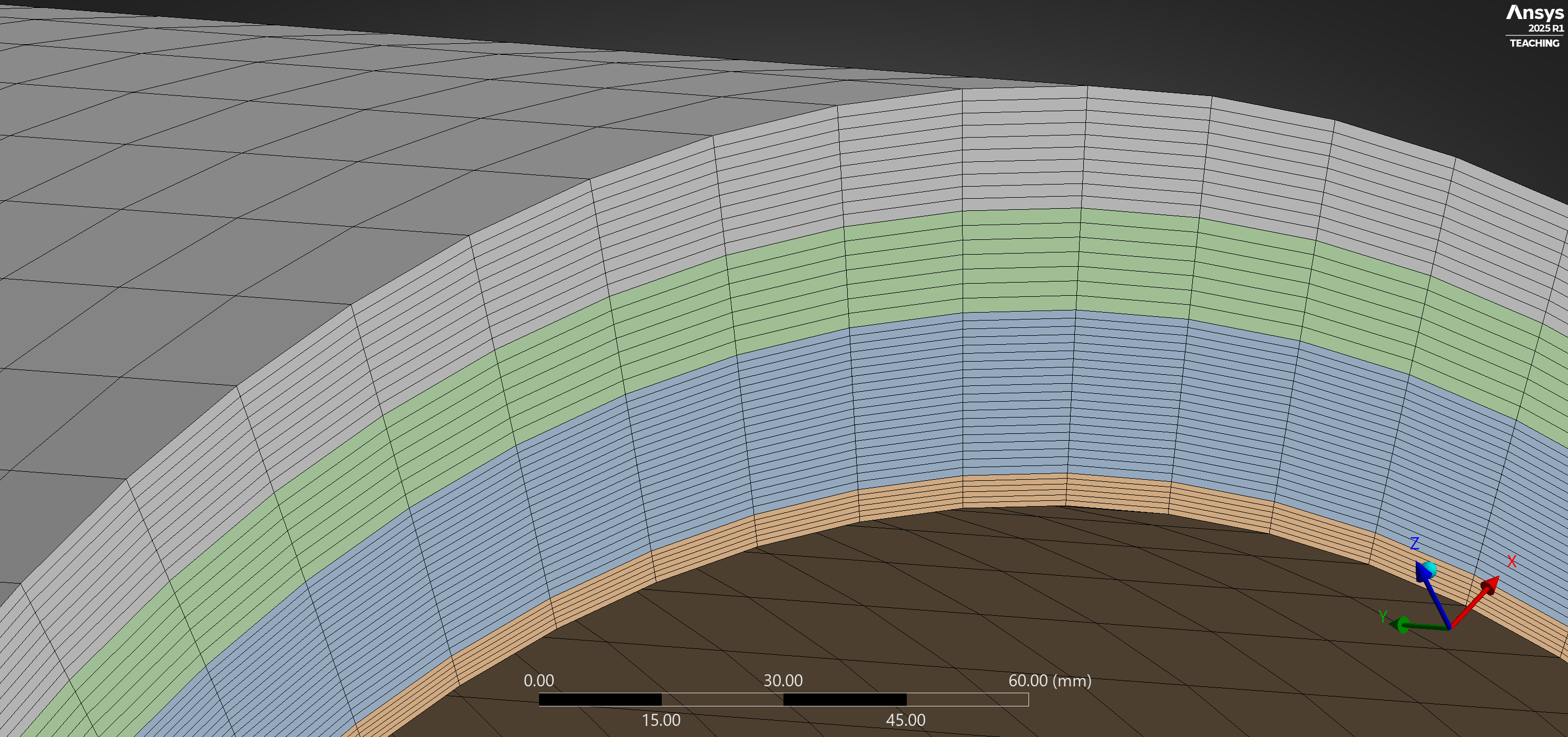
The geometry consists of four concentric layers (from inside to outside):
1. Inner metal wall
2. Cooling water channel
3. Outer metal wall
4. Molten polymer layer
The metal walls are stationary and fixed to the ground, while both the polymer and cooling water flow along the axis of the cylinder.
The main challenge is how to correctly represent the polymer behaviour. The polymer enters the system at around 230 °C in the molten state and cools down to approximately 50 °C at the outlet. During cooling, the material undergoes several phase transitions (glassy state, crystallisation, etc.). DSC measurements show strong non-linear thermal behaviour, with peaks related to phase change, so the heat exchange cannot be approximated as a simple Newtonian liquid cooling case.
Right now, I am modelling the polymer in Fluent as a fluid with extremely high viscosity, but I am unsure whether this approach is appropriate. Fluent does not directly include phase transition models for polymers, so my question is:
What is the most suitable way to simulate this type of polymer cooling and solidification process?
More specifically:
Should I continue using Fluent and treat the polymer as a non-Newtonian fluid with temperature-dependent viscosity and Cp, even through the phase transition?
Or is there a better workflow within ANSYS (e.g. using Ansys Polyflow, CFX, or a solidification model) that is more appropriate for polymer extrusion solidification?
How do you recommend implementing the non-linear Cp and phase change effects shown in DSC data?
Is it reasonable to use an enthalpy-based solidification model, even though the material transitions are not sharp like metals?
Any guidance or suggestions on the correct physics models, material definition strategy, or software selection would be greatly appreciated.
Thank you!




















 You are navigating away from the AIS Discovery experience