-
-
November 3, 2022 at 8:43 am
2212296
SubscriberHi, I'm working on a simulation about metasurfaces. The number of units was compared.
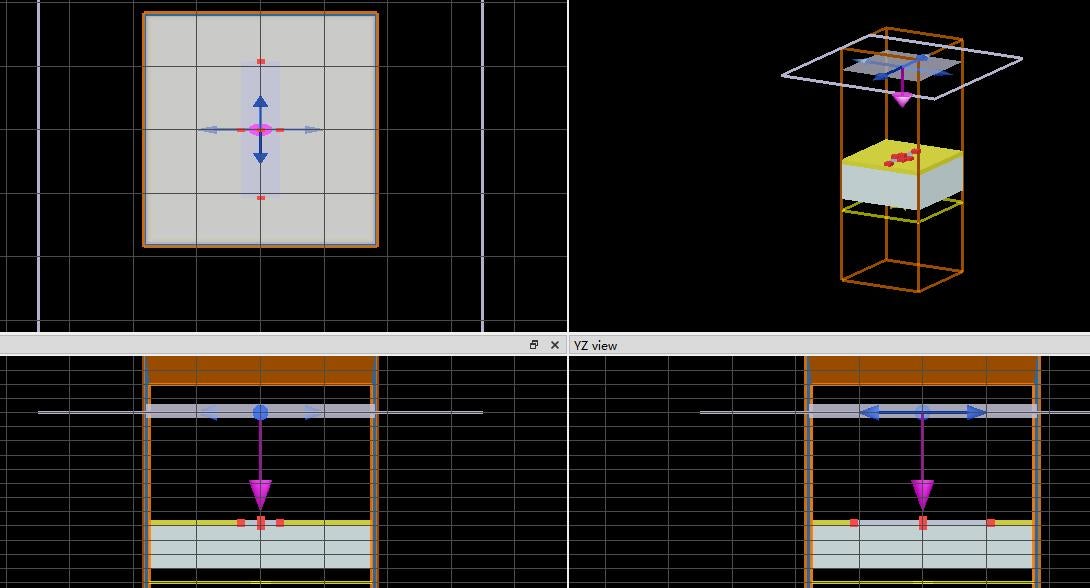
In the first one, the number of units is 1. Condition: Periodic Boundary Condition. Detect the phase difference of light transmitted through the metasurface separately .
The detector position is (0, 0), and the detection target is a small unit.
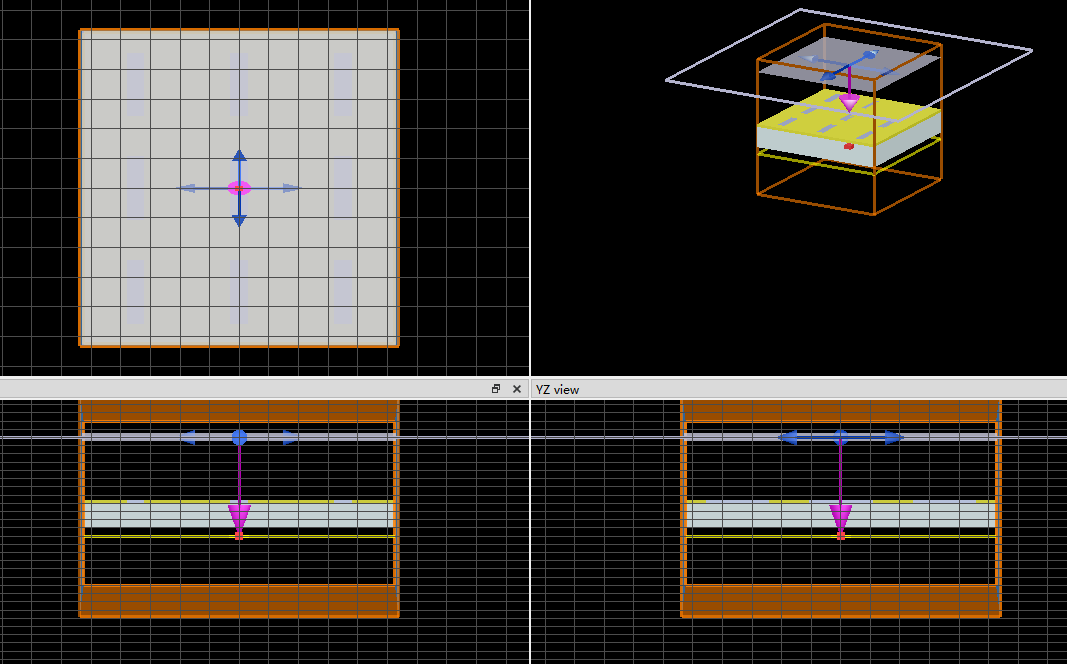
In the second, the number of units is 9. Condition: Periodic Boundary Condition. Detect the phase difference of light transmitted through the metasurface separately.
The detector position is (0, 0), and the detection target is a small unit.
What needs to be considered is that in the second case (9), the coupling effect of each small unit (theoretically explained, will not directly affect each other).
-
November 3, 2022 at 8:52 am
-
November 3, 2022 at 8:56 am
2212296
SubscriberHowever, the final result was not the same. I don't know where is the problem. -
November 3, 2022 at 11:23 pm
Guilin Sun
Ansys EmployeeIn principle they should be the same. However FDTD is a discrete method. To get the same result, you will have to make sure the mesh is exactly the same for the two cases. From your screenshor, the structure has the same dimension as the FDTD span, which might cause some problem. Please at least to expend the "substrate" out side of the FDTD periodic BCs. In addition, please use an override mesh to cover the whole period (FDTD spans) to make sure the mesh size does not change.
If you keep the current 3by3 unit cells unchanged, and do a one unit simulation, the result should be as accurate as the 3by3.
-
- The topic ‘For periodic boundary conditions, elements: single or multiple’ is closed to new replies.

-
6425
-
1906
-
1457
-
1308
-
1022
© 2026 Copyright ANSYS, Inc. All rights reserved.