-
-
December 16, 2025 at 8:28 am
valerym.m5
SubscriberDear colleagues,I'm solving problems involving the deformation of parts made of hyperelastic materials with viscous properties.I'm using TNV and Three-Networks models from the PolyUMod library.Has anyone used these models to simulate the failure of parts made of these materials?Regards Valery -
December 18, 2025 at 2:30 pm
Ram Gopisetti
Ansys EmployeeHi,
By default, all models from the PolyUMod Library, including TNM and TNV, do not provide failure modelling.
To enable failure capture, MAT_ADD_GISSMO or MAT_ADD_EROSION must be used in conjunction with these models.
Kind regards,
Ram-
December 19, 2025 at 4:14 pm
valerym.m5
SubscriberDear Ram,
haven’t used MAT_ADD_GISSMO or MAT_ADD_EROSION for TVM model before.I would be very grateful if you could recommend blogs and/or videos on how to use MAT_ADD_GISSMO or MAT_ADD_EROSION specifically for TVM model.I would be happy to confirm that the mentioned MAT_ADD_GISSMO or MAT_ADD_EROSION functions correctly when using the TNV model.
Please clarify:
Are "MAT_ADD_GISSMO or MAT_ADD_EROSIO" valid for hyperelastic materials with viscous properties?Regards Valery
-
-
December 19, 2025 at 4:01 pm
valerym.m5
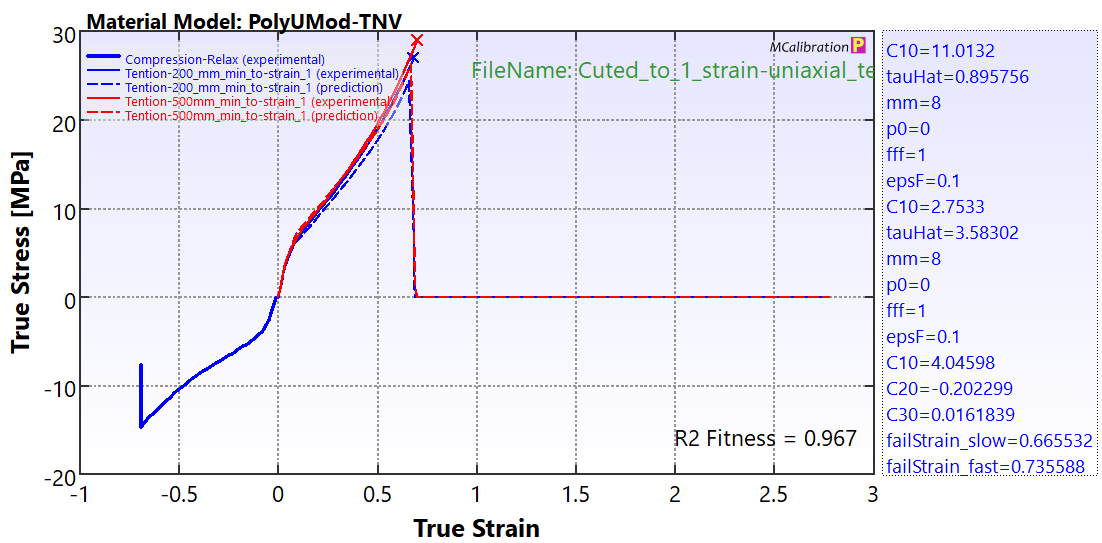
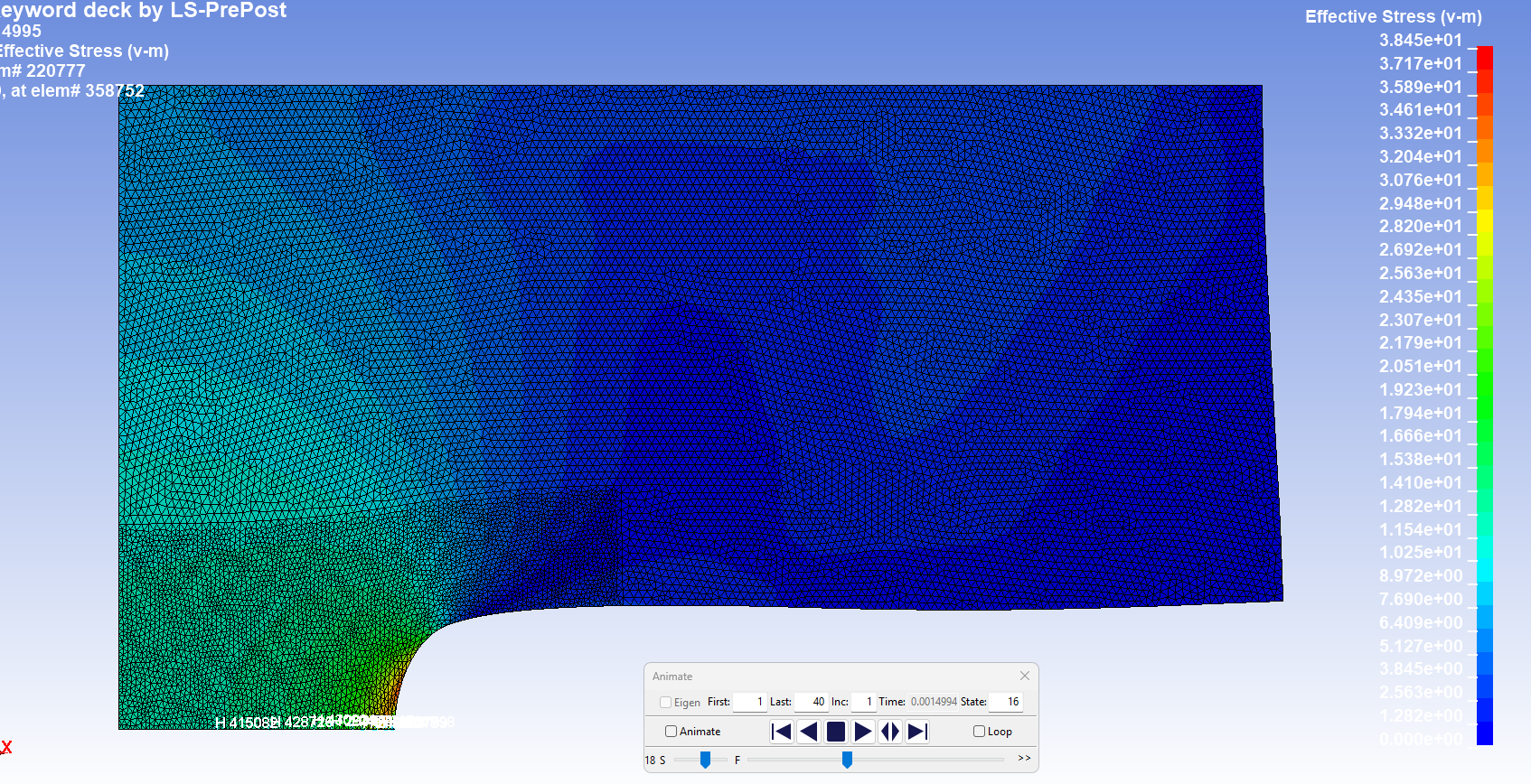
SubscriberI seem to have solved a simple test problem—uniaxial tension of a flat specimen with failure—using the aforementioned method.
Quick Calibration of a PolyUMod Failure Model to Experimental Data
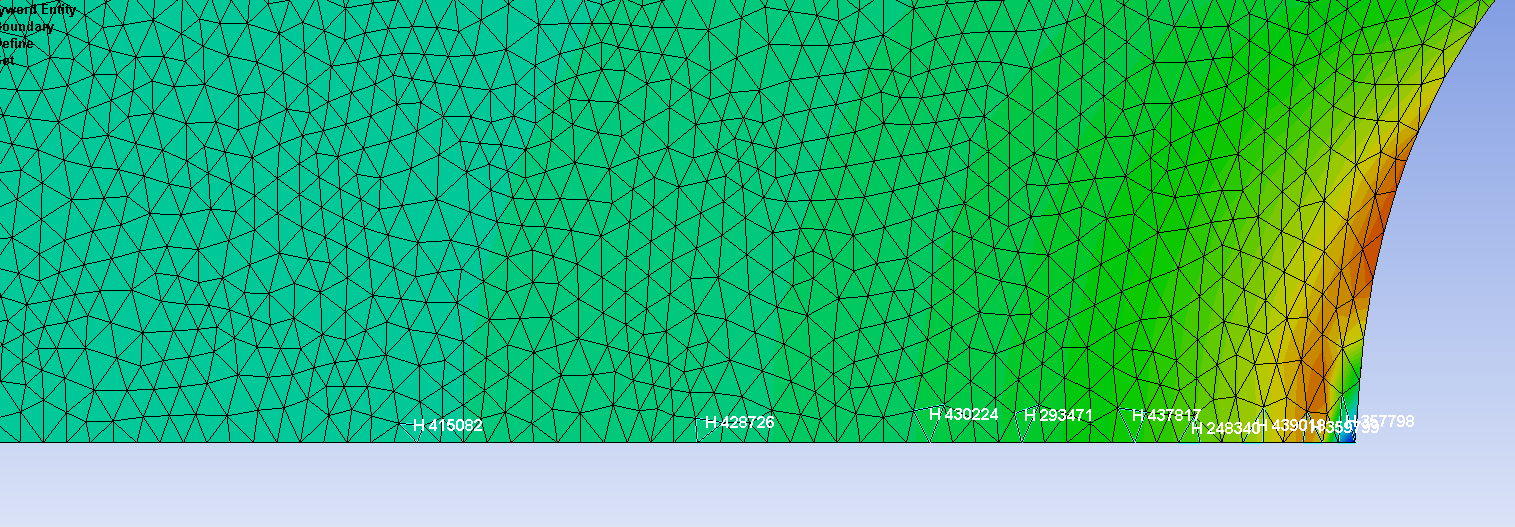
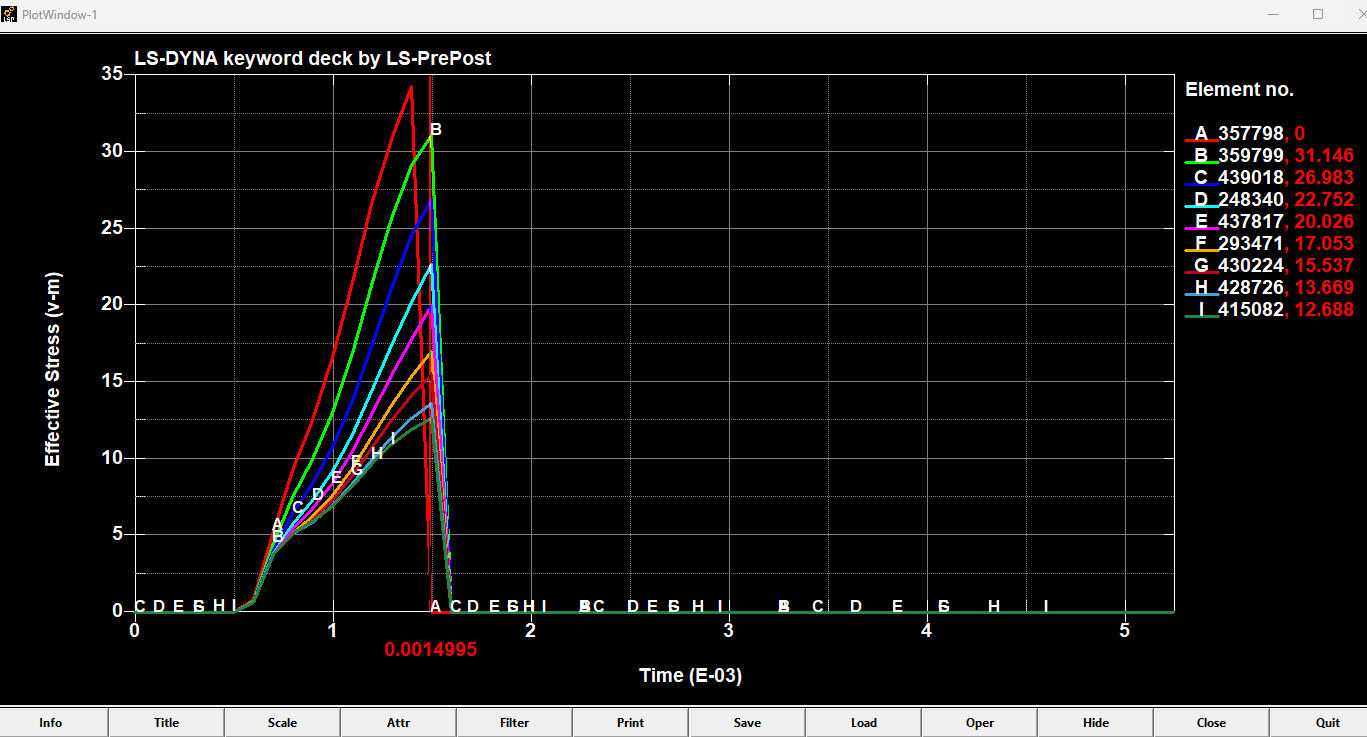
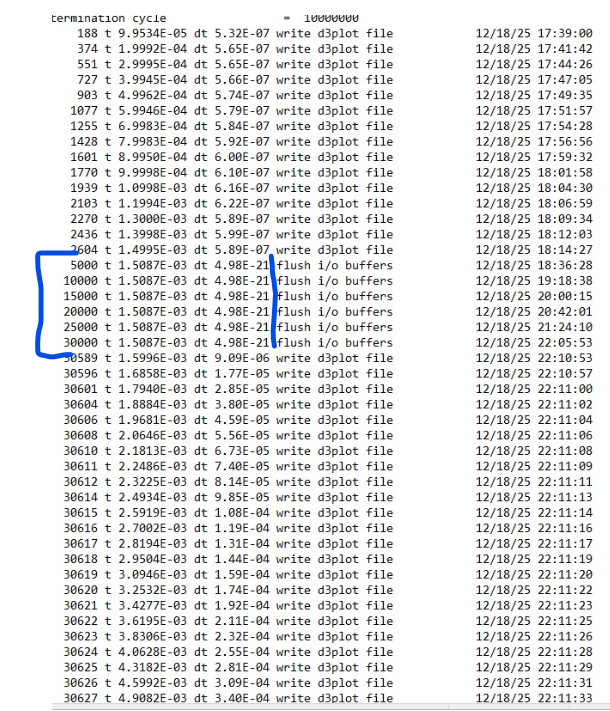
https://www.youtube.com/watch?v=Qd1Pvqh20vE*** I’m using LS-Dyna and Polyumod 2022.I’m seeing some issues:1. When using the TNV model, LS-Dyna doesn’t record, or records incorrectly, deformations and displacements for the entire model.That is, zero values are returned if I try to plot graphs and then write the values to a file.2. Visualization issues:- Visualization of the deformed model is possible before resolution, but if I try to display deformations or displacements for a single point, all values will be zero.- After failure begins, visualization of the ENTIRE model is impossible.Despite the lack of deformation and displacement results in the database, the calculation itself—up until failure—results in a realistic model (like a full-scale experiment and the results of calculating and calibrating the constants).*** I have some assumptions/hypotheses:When solving problems, LS-Dyna incorrectly records the values of some variables for this model in the database or records them in a way that the postprocessor “doesn’t see.”The stress graphs constructed from LS-Dyna calculations are very similar to reality.I solved the same model using an abacus without any problems —the calculation results are very similar. -

December 19, 2025 at 4:10 pm
-
December 19, 2025 at 6:03 pm
valerym.m5
SubscriberDear Ram,
I would be very grateful if you could tell me:How can I obtain the following information for models from the PolyMod library:1. Viscous deformation2. Absorbed energy due to viscous properties.
Regards Valery -
January 6, 2026 at 3:48 pm
valerym.m5
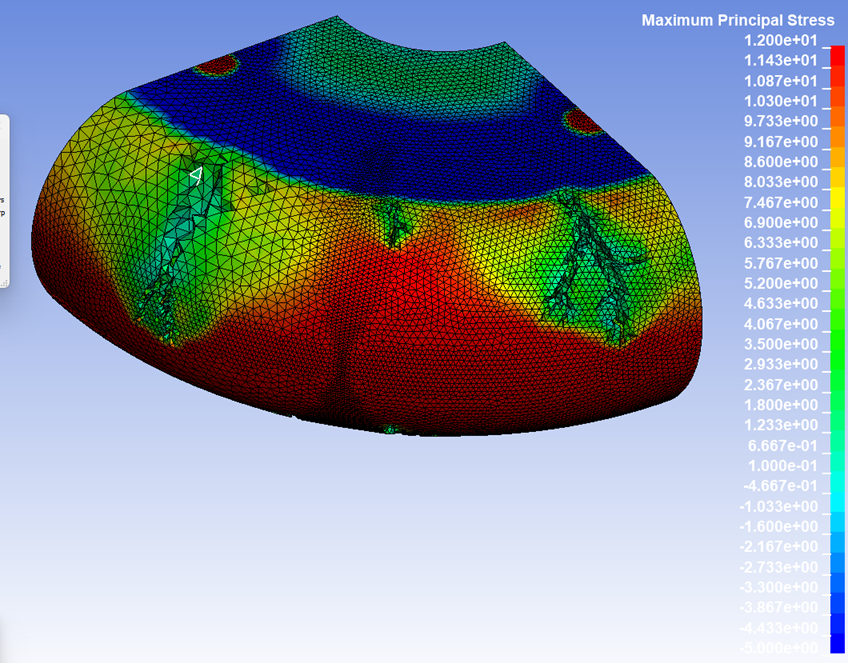
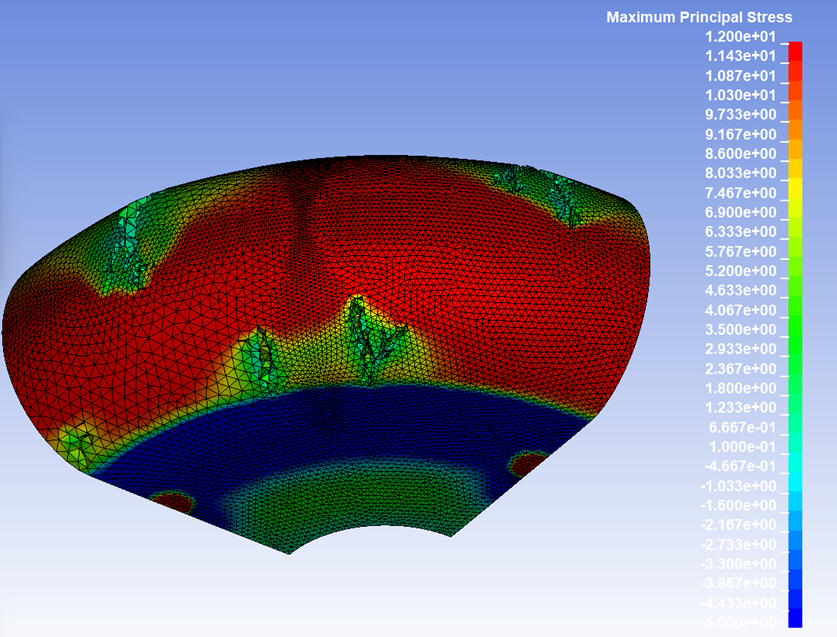
SubscriberI've run several test simulations using MAT_ADD_EROSION (the SIGP1 Maximum Principal Stress at Failure failure criterion).
The crack formation locations and shape are very similar to the results of the full-scale experiments.

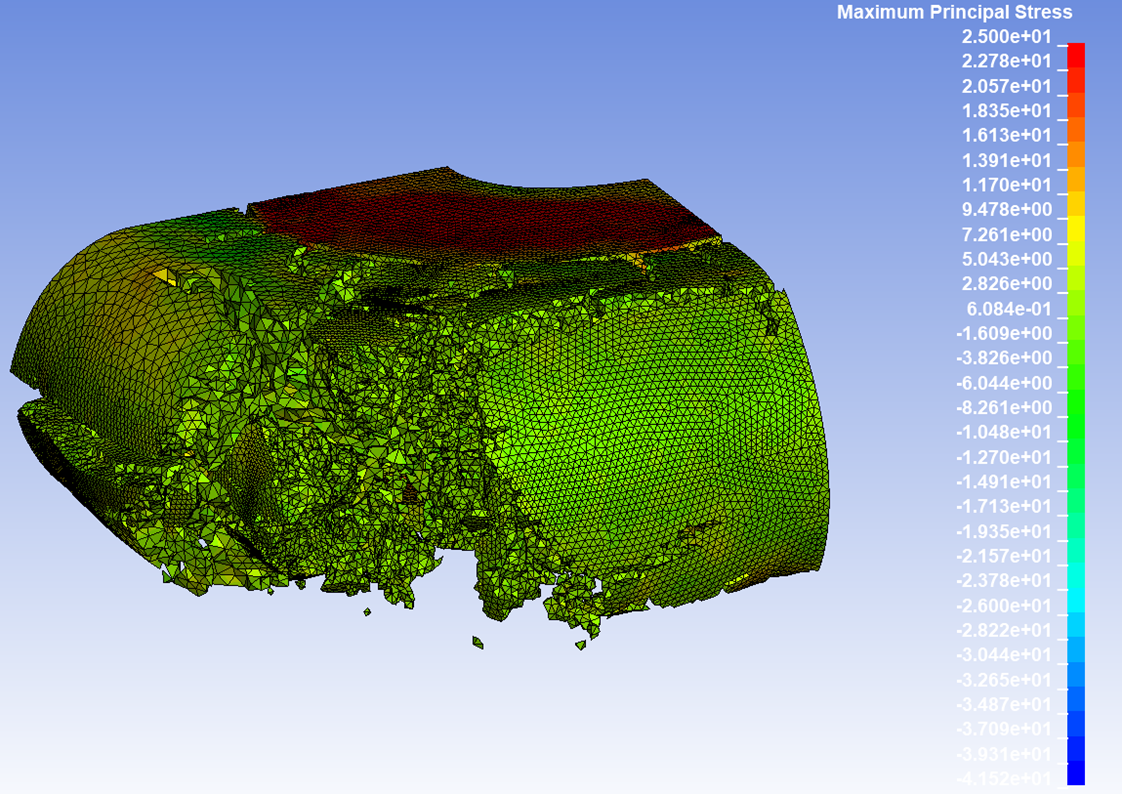
However, the subsequent crack propagation and failure of the part are completely different from the full-scale experiment.
I would be grateful for your advice and comments.
-
Viewing 5 reply threads
- You must be logged in to reply to this topic.
Innovation Space
Trending discussions
Top Contributors
-
4863
-
1587
-
1386
-
1242
-
1021
Top Rated Tags
© 2026 Copyright ANSYS, Inc. All rights reserved.
Ansys does not support the usage of unauthorized Ansys software. Please visit www.ansys.com to obtain an official distribution.