

-
-
May 25, 2021 at 10:08 am
Danielgkh
SubscriberHi everyone,
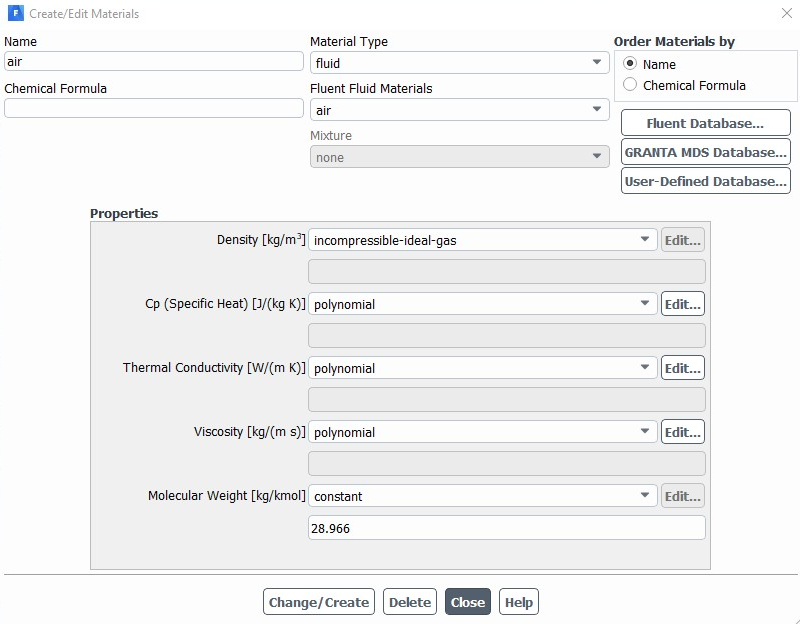
I am simulating the airflow in a tube with varying temperature. The inlet temperature is set as 450 C. The outlet temperature is around 200 C after initial simulation. The material is user-defined air.
May 25, 2021 at 1:03 pmKarthik Remella
AdministratorHi Wall y+ indicates generally indicates the whether or not you are modeling the laminar sub-layer. Since you are modeling a heat transfer problem, I'm guessing you might want your y+ values closer to 1 (for better accuracy). To achieve this, you might need to further reduce your 1st layer thickness when you generate the computational mesh.
Again, this also depends on the near-wall treatment you are using (under Viscous models).
Since you have the two temperatures, estimate the y value based on the two viscosities and pick the lower value and try.
Karthik
May 25, 2021 at 1:23 pmSubscriber
thank you very much for your explanation. I am using realizable k-e model with enhanced wall treatment. Does this statement "y+ values closer to 1" applies to this model as well?
Thanks again in advance.
June 7, 2021 at 11:49 amAdministratorHello The results from the Enhanced wall treatment depends on your mesh resolution. If the mesh near the wall is refined enough, it can capture the viscous sub-layer. If it isn't, it behaves similar to a wall function model. It all depends on the mesh. To answer your question, yes - it does have the capability to resolve the sub-layer details (y+ ~1).
Karthik
Viewing 3 reply threads- The topic ‘dynamic viscosity for grid spacing calculation for airflow with varying temperature’ is closed to new replies.
Innovation Space Trending discussions
 Top Contributors
-
peteroznewman
 6485
6485 -
scabo
 1906
1906 -
Dennis Chen
 1458
1458 -
javat33489
 1308
1308 -
Shyam Prasad V Atri
1022
Top Rated Tags
© 2026 Copyright ANSYS, Inc. All rights reserved.
Ansys does not support the usage of unauthorized Ansys software. Please visit www.ansys.com to obtain an official distribution.
-


The Ansys Learning Forum is a public forum. You are prohibited from providing (i) information that is confidential to You, your employer, or any third party, (ii) Personal Data or individually identifiable health information, (iii) any information that is U.S. Government Classified, Controlled Unclassified Information, International Traffic in Arms Regulators (ITAR) or Export Administration Regulators (EAR) controlled or otherwise have been determined by the United States Government or by a foreign government to require protection against unauthorized disclosure for reasons of national security, or (iv) topics or information restricted by the People's Republic of China data protection and privacy laws.

 You are navigating away from the AIS Discovery experience