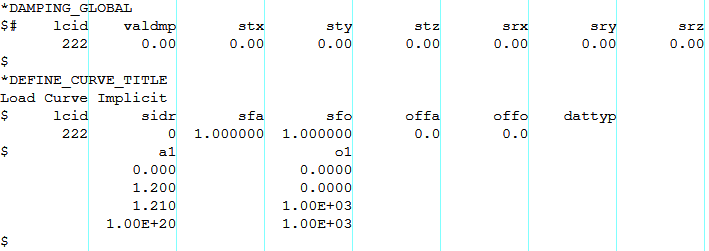
Hi, I think this follows the documentation. THe global damping card is a mass based damping and it artificially create some energy dissipation by adding a f_damp term determined by the valdmp value.
As for the valdmp value in the LCID, that number should be based on the lowset mode of interest. The strict method is to do a modal (eigenvalue) analysis and then use the frequency of interest to determine valdmp value. Setting a really high value could overdamp the system and actually make things appear heavier than they actually are. see this video -
if it helps as I directly assessed what happens if I overdamp the structure.
you can plot effective plastic strain directly to see if there's enough imapct force to create localized plastic strain on the ball. It's an option in LSPP. Also check the keyword database_extent_binary and make sure it's set to include what you want to see in the results (such as strain terms).


















 You are navigating away from the AIS Discovery experience