Ansys Assistant will be unavailable on the Learning Forum starting January 30. An upgraded version is coming soon. We apologize for any inconvenience and appreciate your patience. Stay tuned for updates.
Fluids

Fluids

Topics related to Fluent, CFX, Turbogrid and more.

Dissolved oxygen in water- Henrys law

    • myke
      Subscriber

      Hi I want to simulate the quantity of disolved oxygen in water depending on temperatura. I créate my model but I have some problems, My model is the next one:


      I create an eulerian multiphase model. My primary phase is water + disolved oxyegen (density depending on temperatura by udf) and my secondary phase is dummy oxygen + oxygen (volumen weighted density). Then I apply species mass transfer from water disolved oxygen to the gaseous oxygen and I actívate henrys law. In my initialization conditions I put the quantity of disolved oxygen of my primary phase (mass fraction of disolved oxygen = 0.0083) and the mass fraction of dummy oxygen = 1. Also I put a small quantity of volumen fraction of my secondary phase to actívate the mass transfer (volumen fraction of secondary phase = 0,006). Then I simulate in transuient model because if I put steady because of the complexity of the simulation I have floating point errors. Is this model correct?


      My results are not very logical, the mass fraction of my secondary phase (oxygen gas) always is 0 so the is no mass transfer from primary to secondary phase. Also the volumen fraction of my secondary phase is very small like maximun 1e-20. Why it can be the reason of that?


      Thanks

    • Rob
      Forum Moderator

      Most multiphase models will struggle in steady state, try transient. 


      Re the mass transfer, work through the steps carefully and check with documentation. 1e-20 suggests that there is no mass transfer as that's the usual number we see when numerical errors creep into a solution. 

    • myke
      Subscriber

      Hi again and thanks for your advices.


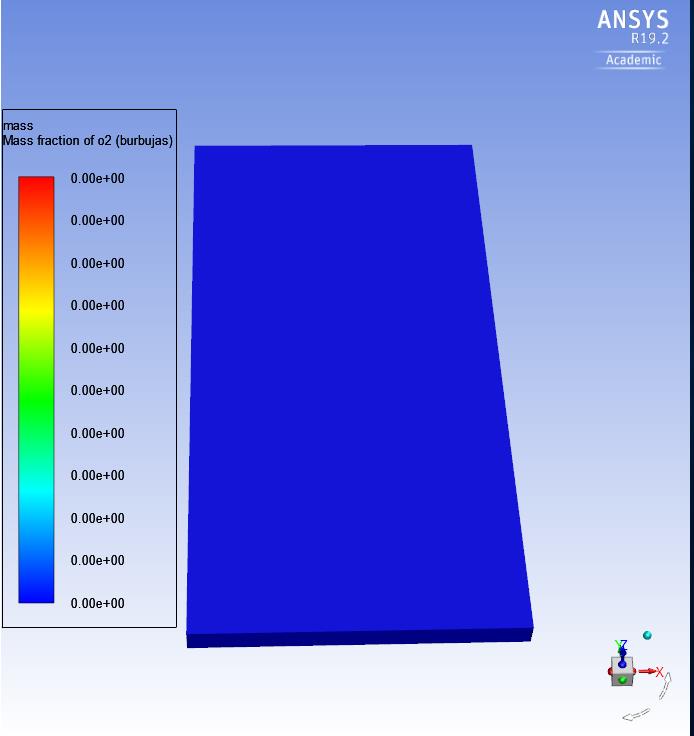
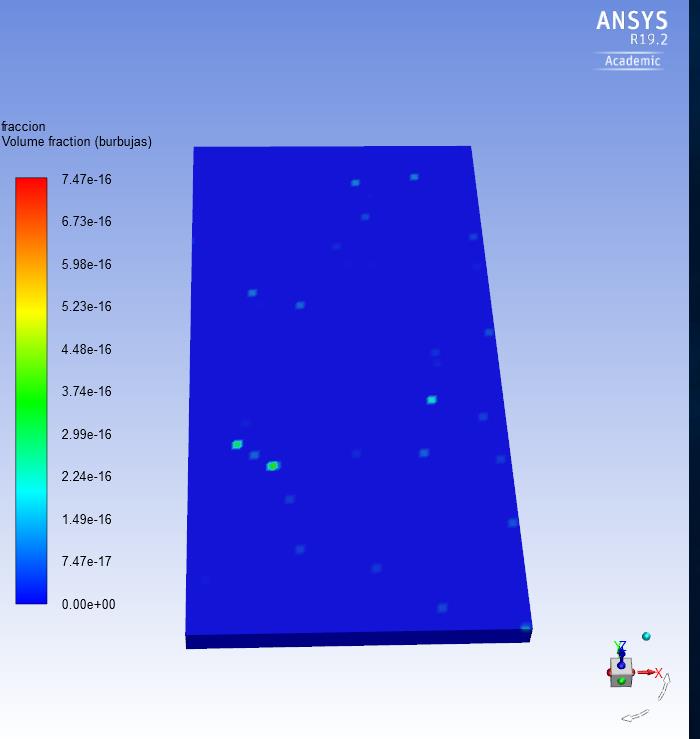
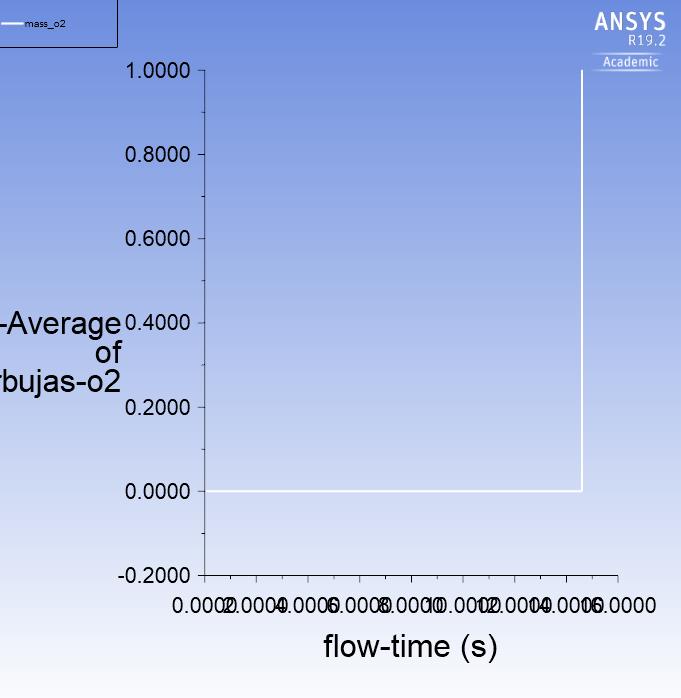
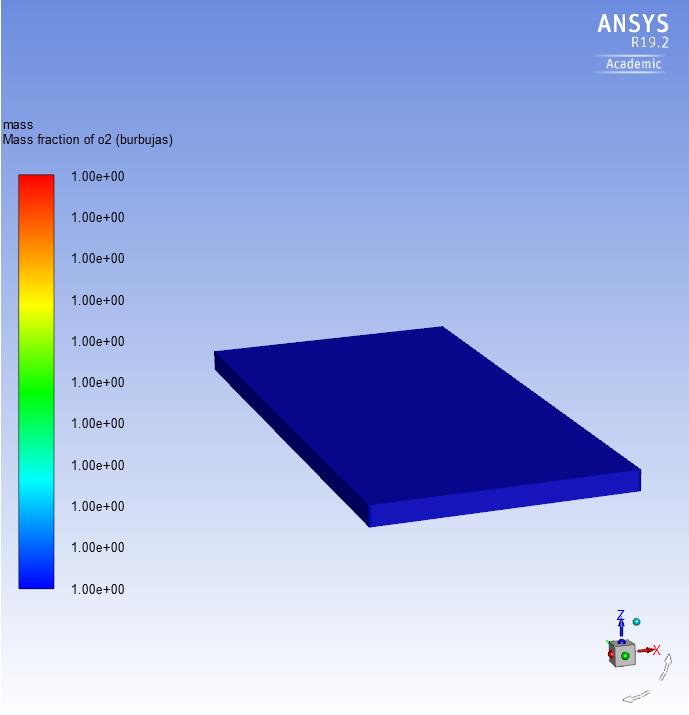
      I work with transient model but also the results are not logical. This are the results of the mass fraction and volumen fraction of my secondary phases mass fraction is 0 and volumen fraction also like zero. 


      Why it can be the error of that? I see and read the documentation but I cant search the problem...


      Thanks

    • DrAmine
      Ansys Employee

      Add more information like phase interaction panel etc. I will move this thread to Fluid category.

    • myke
      Subscriber

      Hi again I Will add more information:


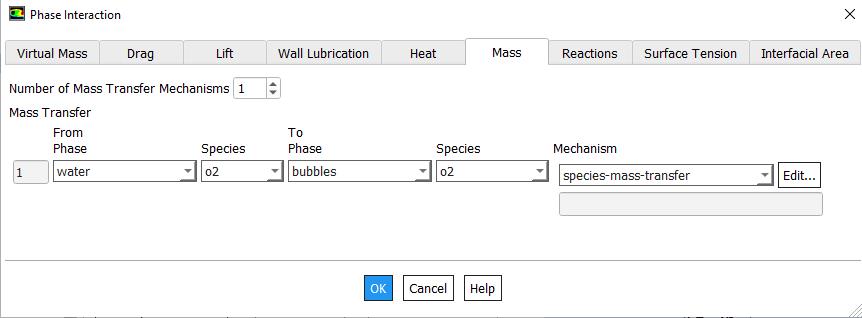
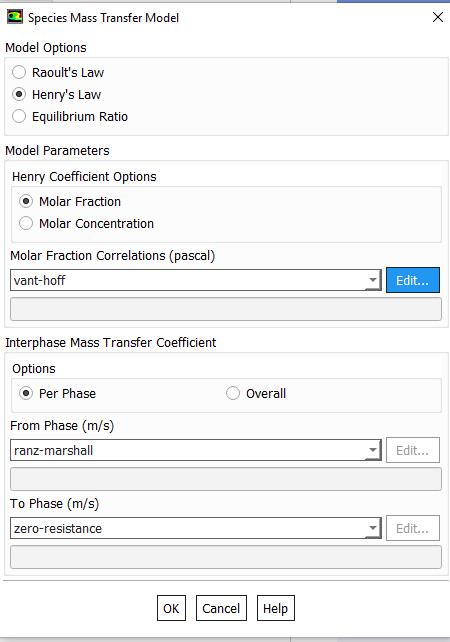
      1.- I use eulerian multiphase model with primary phase (water + dissolved oxygen) and secondary phase (dummy oxygen + oxygen gas). In phase interaction I put the surface tension, interfacial área (ia-gradient) and species mass transfer from disolved oxygen to oxygen gas like you can see in the images. For now, I didnt change anything else in phase interaction.


      2.-  In materials I put an UDF to change the density of water depending on temperature and I use volumen-weighted density in my secondary phase that also change with temperature. The other values of the materials are default.


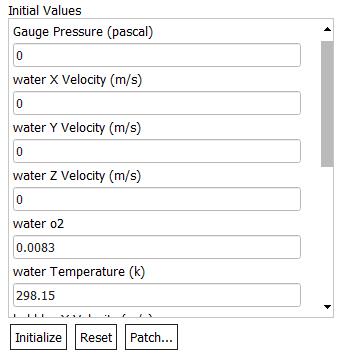
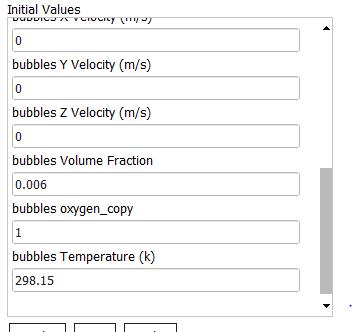
      3.- To star the simulation I initialize my model. I put the quantity of disolved oxygen for my primary phase (0.0083) and dummy oxygen that is my secondary phase in the starting point Will be 1. Also I put a small quantity of volumen fraction of my secondary phase. You can see in the next image:


      The results are the ones that I show you in the last post and I dont know where is the problema.


      Thanks

    • DrAmine
      Ansys Employee

      Use symmetric or particle for interfacial area.


      Moreover check the volume fraction of the gas phase straight after initialization. Monitor the min, max and volume avg. of the phase interaction source term.

    • myke
      Subscriber

      Hi again and thanks for your advices. I have two questions. 


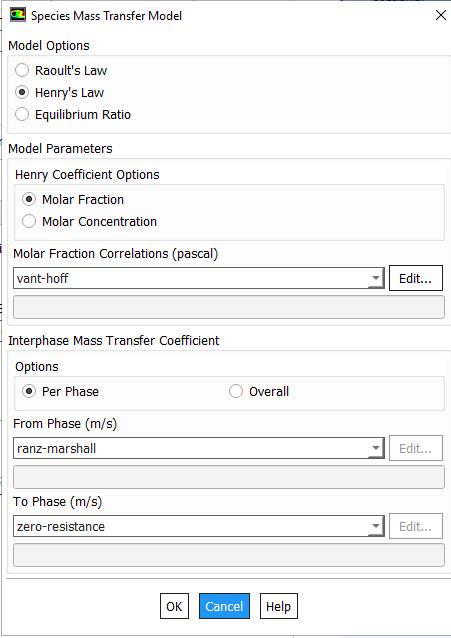
      1.- The species mass transfer that I modeled taking into account the henrys law is correct (see image):


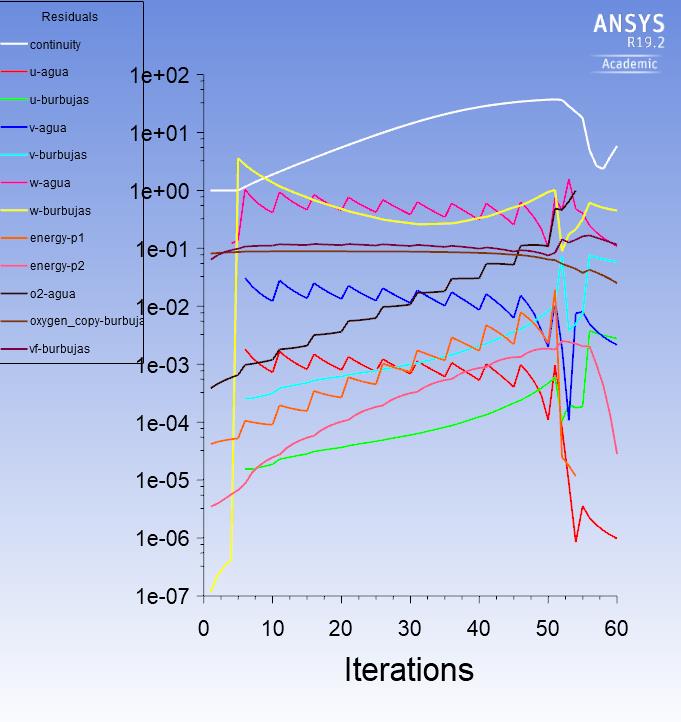
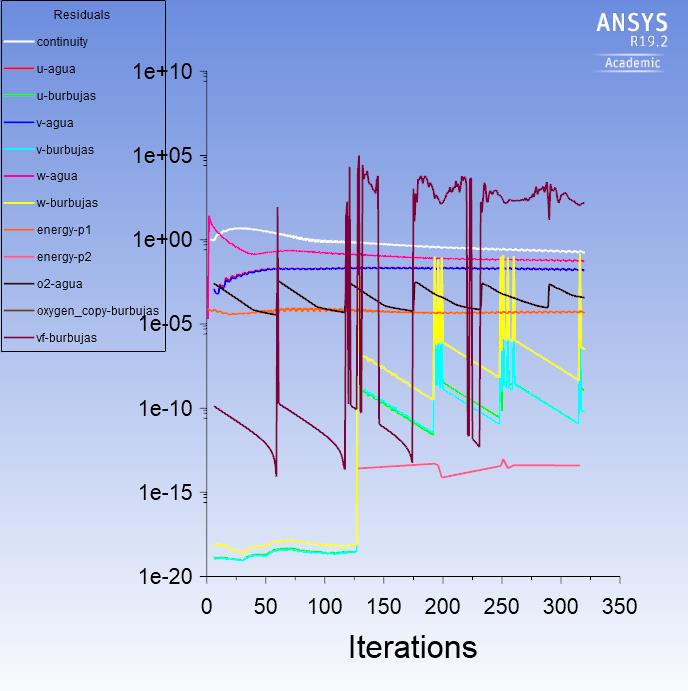
      2.- I simulate with a very small time step 1e-6 and after 100 interactions the volumen fraction of my secondary phase goes to 1 that is not logical. Also the form of the residuals is not correct. Why happens this?


      Thanks


    • DrAmine
      Ansys Employee

      1/Yes


      2/Bad convergence: it accumulates.


      You can try using the simpler mixture model with species mass transfer. Moreover I recommend to update to the most actual release.

    • myke
      Subscriber

      Hi again, where can be the problem of my model (because the steps are correct) or how can I solve the problem (where can I search more information) ? 


      Thanks


    • DrAmine
      Ansys Employee

      As I do not have your model I can only judge on what you are sharing. Check if you have defined the proper operating conditions, gravity (operating density =0), heat transfer interaction, etc..


      For that reason and to reduce the search: you can start by much more simple model just a tank filled with water and oxygen and check if the setup regarding that is consistent. Or as mentioned using mixture model with slip so that only drag needs to be provided.


      Do not ignore my comment regarding the version: we have introduced a lot of enhancements in the the last release(s).

    • myke
      Subscriber

      Hi again I have one questions:


      My primary phase is wáter + oxygen and I define the density depending on temperatura by an UDF. This is correct no?


      Also, in my secondary phase I have volumen wighted mixin law density and then and put polynomial of each case (dummy oxygen and gaseous oxygen) Is this correct?


      It can be the problema in the initialization parameters?


      Thanks

    • DrAmine
      Ansys Employee
      1/sounds ok. For simplicity just use constant for water. Volume weighting mixing for the bulk.
      2/for the gaseous the same can be used or just ideal gas law.
    • myke
      Subscriber

      Hi again I am trying with a simple model like a small tank with (water + disolved oxygen) and gaseous phase (dummy oxygen + oxygen gas) and I have some questions about the initialization.


      In my initialization I put the mass fraction of disolved oxygen of my primary phase and the mass fraction of dummy oxygen of my secondary phase that is 1. 


      Do I have to specify the volumen fraction of my secondary phase? I thought that is zero because in the starting point there is not gaseous phase but I am not sure. What is the meaning of this volumen fraction?


      Thanks

    • DrAmine
      Ansys Employee

      Why setting mass fraction of dissolved oxygen to 1?

    • myke
      Subscriber

      Hi again, initialization:


      1.-Mass fraction of disolved oxygen is 0.00027


      2.-Mass fraction of dummy oxygen is 1


      3.- I have daughts about the volumen fraction of my secondary phase. I think that is 0 because in the starting point I dont have gaseous phase but I am not sure. What is the meaning of this volumen fraction in my case?


      Thanks

    • DrAmine
      Ansys Employee

      I do not understand your 3/ point.


      You just need the volume fraction of gaseous phase to trigger mass transfer. You can leave it to zero and adjust the min vof seeding (introduced in actual releases) or just code your own mass transfer via udf.

    • myke
      Subscriber

      Hi again, my model for know is very simple.


      I have a micro tank that is filled with water and disolved oxygen and all my boundary conditions are walls. In the starting point the wáter is at 25ºC and I apply a temperatura difference in the bottom Wall to see the change of disolved oxygen in wáter depending on temperatura (henrys law). Because of that I créate a mass transfer from the liquid phase to the gaseous.


      In the initialization the volume fraction of the gaseous phase I thought that is zero so because of that I was asking if it is correct or not because I dont understand which is the value of this volume fraction.


      Thanks

    • myke
      Subscriber

      Hi again, I have ano0ther question. I simulate in transient model without mass transfer and then when the time is passing I apply the mass transfer from liquid to the gaseous phase (henrys law) and in my results all is like gaseous phase in a very fast time. Why happens this?


      thanks

    • DrAmine
      Ansys Employee

      Hard to say why? Perhaps the mass transfer is very large and this resulting in this divergence.

    • myke
      Subscriber


      why is the mass transfer very large? because the quantity of disolved oxygen in wáter is so high?


      Thanks

    • DrAmine
      Ansys Employee

      Probably and maybe the new setup is wrong. I am not aware about your settings and it becomes more and more confusing for me here..

    • myke
      Subscriber

      My setup: A small tank that is filled with water and I want to see the creation of bubbles because of the change of the temperatuire (henrys law).


      1.-Eulerian multiphase model (primary phase water + disolved oxygen) and secondary phase (gaseous oxygen + dummy oxygen). 


      2.-Material properties--> primary phase (only I change the density of the mixture and I use a UDF to specify that change depending on temperatura). Secondary phase (only a change the density and I use volume weighted mixing law and polinomial density gor each phase).


      3.-Phase interaction--> I put the Surface tensión and the interfacial área like symmetric. Then I actívate species mass transfer from the liquid phase to the gaseous phase with henrys law.


      4.-Boundary conditions--> Only I ut the temperatura in the bottom part of the tank and in the starting point the water Will be at 25ºC and then because of the temperatura difference créate this bubbles (henrys law).


      5.-Initial conditions--> Water 25ºC, disolved oxygen in water (0.0083) and volumen fraction of my secondary phase (gaseous part).


      This is my setup, maybe know you can understand better what I want to see. 


      There is a mass transfer from the liquid to the gaseous phase but this also happen when the bottom part is at 25ºC so I think that is not logical because there is not a temperatura difference.


      Thanks

    • DrAmine
      Ansys Employee

      Can you reduce the complexity by just using constant material properties at first. Moreover you need to either patch with small volume fraction or use that seeding I mentioned


      Moreover, you can later try to under-relax the vaporization rate (solution controls) or even test with constant mass transfer rate to check if the whole setup makes a sense or not.


      I have run similar but with UDF for mass transfer.


    • myke
      Subscriber

      Hi and thanks for your advices


      In fluent the henrys law model is depending on temeperature? If the temperatura of liquid doesnt change there Will be mass transfer or not? In the reality when the temperatura doesnt change the disolved oxygen in wáter doesnt change and there is no mass transfer from the liquid to the gaseous phase.


      So if in my boundary conditions I dont change the temperatura there Will be mass transfer or not?


      Thanks

    • DrAmine
      Ansys Employee
      Yes the vanthoff depends on temperature but for testing hours can use constant pressure or even unidirectional mass transfer.
    • myke
      Subscriber

      Hi again, so if my temperatura is constant and if the model is correct the wont be mass transfer? Because I put constant temperature and there is mass transfer..


      Thanks

    • DrAmine
      Ansys Employee

      It would be mass transfer check the formulation after Vanthoff. Exp(x) cannot be zero!

    • myke
      Subscriber

      Yes you are correct!


      I have one question about the initalization… I have to define the disolved oxygen and the volumen fraction of my secondary phase. Depending on the disolved oxygen the mass transfer Will be higher or smaller? what do you mean with "patch a small volumen fraction" how much is this small volumen fraction?


      Thanks

    • myke
      Subscriber

      Hi I have one question:


      When I initialize my model, depending on the oxygen that is disolved in my primary phase, the mass transfer is different. If I put more disolved oxygen in wáter the mass transfer also is higher. Is this correct?


      Thanks

    • DrAmine
      Ansys Employee

      big enough to trigger mass transfer but not huge as it affects the flow. For that reason again search after the seeding command I shared a couple of time on this community.


      The mass transfer is concentration driven so it would depend on how much oxygen we have in water. Check the manual and the formula behind that!

    • myke
      Subscriber

      Hi again and thanks for your advice, Sorry but which command are you saying? What I have to search?


      Thanks

    • myke
      Subscriber

      Sorry, but which command are you saying to search?


      Thanks

    • DrAmine
      Ansys Employee

      In actual Fluent versions there is a search bar. There give the word "seeding"

    • myke
      Subscriber

      Hi again


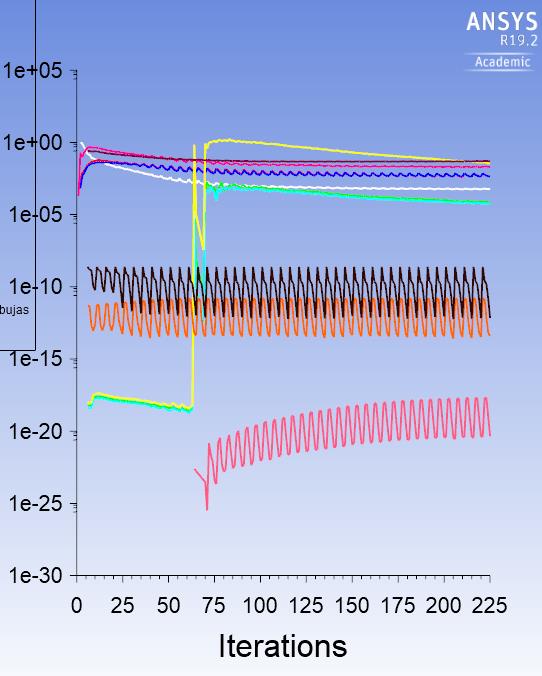
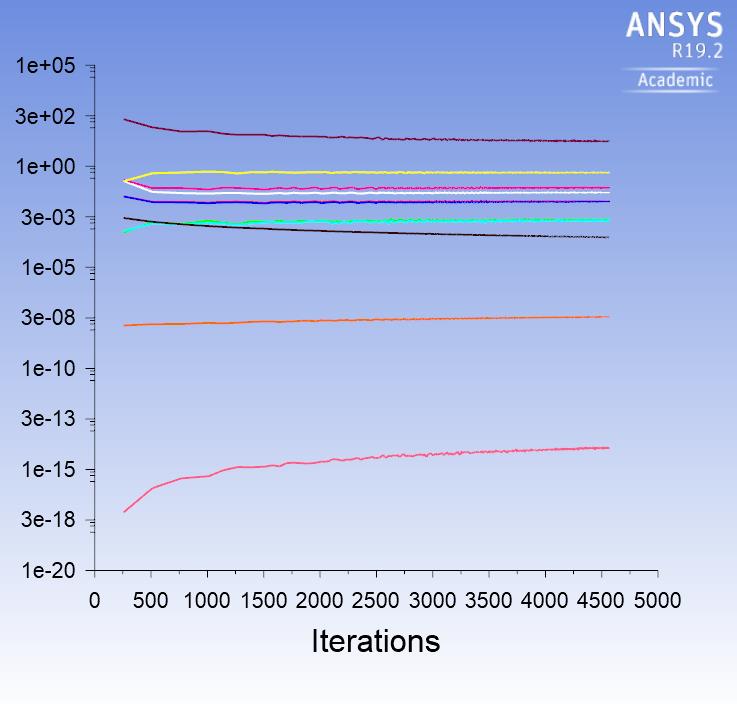
      I use the seeding that you mentioned but my results are not logical. The mass fraction of my secondary phase (gaseous) is the same at 25 and 65ºC and this is not correct. Also I reduce the number of controls but the form of my residuals is the next one!


      Why can happen this?


      Thanks

    • DrAmine
      Ansys Employee
      Not easy to figure out without looking into the case. Again test at first with constant rate to see if it works at all.
    • myke
      Subscriber

      Hi again and thanks for your response+


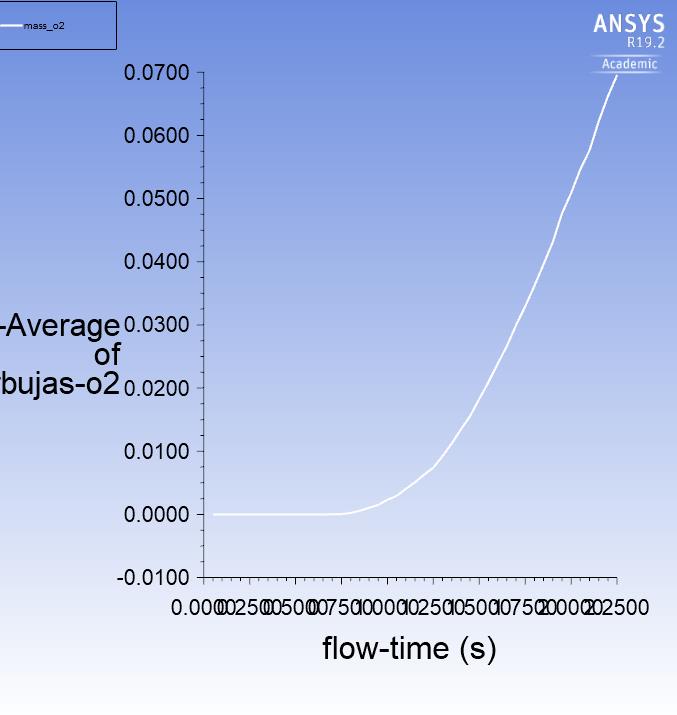
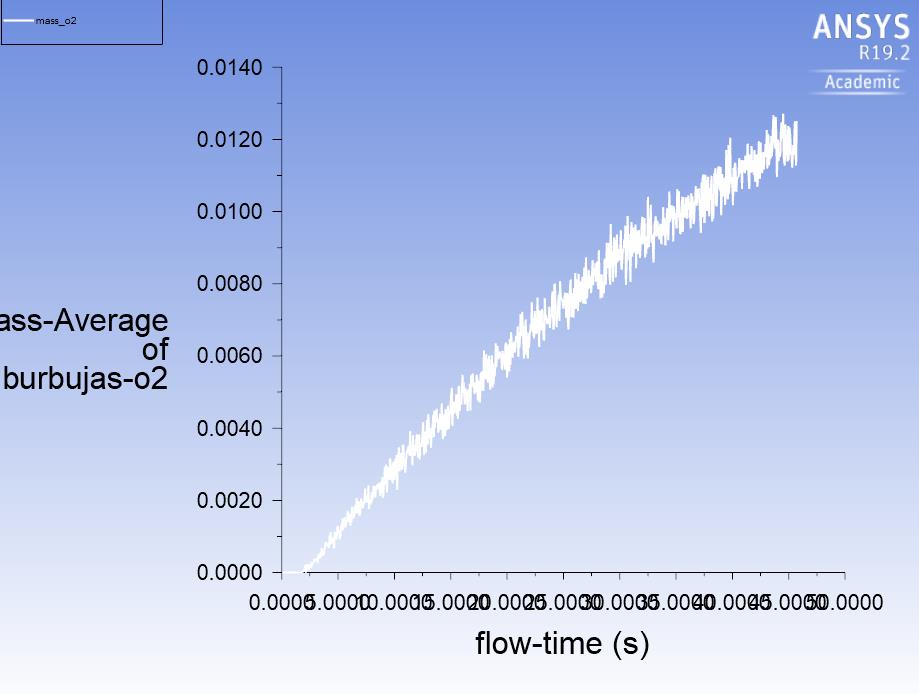
      I prove with constant rate and I think that is correct. You can see next figures:


      So now I have to apply the species mass transfer with henrys law and put difference temperatures to see the results no?


      Thanks

    • myke
      Subscriber

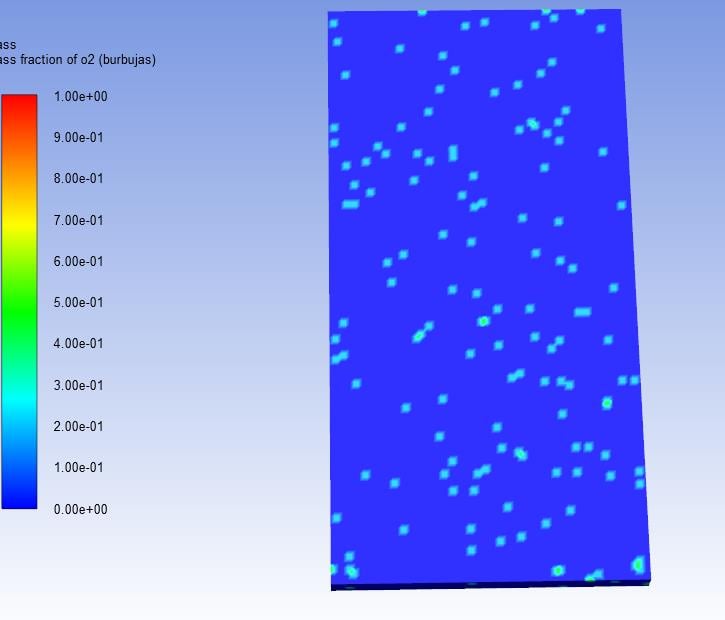
      Hi again, I modelate with species mass transfer (henrys law) but the results are the same at 25ºC or 65ºC and is not logical.. always I have like mass transfer and the mass fraction of my gaseous phase like in the next image.. is this correct?


      Thanks


    • myke
      Subscriber

      Also I actívate the seeding to put the minimun volumen fraction of my secondary phase and my intiial conditions are:


      Mass fraction of dissolved oxygen : 1e-10


      Mass fraction of dummy oxygen : 1


      Volume fraction of gaseous phase: 0


    • DrAmine
      Ansys Employee

      How does the volume fraction plot look alike?

    • DrAmine
      Ansys Employee

      And please use a new version: they are a couple of enhancement introduced which might affect the overall behavior.

    • myke
      Subscriber

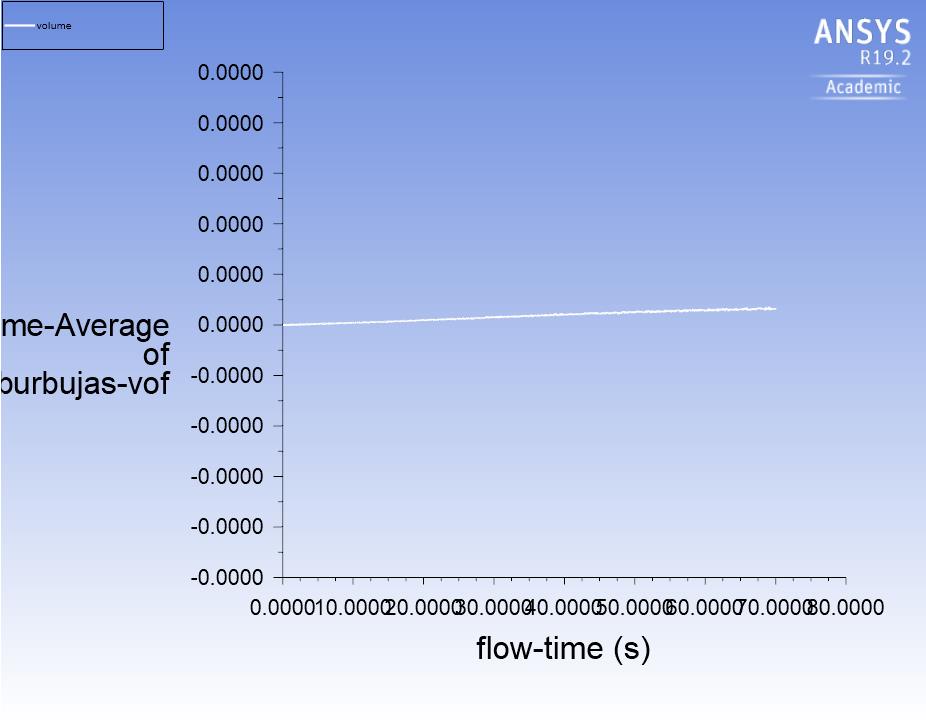
      The volume fraction of ,my secondary phase looks like this after 70 seconds 


      Thanks

    • myke
      Subscriber

      Hi again I have some questions


      My setup is like a tank filled with wáter and disolved oxygen and as you know I want to see the disolved oxygen in wáter depending on temperatura (henrys law)… 


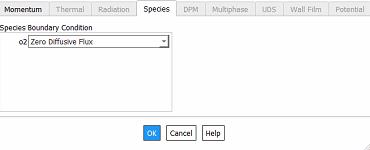
      In my boundary conditions (species) I put all the walls like zero difussive flux (next image) this is correct no? All of my boundary conditions are walls and only I change the temperatura of the bottom Wall in one setup is all 25ºC and in another setup the bottom Wall is 70ºC to see this change of disolved oxygen.


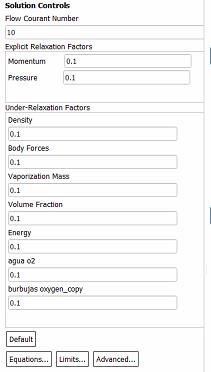
      Also I change the controls and I put smaller values to have a better convergence. Is this correct no?


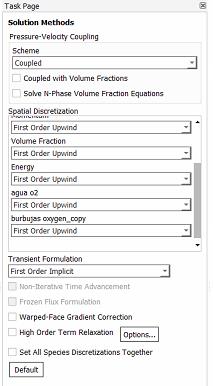
      And also I put my models like default and I change the scheme for couple. Do you think that is enough with that?


      Thanks

Viewing 41 reply threads
  • The topic ‘Dissolved oxygen in water- Henrys law’ is closed to new replies.
[bingo_chatbox]