

-
-
February 19, 2021 at 12:40 pm
kashfia.mahin
SubscriberFebruary 20, 2021 at 1:59 pmpeteroznewman
SubscribernIn Static Structural model, under Analysis Settings, turn on Large Deflection. For a drum head, there is very little stiffness to the initial or linear displacement of the drum head normal to its surface. It is only through nonlinear iteration that the tension in the drumhead can be developed, which will greatly increase the stiffness of the drum head.nA 1 N force is a very small force, maybe you need a larger force. Please show how that force is applied and how the drum is supported. How is the drum meshed? Is it shell elements on a surface? That is what you want.nFebruary 20, 2021 at 2:43 pmSubscriberthanks for your reply.nFor the Mesh on the water tank, Shell elements are not used. n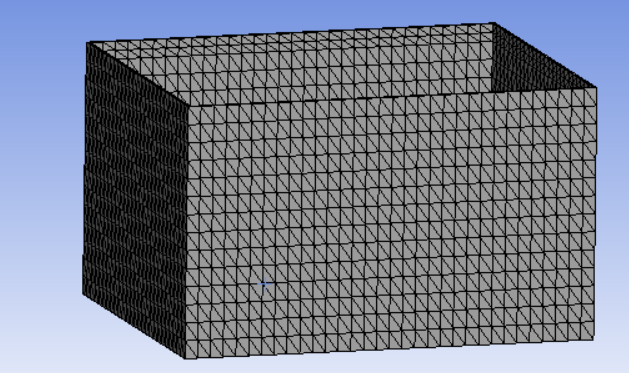 Force is applied on the one fave of the tankn
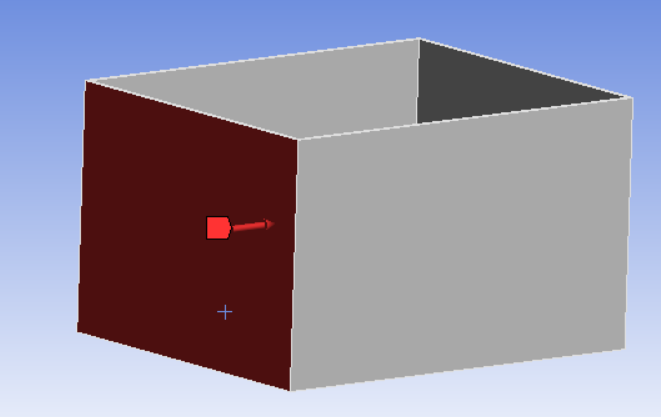 Fixed support is given in the lower edges of the drumn
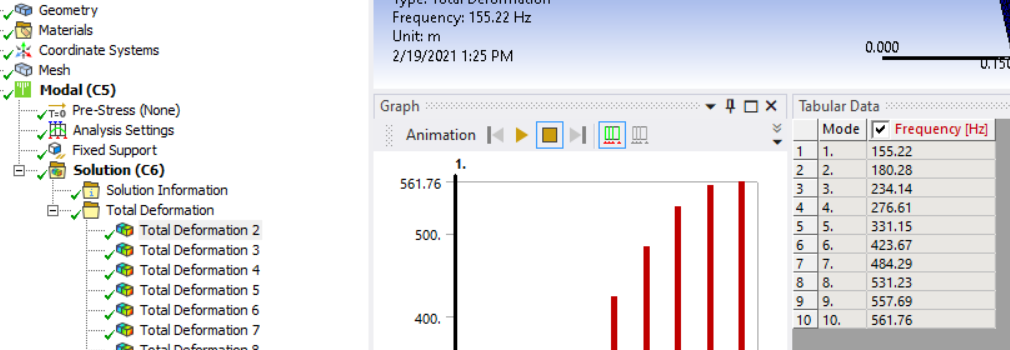
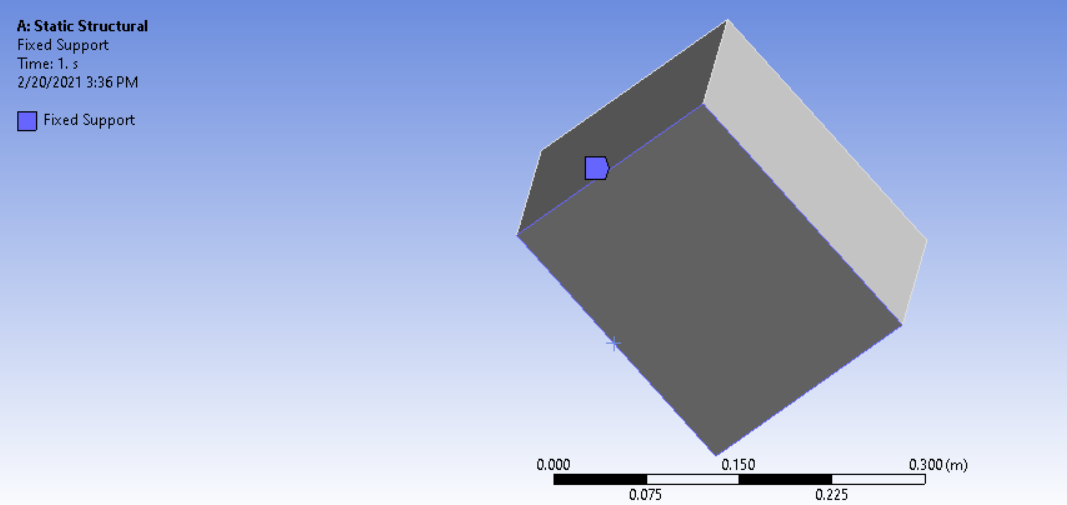 I changed the Force from 1N to 100N on the face. I didn't see much change in the eigenvalue.nTotal Deformation for 1N forcen
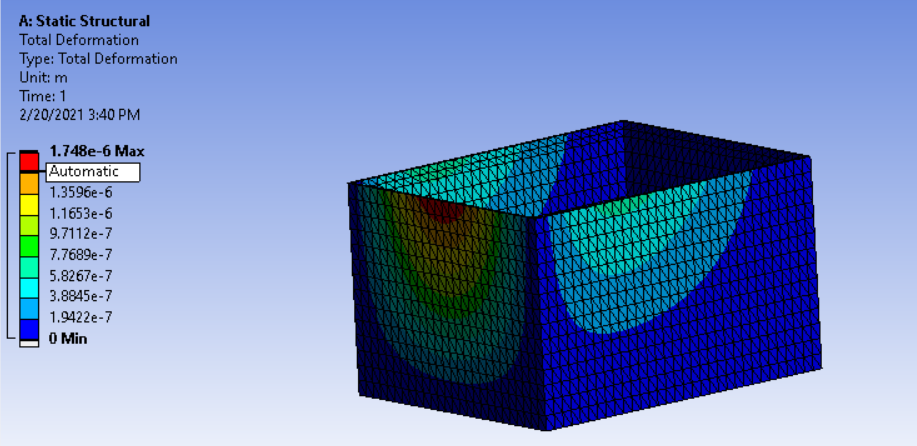 nn
February 20, 2021 at 3:34 pm
nn
February 20, 2021 at 3:34 pmErKo
Ansys EmployeeIt is membrane actions generating stress stiffening effects, and thus increase in the bending stiffness.nnThe best example is to put an axial load/stress on a beam, and then see how the 1st bending mode frequency changes as we increase our axial load. This is the same thing that happens when increasing the tension in a guitar string, where the frequency goes up with increased tension.nnThis is the best example to start with in order to understand this effect (stress stiffening).nnAll the bestEriknnFebruary 20, 2021 at 4:01 pmSubscribernErik's example is very good to learn from.nFor your model, you should definitely replace the solid body with a surface body and get shell elements.nWhich mode vibrates that surface? You should see that mode move when you have significant force, but you don't have a rigid structure so you can't build up much tension in the shell elements from that force.nnFebruary 20, 2021 at 5:11 pmSubscriberThanks nI have tried first the way Mr. Erik said. For the free boundary condition of that tank, the frequencies are very smaller than when I applied the support on the edges. nBut when I applied the force on the outer face, it doesn't change much in the eigenfrequency. n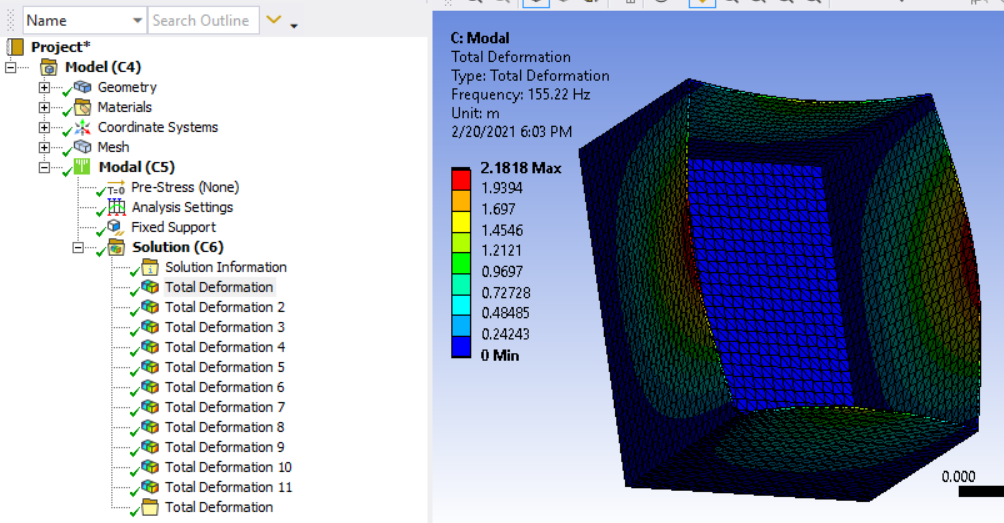 the above picture is the 1st Mode of Deformation of the tank while considering only the Modal analysis.n
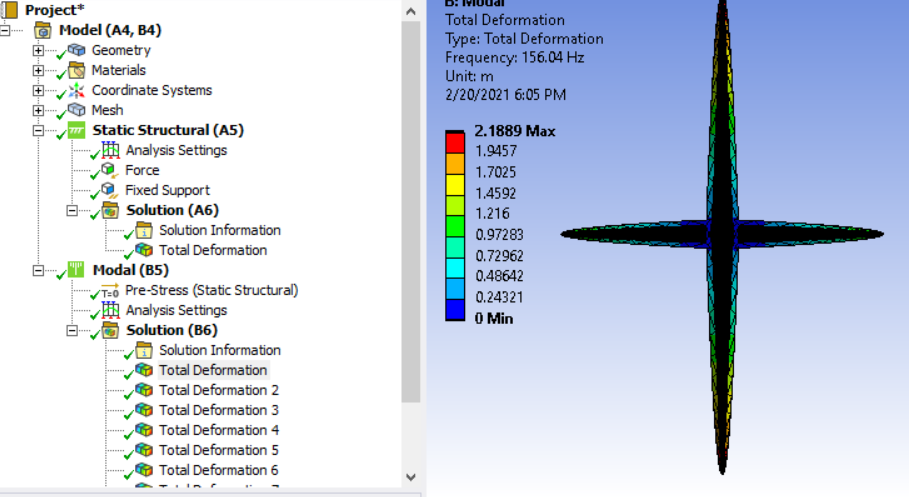 The 2nd picture is the 1st mode of deformation of the tank after Static Analysis.nAs I am a new learner in structural dynamics, sometimes I miss the parameters to consider. n
Viewing 5 reply threads
The 2nd picture is the 1st mode of deformation of the tank after Static Analysis.nAs I am a new learner in structural dynamics, sometimes I miss the parameters to consider. n
Viewing 5 reply threads- The topic ‘Change of eigenfrequency with force in after Pre-Stressed Modal Analysis’ is closed to new replies.
Innovation Space Trending discussions
 Top Contributors
-
peteroznewman
 6465
6465 -
scabo
 1906
1906 -
Dennis Chen
 1458
1458 -
javat33489
 1308
1308 -
Shyam Prasad V Atri
1022
Top Rated Tags
© 2026 Copyright ANSYS, Inc. All rights reserved.
Ansys does not support the usage of unauthorized Ansys software. Please visit www.ansys.com to obtain an official distribution.
-


The Ansys Learning Forum is a public forum. You are prohibited from providing (i) information that is confidential to You, your employer, or any third party, (ii) Personal Data or individually identifiable health information, (iii) any information that is U.S. Government Classified, Controlled Unclassified Information, International Traffic in Arms Regulators (ITAR) or Export Administration Regulators (EAR) controlled or otherwise have been determined by the United States Government or by a foreign government to require protection against unauthorized disclosure for reasons of national security, or (iv) topics or information restricted by the People's Republic of China data protection and privacy laws.

 You are navigating away from the AIS Discovery experience