TAGGED: ansys-aqwa, aqwa, hydrodynamic-response
-
-
July 9, 2025 at 6:51 am
NVN NAMMA
SubscriberHello,
I’m working with ANSYS AQWA for time-domain response analysis. I have defined a JONSWAP spectrum to generate irregular waves and have obtained the wave elevation time series as output.
I would like to check how well the simulated wave elevation matches the theoretical JONSWAP spectrum (for the same parameters).
Does AQWA provide any built-in way to view or export the frequency-domain spectrum (Power Spectral Density) of the output elevation time series? If not, what is the recommended practice for verifying the agreement between the input spectrum and the generated wave time series?
Any suggestions or workflows for this verification would be much appreciated.
Thank you!
-
July 10, 2025 at 4:14 pm
Shuangxing Du
Ansys EmployeeYes, you can use Ags to do it.
(1) Run Hydrodynamic time domain analysis with JONSWAP wave spectrum and make sure the time step is small, for example 0.1 second, and the duration is long enough, such as 500 seconds.
(2) The results are stored in (Your project)\dp0\AQW-?\AQW\AQ\Analysis\TIMERESPONSE.RES and TIMERESPONSE.PLT.
(3) Double click on (your Ansys installation folder)\\aqwa\bin\winx64\Ags.exe, Aqwa Supervisor Window will appear
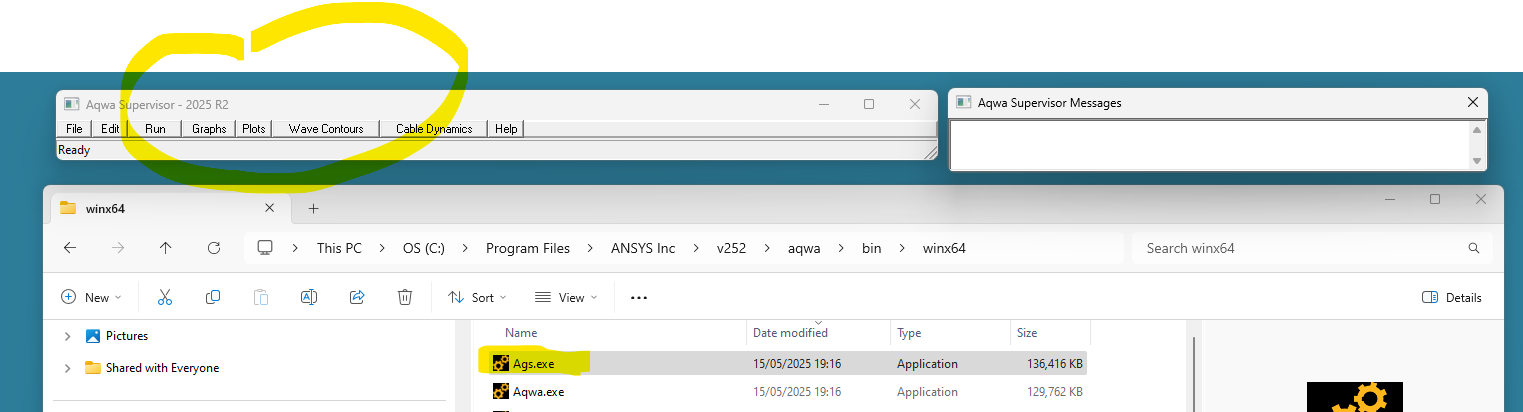
(4) Click on File -> Open to import TIMERESPONSE.RES in your project folder, then click on Graphs to import TIMERESPONSE.RES in your project folder. Select Wave psn in z direction, confirm selection, then PLOT, the time domain wave elevation will be plotted.
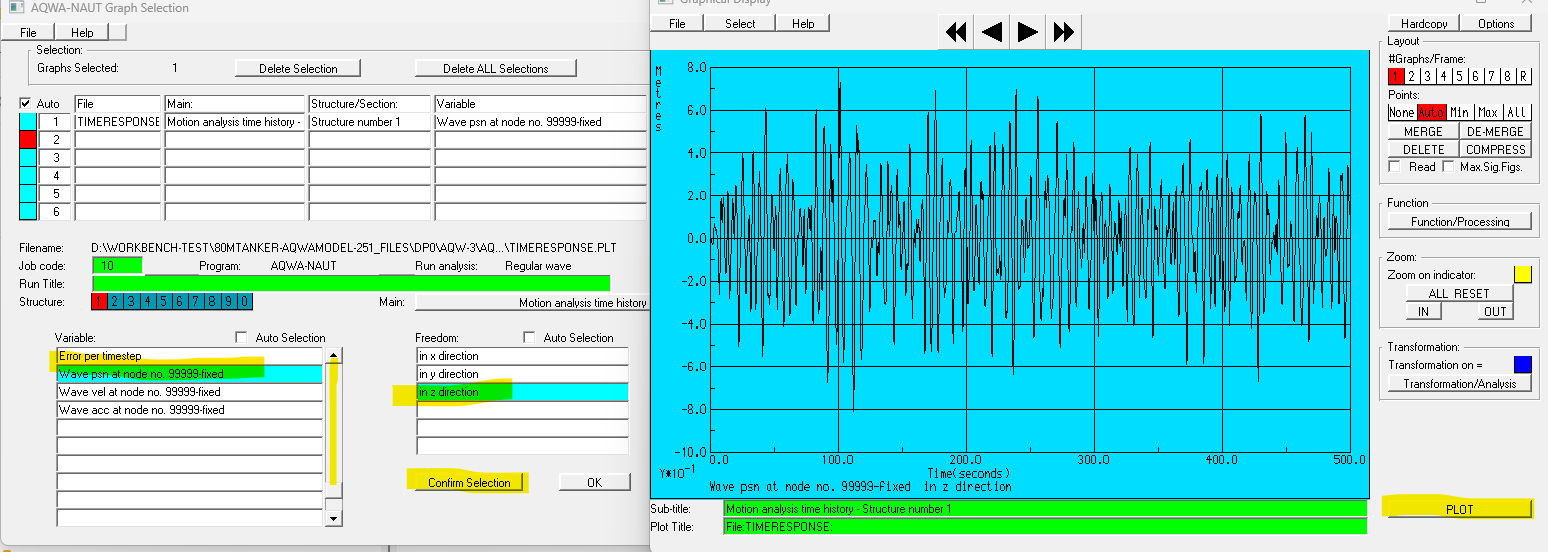
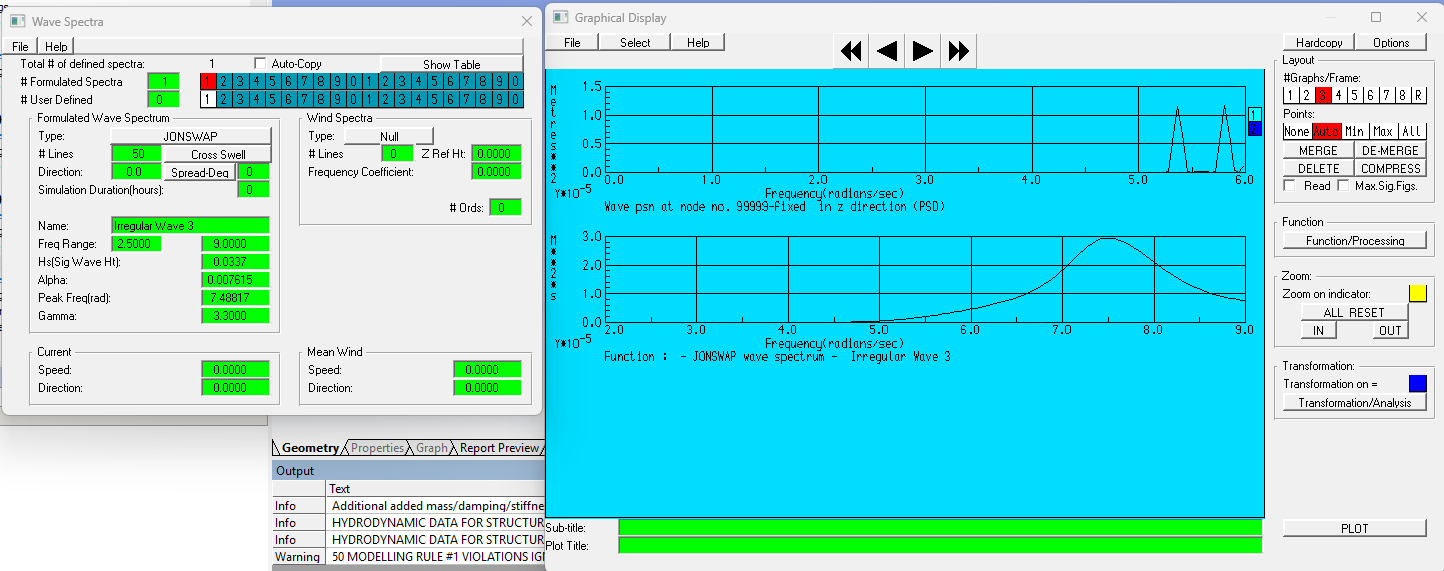
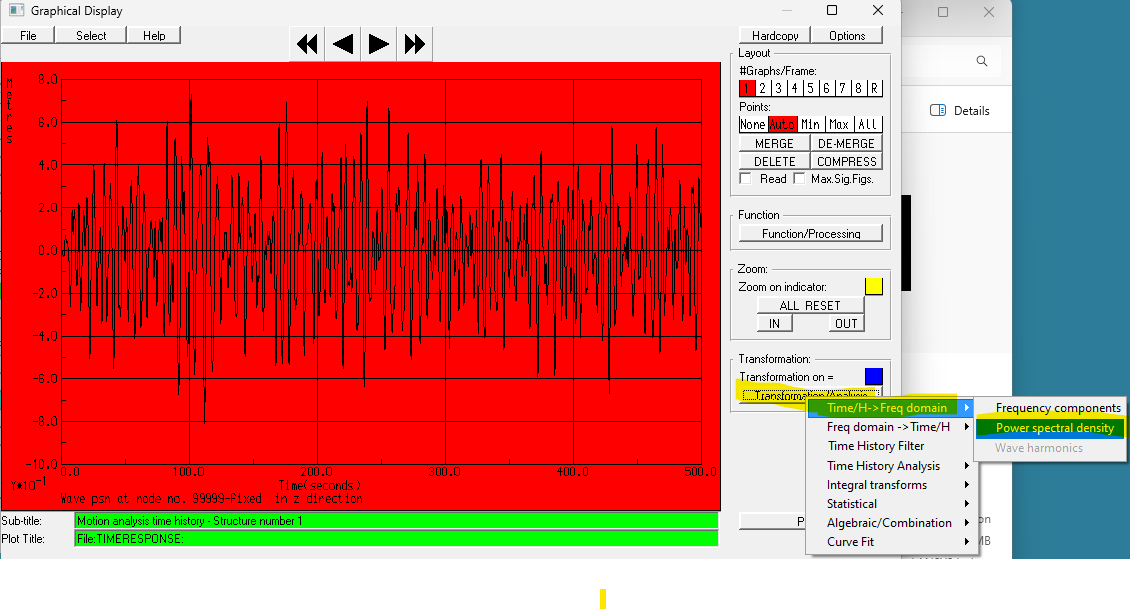
(5) Click on the graph, -> Transformation/Anslysis -> Time/H -> Freq domain -> Power spectral density
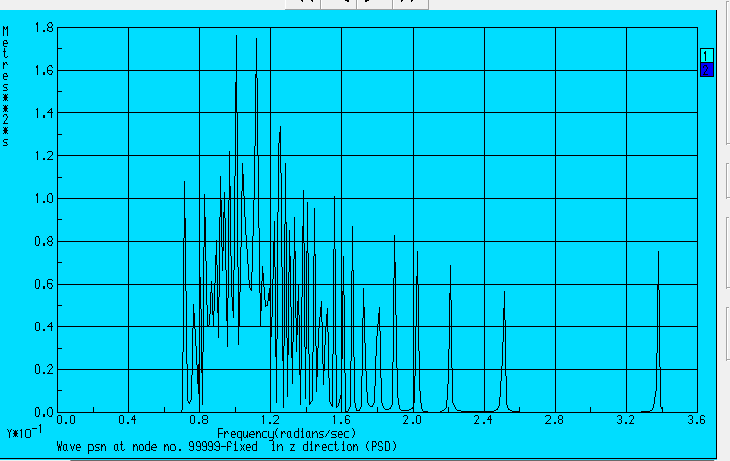
(6) the swave spectrum density will display
The JONSWAP spectrum you defined can also be dsplayed by clicking on Function/processing
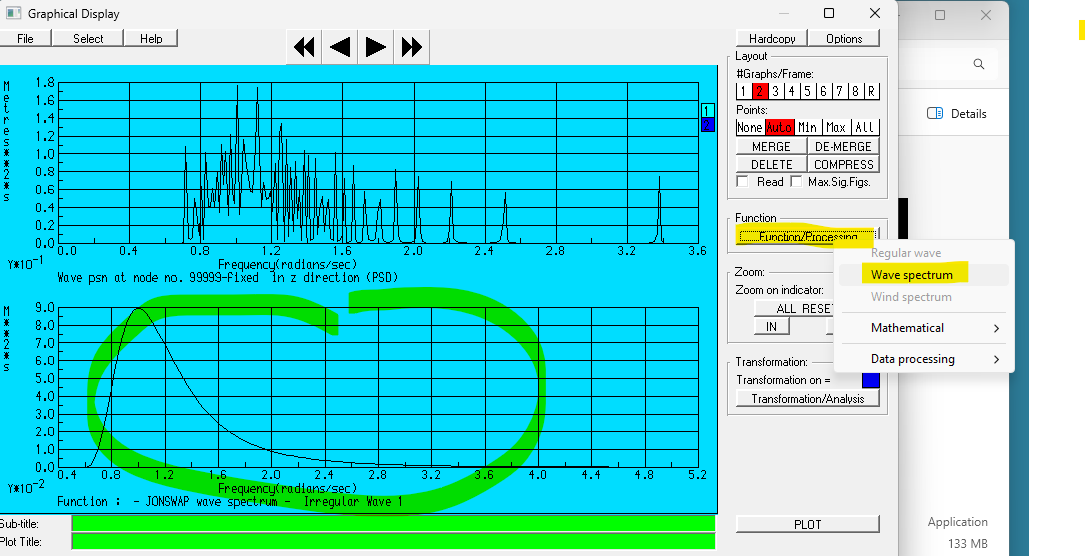
(7) by holding Ctrl key and pushing Mouse left button on these two graphs, then click MERGE
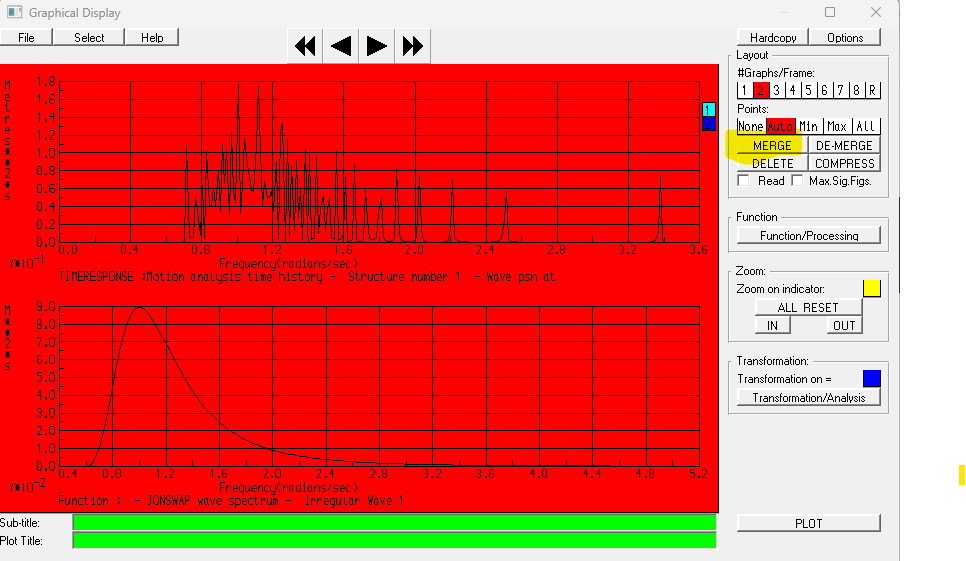
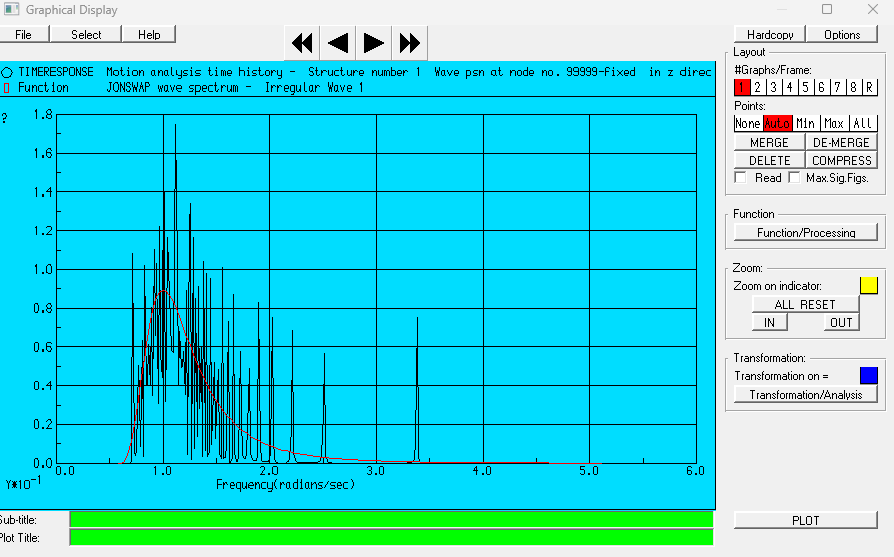
finally you will have the comparison of these two data
-
July 11, 2025 at 5:07 am
-
July 14, 2025 at 8:01 am
-
July 16, 2025 at 7:38 am
NVN NAMMA
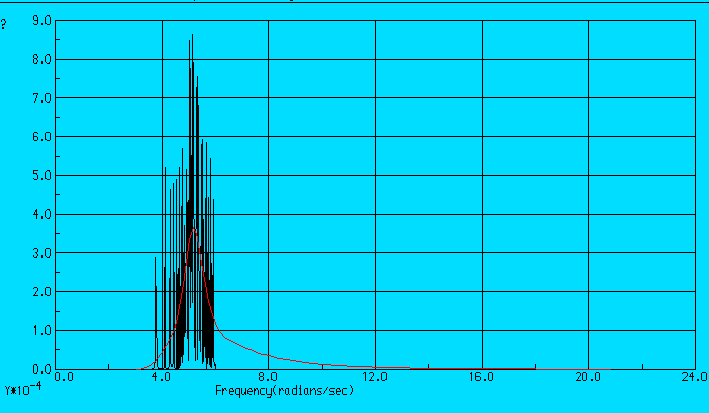
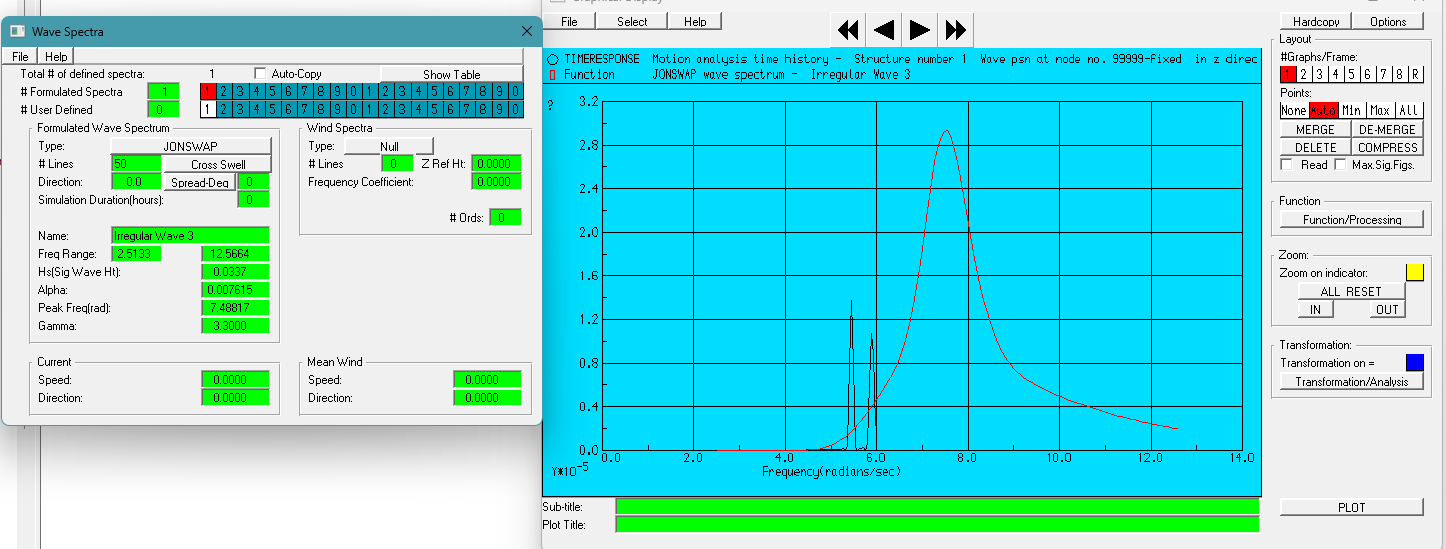
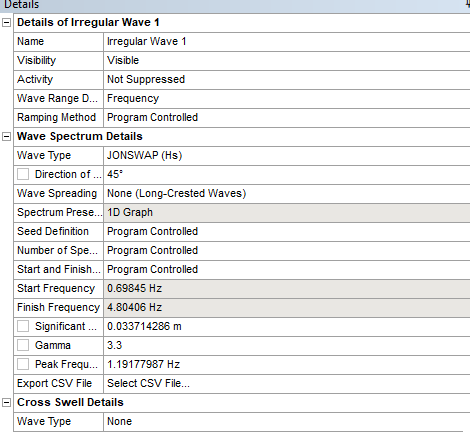
SubscriberTo cover the majority of the frequencies in the JONSWAP spectrum, I adjusted the start and end frequencies in the simulation and used a duration of 500 s with a time step of 0.01 s. However, the results do not match the target spectrum. What could be the reason?
The theoretical spectrum matches the given range, but the spectrum developed from the wave elevation does not match.
-
July 16, 2025 at 7:53 am
Shuangxing Du
Ansys EmployeeCan you please show the data from Data Category 13 to Data Category 18 in (Your project)\dp0\AQW-?\AQW\AQ\Analysis\TIMERESPONSE.DAT? Data Category 13 defines the wave spectrum.
-
July 16, 2025 at 9:35 am
NVN NAMMA
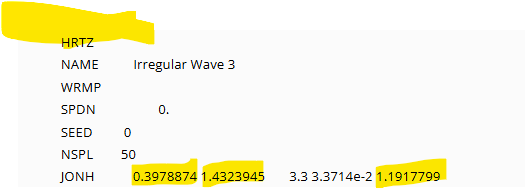
Subscriber*********************************** DECK 13 ************************************
********************************************************************************
SPEC
HRTZ
NAME Irregular Wave 3
WRMP
SPDN 0.
SEED 0
NSPL 50
JONH 0.3978874 1.4323945 3.3 3.3714e-2 1.1917799
END
********************************************************************************
*********************************** DECK 14 ************************************
********************************************************************************
MOOR
LINE 197001 097000 3.645 13.377521
LINE 197005 097004 3.645 13.377521
LINE 197009 097008 3.645 13.377521
LINE 197013 097012 3.645 13.377521
LINE 197017 097016 3.645 13.377521
LINE 197021 097020 3.645 13.377521
LINE 197025 097024 3.645 13.377521
LINE 197029 097028 3.645 13.377521
DYNM
END
********************************************************************************
*********************************** DECK 15 ************************************
********************************************************************************
STRT
POS1 0. 0. -0.296 0. 0. 0.
POS2 0. 0.-5.8803317 0. 0. 0.
END
********************************************************************************
*********************************** DECK 16 ************************************
********************************************************************************
TINT
TIME 50001 1.e-2 0.
END
********************************************************************************
*********************************** DECK 17 ************************************
********************************************************************************
HYDC
DRGM 1 1.
ADMM 1 1.
SLMM 1 0.
DRGM 2 1.
ADMM 2 1.
SLMM 2 0.
END
********************************************************************************
*********************************** DECK 18 ************************************
********************************************************************************
PROP
PRNT
ALLM
PMST
PTEN
PPRV 1
GREV 1
PREV 1
TPRV 1
TGRV 1
ZRON
NODE 199800
ZROF
ZRON
NODE 199801
ZROF
ZRON
NODE 199802
ZROF
ZRON
NODE 199803
ZROF
ZRON
NODE 199804
ZROF
ZRON
NODE 199805
ZROF
ZRON
NODE 199806
ZROF
ZRON
NODE 299807
ZROF
WPON
NODE 199999 099999
WPOF
END
********************************************************************************
-
-
July 16, 2025 at 9:56 am
Shuangxing Du
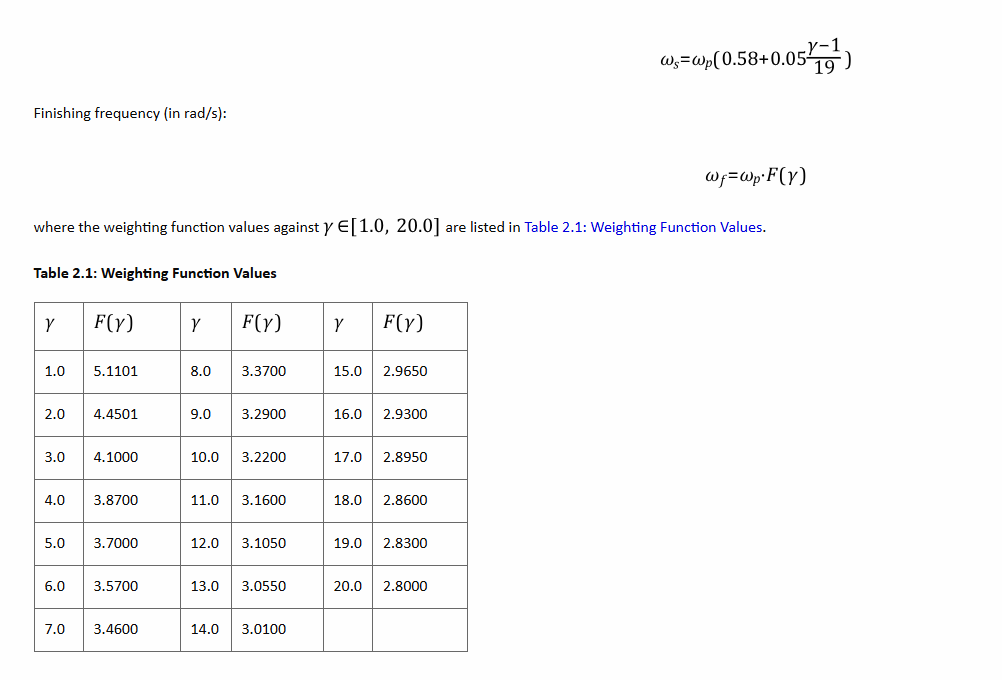
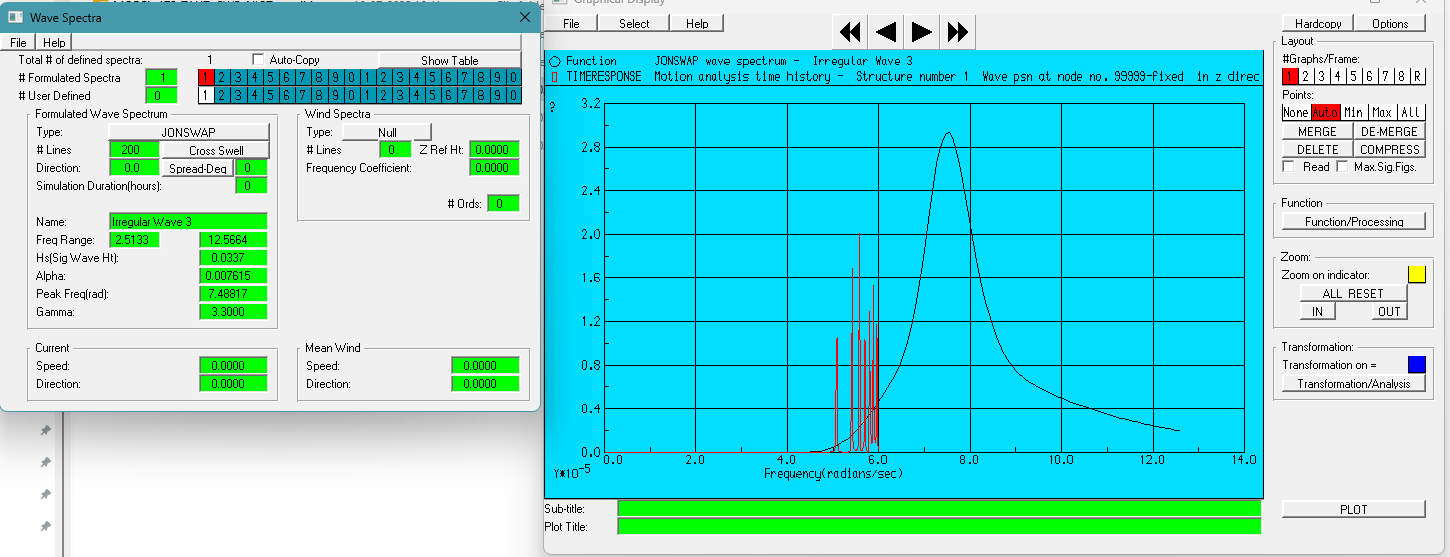
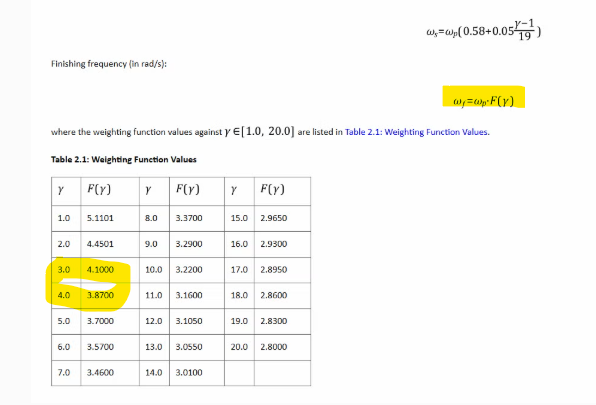
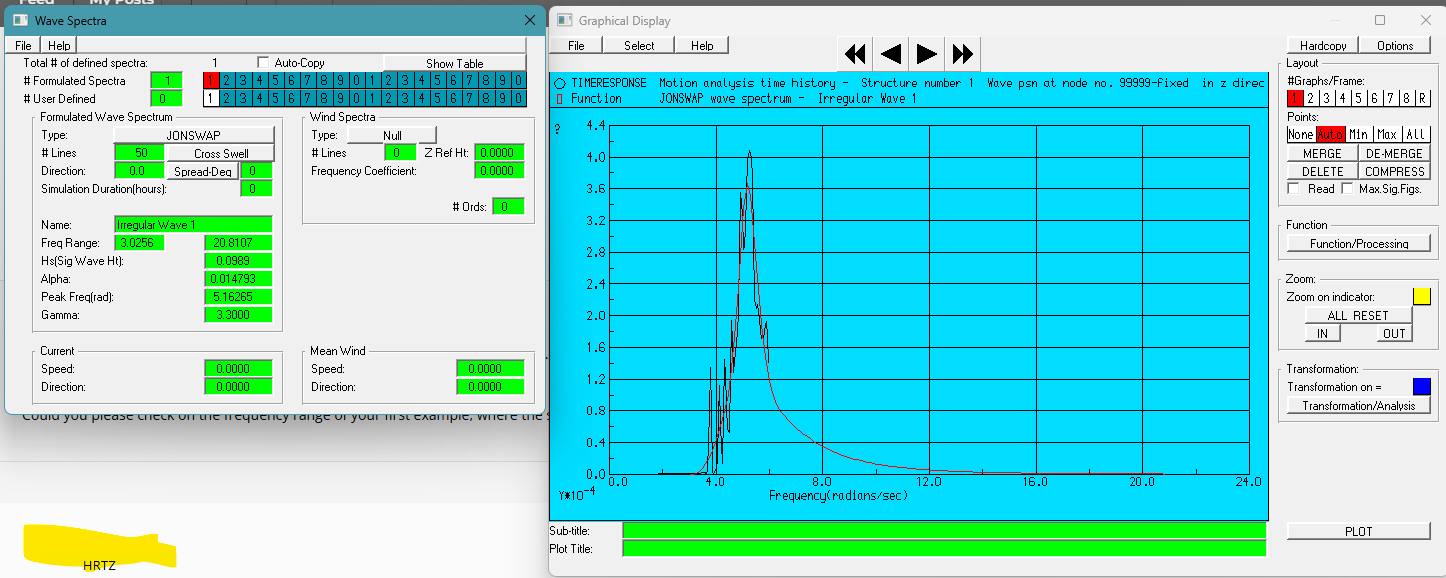
Ansys EmployeeNormally within starting/finishing frequnecies, the wave energy should be at lease of 99% of the total wave spectrum energy. From the plot of the spectrum, it seems not the case. Can you make the finishing frequency to be higher. Can you also set the numebr of wavelets to be 200 instead of default value of 50?
-
July 16, 2025 at 10:03 am
-
-
July 16, 2025 at 10:10 am
-
July 16, 2025 at 11:29 am
-
July 16, 2025 at 11:39 am
Shuangxing Du
Ansys EmployeeWith a wave spectrum, the irregular waves are represented by number of wavelets between the starting and finishing frequency range. In a time domain analysis, the actual wavelets' frequencies are defined by the program to ensure the same wave energy (or same wave amplitude) of each wavelet. By using more wavelets instead of 50, the waves are represented more accurately, but slightly time consuming in the numerical analysis.
Note that you may have defined a wave spectrum for the seakeeping basin, as the signficant wave height is about 0.03m, and the frequency is in the order of 1 Hz. I wonder if you convert your model into the prototype size and define the equivalent sea wave condition, could this comparison work be better?
-
July 16, 2025 at 2:28 pm
NVN NAMMA
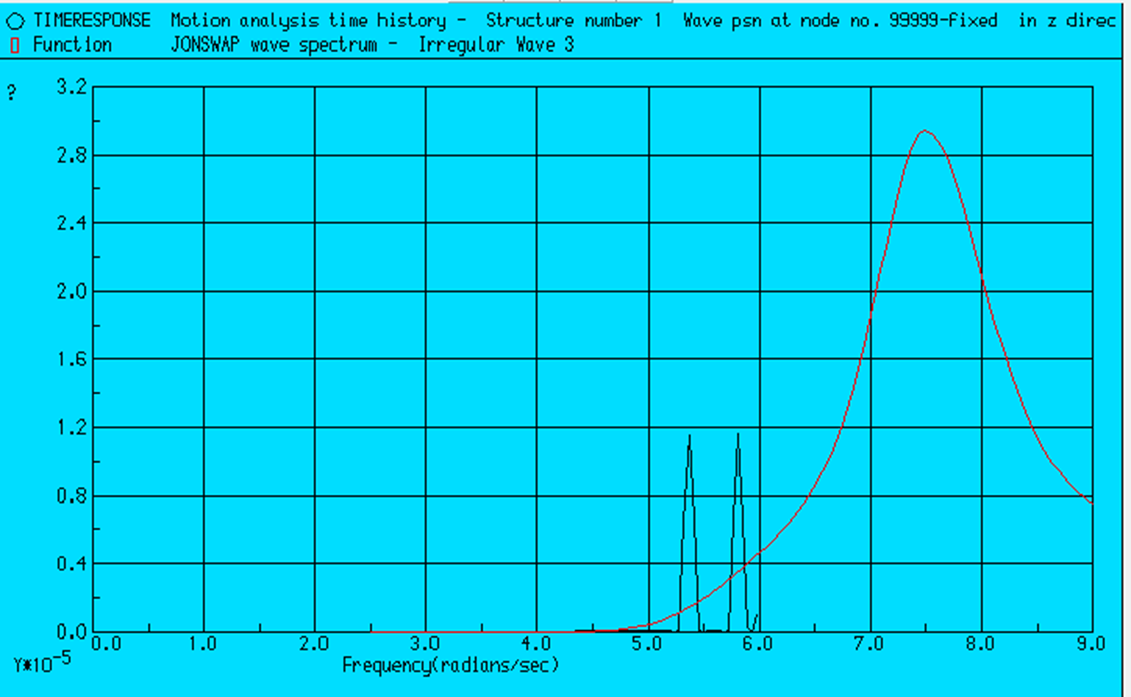
SubscriberDoing simulations on the prototype scale will not work for me. Now i am unable to understand why those frequencies are missing in the time series. and i am struggling to reproduce the old one, which had a better match
Here too, those frequencies are missing. In the hydrodynamic diffraction analysis, I defined a manual frequency range with a maximum of 2 Hz. Could this be related to the wave elevation in the hydrodynamic time response simulations?
-
-
July 16, 2025 at 3:43 pm
-
July 16, 2025 at 4:01 pm
NVN NAMMA
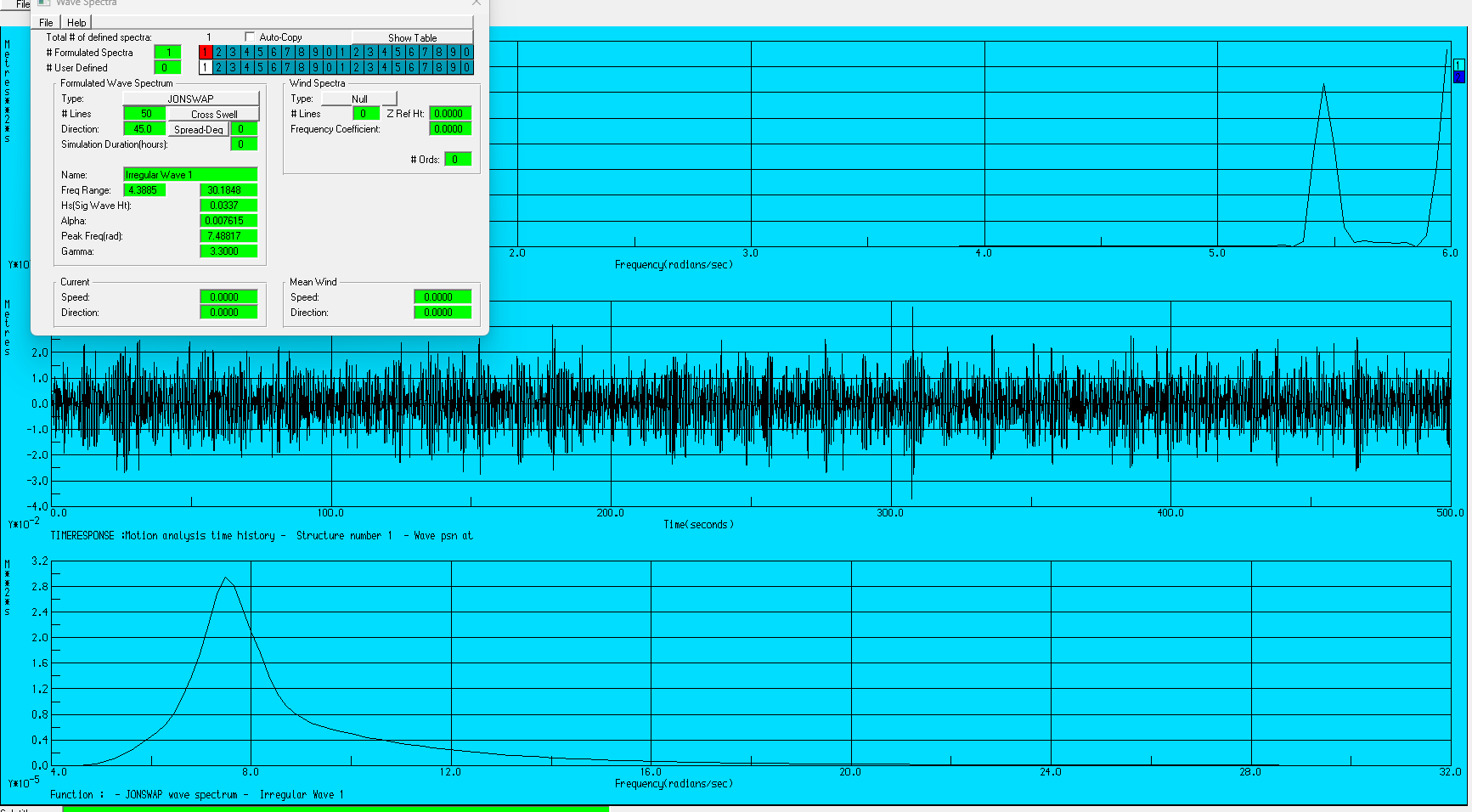
SubscriberNo, sir. The results are in rad/s so the maximum frequency would be 29.90 rad/s. (2*4.76*pi). The theoretical spectra are shown up to the given finishing frequency. In all the time series spectra, the maximum frequency is 6 rad/s. ie 0.954 Hz. Is there any modification required in the diffraction analysis?.
Could you please check on the frequency range of your first example, where the spectrum spans the entire theoretical spectrum?
-
July 16, 2025 at 4:08 pm
-
July 17, 2025 at 5:24 am
-
-
July 17, 2025 at 5:50 am
-
July 17, 2025 at 8:08 am
Shuangxing Du
Ansys EmployeeYes, it could be the limit of 6 rad/s. For the real sea state, it is reasonable. Thank you for reporting it, I will check the code and may have a change.
-
July 17, 2025 at 8:15 am
NVN NAMMA
SubscriberThank you so much👍
-
July 17, 2025 at 8:58 am
NVN NAMMA
SubscriberAs a result, I am currently constrained by the model scale in simulating wave conditions beyond the peak frequency of 1 Hz. I would greatly appreciate any suggestions or possible strategies to address this limitation
-
-
July 17, 2025 at 8:42 am
Shuangxing Du
Ansys Employeeyou are welcome.
-
July 17, 2025 at 9:01 am
NVN NAMMA
SubscriberSo, I'm stuck with my model scale and can't simulate wave conditions beyond the peak frequency of 1 Hz. I would appreciate any suggestions or alternative approaches to overcome this limitation
-
July 17, 2025 at 9:49 am
Shuangxing Du
Ansys EmployeeI will check the source code today to see if it is just the problem in the post-processing of doing FFT.
-
July 17, 2025 at 10:07 am
Shuangxing Du
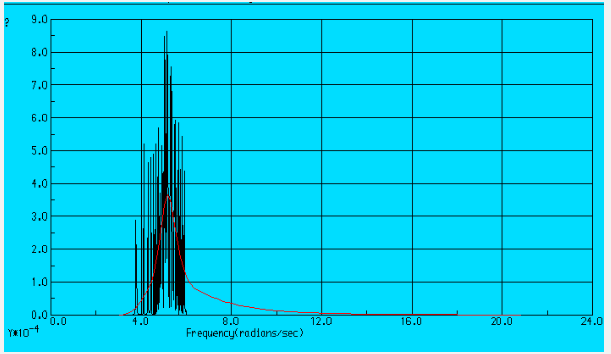
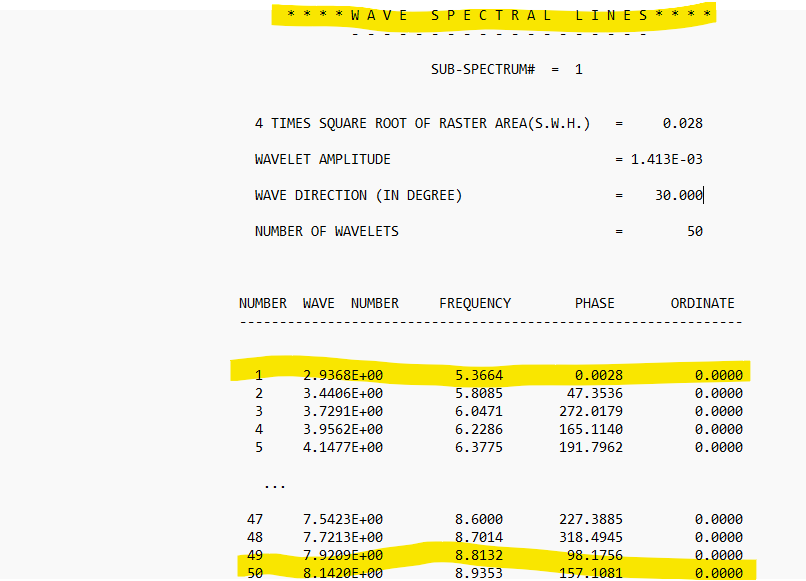
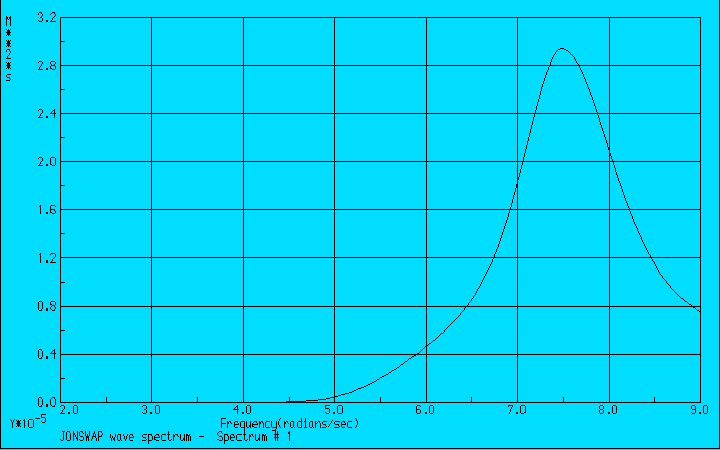
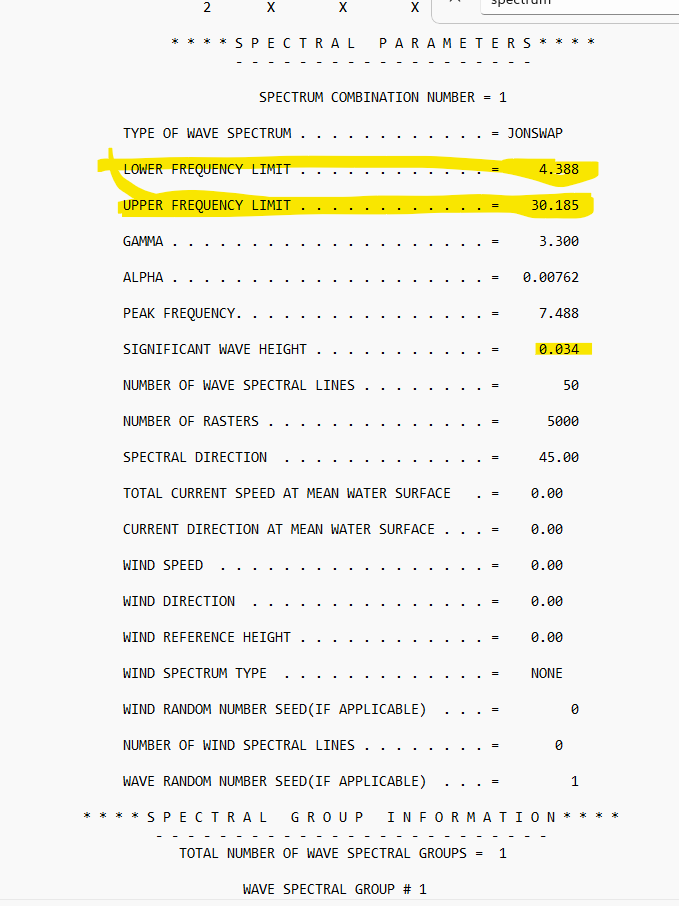
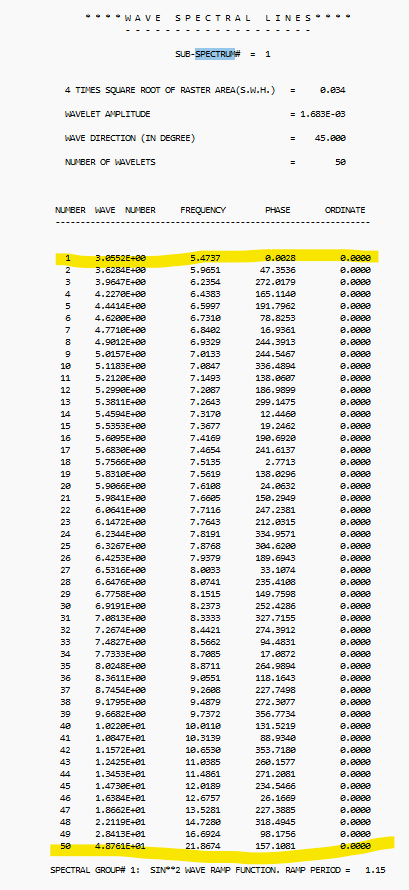
Ansys EmployeeIt is confirmed that the Aqwa time domain analysis uses the wavelets in the frequency range of (5.366, 8.935) rad/s. Please see RESPONSE.LIS in (Your project)\dp0\AQW-?\AQW\AQ\Analysis
The wave spectrum you defined looks like
As I mentioned previously, the finishing frequency may not be correct.
The 6 rad/s limit is just for post-processing, which does not affect your time domain response analysis, but your finishing frequency may do.
-
July 18, 2025 at 5:21 am
-
July 18, 2025 at 9:01 am
Shuangxing Du
Ansys EmployeeNothing wrong. As I mentioned previous, when the finishing frequency is higher than 6 rad/s, please do not use this FFT post-processing function. Just check the wavelet information in the response.lis file, as you did, which lists the wavelets acutally used in the Aqwa analysis.
-
- You must be logged in to reply to this topic.
-
6379
-
1906
-
1457
-
1308
-
1022
© 2026 Copyright ANSYS, Inc. All rights reserved.