TAGGED: cyclic-loading, preload, pretension, thermal-analysis
-
-
February 26, 2024 at 4:59 am
Joe
SubscriberHi guys,
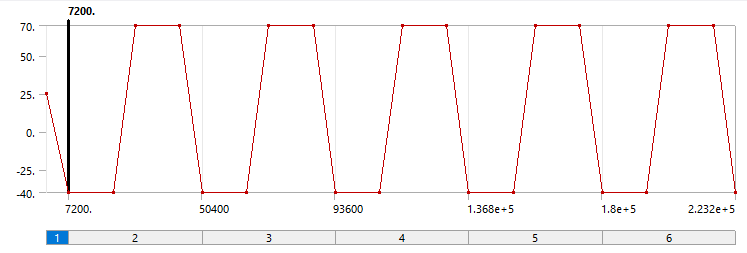
Im doing a simulation in transient structural on bolted joints by applying pretension of 7143N and thermal cycling of 25°C , -40°C , 70°C (5X) and i got my results of working load ( preload reaction) higher than the pretension like 7329N .So can the working load go higher than the preload after thermal cycling and if yes please give some explanation and some website link or something for reference if possible.
(attached an image showing the temperature cycling)
Thanks
-
February 26, 2024 at 1:05 pm
peteroznewman
SubscriberLet the CTE of the plate materials the bolt is clamping together be CTEp. Assume the two plates are the same material. The bolt material has CTEb. Let the total thickness of the two plates be Lp. The change in temperature at 70 C is 45 C. The change in plate length dLp = CTEp*Lp*45. The change in bolt length dLb = CTEb*Lp*45. Assuming that CTEp>CTEb, the plates expand more than the bolt, which means the bolt gets stretched a bit more and the plates get compressed a bit more, leading to a higher Working Load. This assumes all materials have a reference temperature of 25 C.
-
February 27, 2024 at 8:48 am
Joe
Subscriberthanks peter I get that .
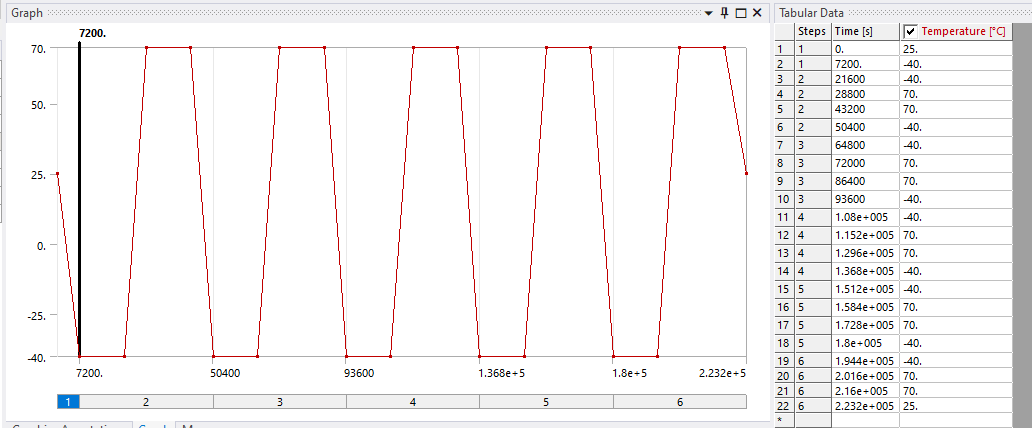
1)I made a change in last in my temperature cycling such that it drops to room temperature finally . I have attached an image.
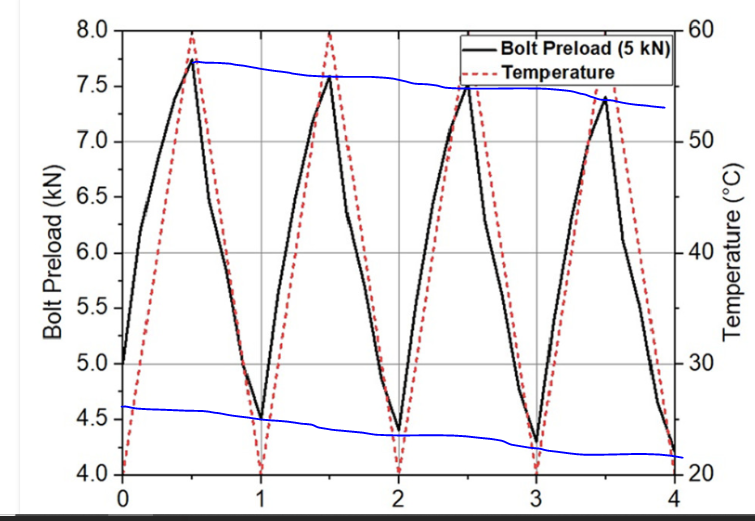
2) So now im getting a Preload reaction or working load (7247.6 N) as more than the input preload (7143 N) . But in some research papers the working load goes down a bit after all cycles , so whether my answers are wrong?
(this is my result)
( this is from research paper as we can see the working load is gradually decreasing)
-
February 27, 2024 at 11:49 am
peteroznewman
Subscriber1) Do the same calculation I made above but use a deltaT of -65 C. In the cold, the thickness of the two plate shrinks more than the bolt length, reducing the Working Load below the preload applied at 25 C.
2) Please provide a link to the research paper. In that paper, the plate material could have a low strength and the bolt preload has taken the material under the washer past the yield point while stretching the bolt. When the temperature increases, the plate material expands more than the bolt length, increasing the working load which causes more yielding. When the temperature goes down, there will be less preload because permanent plastic deformation occured at the maximum temperature.
You need to add a Plasticity material model to simulate a phenomenon called Rachetting.
-
February 27, 2024 at 11:52 am
Joe
SubscriberPeter i have edited my reply can you please refer this
-
February 27, 2024 at 11:53 am
Joe
Subscriberhttps://journals.sagepub.com/doi/full/10.1177/16878140211039428#:~:text=It%20means%20that%20the%20bolted,indicator%20shows%2060%C2%B0C.
Link of the research paper
-
February 27, 2024 at 12:09 pm
Joe
SubscriberIm thinking like In first point u mentioned that plate shrinks more and so working load is decreased , so in second point since permanent deformation took place it will shrink less or wont shrink so that working load wont get decreased right
Im not able to understand
-
February 28, 2024 at 11:14 am
peteroznewman
SubscriberThe permanent deformation is small compared to shrinking due temperature reduction so the working load will decrease.
-
- The topic ‘Analysis on preload reaction by applying pretension and thermal cycling’ is closed to new replies.

-
5879
-
1906
-
1420
-
1306
-
1021
© 2026 Copyright ANSYS, Inc. All rights reserved.