Ansys Assistant will be unavailable on the Learning Forum starting January 30. An upgraded version is coming soon. We apologize for any inconvenience and appreciate your patience. Stay tuned for updates.
Fluids

Fluids

Topics related to Fluent, CFX, Turbogrid and more.

Aerospike CFD – Reversed flow on pressure outlet/ massflow difference between inlet and outlet

    • KruX
      Subscriber

      Hi,


      For my thesis I have to simulate the flow in an aerospike nozzle. After some initial problems my simulation converges, in addition to the residuals I also looked at the mass flow at the inlet and outlet, but this differs considerably. The mass flow at the outlet is by a factor of 10 larger than at the inlet, additionally I often get the message during the simulation that reversed flow is present. The force on the nozzle wall is a hundred times greater then calculated. Does anybody have an idea what this could be due to?


      I am of the opinion that my mesh is ok, because the most important key figures are kept (Max. Skewness < 0.98, Min. Orth. Quality > 0.1, Average Element Quality > 0,775, AR <5 besides some cells at the wall where the AR is up to 30). The outlet is also far enough away from the actual nozzle geometry (about 10 times the length of the nozzle)


      I am using the following settings (on Ansys 19.2):


      • density based solver

      • energy equation 

      • realizable k-epsilon

      • pressure inlet at 68,9476 bar and 2616.532 K (k = 1 and epsilon = 100 due to high turbulent viscosity)

      • pressure outlet at sea level conditions

      • All second order upwind methods 


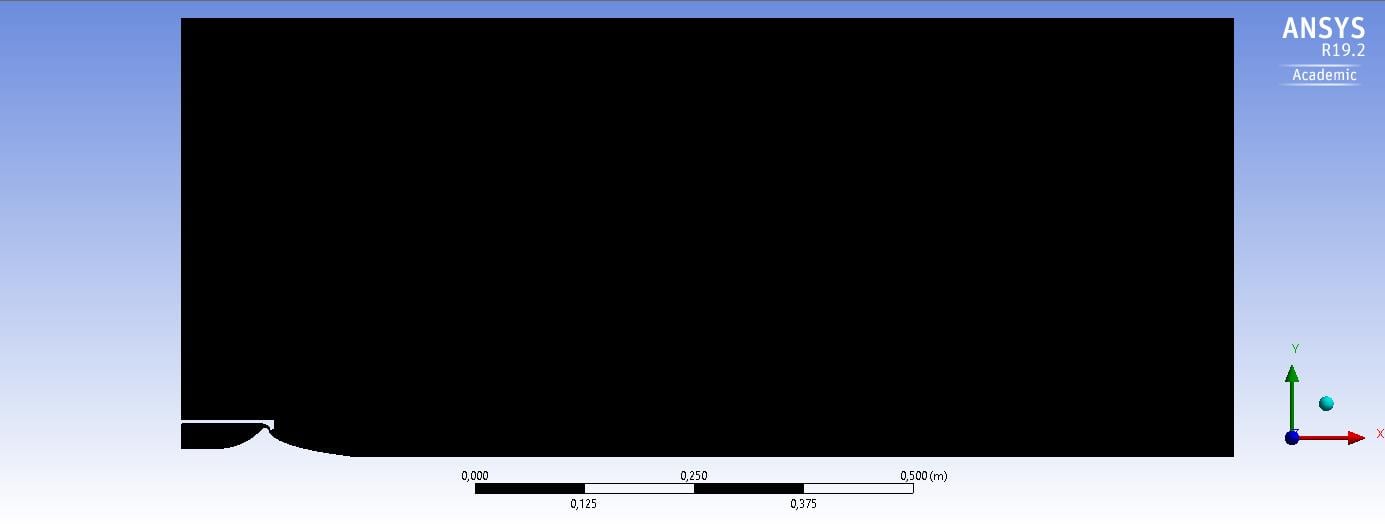
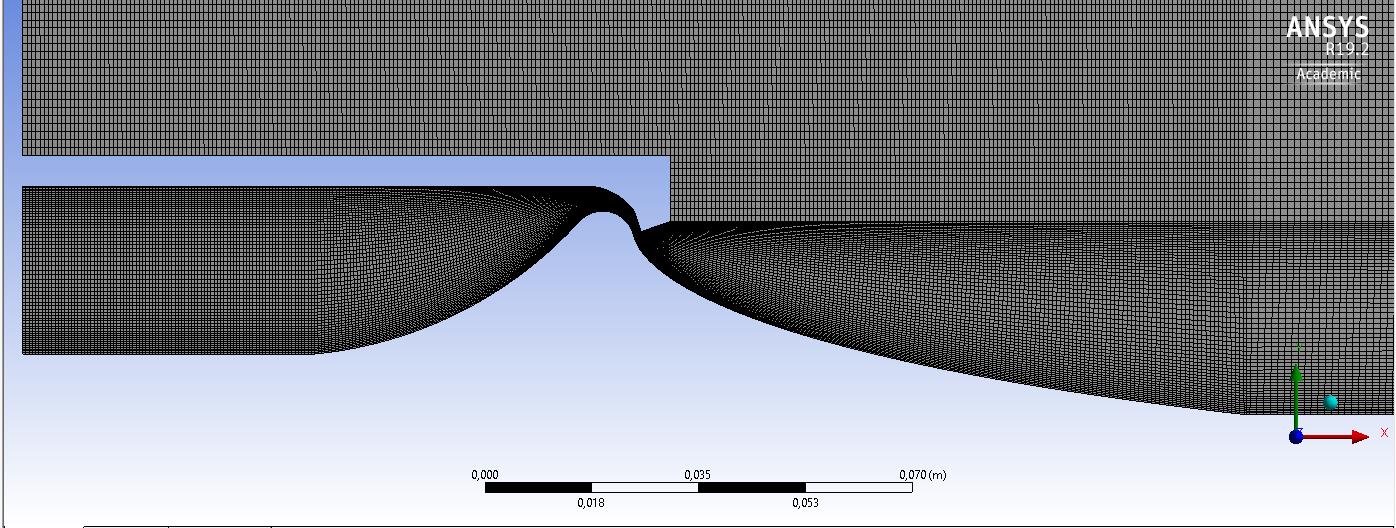
      I have also tried a massflow inlet but then the simulation didn't converge at all. Attached are some pictures of the Mesh. If something is missing I will provide it as sonn as possible.


      Thank you for your help.

    • KruX
      Subscriber


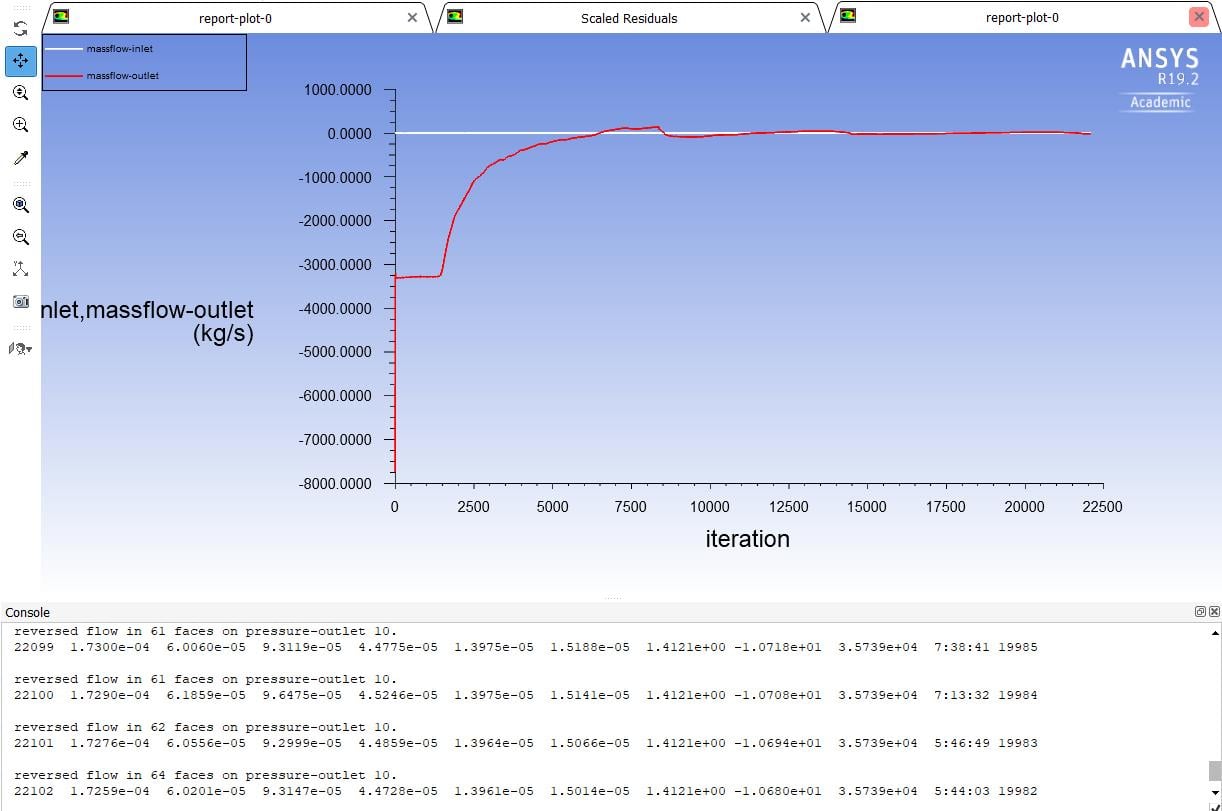
      It seems like the massflow is also converging, but there is still a Factor of 10 between the massflwow at the inlet and at the outlet.

    • RK
      Ansys Employee

      Hello, 


      Can you please try running the simulation using AUSM scheme?

    • KruX
      Subscriber

      Hi @rahkumar,


      thank you for your response. I am currently running the simulation with AUSM scheme and I will report back when the results are available.


      Best Regards,


      Roman

    • KruX
      Subscriber

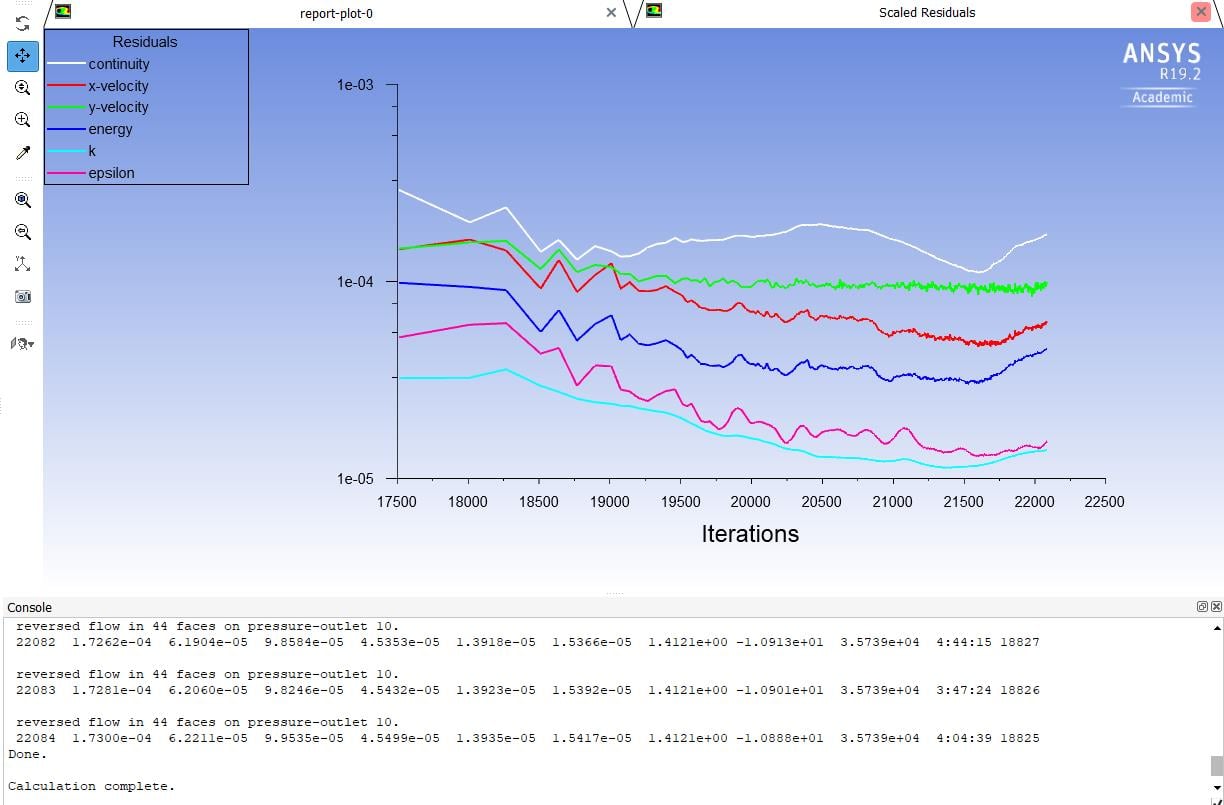
      So its basically the same results as with ROE-FDS. Residuals are converging after 15000 iterations but for the last 4000 iterations there is a reversed flow in ~250 faces on the pressure outlet. The massflow at the outlet is still higher compared to the inlet. The force on the nozzle wall is also considerably too high.


      Do you have any other ideas?

    • RK
      Ansys Employee

      What is your inlet Mach number?


      Double check the values for Gauge Total Pressure and Inlet Gauge pressure . Set Density to ideal gas, you can also set viscosity to Sutherland model, make sure operating pressure is set to zero. I am assuming this is axisymmetric, make sure boundaries are specified right. Also use standard initialization from inlet. 

    • KruX
      Subscriber

      I am basically doing all the things you suggested. But I only know the Gauge Total Pressure and I was kind of guessing the Inlet Gauge Pressure because I read that it's not that important and only leads to a shorter convergence time. Maybe I should investigate more into this.

    • RK
      Ansys Employee

      Hi Roman, 


      Thank you for your patience. At this point it is hard to pin point on what is going on. 


      How about changing the boundaries to pressure farfield (right, top and left boundaries)? 

    • KruX
      Subscriber

      Hi Rahul,


      I can try it. So should I even change the pressure outlet to a pressure farfield? 


      Thank you for your help!


    • RK
      Ansys Employee

      Yes, please try that. 

    • KruX
      Subscriber


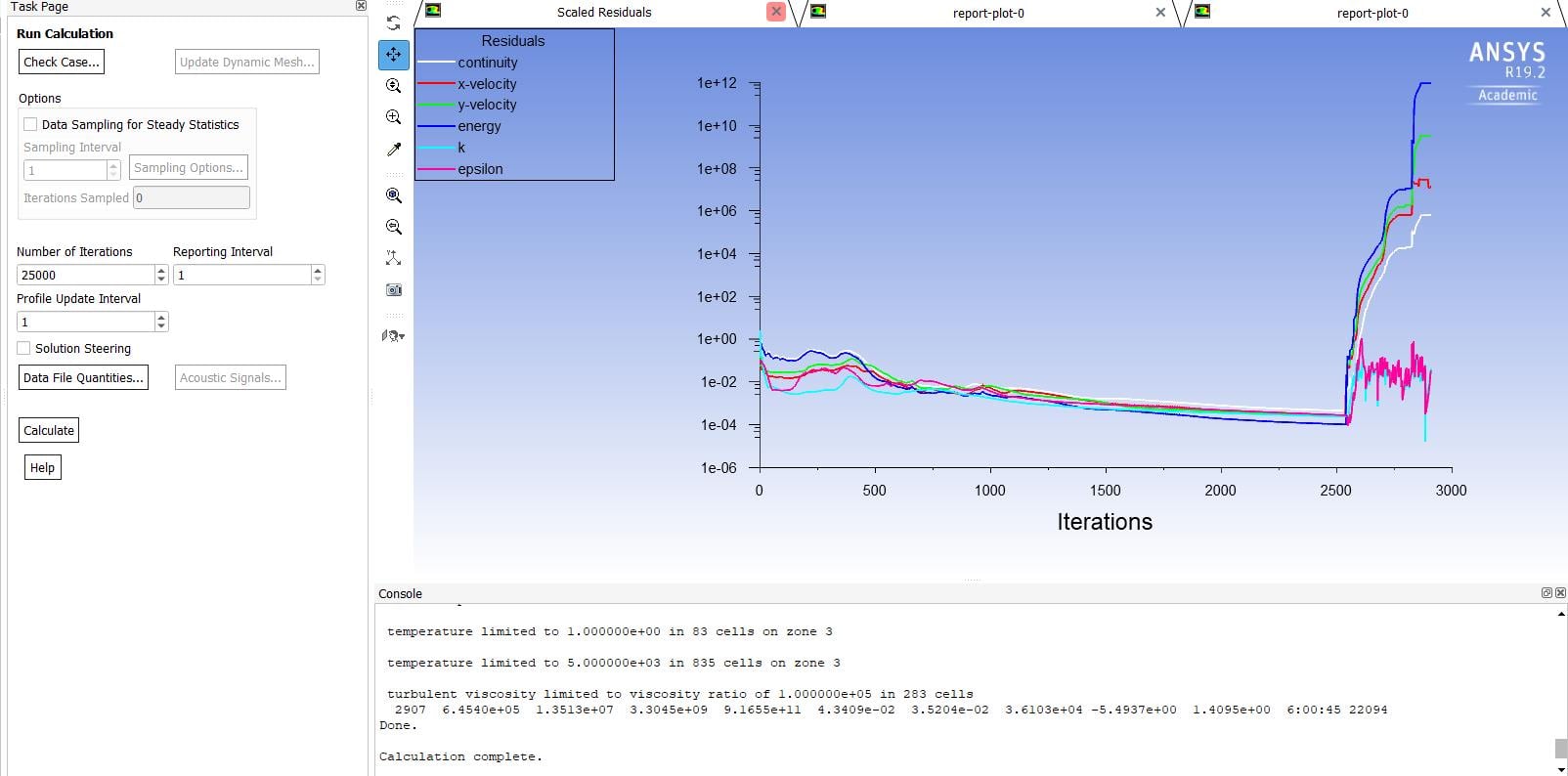
      Unfortunately, this didn't work either. Now the simulation isn't converging at all. First of all the residuals seem to converge very fast but after 2500 iterations the residuals are exploding. I tried it with different Mach numbers for the pressure farfield.

    • RK
      Ansys Employee

      Can you please plot the pressure and density contours and insert an image of both here. It helps to see what is really going on. 

    • KruX
      Subscriber

      Hello,


      I am very sorry for my late response! I had to write exams, but I am now back on my thesis. Since I last postet I have refined my Mesh (especially  paying attention to the y+ value) and applied a Pressure Farfield at the left boundary and at the outlet. When specifying the free stream Mach number at M = 0.6 my simulation converges and the massflow at the inlet equals the massflow at the outlet (which was the biggest mistake in my previous simulation). However, if I change the free stream Mach number to smaller values the simulation isn't converging anymore, which I don't really understand.


      Maybe somebody can help me with that, since the advise reagarding the Pressure Farfield from Rahul was very helpfull.


      Best regards,


      Roman

    • Rob
      Forum Moderator

      If you review the flow field carefully and then run with a lower Mach number what changes?  

    • KruX
      Subscriber

      Thank you for your answer. What exactly do you mean by 'review the flow field carefully'? If I run the simulation with a freestream Mach number of M=0.3 the residuals are exploding after ~20000 Iterations. When this happens, I get the message that the turbulent viscosity ratio is limited to 1e5 and that the temperature is limited to 5e3 K. But this only happens with low Mach numbers at the pressure farfield.

    • KruX
      Subscriber

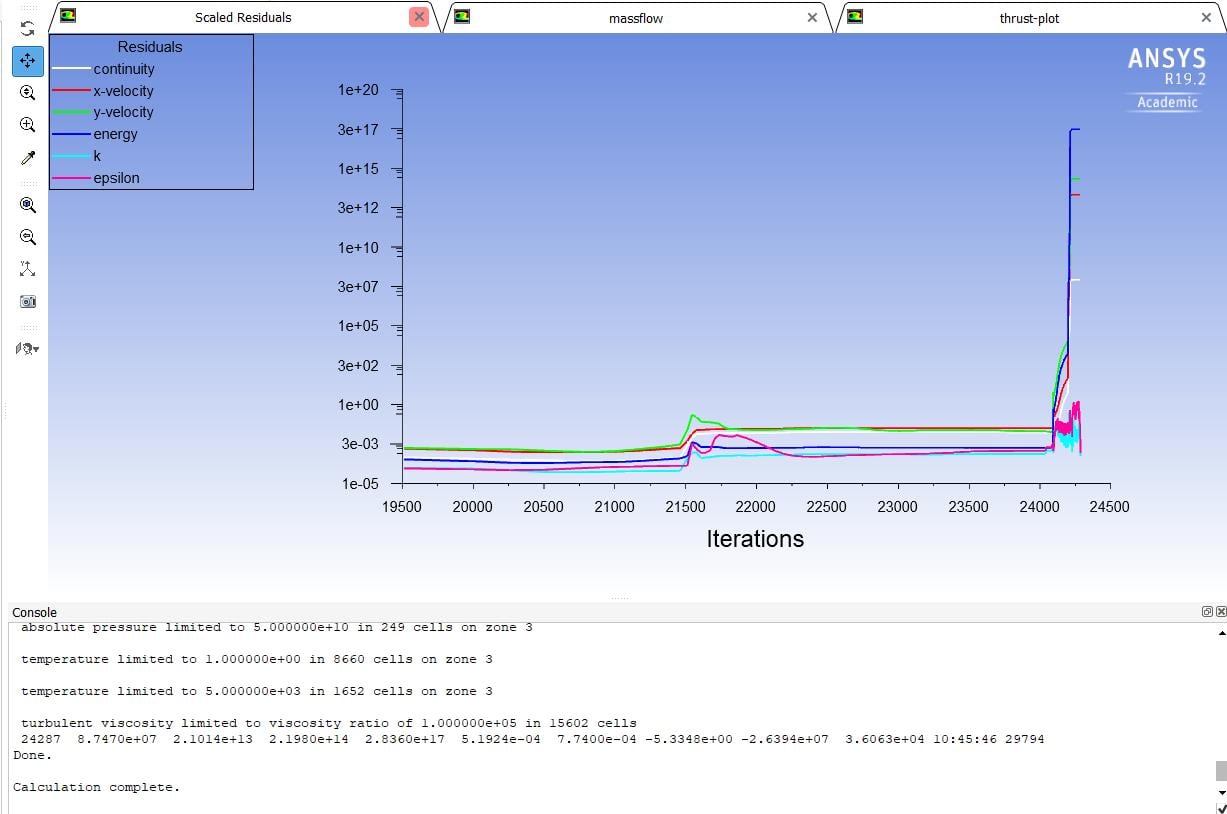
      This are the residuals from my latest simulation. After the spike at 21500 iterations I tried to reduce the Courant Number and the URF, but it didn't help. However, I noticed that the residuals started to rise again when the massflow at the inlet equals the massflow at the outlet. When I started the simulation, both were negative and then they slowly started to converge. At 21500 iterations the massflow at the inlet was equal to the massflow at the outlet (with a different sign) and then the residals explodes and I get the message that temperature, absolute pressure and turbulent viscosity ratio are limited. 


Viewing 15 reply threads
  • The topic ‘Aerospike CFD – Reversed flow on pressure outlet/ massflow difference between inlet and outlet’ is closed to new replies.
[bingo_chatbox]