

-
-
September 22, 2020 at 3:45 pm
OguzhanA
SubscriberHi everyone!
I have a steel cylinder model. I need to cover its outer surface with cfrp material. Can you help me?
Model : height=1250 mm Radius=500 mm thickness=1 mm
September 23, 2020 at 5:19 pmSean Harvey
Ansys EmployeeHello,nThe first place to start would be in the help and look for the ANSYS Composite PrepPost User's Guide. In that there is getting started, examples, etc. That can help you get situated with the usage of the tool.nAlso, if you search on YouTube for Ansys composite preppost ACP you will find videos that help with getting started, etc.nThe constitutive material data you have will need to be homogenized with the proper volume fraction fabric type (UD/woven, etc.) to get the composite material orthotropic materials. You do not have all the necessary material data such as Poisson's ratio of the constitutive materials. See if you can get more data from the supplier, but if not it can be estimate. Do you have access to Ansys license at University or company? The student version does not have our material designer tool, but those other licenses do. Now there are ways to do homogenization without software and I can try and send you some additional information.. Knowing if you have access to a full license would help in this discussion and I can follow back up.nnThank younSeannSeptember 24, 2020 at 6:09 amSubscriberThank you Sean, I have a Ansys license from my University . I will be glad if you post.nRegardsnOguzhannSeptember 25, 2020 at 6:00 amAnsys EmployeeHello Oguzhan, so you will want to get on that licensed version, then fire up Material designer. See image below as to where it can be found in the Workbench toolbox. It has a wizard that is pretty straight forward. You need to specify the material properties of the fiber and epoxy, and then go through the wizard picking what type of material (UD, woven, etc.) It will finally solve for the orthropic material constants. You can search around on the internet for similar materials maybe to get and idea on the Poisson's ratio or the fiber or epoxy or even contact the manufacture.nHope this helps get you started with that tool to get 9 orthotropic material constants you need.nnThank younSeann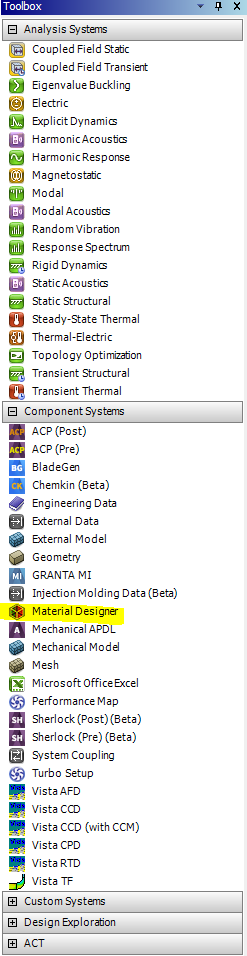 n
September 25, 2020 at 12:48 pmSubscriberI tried to use this section and obtained this material. This is woven carbon epoxy material.n
n
September 25, 2020 at 12:48 pmSubscriberI tried to use this section and obtained this material. This is woven carbon epoxy material.n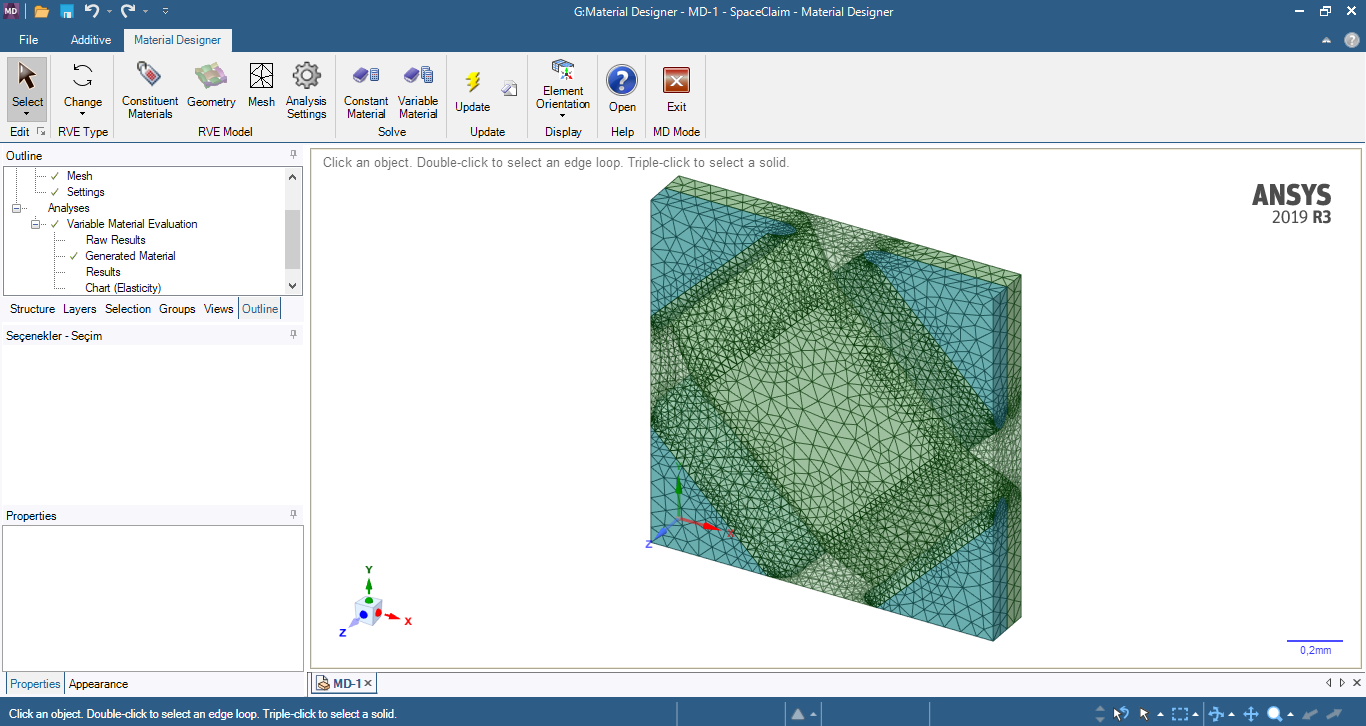
 But now,I don't know how can I create cylinder. (1 mm steel-and cover carbon epoxy)? Because I have 7 models. Not every model is completely covered. Some of them have only certain areas covered with carbon epoxy.nn
September 25, 2020 at 9:03 pmAnsys EmployeeHello OguzhanAnSo you would use this as engineering constants for a material in engineering data. In fact you can connect the Material Designer to Engineering data to pass this. n
But now,I don't know how can I create cylinder. (1 mm steel-and cover carbon epoxy)? Because I have 7 models. Not every model is completely covered. Some of them have only certain areas covered with carbon epoxy.nn
September 25, 2020 at 9:03 pmAnsys EmployeeHello OguzhanAnSo you would use this as engineering constants for a material in engineering data. In fact you can connect the Material Designer to Engineering data to pass this. n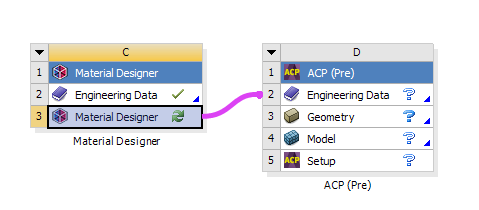 You will add the steel material (actually it will be in there by default) Then you need to setup your geometry, mesh. You can split the surfaces of the cylinder in Geometry (SpaceClaim) and then use name selection in Mechanical to indicate regions, then in ACP, you will use the oriented element sets to reference these regions (Element Sets) that have the different layups. You have to specify the layups of the carbon in ACP in the modeling ply. Much of these steps are covered in YouTube videos on ACP. See if you can find one and follow along on the basic usage of ACP.nnDoes that help?nThanksnSea
September 30, 2020 at 1:59 pmSubscriberI found details. nSTEP-1 : I will apply SAT4500 (Epoxy encapsulation resin) about 1 mm.n Figure-1: SAT4500 Propertiesn
You will add the steel material (actually it will be in there by default) Then you need to setup your geometry, mesh. You can split the surfaces of the cylinder in Geometry (SpaceClaim) and then use name selection in Mechanical to indicate regions, then in ACP, you will use the oriented element sets to reference these regions (Element Sets) that have the different layups. You have to specify the layups of the carbon in ACP in the modeling ply. Much of these steps are covered in YouTube videos on ACP. See if you can find one and follow along on the basic usage of ACP.nnDoes that help?nThanksnSea
September 30, 2020 at 1:59 pmSubscriberI found details. nSTEP-1 : I will apply SAT4500 (Epoxy encapsulation resin) about 1 mm.n Figure-1: SAT4500 Propertiesn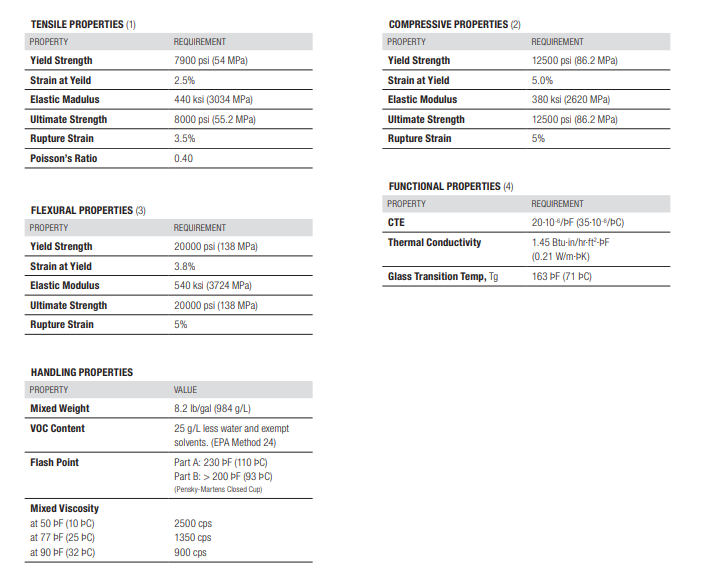 nnSTEP-2: Then I will apply my fibre fabric. n Figure-2: Fibre Fabric Propertiesn
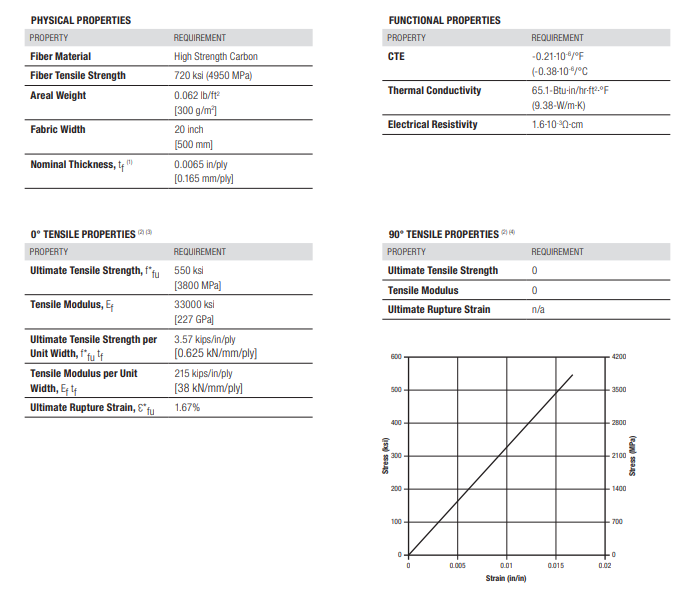 STEP-3: Again apply SAT4500 .nquestion-1 : I watched ANSYS material designer tutorial and firstly I created Epoxy Carbon UD then created epoxy carbon woven. When I created epoxy woven, I used resin. Now in ACP, will I use resin again ? or Should I use resin (for sat4500-1 mm) ?nquestion-2: If I define fabric in ACP, Should I define three fabric ( 1 mm SAT4500 Resin-Epoxy Carbon Woven-1 mm SAT4500 Resin)nRegards nOguzhanAn
October 2, 2020 at 11:49 pmAnsys EmployeeHello,nSo with composites, the fiber is embedded in the matrix, and when you select the RVE type (UD, Woven, etc.) that corresponding geometry and mesh is used to compute orthotropic material constants. If you look at a cross section of woven or UD composite (Google search to see images), you will see that the fiber and matrix are combined, not separate layers. So in material designer you specify your fiber and matrix and the proper volume fraction. Then once the values are computed, you use them to represent 1 ply or wrap of the material on your part. So if you will have say 2 or 3 wraps of material (or whatever number it is) in ACP, you define the 2 or 3 plies and their orientation. Each ply will come in ACP from a material and fabric (where you specify the thickness of the fabric). So you only need 1 fabric, not 3. Does that help clarify?.Thank younSeannOctober 5, 2020 at 5:10 pmSubscriberThank you, Sean nRegardsnOguzhannViewing 8 reply threads
STEP-3: Again apply SAT4500 .nquestion-1 : I watched ANSYS material designer tutorial and firstly I created Epoxy Carbon UD then created epoxy carbon woven. When I created epoxy woven, I used resin. Now in ACP, will I use resin again ? or Should I use resin (for sat4500-1 mm) ?nquestion-2: If I define fabric in ACP, Should I define three fabric ( 1 mm SAT4500 Resin-Epoxy Carbon Woven-1 mm SAT4500 Resin)nRegards nOguzhanAn
October 2, 2020 at 11:49 pmAnsys EmployeeHello,nSo with composites, the fiber is embedded in the matrix, and when you select the RVE type (UD, Woven, etc.) that corresponding geometry and mesh is used to compute orthotropic material constants. If you look at a cross section of woven or UD composite (Google search to see images), you will see that the fiber and matrix are combined, not separate layers. So in material designer you specify your fiber and matrix and the proper volume fraction. Then once the values are computed, you use them to represent 1 ply or wrap of the material on your part. So if you will have say 2 or 3 wraps of material (or whatever number it is) in ACP, you define the 2 or 3 plies and their orientation. Each ply will come in ACP from a material and fabric (where you specify the thickness of the fabric). So you only need 1 fabric, not 3. Does that help clarify?.Thank younSeannOctober 5, 2020 at 5:10 pmSubscriberThank you, Sean nRegardsnOguzhannViewing 8 reply threads- The topic ‘How can create Cylinder ACP?’ is closed to new replies.
Innovation Space Trending discussions
 Top Contributors
-
peteroznewman
 6465
6465 -
scabo
 1906
1906 -
Dennis Chen
 1458
1458 -
javat33489
 1308
1308 -
Shyam Prasad V Atri
1022
Top Rated Tags
© 2026 Copyright ANSYS, Inc. All rights reserved.
Ansys does not support the usage of unauthorized Ansys software. Please visit www.ansys.com to obtain an official distribution.
-


The Ansys Learning Forum is a public forum. You are prohibited from providing (i) information that is confidential to You, your employer, or any third party, (ii) Personal Data or individually identifiable health information, (iii) any information that is U.S. Government Classified, Controlled Unclassified Information, International Traffic in Arms Regulators (ITAR) or Export Administration Regulators (EAR) controlled or otherwise have been determined by the United States Government or by a foreign government to require protection against unauthorized disclosure for reasons of national security, or (iv) topics or information restricted by the People's Republic of China data protection and privacy laws.

 You are navigating away from the AIS Discovery experience