-
-
April 9, 2026 at 2:57 am
-
April 9, 2026 at 5:36 am
Takeshi Itadani
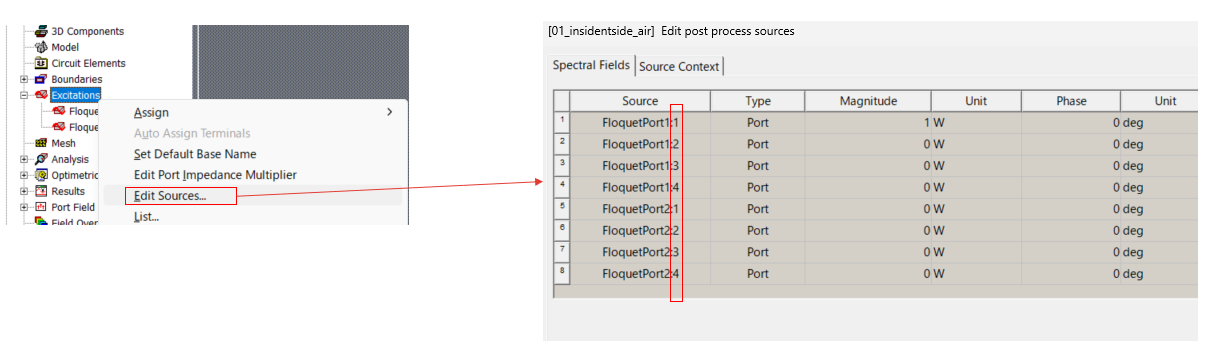
Ansys EmployeeTo plot higher-order modes, right-click on Excitations in the Project Manager and select Edit Sources...Â-
April 9, 2026 at 7:39 am
derrick
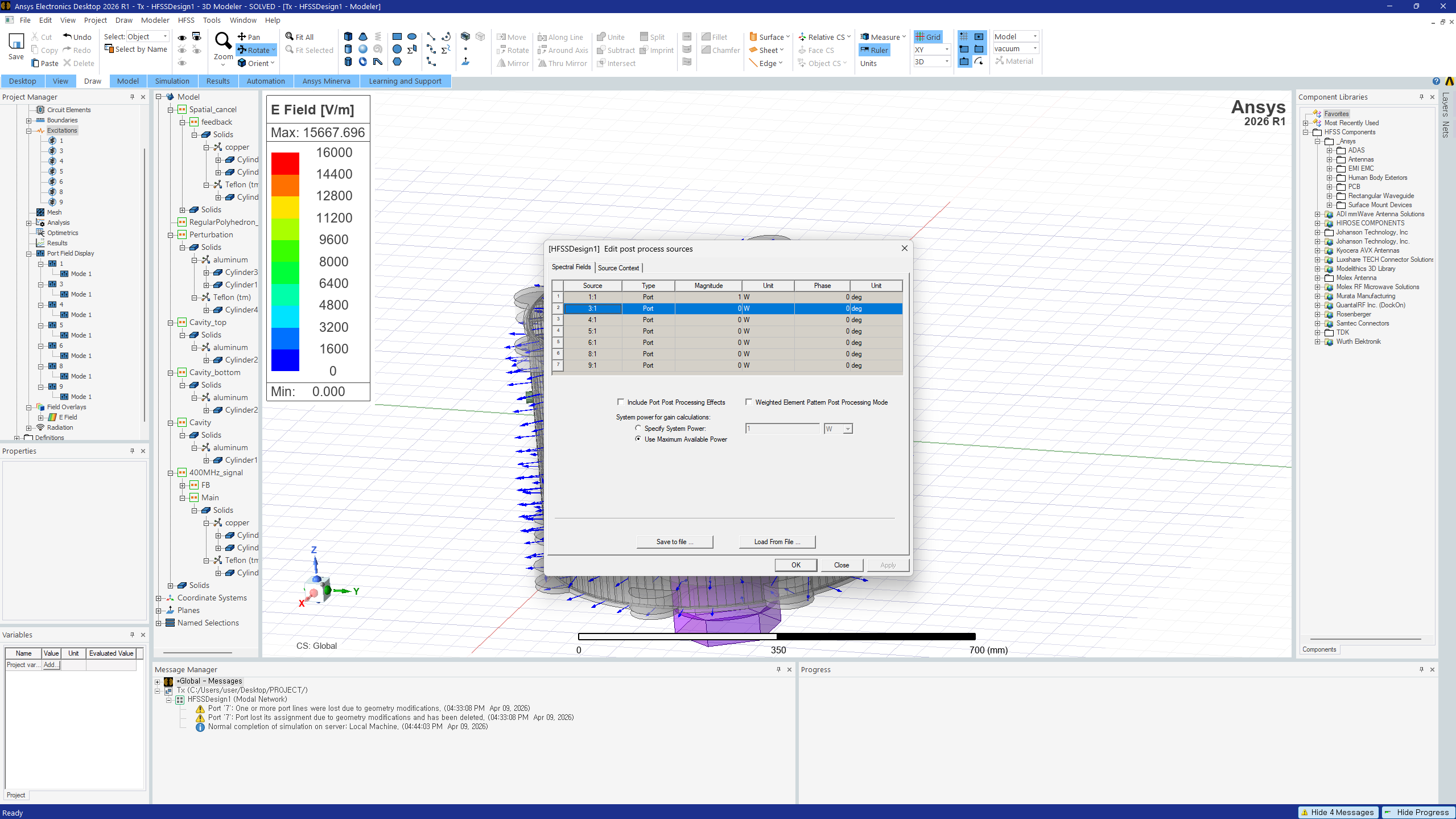
Subscriber"In the Source column of the displayed screen, the ":#" after the port name indicates the mode. By entering a non-zero number in the Magnitude field for the mode you want to check, and entering 0 for the other Magnitudes, you can plot only specific modes."
Please how do i plot the specific modes?
-
-
April 9, 2026 at 7:52 am
derrick
SubscriberAlso please one more questionÂ
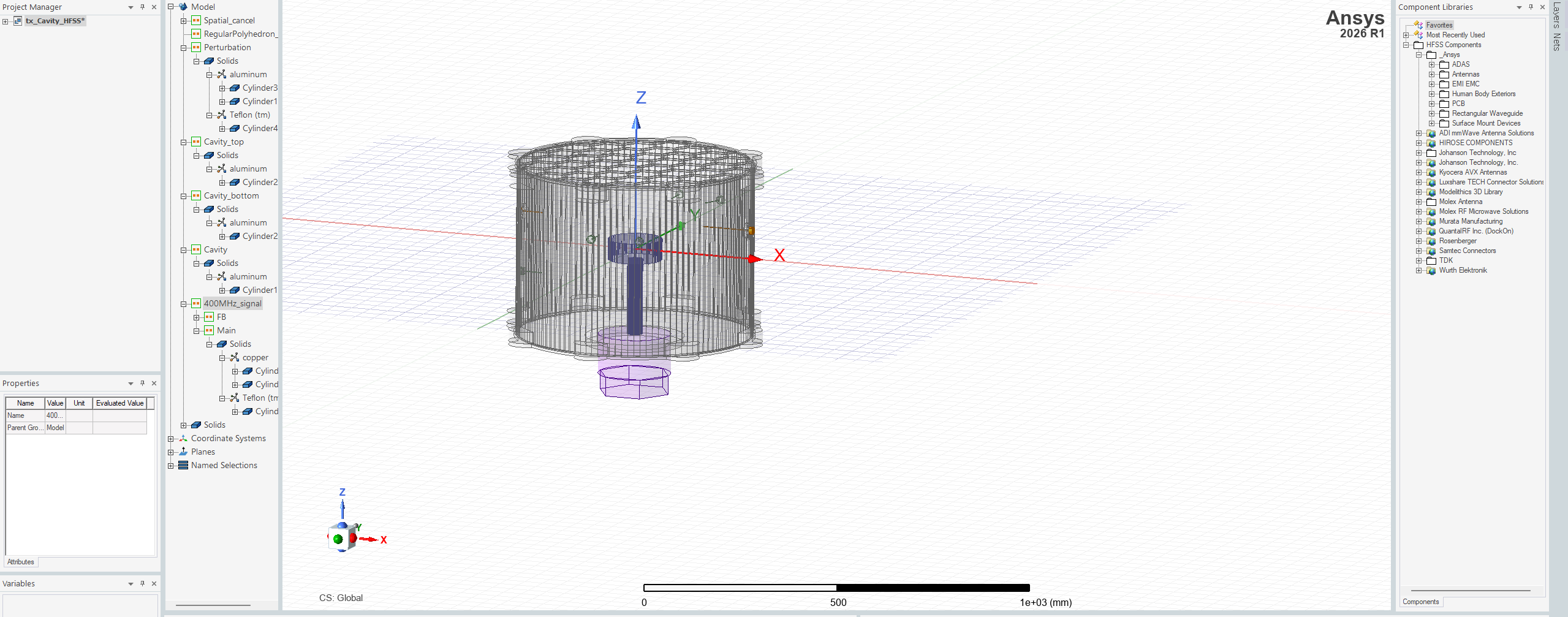
since is a resonator how can i plot the field distrustion inside the cavity to see it its behaviour anythime i plot it seems the field distubution appear on the outside of the cavityÂ
can you help me with more ellaboration? -
April 9, 2026 at 7:54 am
Takeshi Itadani
Ansys Employee> Please how do i plot the specific modes?ÂAs explained in the answer above, set the Magnitude of the mode you want to plot to a number other than 0, and set the Magnitude of all other modes to 0. -
April 9, 2026 at 7:57 am
Takeshi Itadani
Ansys Employee> since is a resonator how can i plot the field distrustion inside the cavity to see it its behaviour anythime i plot it seems the field distubution appear on the outside of the cavityÂÂHow about placing a 2D sheet as "Unassigned" at the location you want to plot inside the cavity, and then plotting on that 2D sheet? -
April 9, 2026 at 8:10 am
-
April 9, 2026 at 8:38 am
Takeshi Itadani
Ansys EmployeeSince you are using a Lumped Port, you can only analyze one mode. If you want to analyze higher-order modes, please use a Wave Port.
When setting up a Wave Port, enter the number of modes you want to analyze in "Number of Modes". Perform the analysis in this state, and you will be able to plot the higher-order modes.
The following video may be helpful;
https://www.youtube.com/watch?v=KkiCTtLegjQ -
April 9, 2026 at 9:03 am
derrick
SubscriberWhen setting up a Wave Port, enter the number of modes you want to analyze in "Number of Modes". Perform the analysis in this state, and you will be able to plot the higher-order modes.
The following video may be helpful;
https://www.youtube.com/watch?v=KkiCTtLegjQÂ
1.following the video i realized that one key difference between wave port and lumped port is that the waave port is excited externally and the lumped port is excited internnaly wanted to ask that, can i still use the lumped port externally ?
2. also do you have any video that can help me with identification of modes after plotting or can you teach me?
example after plotting looking at the plot i can say this is TE101 or TE 111 or TM 010? etc
i am a bit confused that is why i am asking.Â
i would greatly appreciate your guidance and effortsÂÂ
-
April 10, 2026 at 12:20 am
Takeshi Itadani
Ansys Employee> can i still use the lumped port externally ?ÂNo, as explained in the video, Lumped Port can only be used within the analysis space.ÂÂ> 2. also do you have any video that can help me with identification of modes after plotting or can you teach me?> example after plotting looking at the plot i can say this is TE101 or TE 111 or TM 010? etcÂTo determine which mode corresponds to which excitation state of an electromagnetic field, you must actually plot the excitation state of that electromagnetic field and make your own judgment.ÂThis judgment is a matter for design and development. -
April 10, 2026 at 12:58 am
derrick
SubscriberSince you are using a Lumped Port, you can only analyze one mode. If you want to analyze higher-order modes, please use a Wave Port.
When setting up a Wave Port, enter the number of modes you want to analyze in "Number of Modes". Perform the analysis in this state, and you will be able to plot the higher-order modes.No, as explained in the video, Lumped Port can only be used within the analysis space. since there is space inside the ressonator how do i make a wave port inside the resonator because i want to feed the signal externally but only one modes appear but do you have any means you think i can go about it?
also what about if i simulate it in eigen mode? -
April 10, 2026 at 2:46 am
Takeshi Itadani
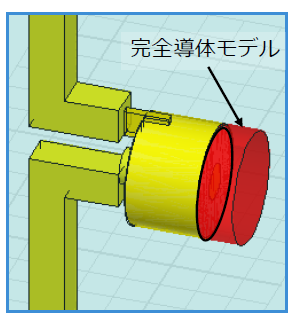
Ansys Employee> since there is space inside the ressonator how do i make a wave port inside the resonatorÂTo place a Waveport in the analysis space, it is necessary to make contact with an object on the opposite side from the side supplying the electromagnetic waves using a perfect conductor, as shown in the diagram below.The red area in the diagram below represents the perfect conductor.ÂÂÂ> also what about if i simulate it in eigen mode?ÂHFSS's Eigenmode analysis investigates what types of electromagnetic waves can be confined in a closed space. No configuration of the analysis space or ports is required. -
April 11, 2026 at 5:57 am
derrick
SubscriberPlease my one more question, thank you very much you are really helping meÂ
>To determine which mode corresponds to which excitation state of an electromagnetic field, you must actually plot the excitation state of that electromagnetic field and make your own judgment.>This judgment is a matter for design and development.

Please how do i know that my judgement is right? Especially woith the aspect of the patterns how to know hte variationsÂ
it seem per source i have seen i am abit confused and i trust that you can help me that very muchÂ
also in the plotting to know that ez = 0 for transeverse electric how do i do that ? -
April 20, 2026 at 7:18 am
derrick
SubscriberPlease I have one more questionÂ
Please is there a video or a book-like theory about the correct length of connector to excite 400 MHzÂ
Also can the 400 MHz connector pin can also excite 800 MHz or 1200 MHz or not.
Is there any theory ?Â
-
- You must be logged in to reply to this topic.
-
6269
-
1906
-
1457
-
1308
-
1022
© 2026 Copyright ANSYS, Inc. All rights reserved.