TAGGED: #fluent-#ansys
-
-
March 31, 2026 at 10:36 am
didi06071120
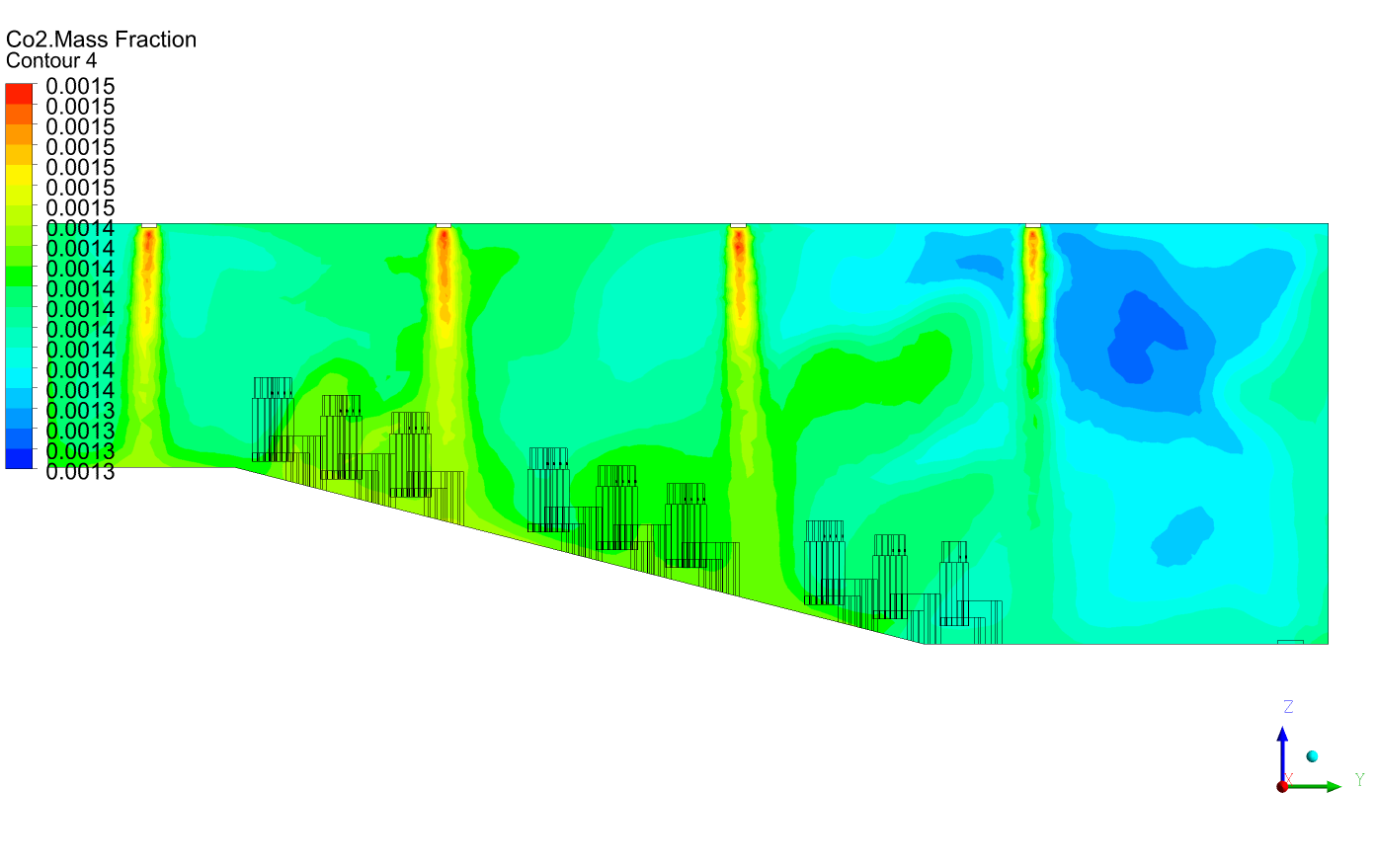
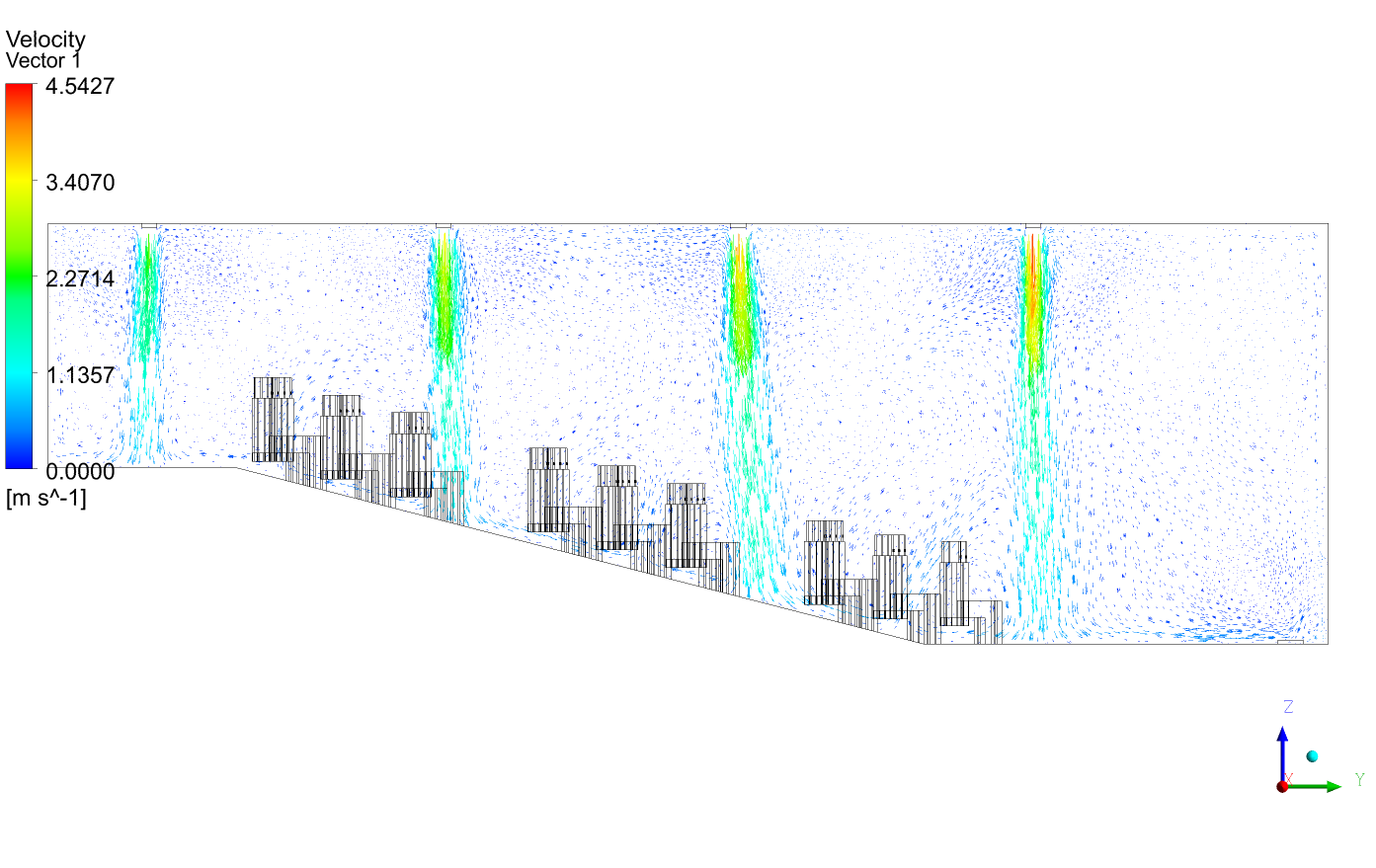
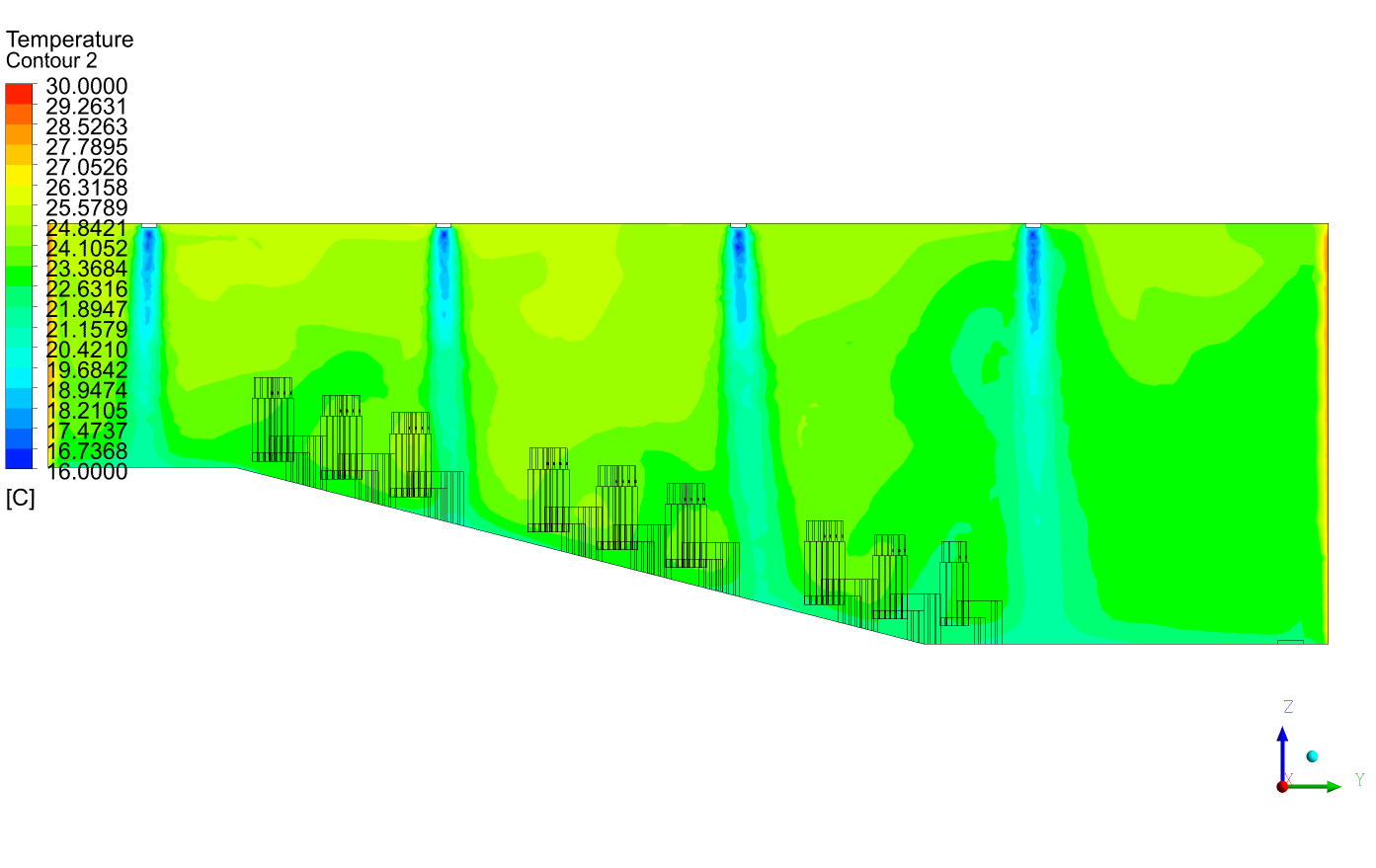
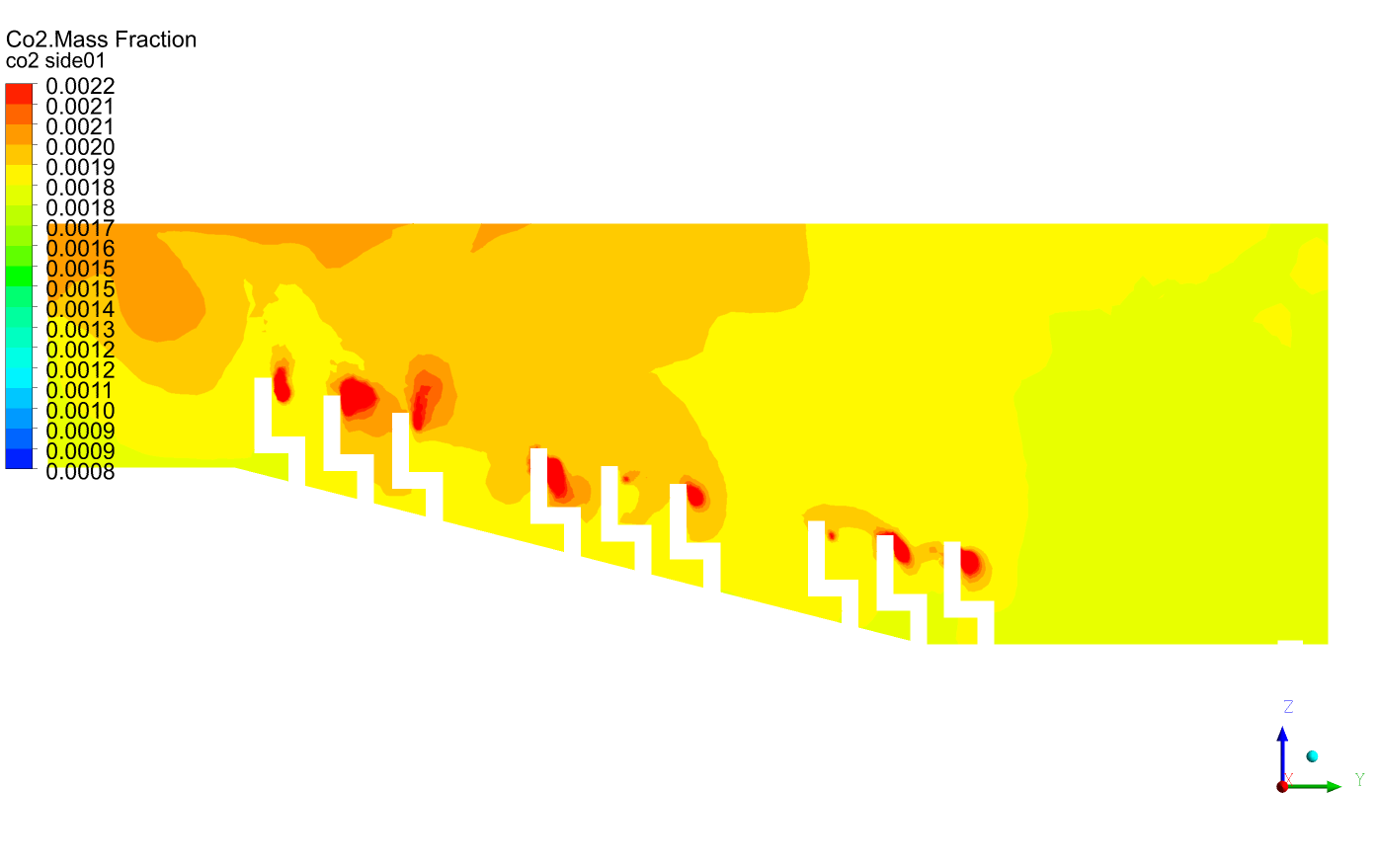
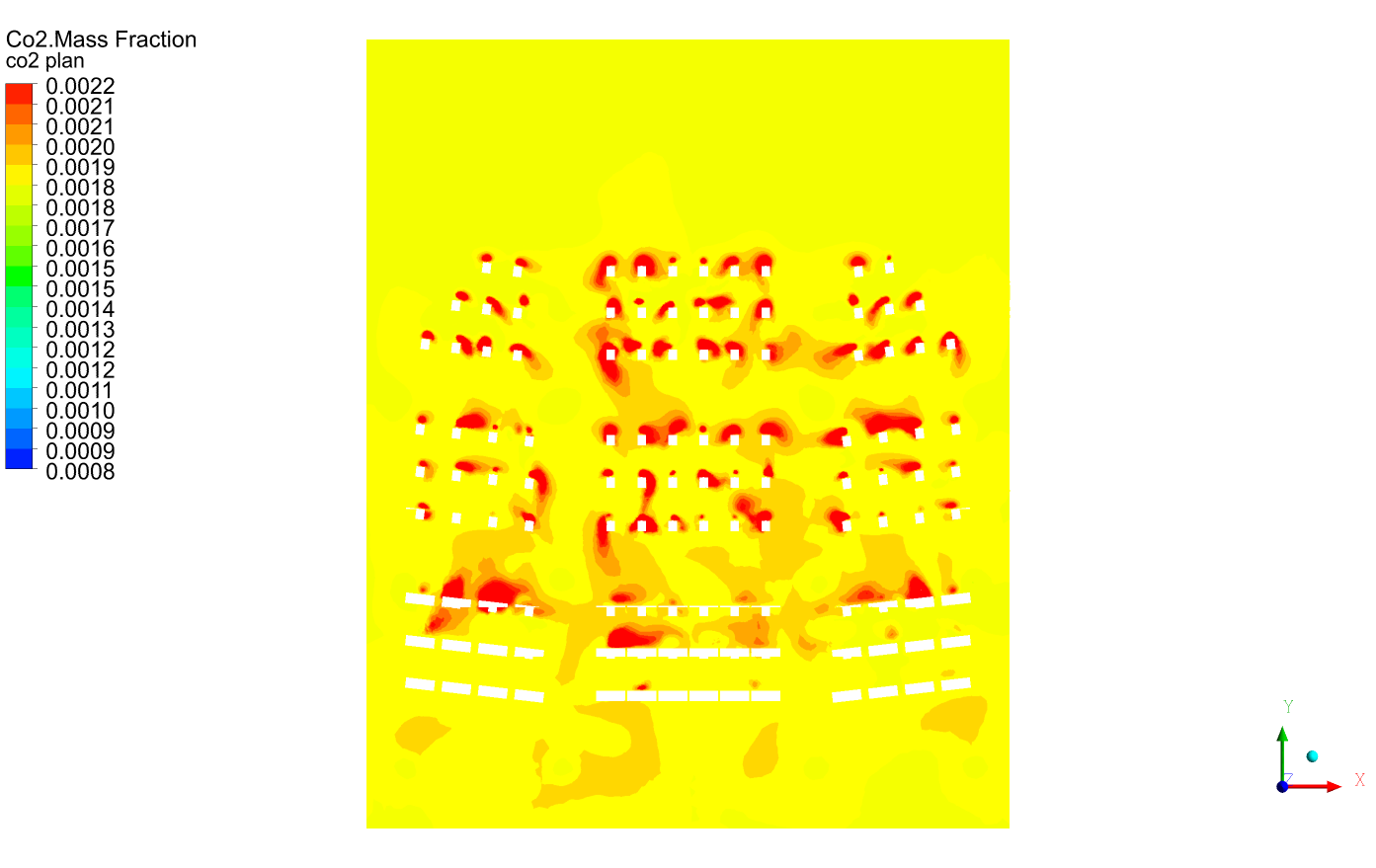
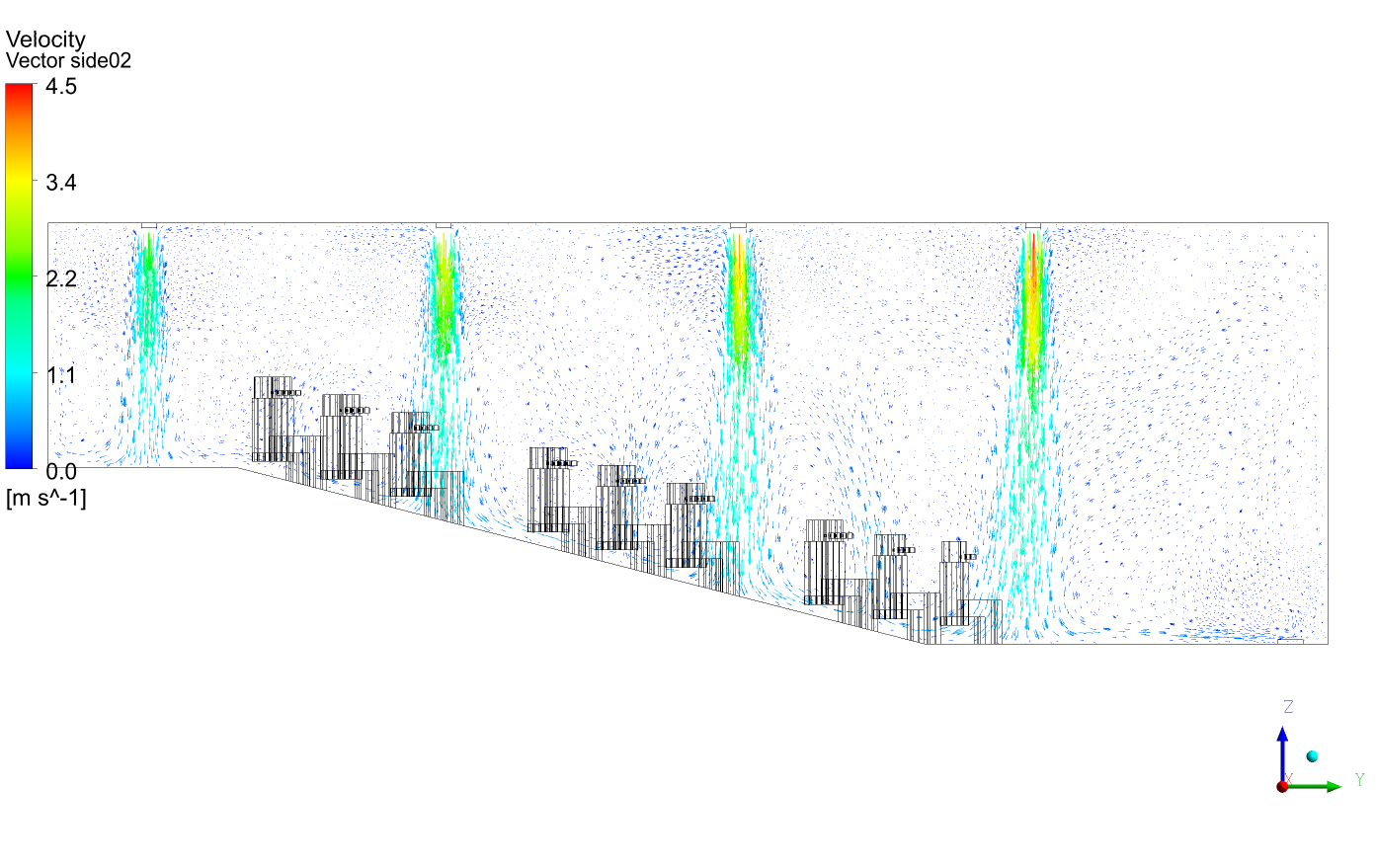
SubscriberHello everyone,ÂI am performing a CFD simulation of indoor airflow and COâ‚‚ distribution in a lecture hall using ANSYS Fluent with the Species Transport model (COâ‚‚ treated as a passive scalar).ÂI have some questions regarding how to correctly define COâ‚‚ sources and boundary conditions:ÂCOâ‚‚ from occupants (breathing):What is the recommended way to model COâ‚‚ exhalation from people?Should it be defined as:a mass source term (kg/s) in a small volume near the mouth, ora boundary condition (e.g., velocity inlet with specified COâ‚‚ mass fraction)?COâ‚‚ concentration at supply air diffusers:For the supply air, I set the COâ‚‚ concentration to 0.001283Â ( AHU set 28% outdoor air and 72% indoor air ,so 500 ppm, mass fraction = 0.000725 , 1000 ppm, mass fraction = 0.0015 , 0.000725*0.28 + 0.0015*0.72 = 0.001283 ).Is this the correct approach?COâ‚‚ setting at return outlets (pressure outlet):For return air outlets, should I define the backflow COâ‚‚ mass fraction as outdoor concentration (500 ppm), or should it be left unspecified?General modeling approach:Is it more appropriate to model COâ‚‚ as a volumetric source distributed in the occupied zone, or as localized sources at each occupant?ÂMy goal is to obtain realistic COâ‚‚ distribution and evaluate ventilation effectiveness in the breathing zone.ÂAny suggestions or best practices would be greatly appreciated. Thank you! -
March 31, 2026 at 10:41 am
-
March 31, 2026 at 10:44 am
Rob
Forum ModeratorHello everyone, I am currently using ANSYS Fluent to perform a CFD simulation of airflow and CO₂ distribution within a tiered classroom, utilizing the Species Transport model (treating CO₂ as a passive scalar).  I have a few questions regarding the correct definition of CO₂ sources and boundary conditions: CO₂ Exhaled by Occupants  (Respiration): What is the recommended method for simulating the CO₂ exhaled by people? Should it be defined as a mass  source term (kg/s) set within a small volume near the mouth, or as a boundary condition (e.g., a velocity inlet with a  specific CO₂ mass fraction)? CO₂ Concentration at Supply Air Diffusers: For the supply air, I have set the CO₂ concentration  to 0.001283 (based on the Air Handling Unit [AHU] settings: 28% outdoor air and 72% indoor air recirculation; thus, at 500  ppm, the mass fraction is 0.000725; at 1000 ppm, the mass fraction is 0.015; 0.72 = 0.001283). Is this approach correct? CO₂  Concentration Setting at Return Air Grilles (Pressure Outlet): For the return air grilles, should I define the mass fraction  of the returning CO₂ as the outdoor concentration (500 ppm), or should I leave it undefined? General Modeling Approach: Which  approach is more appropriate—modeling CO₂ as a volumetric source distributed across the occupied zone, or modeling it as a localized source for each individual occupant? My goal is to obtain a realistic distribution of CO₂ and to evaluate the ventilation effectiveness within the breathing zone. Any suggestions or best practices would be greatly appreciated. Thank you!

-
March 31, 2026 at 10:54 am
Rob
Forum ModeratorPosting in Fluids would be a better choice, but as I can't move the thread we can work in here. And I'm sure the initial question was in Chinese when I posted the translation?Â
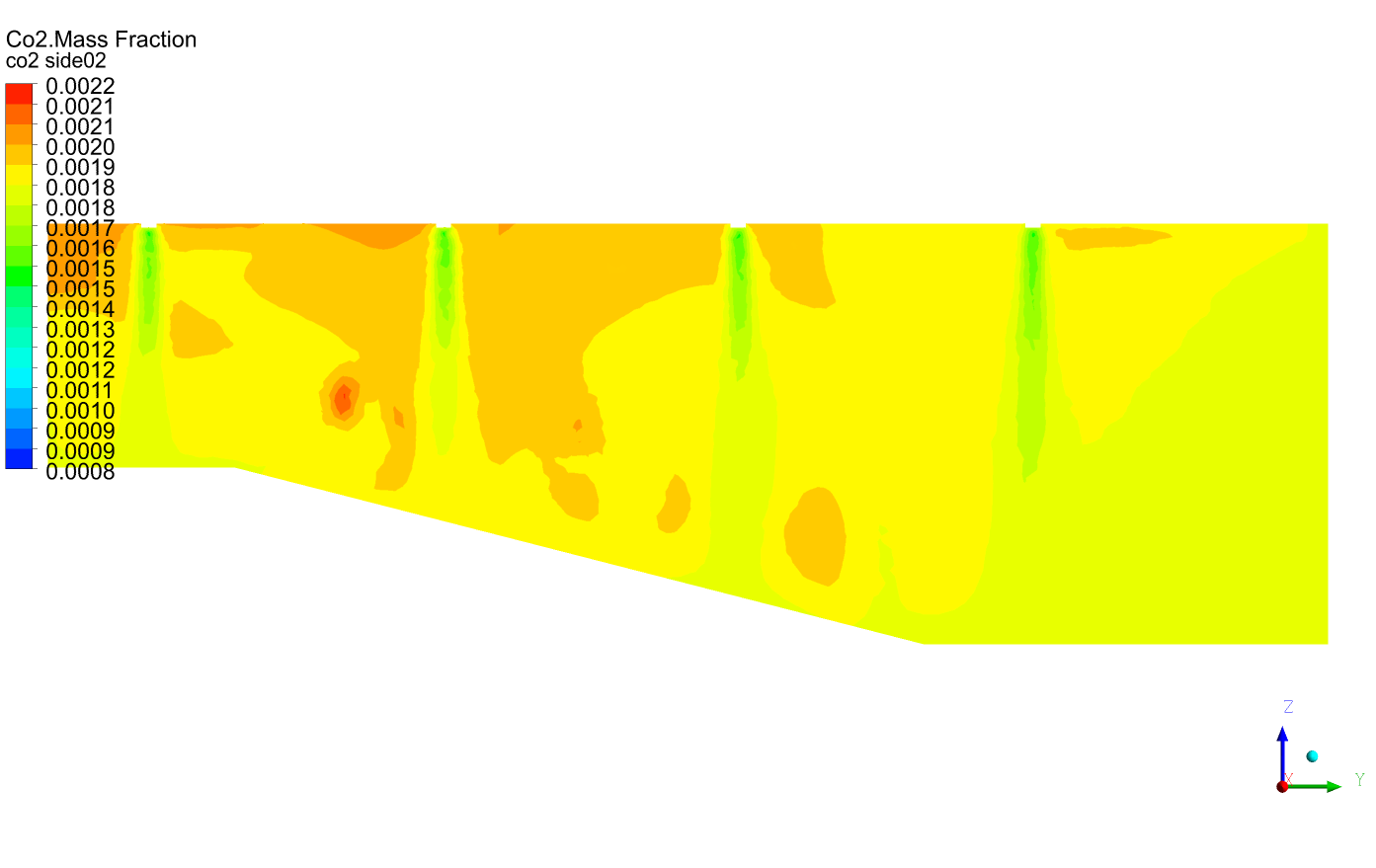
Both options work, in that either a source or inlet can be used. However, unless you want to resolve to individual people it's more common to use a source term to add CO2, water vapour and heat into the "occupied space". That also avoids diffusion effects on boundaries.Â
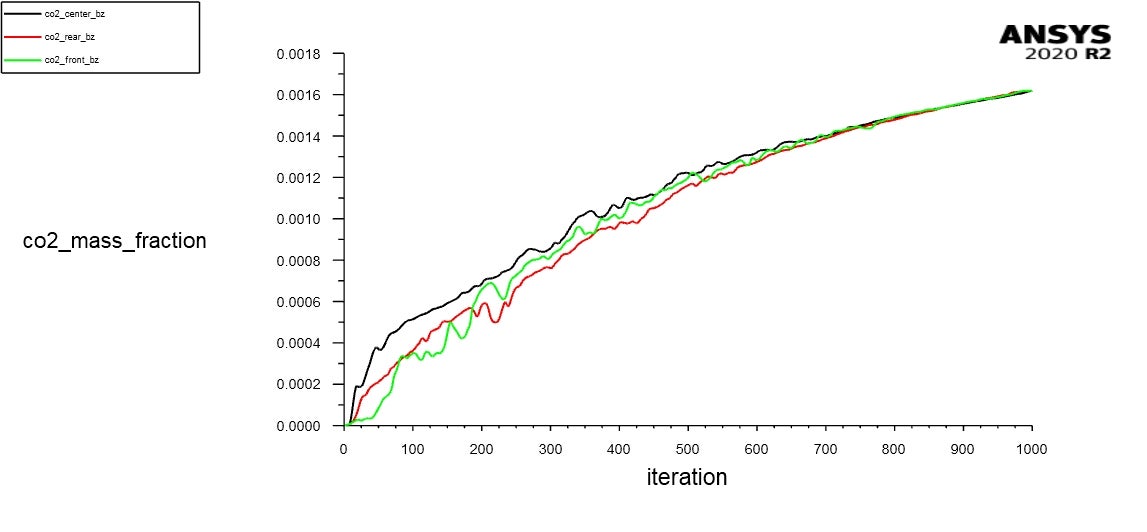
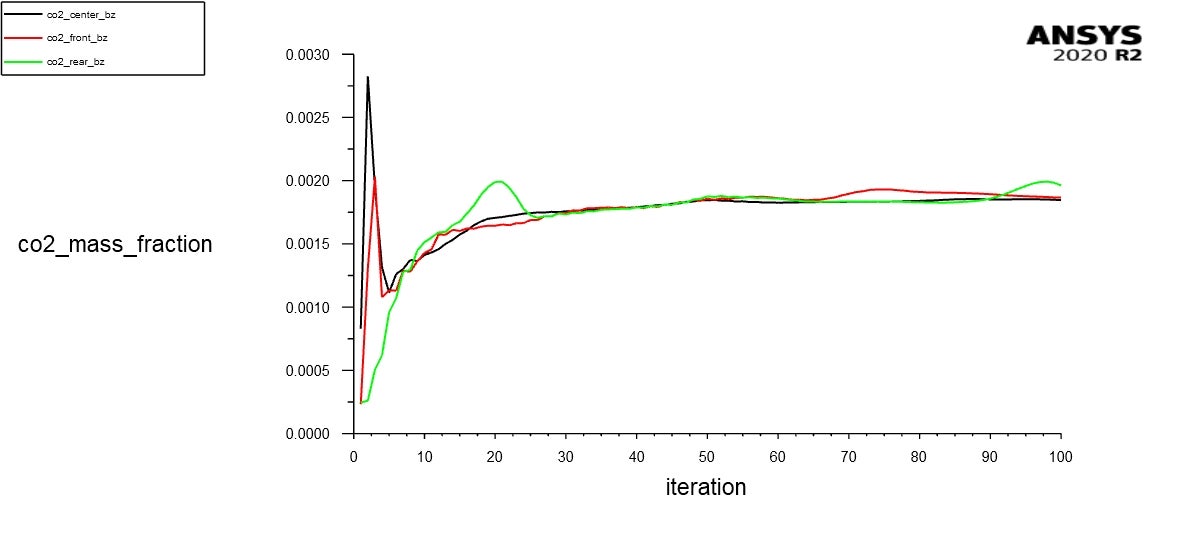
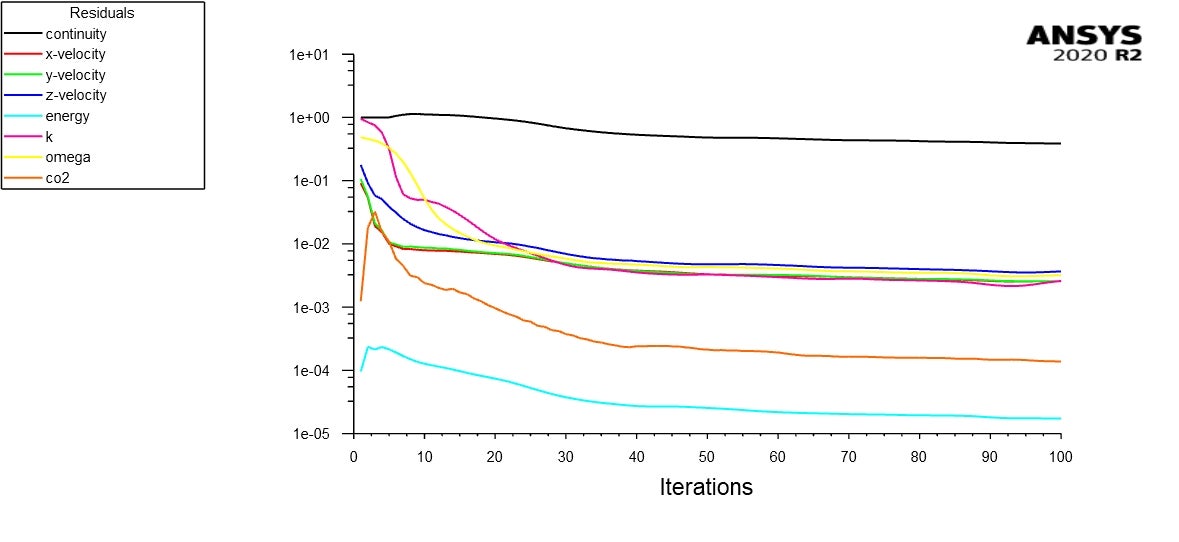
For the supply/return air fraction, that's a boundary value so you need to decide what you're doing. What you can do is use Expressions to find the extract volume fraction and use a function of that for the inlet. Possibly overkill, and could be a little unstable in the early part of the model. You're also trying to model trace elements in the bulk flow. So, if your convergence isn't good (and it's buoyant flow so it won't be) your error could exceed the CO2 mass flux: what do you think a good solution could be?
I assume you're using incompressible ideal gas for the mixture density?Â
-
- You must be logged in to reply to this topic.
-
5844
-
1906
-
1420
-
1305
-
1021
© 2026 Copyright ANSYS, Inc. All rights reserved.