Hi,
I am building a sensing coil that rests on a rotating steel shaft that interacts with a stationary coil carrying an arbitary current, and I am trying to determine the flux linkage and induced EMF based on some different currents, rotation angle and speed. I have set up a realistic simulation but couldn't get any flux linkage in the rotor coil. I then made a very simple model with just two torus', one in a rotating domain. have set up both as windings and the stator has a current of 0A and the rotor with 500mA, 5 turns each. Simulating without the rotating domain is about what you'd expect
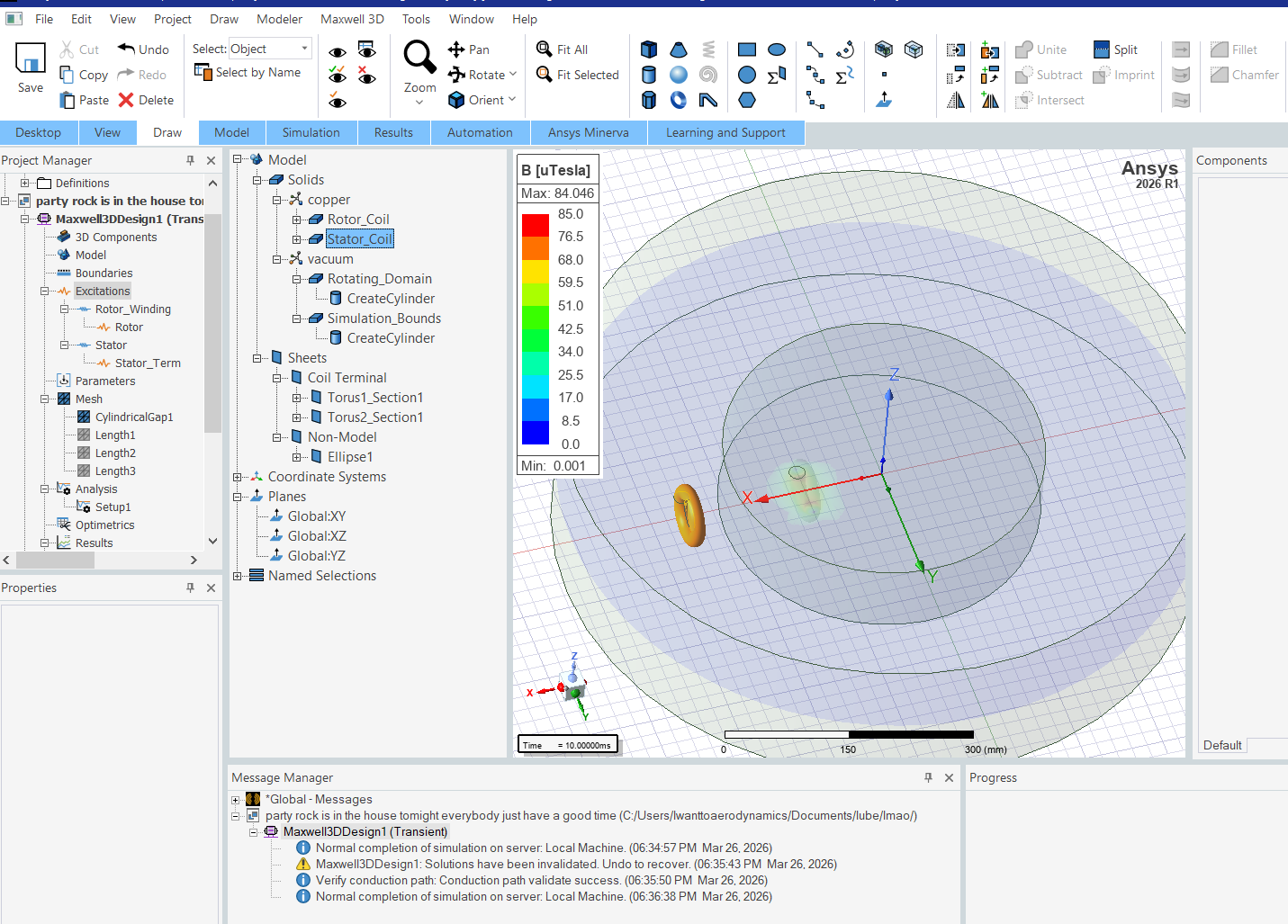
But then as soon as I enable a 0RPM cylindryical rotating band with its center at the origin and encompassing the rotor coil there is no flux in the results at all (nothing else was changed, I just enabled the rotating domain). This happens as well if the RPM is non-zero.
I tried with the opposite current excitements (rotor 0A and stator 500mA) and both environments had flux but the rotor coil flux linkage stayed at 0.
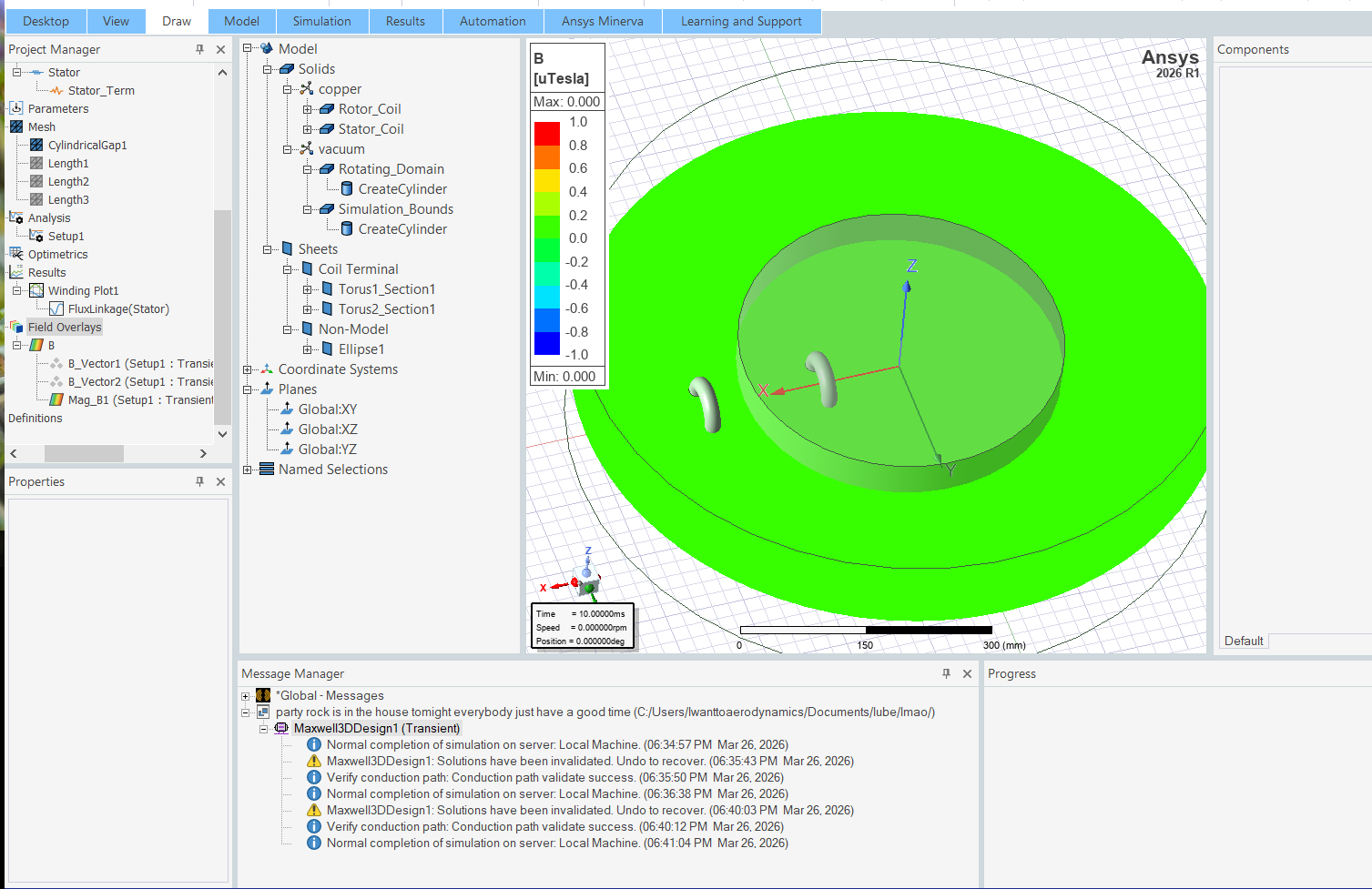
Do coils have to be treated differently when in a rotating domain or is a rotating coil even possible in the transient solver? I have searched for ages and I have seen multiple references saying that sources can move.
Thanks so much for any help!
Luke


















 You are navigating away from the AIS Discovery experience