Hi,
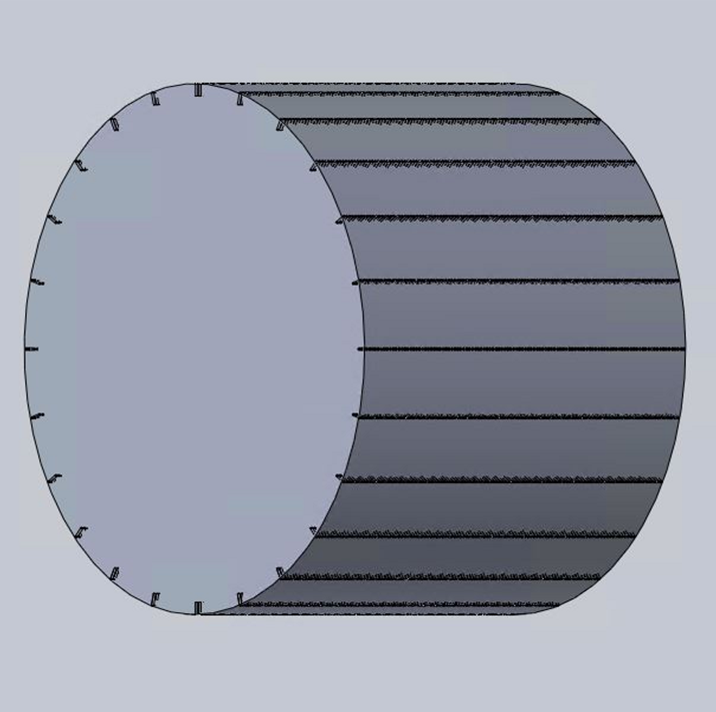
I am modeling species transport in a cylinder that contains internal protrusions at the surface of the wall of the cylinder as shown below.
The figure below shows the inlet at the left and the outlet at the other end.
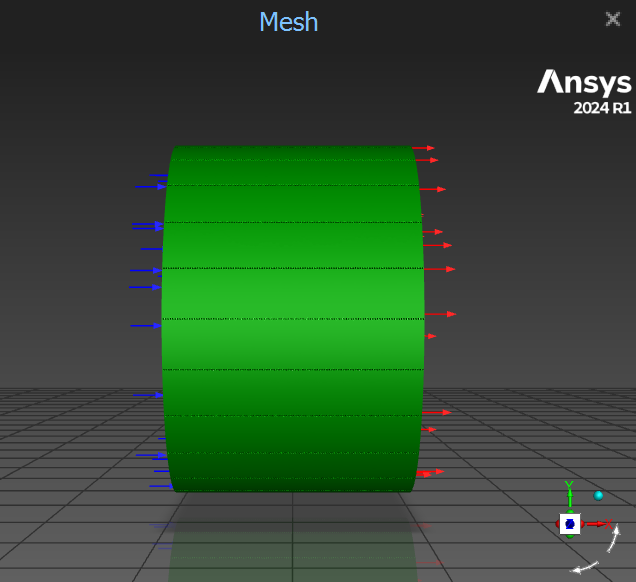
The velocity of the fluid is in the factor of 10e-5 m/s so at first, a steady state fluid flow is solved in the domain so that, there is a developing flow before species transport. The boundary conditions for this model were: velocity inlet, no slip wall and pressure outlet. Once the velocity field has been established, the species transport model settings are turned on as shown below,
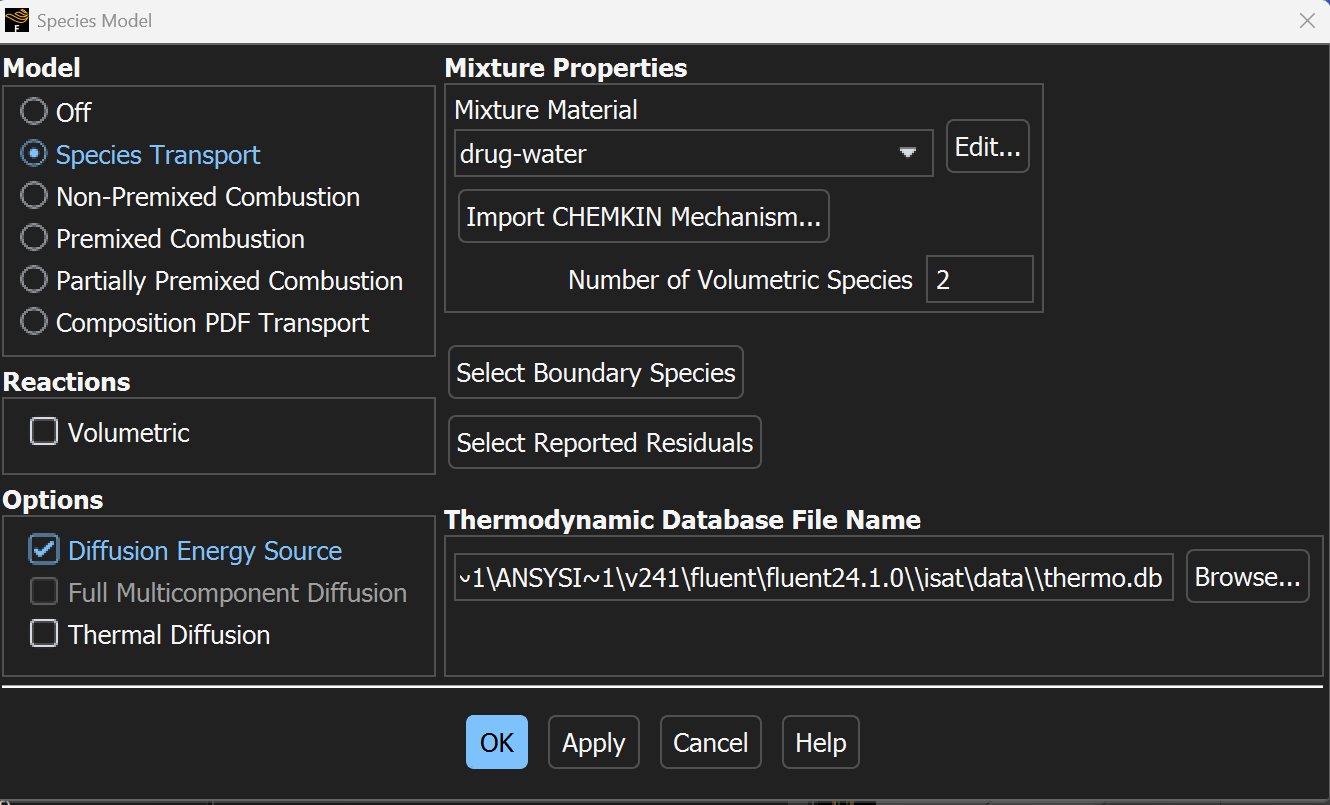
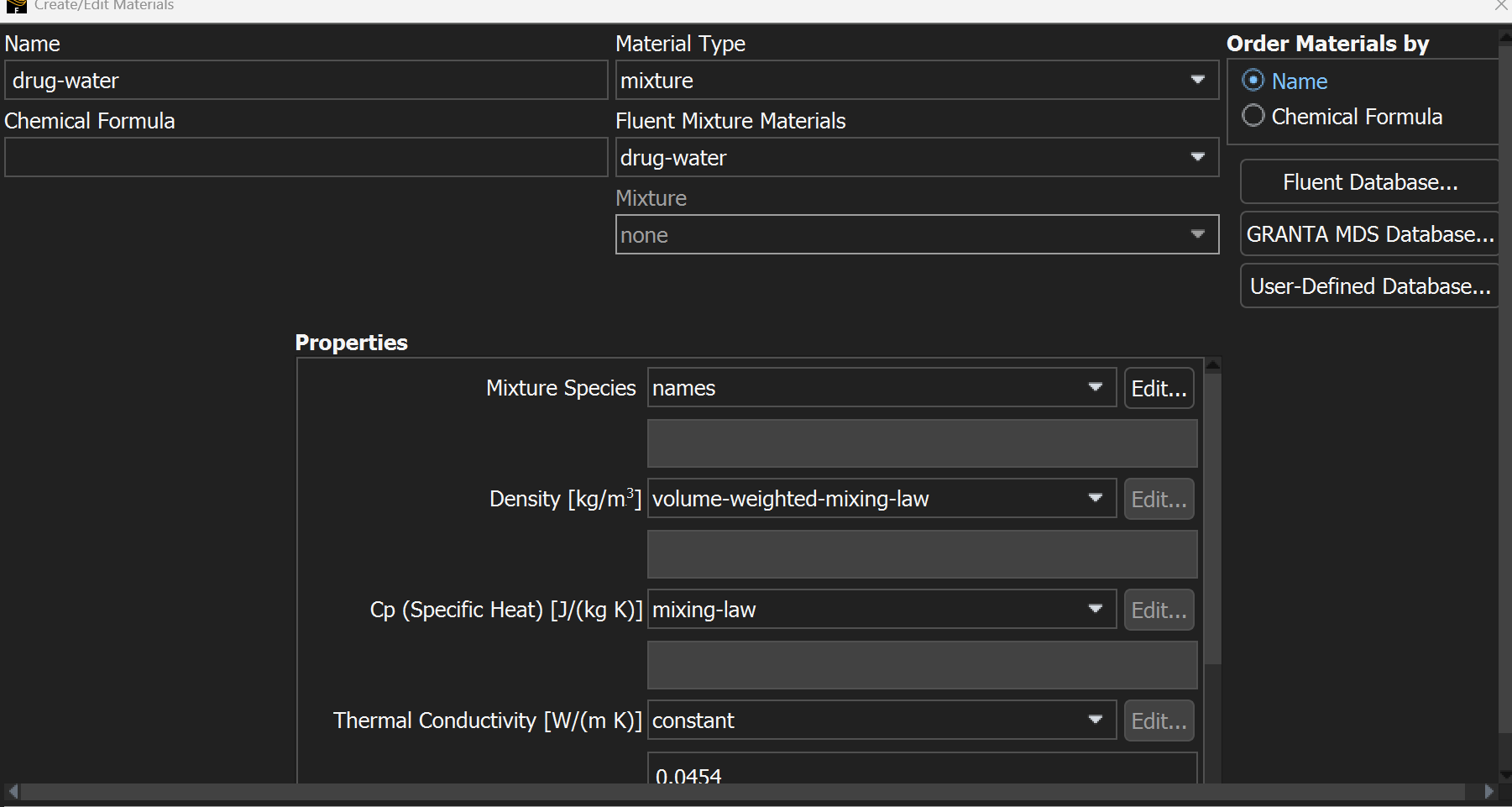
Under materials, a modified fluid called drug is created which is the dissolved species in water. The density is changed to volume weighted mixing law and the diffusion coefficient of the mixture is changed to constant-dilute-appx.
For boundary conditions:
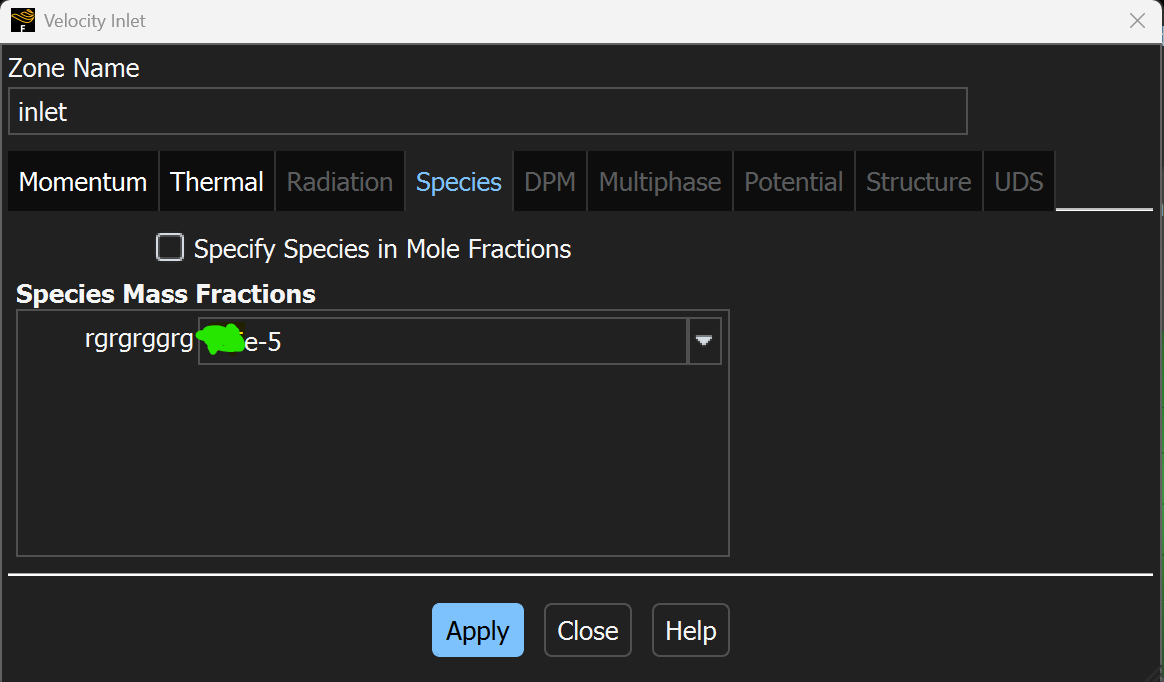
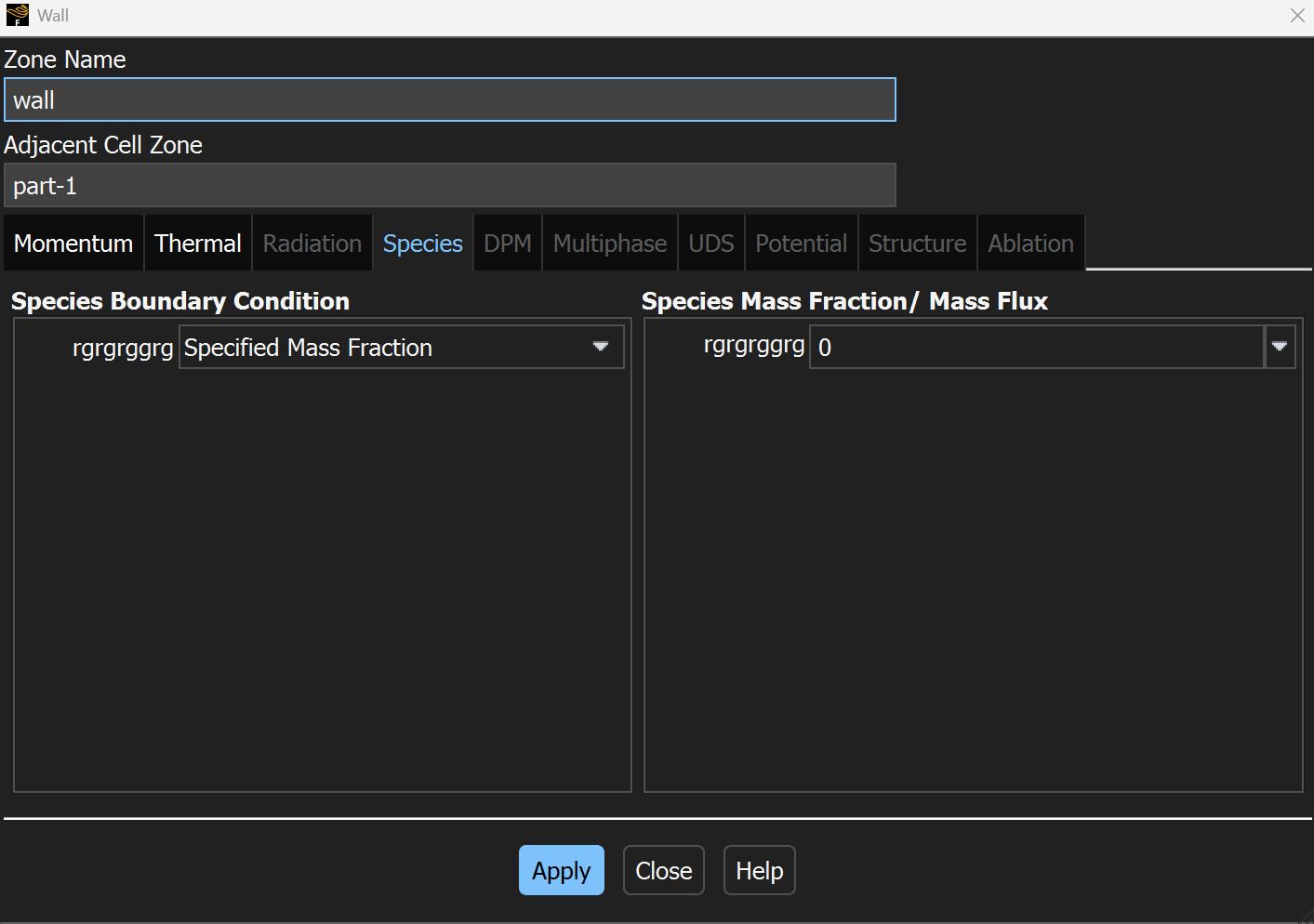
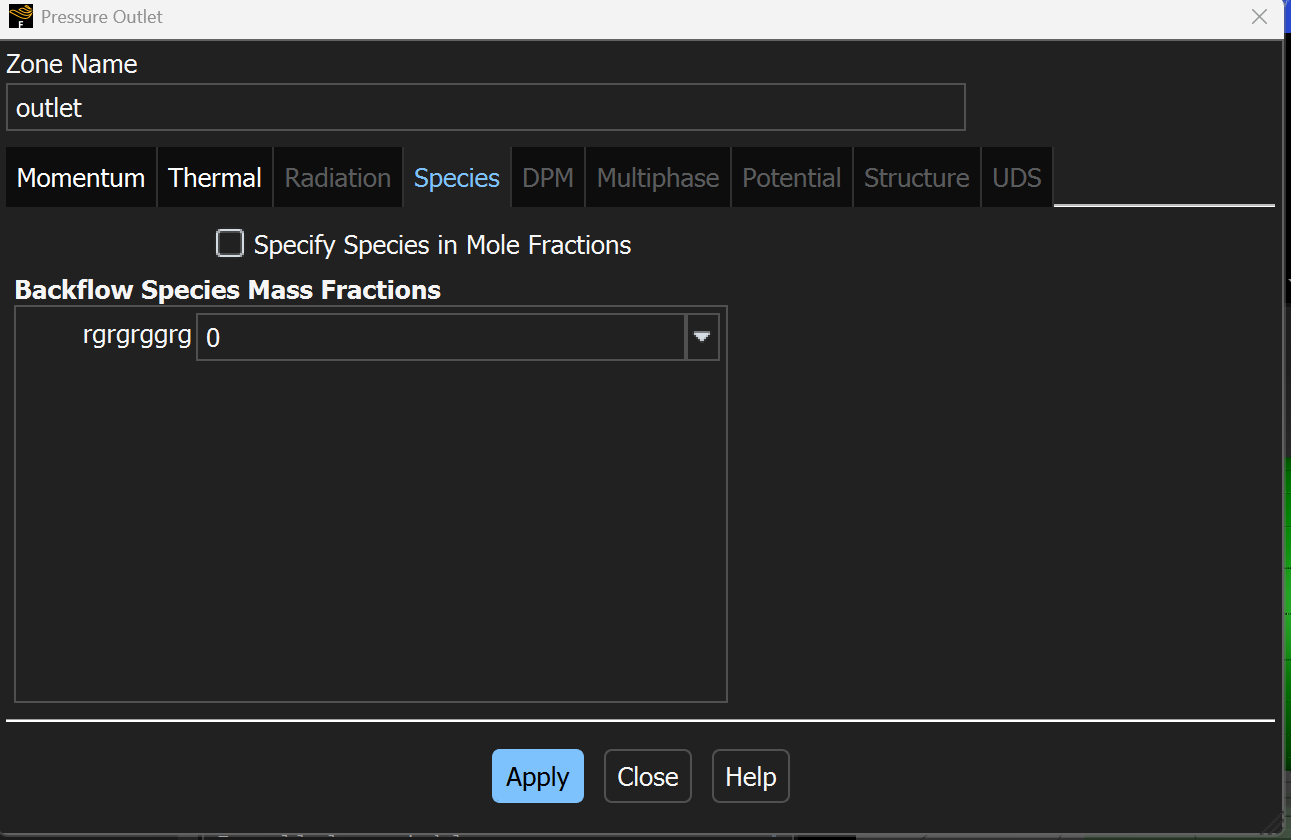
These are the species boundary conditions for the inlet, wall and the outlet. One thing to note here, 'rgrg....' is the chemical formula of the drug which was randomnly named when creating a new material named 'drug'.
After boundary conditions are set, the species transport along with fluid flow is solved for steady state condition. During the simulation, there was approximately 30% backflow reported at the outlet. After the convergence, this is what the contour plot for mass fraction of the drug looks like:
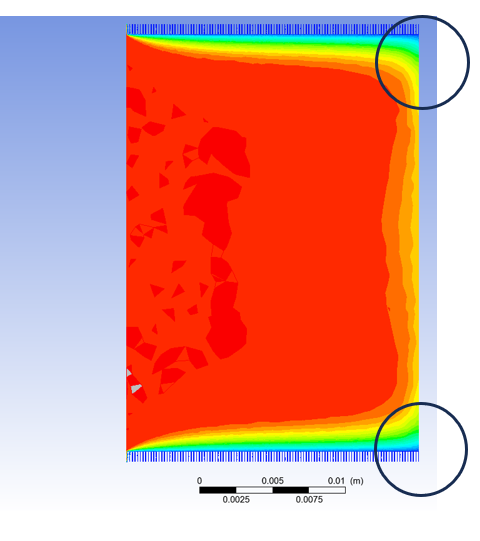
From the contour plot above, it can be seen that as the drug is transported from the inlet, the boundary layer starts and then I expected it to reach plateau but at the end of the domain it increases as indicated by the two circles.
Now, before incorporating the species transport, I had solved just fluid flow in steady state and this is what the velocity contour plot looked like:
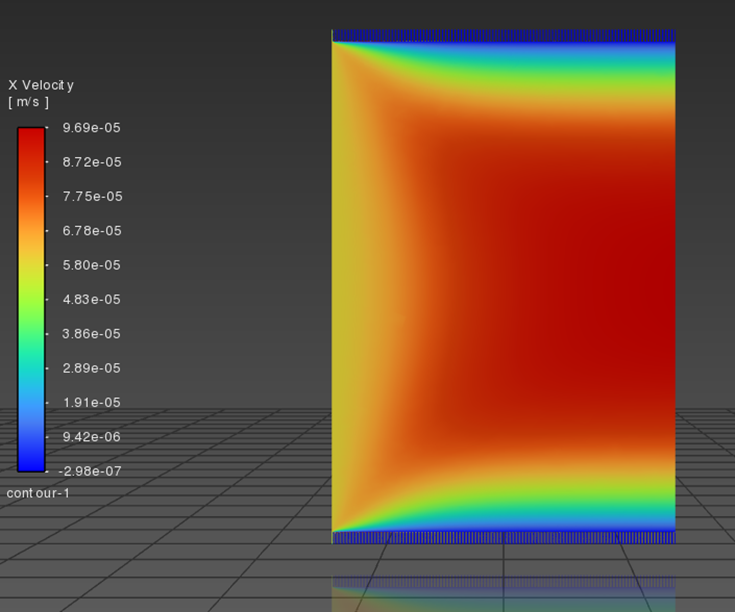
Unlike the species transport, the flow becomes fully developed and the boundary layer thickness reaches plateau (visually). My question is, for species transport, what parameters should I change for the model to get accurate results and if the backflow is the major contributor, how can I reduce the backflow at the outlet?
Additional question:
I am interested in incorporating peristalsis at the walls. In other words, Imagine squeezing a tube of toothpaste, but instead of your hand, a localized "squeeze" or contraction continuously travels down the length of the tube from the inlet to the outlet, pushing the fluid forward.
In CFD terms, I need a section of my cylindrical wall boundary to physically contract radially inward, and that contracted section needs to move axially along the flow direction over time. In this case, is udf needed to model the wall in this way along with fuid flow and species transport?
Thank you for coming this far to read my case. I appreciate any guidance and feedback


















 You are navigating away from the AIS Discovery experience