Ansys Assistant will be unavailable on the Learning Forum starting January 30. An upgraded version is coming soon. We apologize for any inconvenience and appreciate your patience. Stay tuned for updates.
LS Dyna

LS Dyna

Topics related to LS-DYNA, Autodyn, Explicit STR and more.

failure – TNV and Three-Networks models from the PolyUMod  library.

    • valerym.m5
      Subscriber
      Dear colleagues,
       
      I'm solving problems involving the deformation of parts made of hyperelastic materials with viscous properties.
       
      I'm using TNV and Three-Networks models from the PolyUMod  library.
       
      Has anyone used these models to simulate the failure of parts made of these materials?
       
      Regards Valery
    • Ram Gopisetti
      Ansys Employee

      Hi, 

      By default, all models from the PolyUMod Library, including TNM and TNV, do not provide failure modelling.

      To enable failure capture, MAT_ADD_GISSMO or MAT_ADD_EROSION must be used in conjunction with these models.

      Kind regards,
      Ram

      • valerym.m5
        Subscriber


        Dear Ram,

        haven’t used MAT_ADD_GISSMO or MAT_ADD_EROSION for TVM model before.
         
        I would be very grateful if you could recommend blogs and/or videos on how to use MAT_ADD_GISSMO or MAT_ADD_EROSION specifically for TVM model.
         
        I would be happy to confirm that the mentioned MAT_ADD_GISSMO or MAT_ADD_EROSION functions correctly when using the TNV model.

        Please clarify:
        Are "MAT_ADD_GISSMO or MAT_ADD_EROSIO" valid for hyperelastic materials with viscous properties?
         
        Regards   Valery


    • valerym.m5
      Subscriber


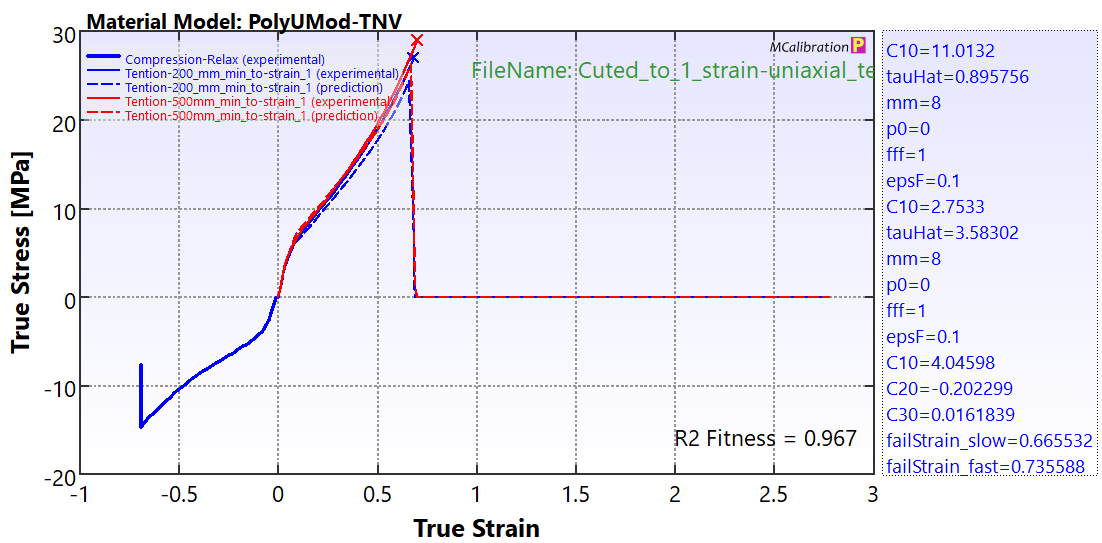
      I seem to have solved a simple test problem—uniaxial tension of a flat specimen with failure—using the aforementioned method.

      Quick Calibration of a PolyUMod Failure Model to Experimental Data
      https://www.youtube.com/watch?v=Qd1Pvqh20vE                                                                                    
       
      *** I’m using LS-Dyna and Polyumod 2022.
       
      I’m seeing some issues:
       
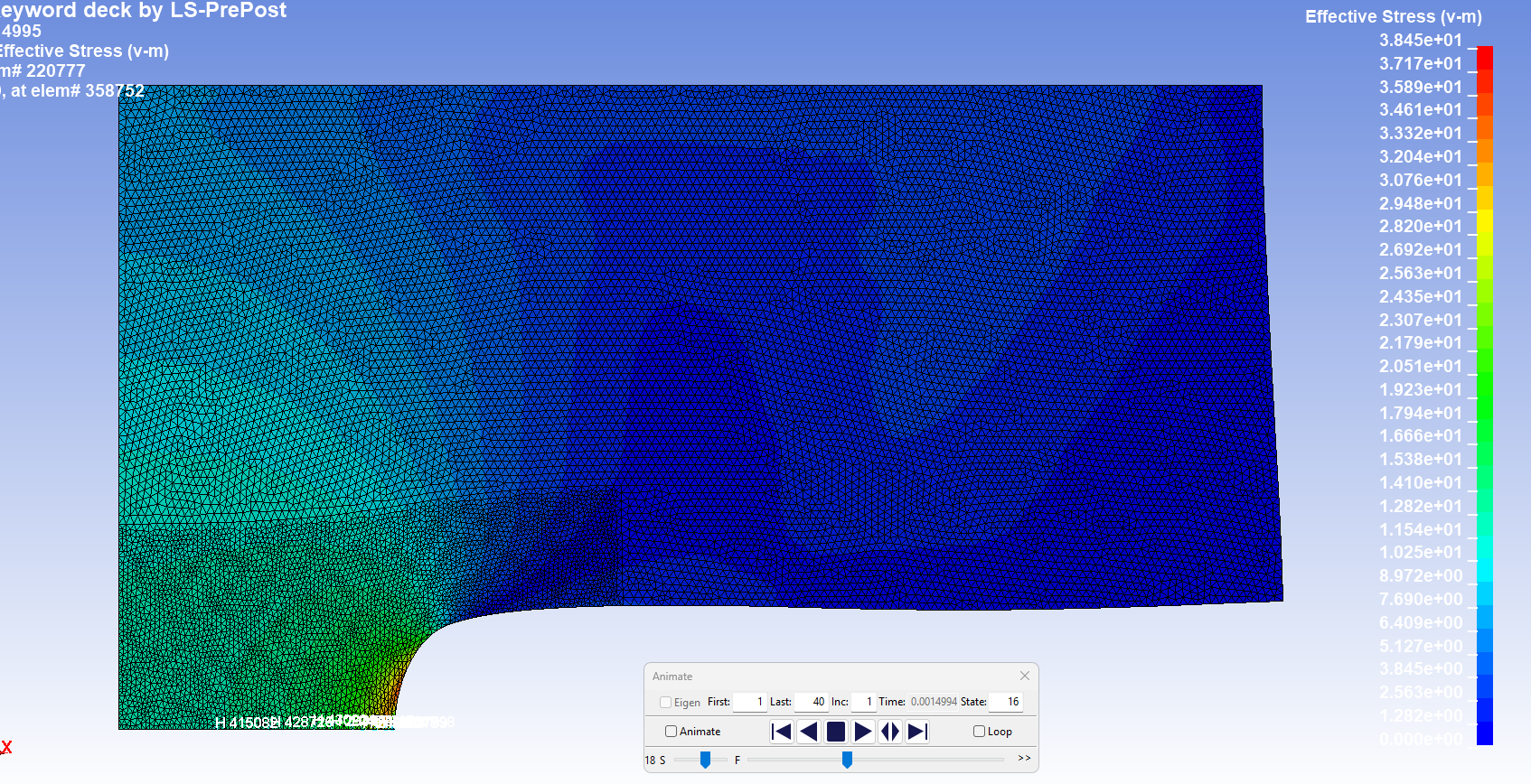
      1. When using the TNV model, LS-Dyna doesn’t record, or records incorrectly, deformations and displacements for the entire model.
      That is, zero values ​​are returned if I try to plot graphs and then write the values ​​to a file.
       
      2. Visualization issues:
       
      - Visualization of the deformed model is possible before resolution, but if I try to display deformations or displacements for a single point, all values ​​will be zero.
       
      - After failure begins, visualization of the ENTIRE model is impossible.
       
      Despite the lack of deformation and displacement results in the database, the calculation itself—up until failure—results in a realistic model (like a full-scale experiment and the results of calculating and calibrating the constants).
       
      *** I have some assumptions/hypotheses:
       
      When solving problems, LS-Dyna incorrectly records the values ​​of some variables for this model in the database or records them in a way that the postprocessor “doesn’t see.”
       
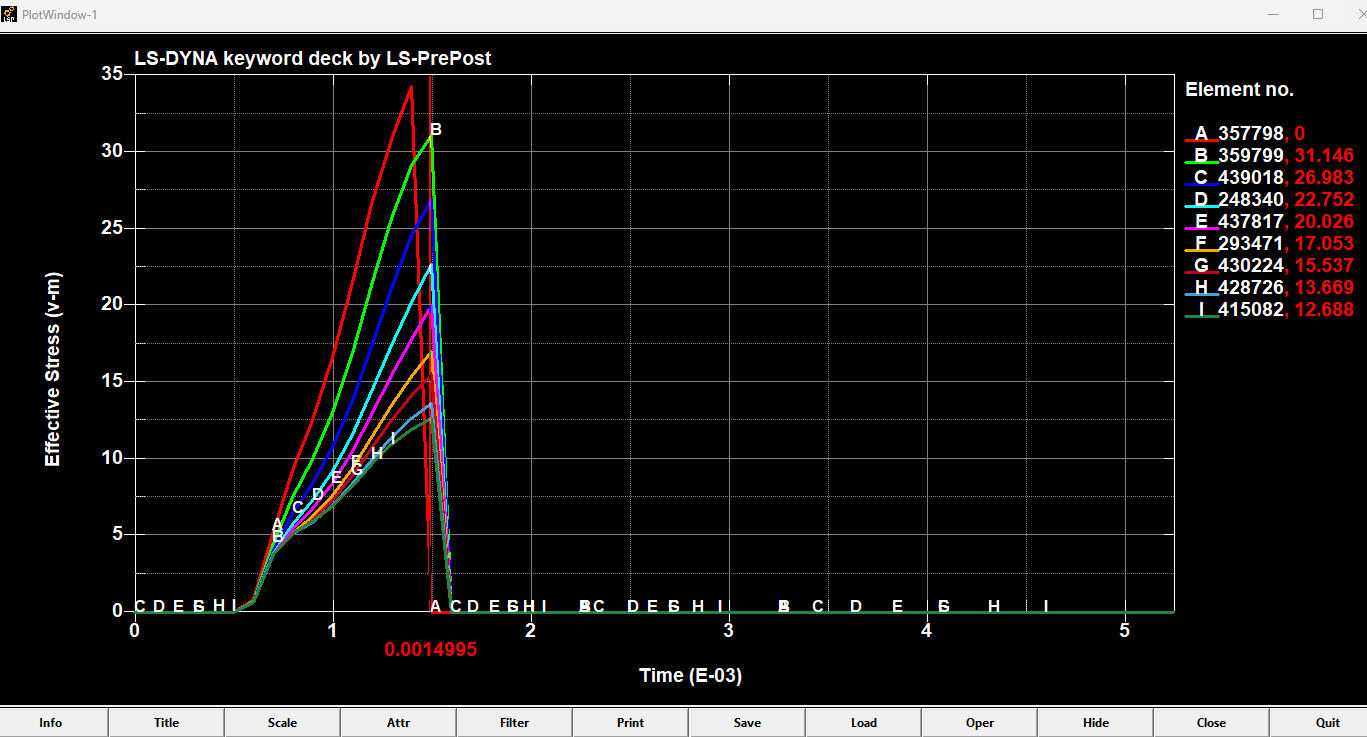
      The stress graphs constructed from LS-Dyna calculations are very similar to reality.
       
      I solved the same model using an abacus without any problems —the calculation results are very similar.



    • valerym.m5
      Subscriber

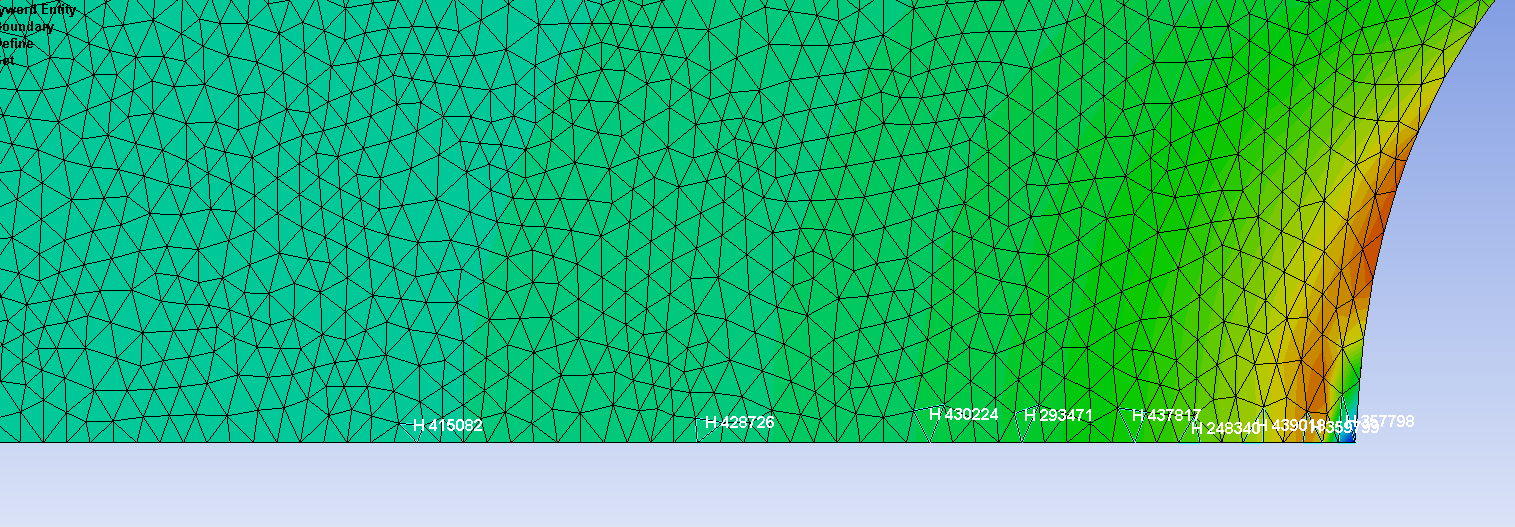
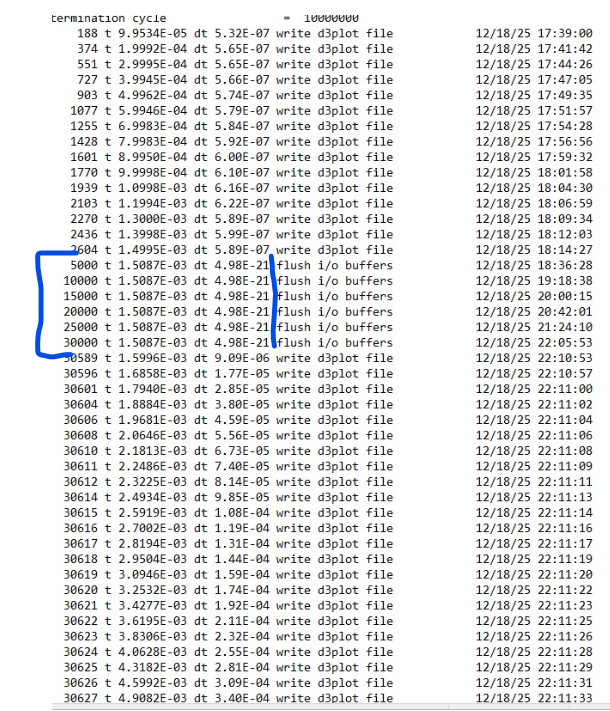
      when the destruction of elements begins, the integration time step decreases by 15 orders of magnitude


    • valerym.m5
      Subscriber


      Dear Ram,

      I would be very grateful if you could tell me:

      How can I obtain the following information for models from the PolyMod library:
       
      1. Viscous deformation
      2. Absorbed energy due to viscous properties.

      Regards   Valery


    • valerym.m5
      Subscriber

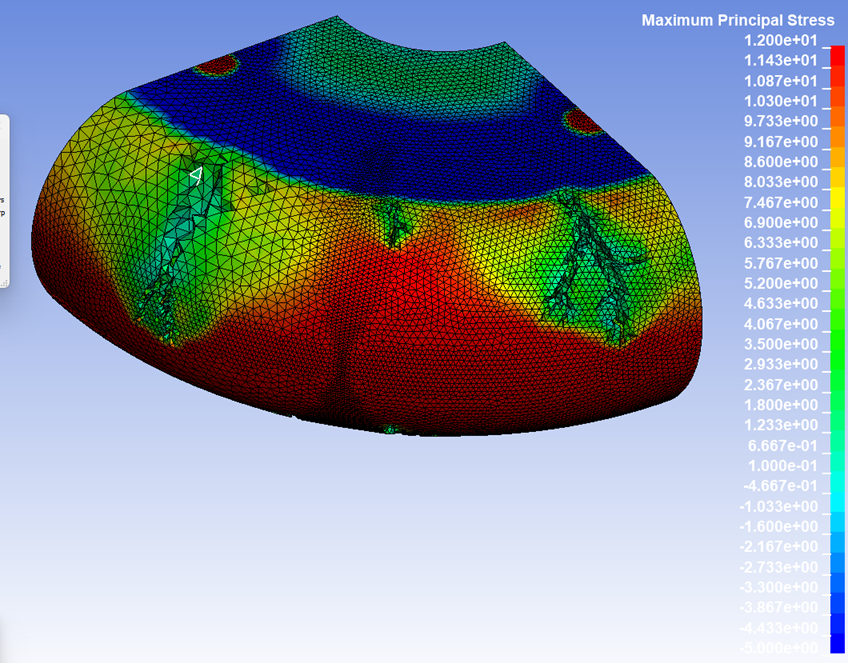
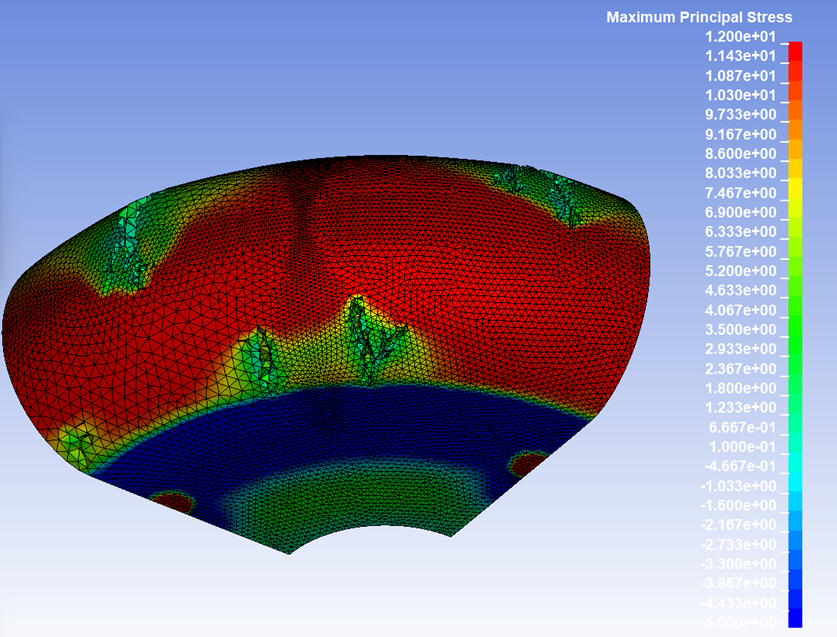
      I've run several test simulations using MAT_ADD_EROSION (the SIGP1 Maximum Principal Stress at Failure failure criterion).

      The crack formation locations and shape are very similar to the results of the full-scale experiments.


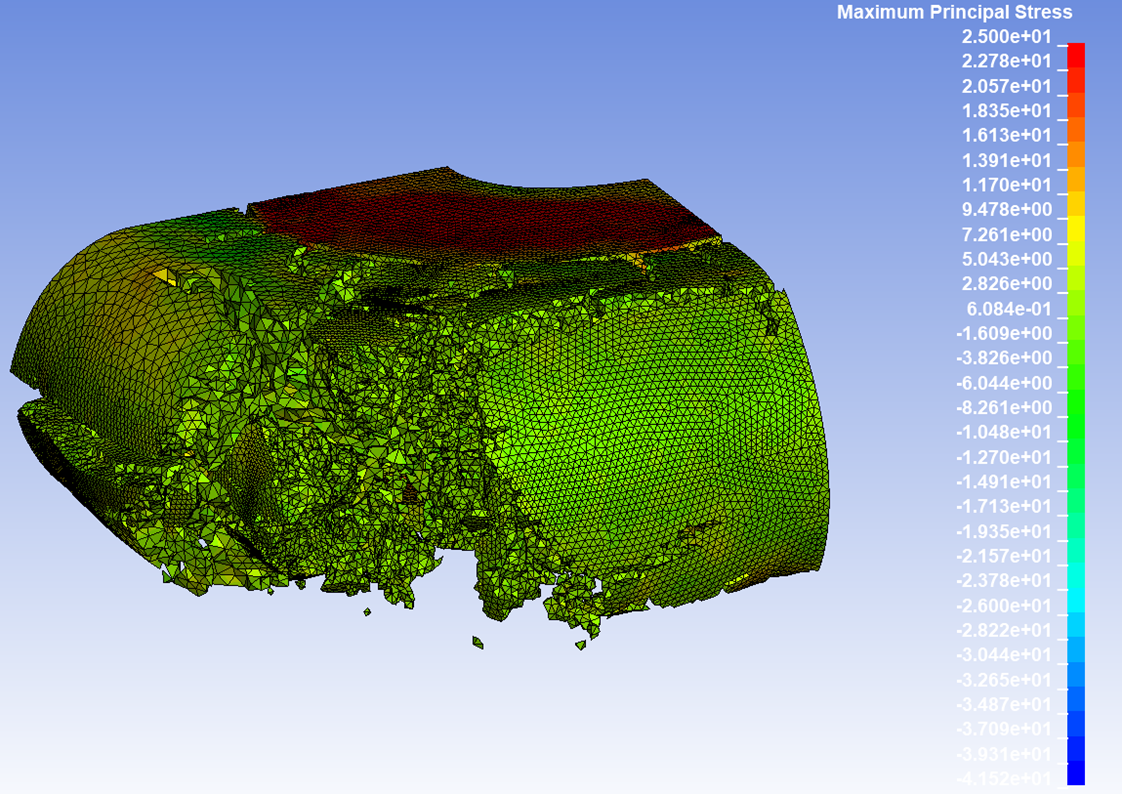
      However, the subsequent crack propagation and failure of the part are completely different from the full-scale experiment.

      I would be grateful for your advice and comments.


Viewing 5 reply threads
  • You must be logged in to reply to this topic.
[bingo_chatbox]