Ansys Assistant will be unavailable on the Learning Forum starting January 30. An upgraded version is coming soon. We apologize for any inconvenience and appreciate your patience. Stay tuned for updates.
General Mechanical

General Mechanical

Topics related to Mechanical Enterprise, Motion, Additive Print and more.

Implement a do loop in Ansys Workbench 16 for uniform circle shaped pressure load

    • HollyFart
      Subscriber

      Hello,


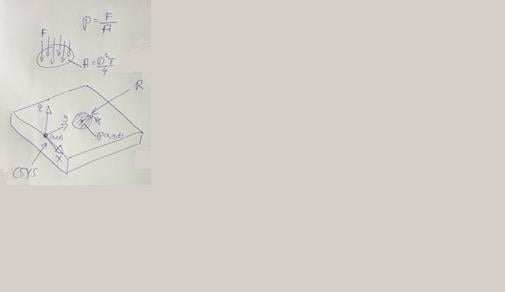
      I'm trying to implement a moving pressure load with a circle shaped area, which is moving along the Y direction via do loop.


      The pressure value is uniform and located within a circle shaped area.


      The moving direction is the Y axis. It should start at the global CS (0,0,0) and heads towards the positive Y axis.


      The load isn't moving, I don't have a clue why.


      The script is posted below due to size restrictions in the post.


      Best regards,


      HF

    • HollyFart
      Subscriber

      And the used script:


      total_time = 10                                  ! Total simulation time in seconds
      time_steps = 100 ! Total amount of steps
      time_inc = total_time/time_steps ! Time increment in seconds
      V_p = 0.01 ! m/s Load velocity
      Radius = 0.005 ! m Radius of the load area
      PV = 1E07 ! Pa Load value
      nsub,time_steps

      *do,I,1,time_steps,1
      time=I*time_inc
      Y_Local=V_p*time
      wpcs,-1,0 ! WP @ GLOBAL ORIGIN
      wpof,,Y_Local ! OFFSET WP ALONG ITS Y AXIS (i.e. provide current position of center of circle along Y axis)
      cswp,11,1 ! DEFINE Cylindrical COORDINATE SYSTEM @ WP ORIGIN
      esel,s,ename,,154 ! Select SURF154 elements
      sfed,all,,pres ! Delete old pressures if any
      nsle ! Select nodes attached to selected SURF elements
      nsel,r,loc,x,Radius ! Select nodes within radius of circle, 0.005m
      csys,0 ! Set CSYS back to global
      esln,r ! Select SURF elements attached to the nodes within the circle
      sfe,all,,pres,,PV ! Apply pressure based on your calculation at the said time.
      allsel,all
      outres,all,all

      *if,I,EQ,1,THEN
      /prep7 ! Enter into /prep7 as ET and ESURF are valid only in /PREP7
      et,100,154 ! Create a new element type for SURF154
      cmsel,s,surface1 ! Select nodes on a face via Face named selection
      type,100 ! Set the element type as 100
      esurf ! Create surface effect elements on the selected nodes
      allsel,all ! Select everything back
      /solu

      time=I*time_inc
      Y_Local=V_p*time

      wpcs,-1,0 ! WP @ GLOBAL ORIGIN
      wpof,,Y_Local ! OFFSET WP ALONG ITS Y AXIS (i.e. provide current position of center of circle along Y axis)
      cswp,11,1 ! DEFINE Cylindrical COORDINATE SYSTEM @ WP ORIGIN
      esel,s,ename,,154 ! Select SURF154 elements
      sfed,all,,pres ! Delete old pressures if any
      nsle ! Select nodes attached to selected SURF elements
      nsel,r,loc,x,Radius ! Select nodes within radius of circle, 0.005m
      csys,0 ! Set CSYS back to global
      esln,r ! Select SURF elements attached to the nodes within the circle
      sfe,all,,pres,,PV ! Apply pressure based on your calculation at the said time.
      allsel,all
      outres,all,all

      *else
      time=I*time_inc
      Y_Local=V_p*time

      wpcs,-1,0 ! WP @ GLOBAL ORIGIN
      wpof,,Y_Local ! OFFSET WP ALONG ITS Y AXIS (i.e. provide current position of center of circle along Y axis)
      cswp,11,1 ! DEFINE Cylindrical COORDINATE SYSTEM @ WP ORIGIN
      esel,s,ename,,154 ! Select SURF154 elements
      sfed,all,,pres ! Delete old pressures if any
      nsle ! Select nodes attached to selected SURF elements
      nsel,r,loc,x,Radius ! Select nodes within radius of circle, 0.005m
      csys,0 ! Set CSYS back to global
      esln,r ! Select SURF elements attached to the nodes within the circle
      sfe,all,,pres,,PV ! Apply pressure based on your calculation at the said time.
      allsel,all
      outres,all,all
      *endif

      *enddo

    • HollyFart
      Subscriber

      This is the model sketch


      Model

    • BenjaminStarling
      Subscriber

      Do you have an input file that you can provide such that I can investigate further? My advice is to step through your code line by line to see what is occuring. Are you using this in Workbench/Mechanical or MAPDL?


      My first observations are so:


      • You are creating surface elements after the first stage of the do loop, are there no surface elements in the model during the first stage?

      • Your do loop isn't solving between steps, use the *get command to get the current step/substep to increment your do loops between steps.

      • You are creating surface elements when a surface effect (SFE command) may be sufficient.


      The logic overall seems sound though and you should be able to get this to work. Link below hints that this is more complicated in MAPDL than in Workbench. So if you aren't commited to MAPDL I would recommend switching to Workbench.


      https://www.padtinc.com/blog/running-an-apdl-command-snippet-for-every-load-step-in-ansys-mechanical/

    • HollyFart
      Subscriber

      Hello,


      thank you very much for your answer.  Of course I can provide you the input file.


      I’m working with Ansys Workbench 16 and use command snippets to implement APDL scripts.


      Regarding your questions:


      1.       There are no surface elements in my model before I initiate the load loop, because it’s not really possible to implement several different elements (2D +3D) via GUI in workbench.


      2.       *Get command, okay sounds plausible


      3.       I already use SFE to apply the load on all nodes in a moving circle shaped area.


      Best regards


      HF

    • BenjaminStarling
      Subscriber

      Hi Holly,


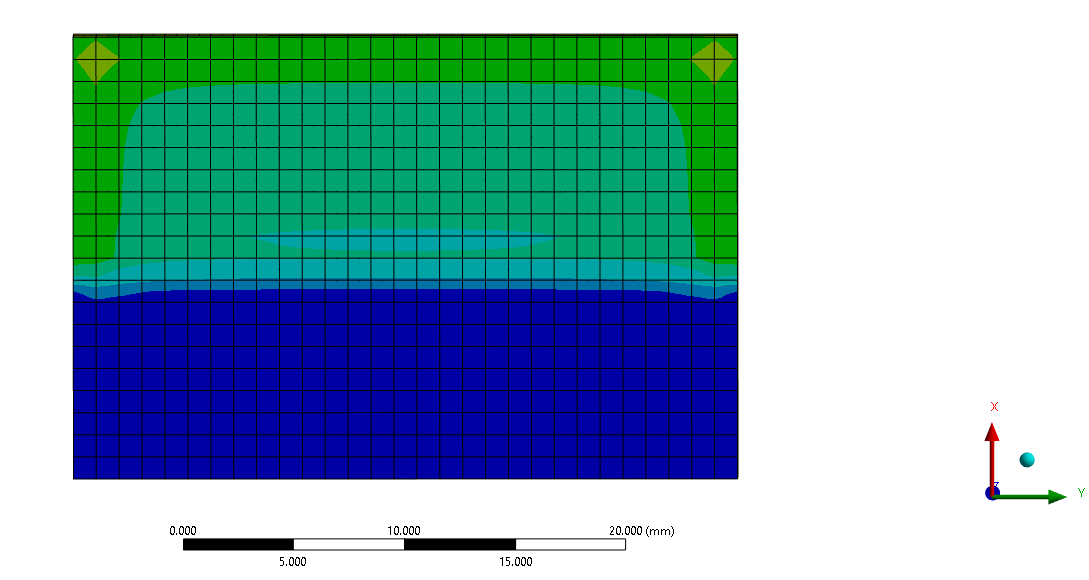
      I created a mock shell model with a fixed support around the edges.


      Please see attached images highlighting the following things.


      • Considering you are in the workbench environment you do not need a do loop to acheive this (it may not have been required in MAPDL either)

      • I have created a cylindrical CS in workbench which I have identified as CS12. I then move/redefine CS12 based on itself. No need to move the WPCS around and create more CS.

      • Your intialising scripts to create the surface elements and define parameters should run at the first load step. The moving of the CS and applying the pressure needs to occur at each loadstep

      • You should not be using substeps in this analysis. During a substep you cannot move the CSYS/Pressure load. Only use substeps if they are required for ramping the load/convergance issues. Even in that instance you may not get the desired effect of the rolling pressure.

      • I have set up my analysis with an increment of 5mm across a 100mm plate, going from 25mm to 75mm across the width of a plate. I have input these numbers directly but these can all be parameterised. I moved the CSYS back from where I would like it to start such that the first load step moved it to the desired location.


      If any of the features I have relied upon are not available in your academic version please let me know and I will find a work around. I am working on 2019 R3.

    • HollyFart
      Subscriber

      Hi Benjamin,


      Thank you for your answer. Your way is quite simple and effective.


      Do you know how move the CSYS/Pressure without complex loop?


      I would like to move the load with a high resolution and it’s very exhausting to implement 100 single steps and I’m still struggle to loop it.


      I work with R16 at home and R19.1 at work.


      Best regards Holly

    • BenjaminStarling
      Subscriber

      As I mentioned above, if you are using workbench, set the APDL command snippet to run at each load step. This is an option in the details window of the APDL command snippet. You do not require a do loop, and you do not need to cdo any extra work to implement the command for many load steps.


      If you are set on using a do loop you need to include the time command and the solve command in your loop. Increment the time command with a parameter  that is linked to the do loop. i.e.


      *do,I,1,total_time,1


      !Insert commands to move and apply pressure load


      TIME,I


      SOLVE


      *enddo


      The time command tells the solve command which timestep should be solved.

    • HollyFart
      Subscriber

      Hi Benjamin,


      thank you very much for your answer. It’s an elegant solution and it’s working. Maybe I get rid of the loop idea, because it’s not really simple to get it work. I would like to transfer the results from pressure load to heat flux. For this I need to change the used elements from SURF154 to SURF152, and of course you the transient thermal module.


      I use the following commands, similar to the pressure load:

    • HollyFart
      Subscriber

      All steps:


      H_Flux=1000


      Radius=0.003


      Step 1:


      /prep7                                 ! Enter into /prep7 as ET and ESURF are valid only in /PREP7


      et,101,152                          ! Create a new element type for SURF152                


      cmsel,s,surface1                ! Select nodes on a face via Face named selection


      type,101                             ! Set the element type as 101


      esurf                                   ! Create surface effect elements on the selected nodes


      allsel,all                              ! Select everything back  


      /solu                                   ! Re-enter /SOLU


      wpcs,-1,0                     ! WP @ GLOBAL ORIGIN


      wpof,,0                        ! OFFSET WP ALONG ITS Y AXIS (i.e. provide current position of center of circle along Y axis)


      cswp,11,1                     ! DEFINE Cylindrical COORDINATE SYSTEM @ WP ORIGIN


      esel,s,ename,,152         ! Select SURF152 elements 


      sfed,all,,hflux               ! Delete old flux if any


      nsle                               ! Select nodes attached to selected SURF elements


      nsel,r,loc,x,0,radius      ! Select nodes within radius of circle, 0.005m


      csys,0                            ! Set CSYS back to global


      esln,r                              ! Select SURF elements attached to the nodes within the circle


      sfe,all,,hflux,,H_flux      ! Apply hflux based on your calculation at the said time


      allsel,all


      outres,all,all



      Step 2:


      wpcs,-1,0                    ! WP @ GLOBAL ORIGIN


      wpof,,0.01                   ! OFFSET WP ALONG ITS Y AXIS (i.e. provide current position of center of circle along Y axis)


      cswp,11,1                    ! DEFINE Cylindrical COORDINATE SYSTEM @ WP ORIGIN


      esel,s,ename,,152       ! Select SURF152 elements 


      sfed,all,,hflux               ! Delete old flux if any


      nsle                              ! Select nodes attached to selected SURF elements


      nsel,r,loc,x,0,radius     ! Select nodes within radius of circle, 0.005m


      csys,0                          ! Set CSYS back to global


      esln,r                           ! Select SURF elements attached to the nodes within the circle


      sfe,all,,hflux,,H_flux       ! Apply hflux based on your calculation at the said time


      allsel,all


      outres,all,all


    • HollyFart
      Subscriber

      But it’s not working. Do you have an idea why?


      Best regards Holly

    • SteBir
      Subscriber

      Hi you can find a helpful tutorial at YouTube


      https://www.youtube.com/watch?v=dteRMtuXjdk


    • Noor Ur Rehman
      Subscriber

      @BenjaminStarling

      Hi Benjamin,

      I have exactly the same Idea. i have simulated a moving load in the form of a circular area. Now i want to simulate it using square area. i have removed the cylindrical coordinate system. 

      when i run the simulation, I am not able to Move the load to the next step.
      Your help is welcomed.
      This is my code

      total_time = 10
      time_step = 10
      time_inc = 1
      V_p = 2 
      Radius = 2
      PV = 100

      /PREP7

      et,100,154
      cmsel,s,surface1
      type,100
      esurf
      allsel,all                              

      /solu   

      *Do,I,1,total_time,1


      Y_Local = V_p*TIME

      wpcs,-1,0
      wpof,,Y_Local 
      !cswp,11,1
      esel,s,ename,,154
      sfed,all,,pres
      nsle
      nsel,r,loc,X,0,10
      nsel,r,loc,,Y,0,2
      !csys,0
      esln,r
      sfe,all,,pres,,PV
      allsel,all
      outres,all,all

      TIME,I
      SOLVE

      *enddo


Viewing 12 reply threads
  • The topic ‘Implement a do loop in Ansys Workbench 16 for uniform circle shaped pressure load’ is closed to new replies.
[bingo_chatbox]