Hello,
I am using Eddy current solver to calculate the frequency-dependent impedance for electrical motors.
I want to calculate the inductance of each conductor and their coupling.
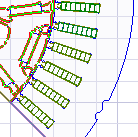
At first I use one pole simulation as follows.
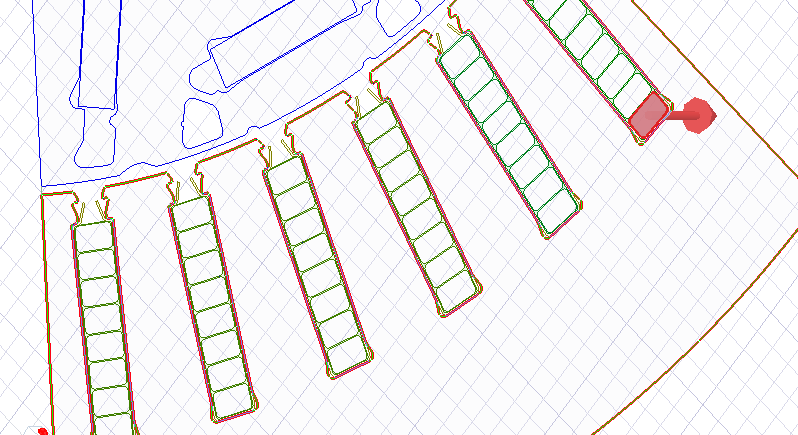
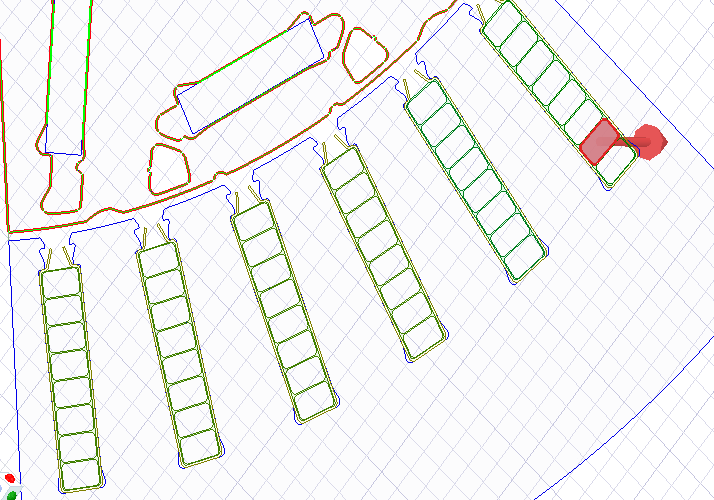
Then, I excite two neighboring conductors as follows:
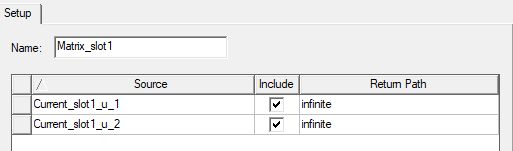
Then, the inductance matrix will be set as
I run the simulation at 20 kHz,
I get the results as follows:
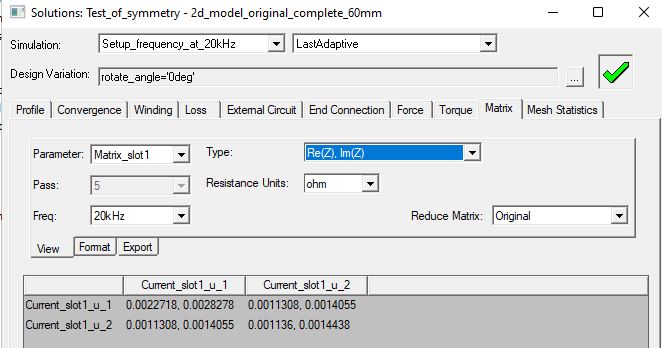
However, they values are too small.
Then, I run the simulation for a pole pair, and the model is
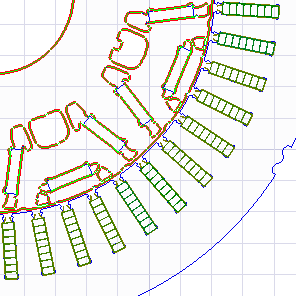
For the excitation this time, I uses winding and coils.
the first coil
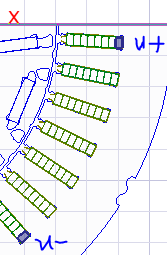
the second coil
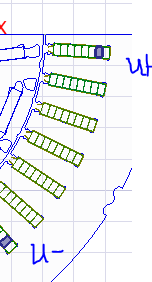
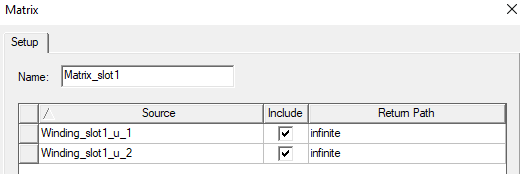
Then, the inductance matrix is set:
afte Simulation, the results are
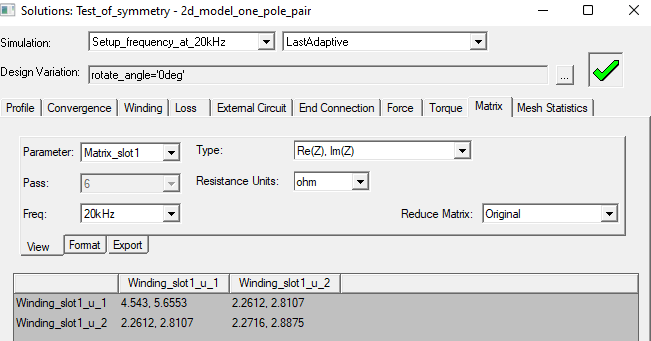
The results are much larger than the result in the first case.
However, I suppose a factor of 2 between them because a turn consists of two conductors.
Therefore, my question is, why there is such a large difference. Which is one is correct for my application, i believe that the second results are more true.
Thank you.


















 You are navigating away from the AIS Discovery experience