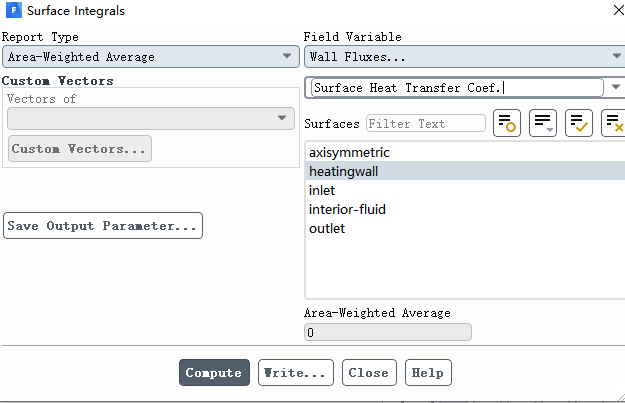
Why does changing the particle size hardly change the heat transfer coefficient in the DPM model? In fact, the smaller the particle size, the greater the heat transfer coefficient. For example, the heat transfer coefficient of nanoparticles is much greater than that of micron particles. The heat transfer coefficient of the micron particles is even larger than that of the nanoparticles. In the DPM model, only the influence of the particle thermal conductivity on the heat transfer coefficient is considered, while the micro-convection around the particle is not considered. Is this the reason why the calculated heat transfer coefficient does not change much?
In addition, in the input of fluid parameters, whether the suspension is considered as a fluid after mixing (according to the empirical formula in the literature), if the input is the physical parameters of the basic liquid, the overall heat transfer performance almost does not change greatly


















 You are navigating away from the AIS Discovery experience