

TAGGED: boundary-conditions, cfd, cfx, periodic, workbench
-
-
May 28, 2021 at 5:29 am
P_Heng
SubscriberHello everyone, have a good day.
Can you recommend me what boundary condition can I use instead of periodic boundary condition? I ever used the periodic boundary condition and I can use this boundary because Both interfaces are the same.
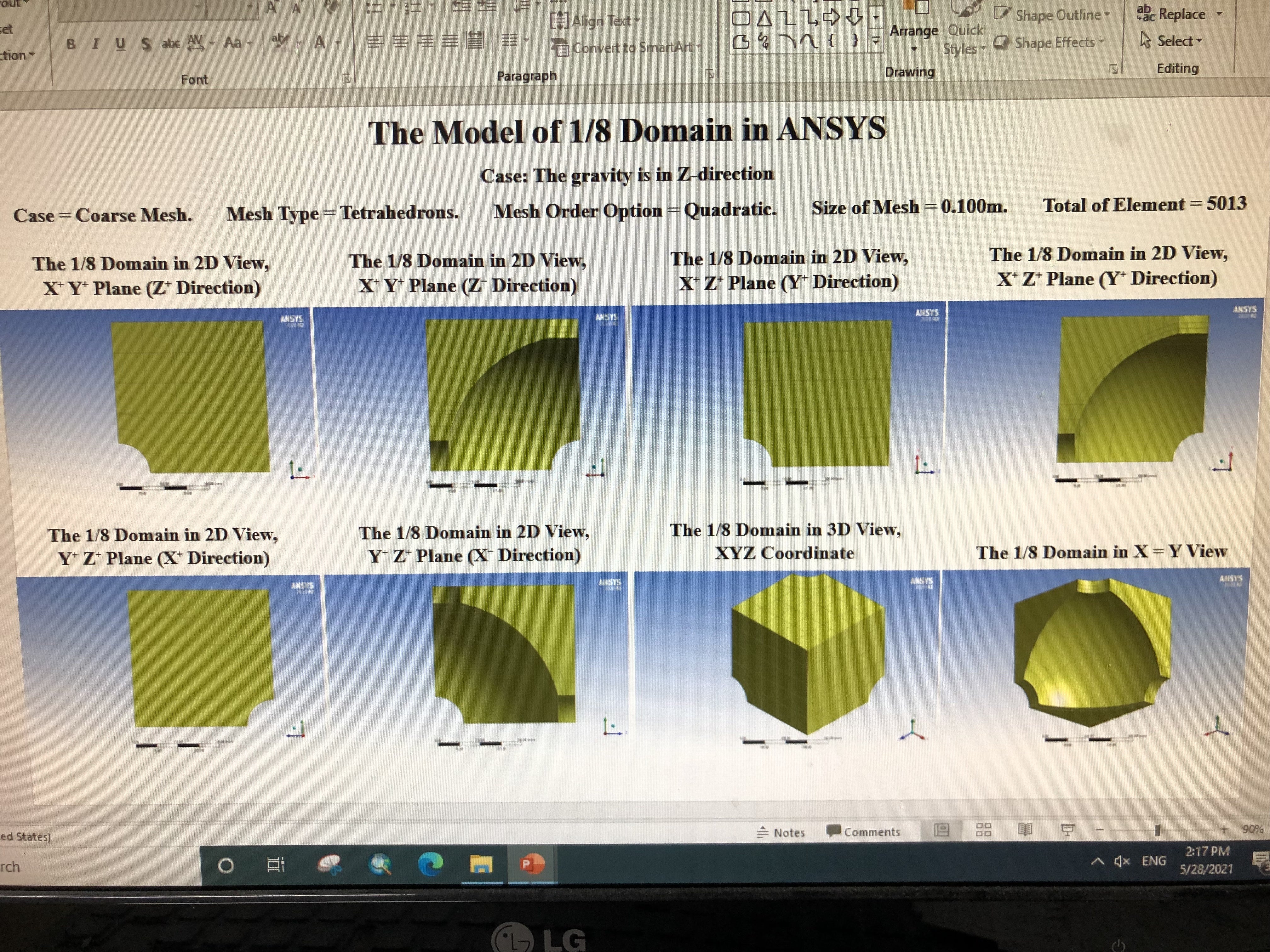
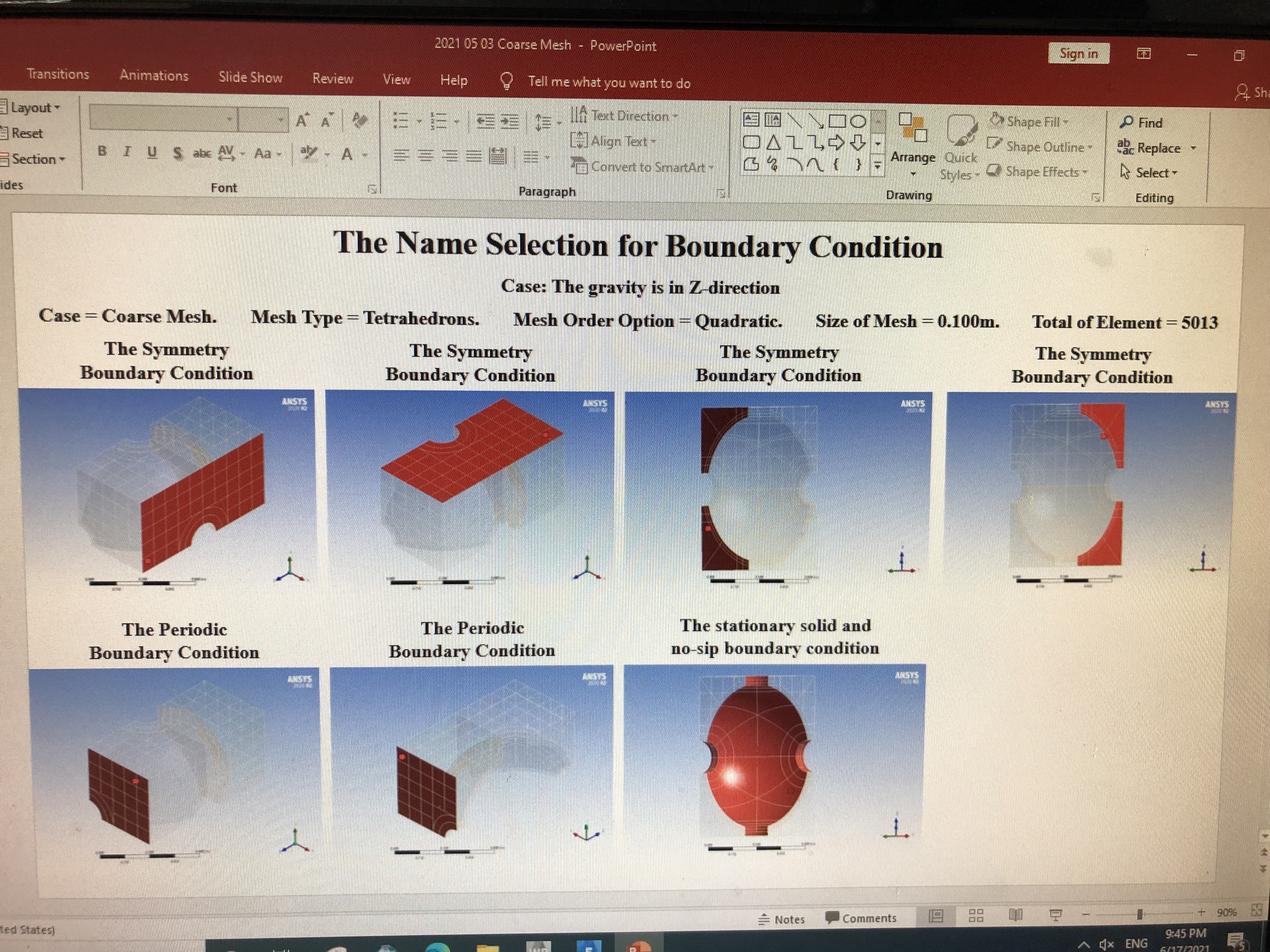
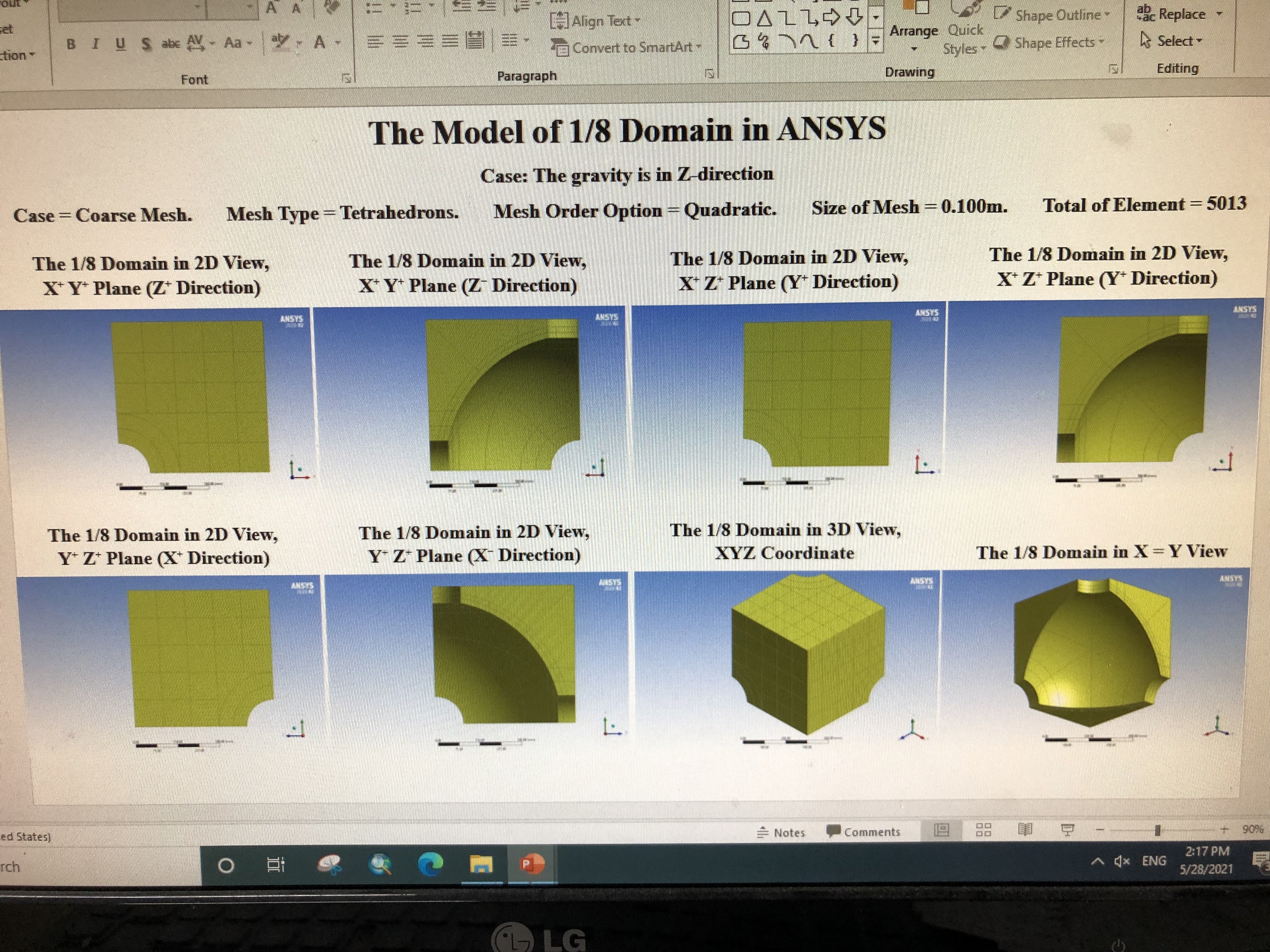
But I now have one more domain which their interfaces are not the same as you see the uploaded picture. I need to do the case like periodic case but I cannot use the periodic boundary condition for this domain.
I want to know that what boundary condition can I use instead of periodic boundary condition?
My regards,
P_Heng.
May 28, 2021 at 2:17 pm1shan
Ansys EmployeeLooks like you could use a symmetry region object along all 3 cut planes. Have a look at https://www.youtube.com/watch?v=RETzoXbbwBA
Regards Ishan.
May 28, 2021 at 3:10 pmSubscriber, I am happy to see your response. Thank you.
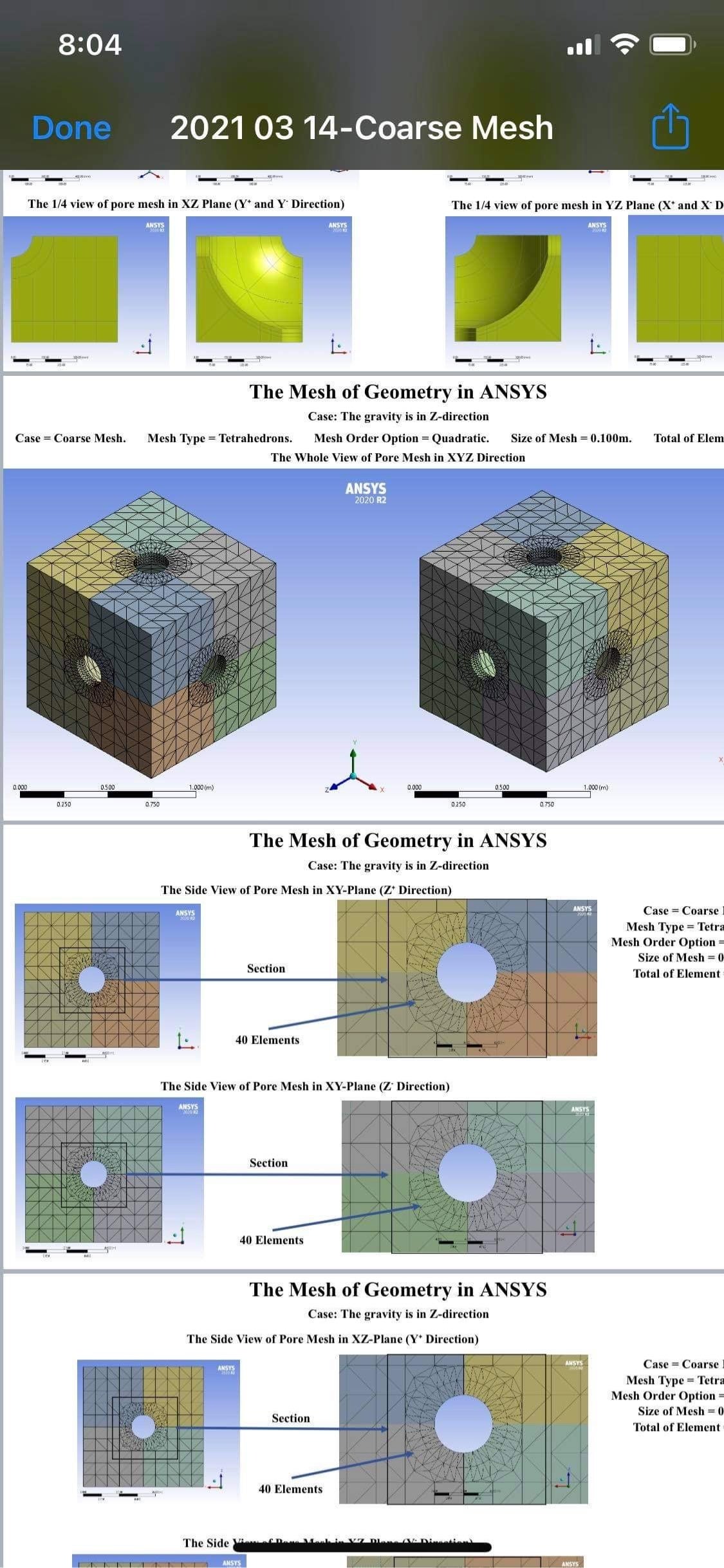
First, I want to tell you that I have a whole domain, and the picture which I sent to this forum is the section. 1/8 section. I will send the whole domain now.
My ProfessorÔÇÖs idea, he wants me to use the periodic boundary condition and I have to put the value for gravity = 1 , viscosity = 1 , and density = 1 only. I must be allowed to put the values of velocity.
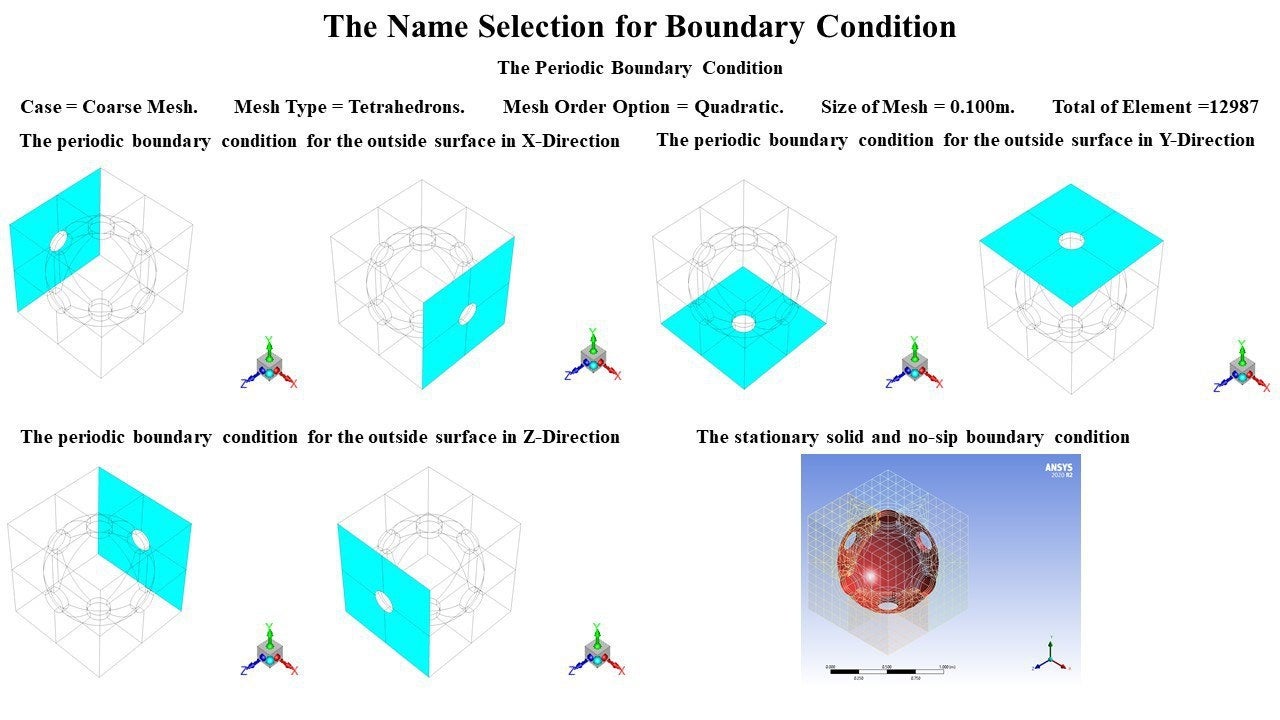
I can use the periodic boundary condition for the whole domain and for the 1/4 section of the domain. But I cannot use this boundary for 1/8 section of domain because both interfaces are not the same.
I also try to use the symmetry boundary condition but the result (volume average of velocity) of 1/8 section is too different to the 1/4 section and the whole domain. The result of 1/8 and whole domain are the same.
I donÔÇÖt know what boundary should I use because I donÔÇÖt know the value of velocity. If I use the periodic boundary condition, I donÔÇÖt need to put the value of velocity.
Are there more solutions?
My regards P.Heng.
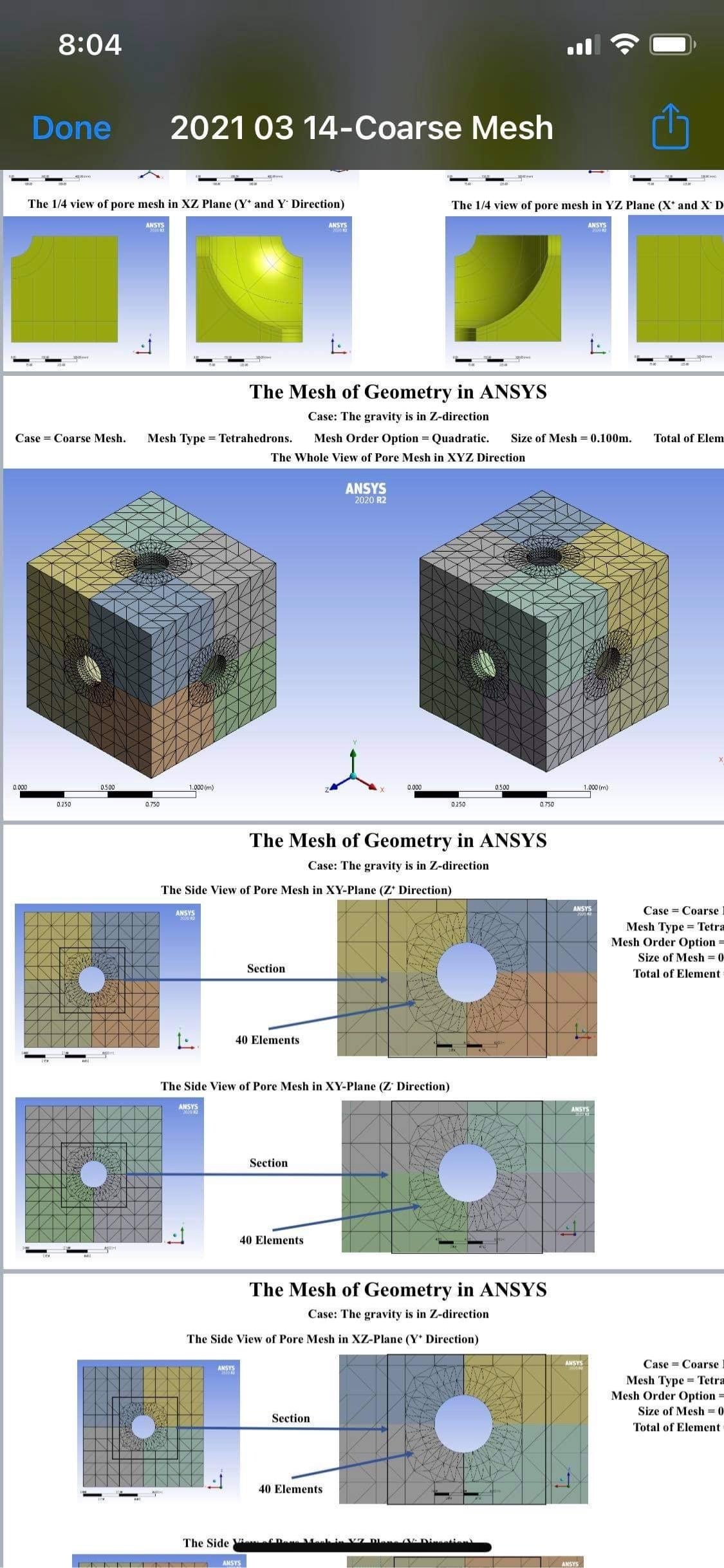 May 28, 2021 at 3:34 pmSubscriberAdditionally, In your video, the domain is separated into 1/4 section.
For my domain, if I cut the domain into 1/4 section, it can be use with the periodic boundary condition and symmetry boundary condition. But my professor want me to cut it into 1/8.
My regards P.Heng.
May 31, 2021 at 1:30 pmAnsys EmployeeIs it a CFD analysis or a structural analysis?
Regards Ishan.
May 31, 2021 at 1:34 pmSubscriber
I use CFD (setup fluent).
My regards P.Heng.
May 31, 2021 at 1:40 pmAnsys EmployeeI assumed it was a structures problem since its posted in that category. Let me move it to fluids.
Regards Ishan.
May 31, 2021 at 1:45 pmSubscriber
It is fluid domain. And I use water as the material.
I also want to make sure that, the inside curve is solid. I send you the picture.
Thanks for your time.
My regards P.Heng.
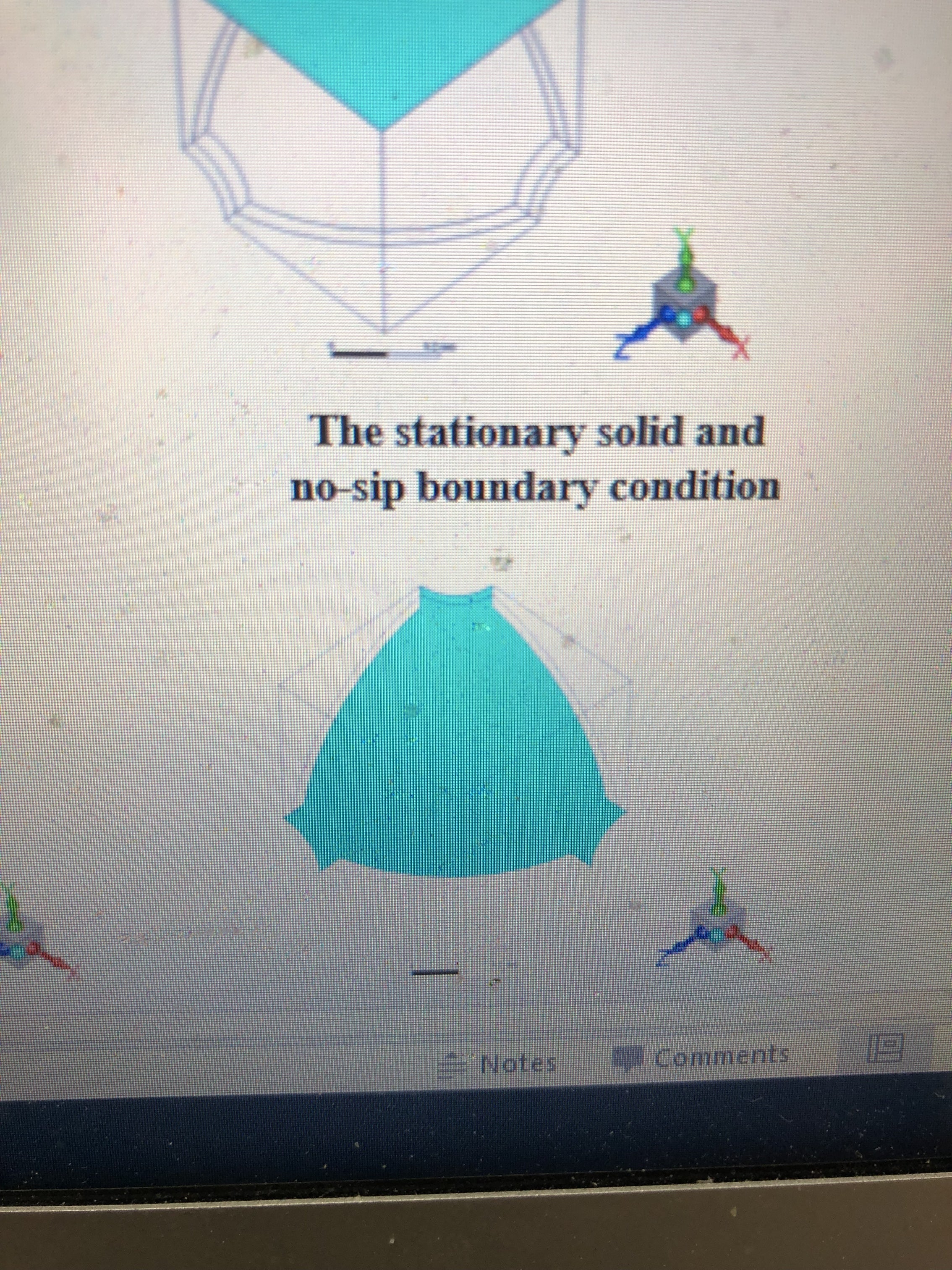
May 31, 2021 at 1:54 pmSubscriber
Tomorrow, I will send you the maximum value of velocity and the volume integral of velocity for whole domain and 1/4 section of domain.
I cannot send you now because I use the computer in my lab and I am now in the dormitory. Now, it is 11:00pm.
My regards P.Heng.
May 31, 2021 at 3:31 pmAnsys EmployeePlease repost this question in the fluids category so that people with relevant expertise can have a look.
Regards Ishan.
June 1, 2021 at 1:45 amSubscriber
Thanks for your suggestion.
My regards, P. Heng.
June 1, 2021 at 2:27 amSubscriber
This is my first to ask the question in the forum. IÔÇÖm sorry for choosing the wrong option to ask the question.
Again, thanks for your time.
My regards P. Heng.
June 1, 2021 at 12:27 pmKarthik Remella
AdministratorHello It all depends on where you have the flow coming in and leaving the entire (whole) domain. Can you, on the schematic of your whole domain, mark your inlet and outlet boundaries?
Karthik
June 1, 2021 at 12:35 pmSubscriber
Thanks for your response.
For 1/8 section of domain, I want the fluid flow in the z direction because I put the gravity in z direction. Therefore, inlet and outlet are in z direction.
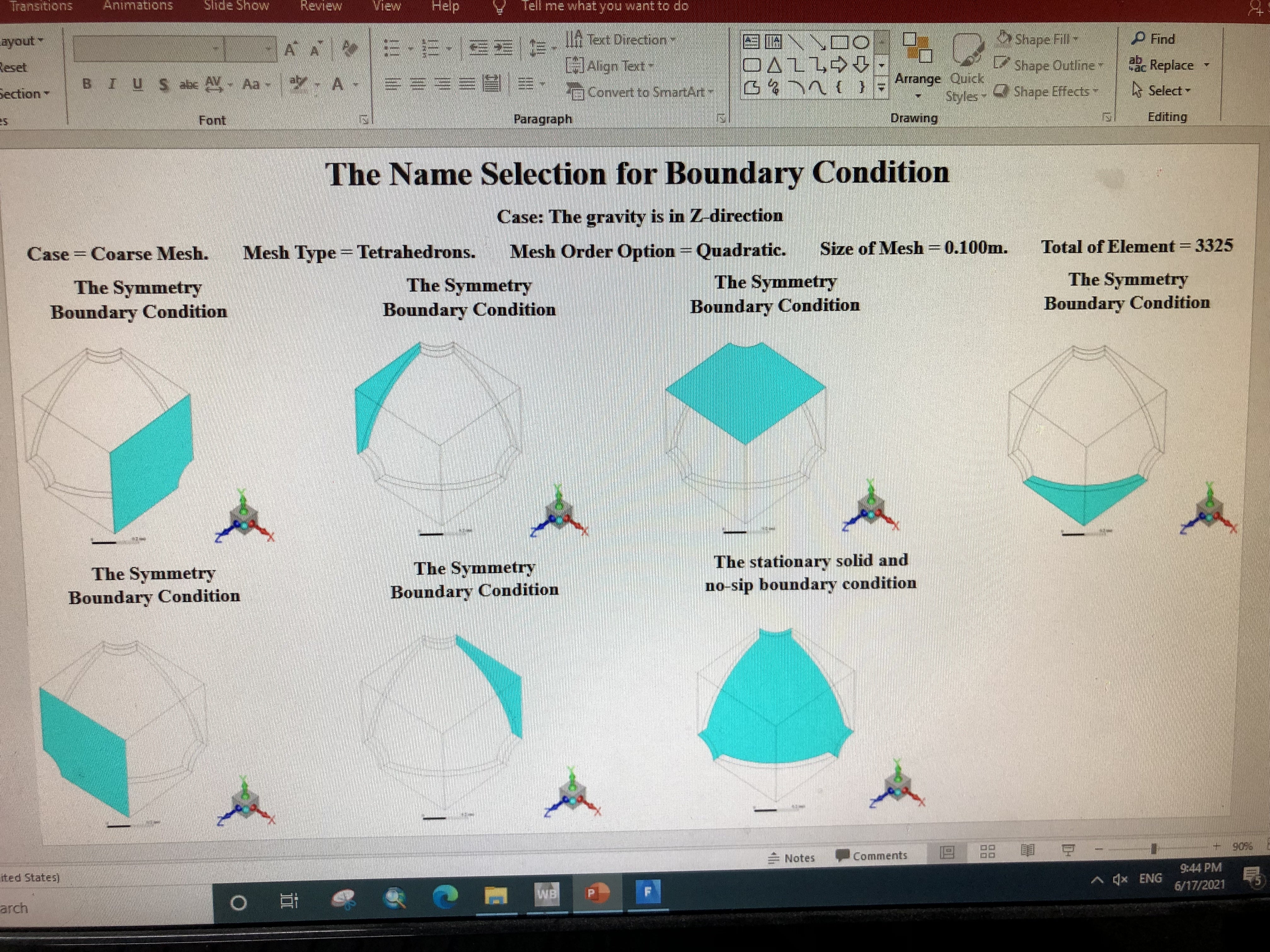
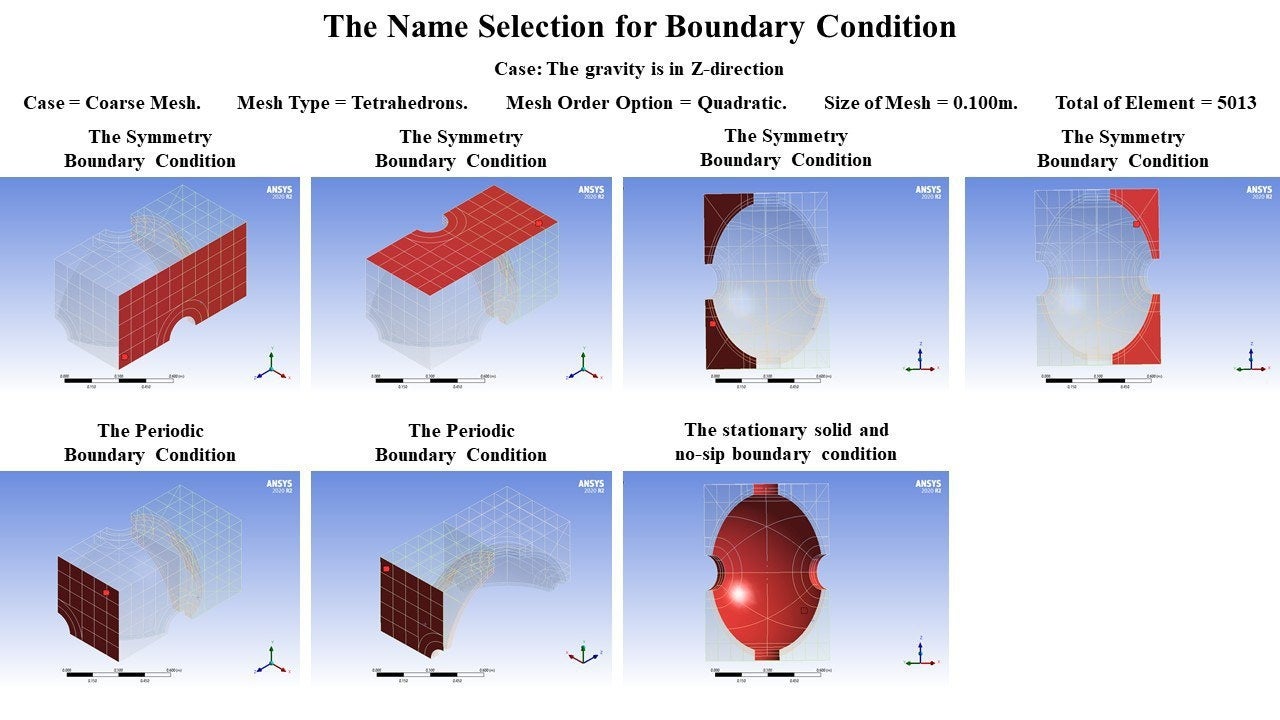
For other interfaces, I use the symmetry boundary condition and the inside curve is solid.
Anyway, I cannot use inlet velocity and pressure outlet because I am not allowed to put the value of velocity by myself. This is the nature fluid flow.
First time, the researchÔÇÖs purpose uses the periodic boundary condition. But I have no idea when the domain is cut into 8 sections as I sent the pictures above.
My regards P. Heng.
June 1, 2021 at 12:43 pmSubscriber
I am now in my dormitory. I already left my lab so I send you a picture and draw red line to show you the inlet and outlet in z direction.
My regards P. Heng.
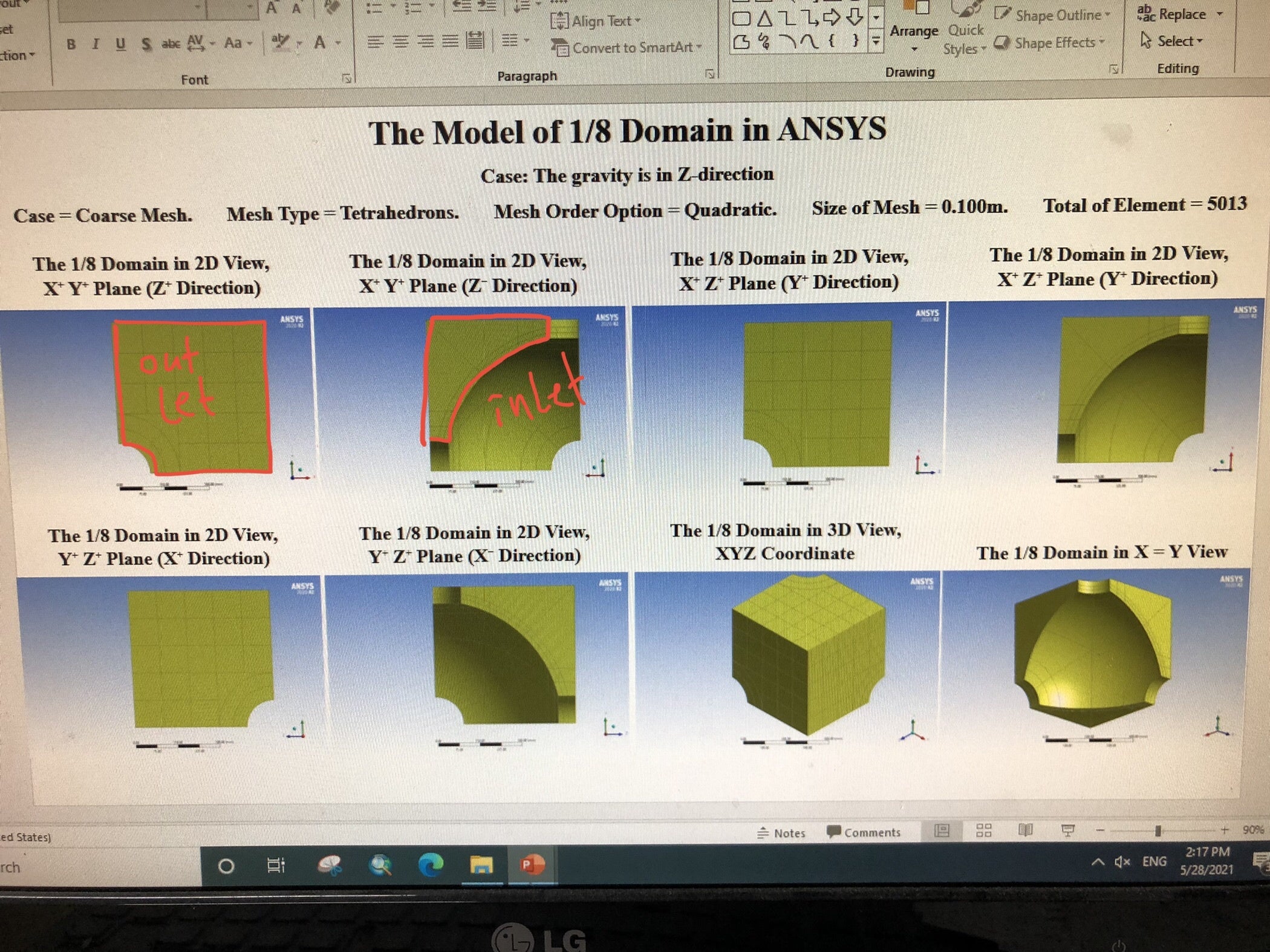
June 1, 2021 at 12:56 pmDrAmine
Ansys EmployeeI have learnt in the past: if swirl is required: periodic. If Not: Symmetric. Reality lies in-between! End :)
June 1, 2021 at 12:58 pmRob
Forum ModeratorDuplicate of /forum/discussion/28306/are-there-boundary-conditions-that-is-able-to-be-used-instead-of-periodic-boundary-condition#latest leaving open as other thread now closed.
June 1, 2021 at 12:59 pmSubscriber
Thanks for your response.
My regards P. Heng.
June 1, 2021 at 1:23 pmSubscriber
Thank you.
My regards P. Heng.
June 3, 2021 at 6:26 amSubscriberHello everyone,
Are there any ways to write the UDF for the boundary condition that we can use instead of periodic boundary condition but that boundary condition have the same role as the periodic boundary condition? In the case, the domain have the different faces.
My regards P. Heng.
June 3, 2021 at 11:45 amForum ModeratorThere are, but as we keep saying your domain is not periodic to the results won't make sense.
June 4, 2021 at 3:33 amSubscriber
Thanks for your response and your time.
My regards P. Heng.
June 17, 2021 at 4:46 amSubscriberHello everyone,
Because my domain is not periodic, What boundary condition can I use?
In my case, I have gravity = 1, density = 1 ( boussinesq ), viscosity = 1.
I donÔÇÖt have the value of velocity or pressure.
My regards P. Heng.
June 17, 2021 at 4:49 amSubscriber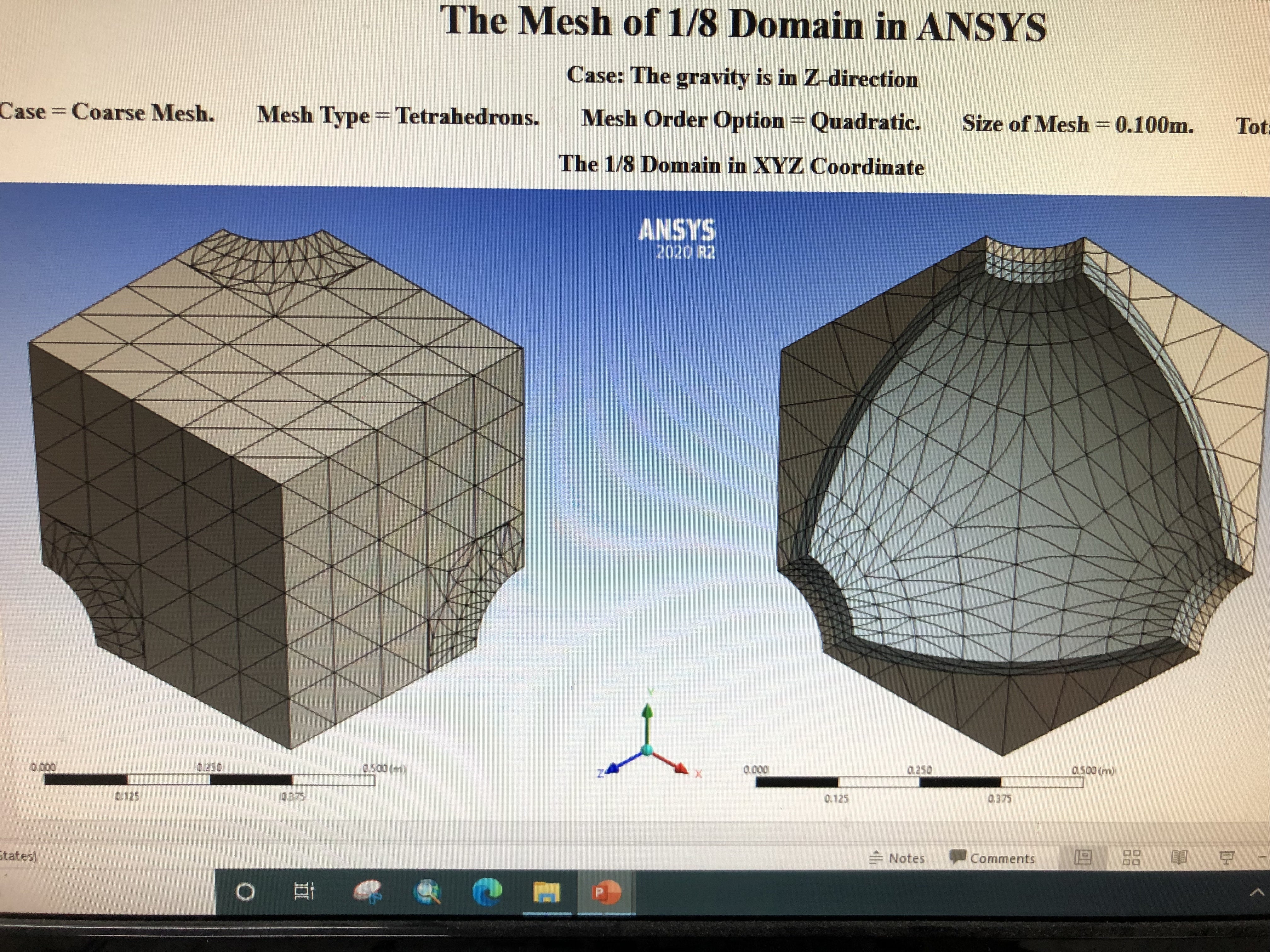
June 17, 2021 at 6:48 amAnsys EmployeeIf you are taking one Quadrant of the whole geometry which seems to be a "symmetric" one and if there is no swirl, I general tend to "symmetry" or "free slip" wall. If this is just solid and does not contain any fluid just model the geometry to avoid any ambiguities.
June 17, 2021 at 7:04 amSubscriber
I am happy to see your response.
I ever try to use the symmetry boundary condition but if I compare the result of velocity between 1/8 domain and 1/4 section of domain or whole domain, their results are too different.
Whole domain and 1/4 section of domain have the same result.
My regards P. Heng.
June 17, 2021 at 7:15 amSubscriber
I want the result of velocity of whole domain, 1/4 Domain, and 1/8 domain are the same.
The purpose of my professor is that he want me to cut the domain into 8 sections in order to reduce of using many nodes and elements.
Therefore, their result should be the same.
My regards P. Heng.
June 17, 2021 at 10:42 amForum ModeratorWhat are the differences? Is your Prof trying to make you realise that you can only split domains down so far, or do they not realise you can only split domains down so far?
June 17, 2021 at 12:50 pmSubscriber
I am happy to see your response.
The result of maximum velocity and the volume average of velocity for whole domain and 1/4 domain are the same because they able to use with periodic.
But their results are different from 1/8 domain because 1/8 cannot use the periodic boundary condition and I try to use the symmetry boundary condition.
I think that they, whole domain, 1/4 domain, 1/8 domain, should have the same result.
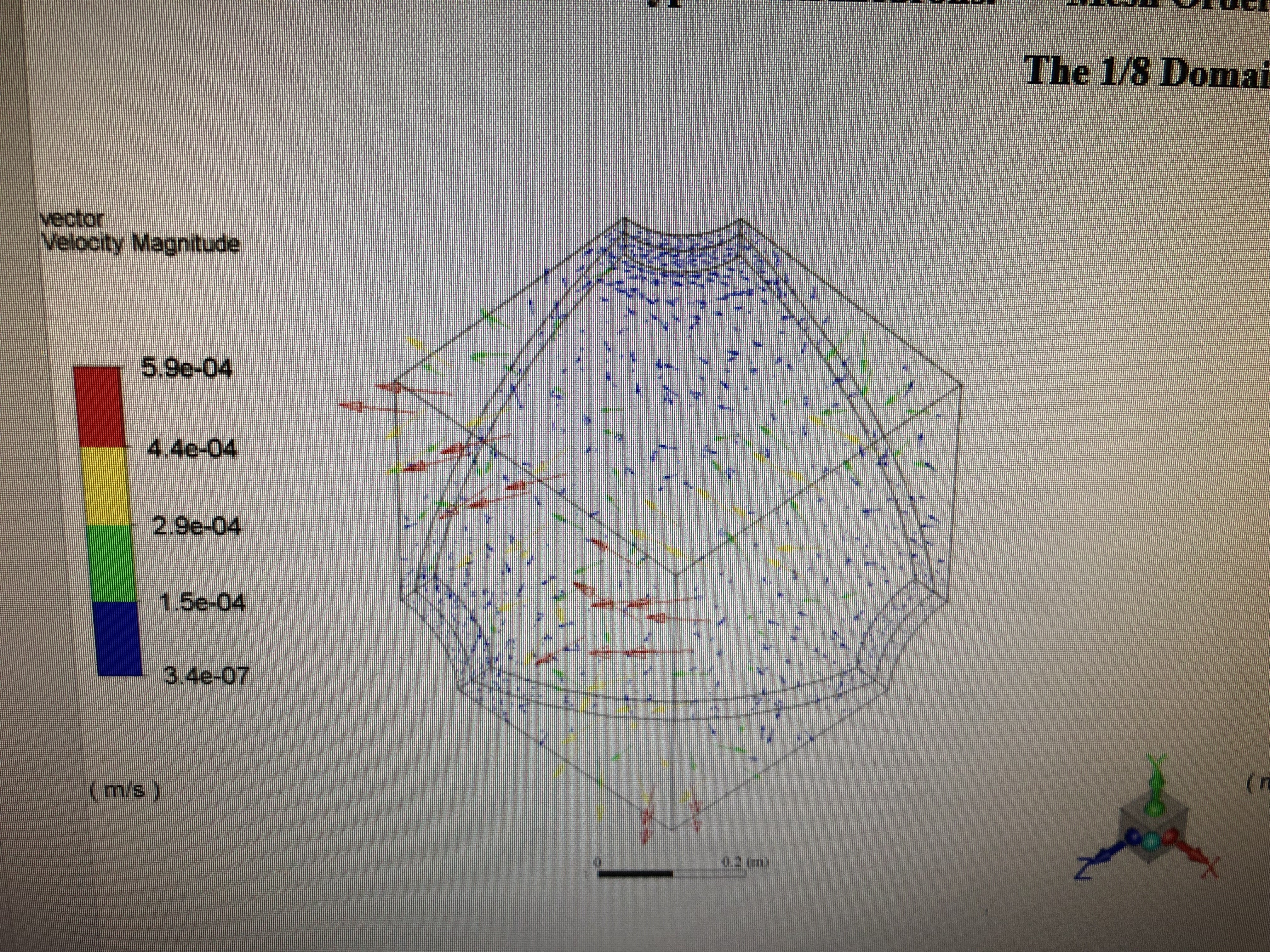
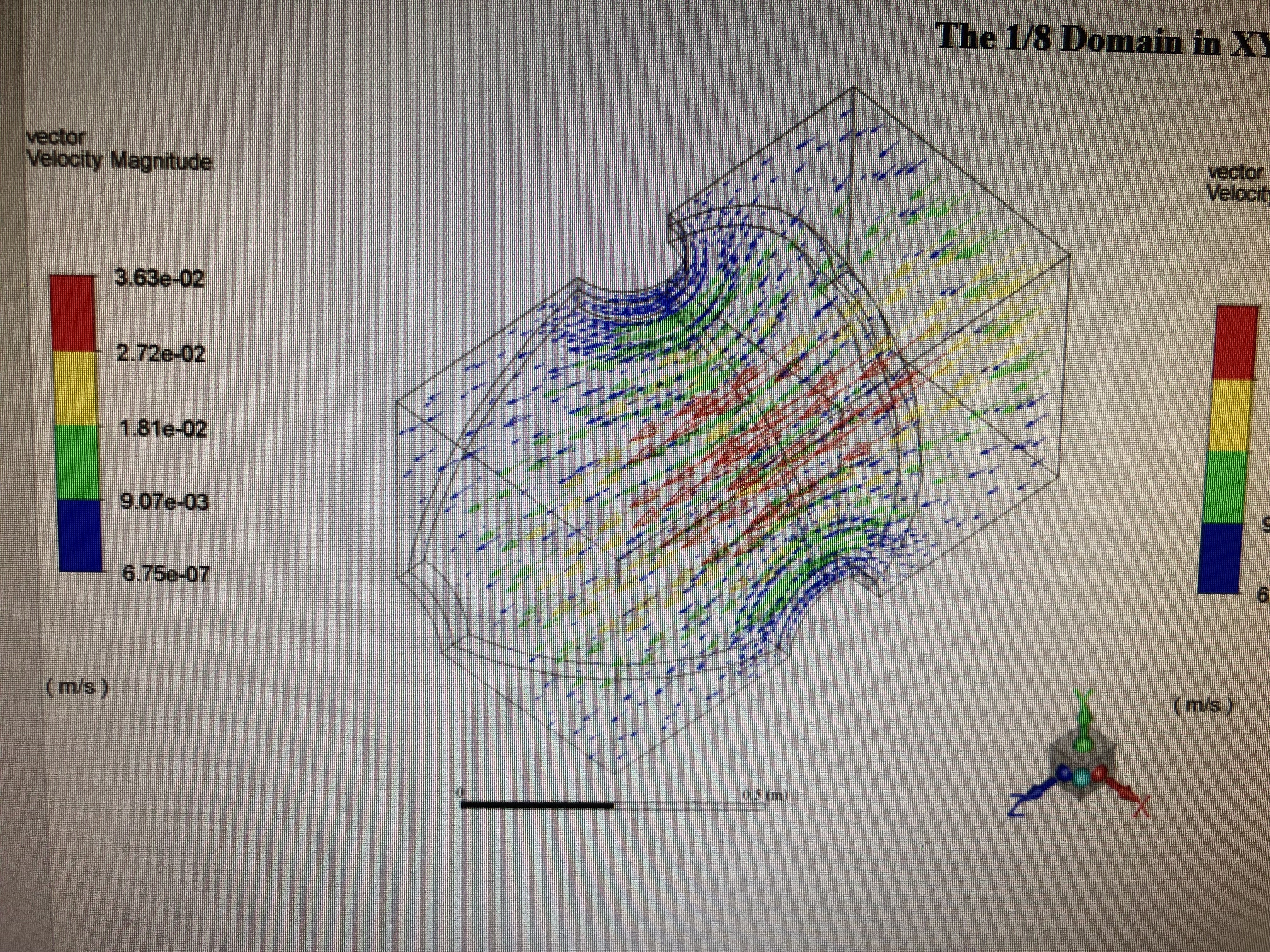
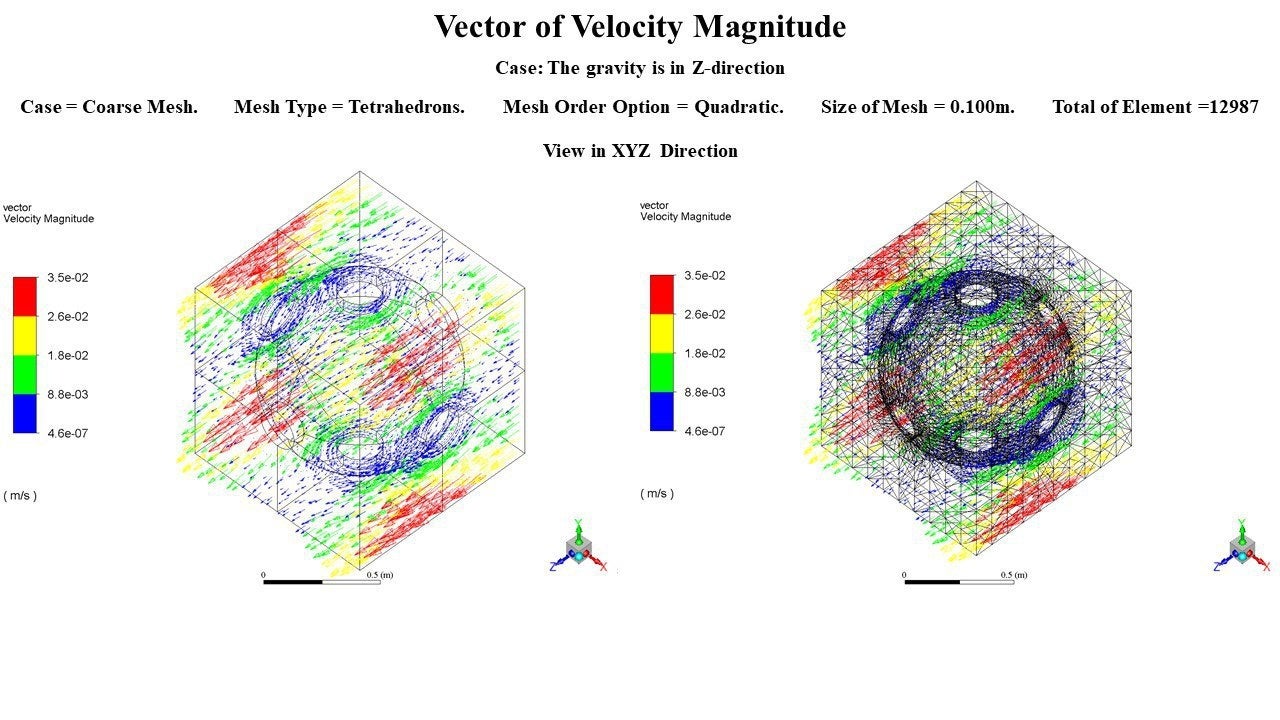
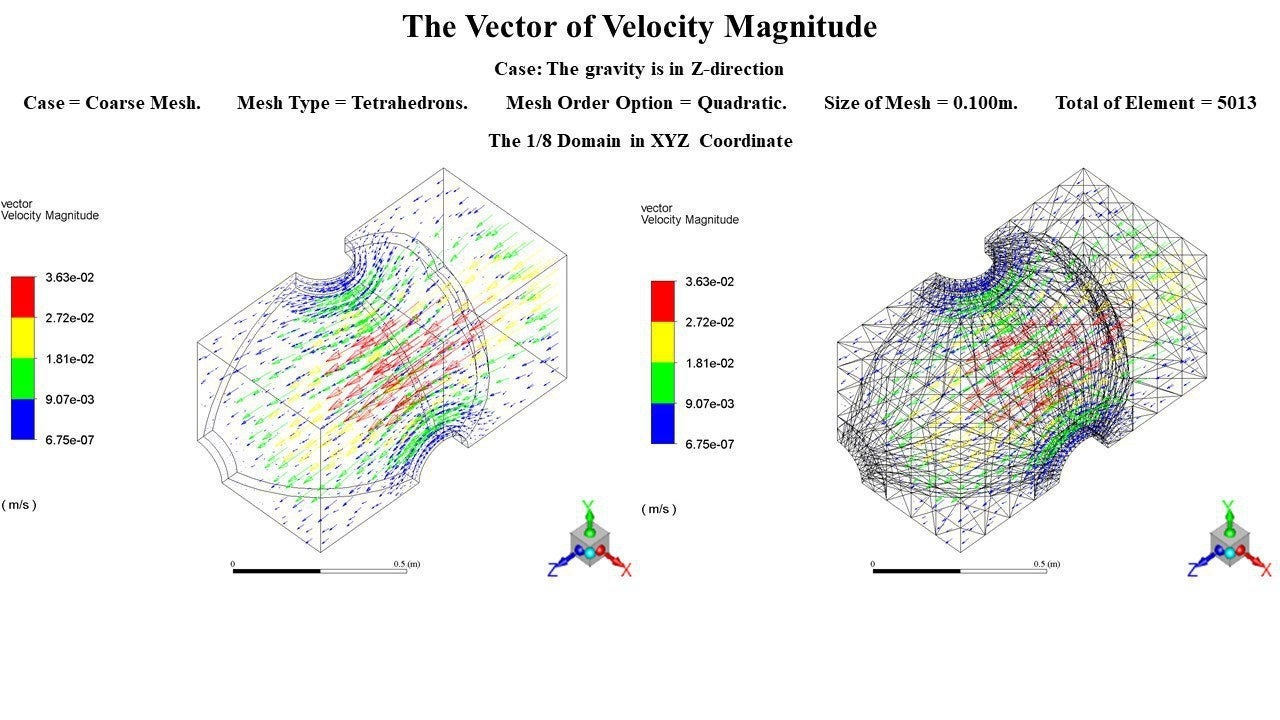
As you see in the picture, the vector of velocities are weird in the case of using symmetry boundary condition.
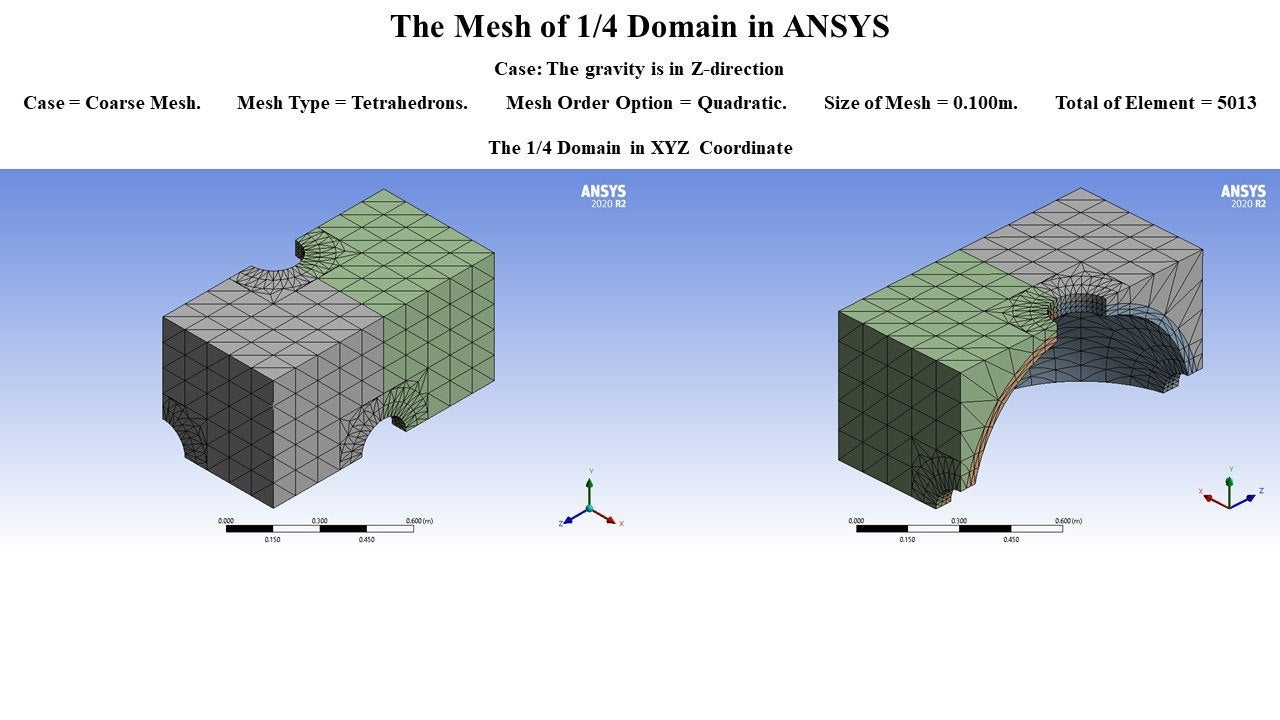
I will send you the pictures of 1/8 domain and 1/4 domain.
My regards P. Heng.
June 17, 2021 at 1:52 pmAnsys EmployeeI apologize I meant octant :)
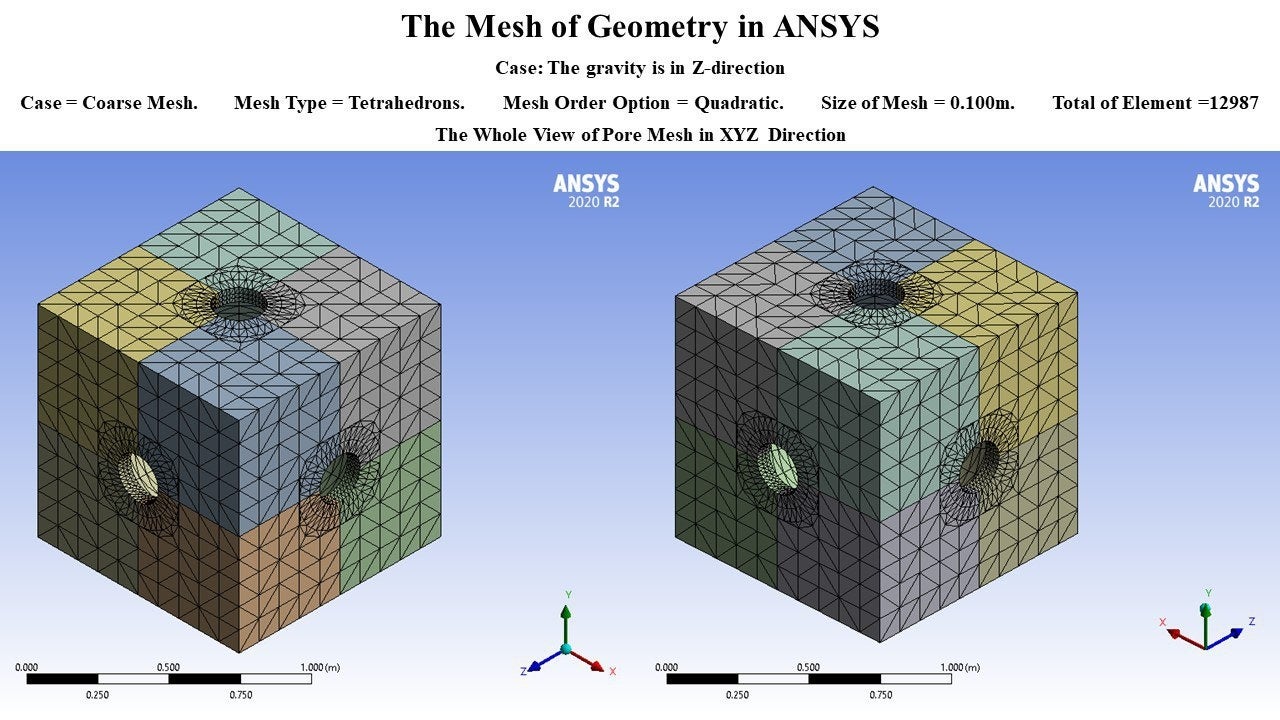
What does now your Prof want you to do? CAn you just share the 1/4 geometry and 1/8 geometry mesh picture (learn how to make good screenshots like using Snipping Tool) :)
June 17, 2021 at 1:57 pmAnsys EmployeeDo you have the result of vectors of the whole domain? It seems like a natural convection case: ? So "wild" velocity vectors, so a bit of "swirl" effects?
Let's just focus on the whole case: can you list settings, models used, Equation of State, Gravity On/Off, etc.. and then tell us more about convergence? Does your Prof require your efforts to finish his slides for the lecture?
June 17, 2021 at 2:01 pmForum ModeratorNow look at the 1/4 and 1/8 domains. In the 1/4 you have a periodic section and have assigned flow. In the 1/ 8 section there are no flow boundaries. Go back to your Prof and ask where the flow is coming from and going to.
June 18, 2021 at 5:21 amSubscriber
My professor wants me to run the flow for the porous media. For my case, I donÔÇÖt know the value of velocity because this is the natural flow in the ground.
what I can put in Ansys Fluent are: gravity = 1 [m/s2], density = 1 [kg/m3] (boussinesq), and viscosity = 1 [kg/m-s].
Before, I started to study the 3D geometry, I ever try to calculate 2D geometry with the simple rectangle shape in the purpose to compare the result of velocity between the Ansys and hand calculation.
For this 2D geometry, I also used periodic boundary condition and its result is the same with the hand calculation, 100%.
when I start to study 3D geometry, I do everything like I did for 2D geometry.
As the results, Whole domain and 1/4 domain have the same result, velocity and the volume average of velocity.
My professor wants me to run 1/8 domain. As you see in the pictures, I cannot use periodic anymore. He wants me to use the other boundaries and he called it, implied boundary condition.
I ever try to use symmetry boundary condition but the result cannot be acceptable and the vector of velocities are weird.
I want to know what boundary condition can I use instead of periodic boundary condition or what should I do to get the same result.
I will send you the pictures below.
I answer your other question. This is my research. It is not for the lecture. I use Laminar flow and the energy is on. The gravity is on and its value is 1 [m/s2].
For calculation: Number of iterations = 200, Reporting Interval = 1, Profile Update Interval = 1, Time Scale Factor = 1. When I run the calculation, the solution is converged around 30 solution (30 solution is converged)
My regards P. Heng.
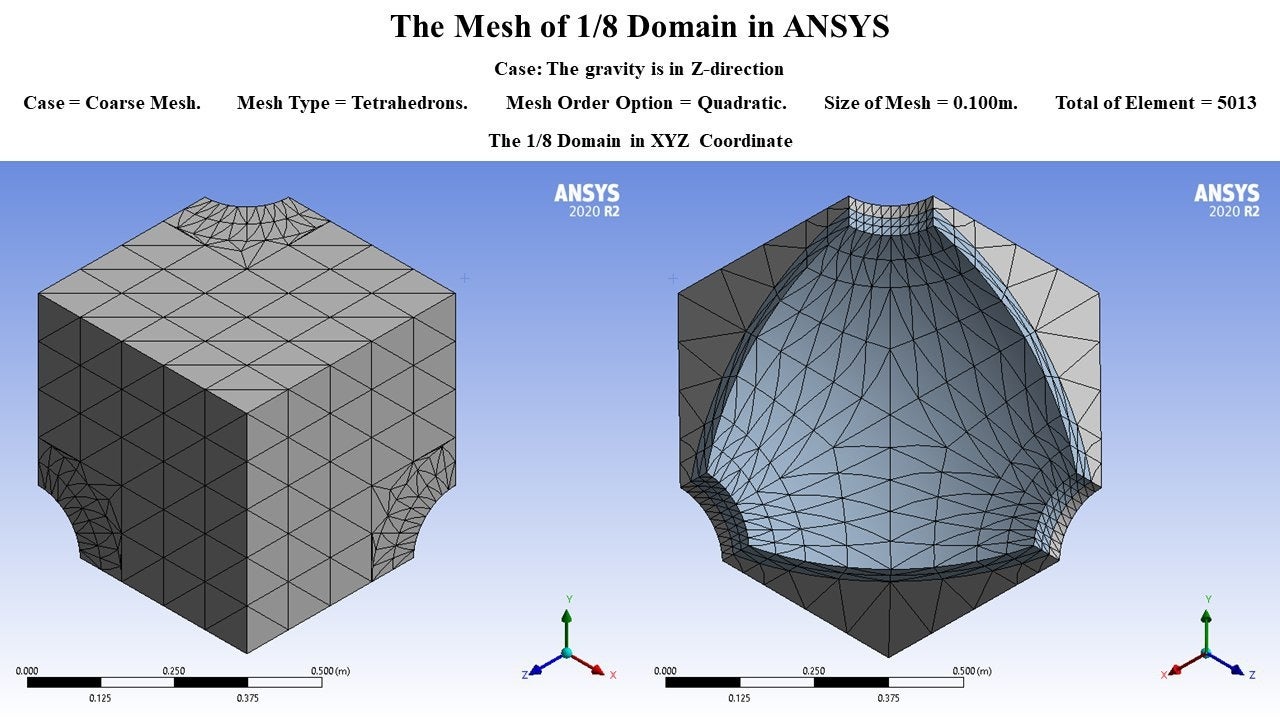
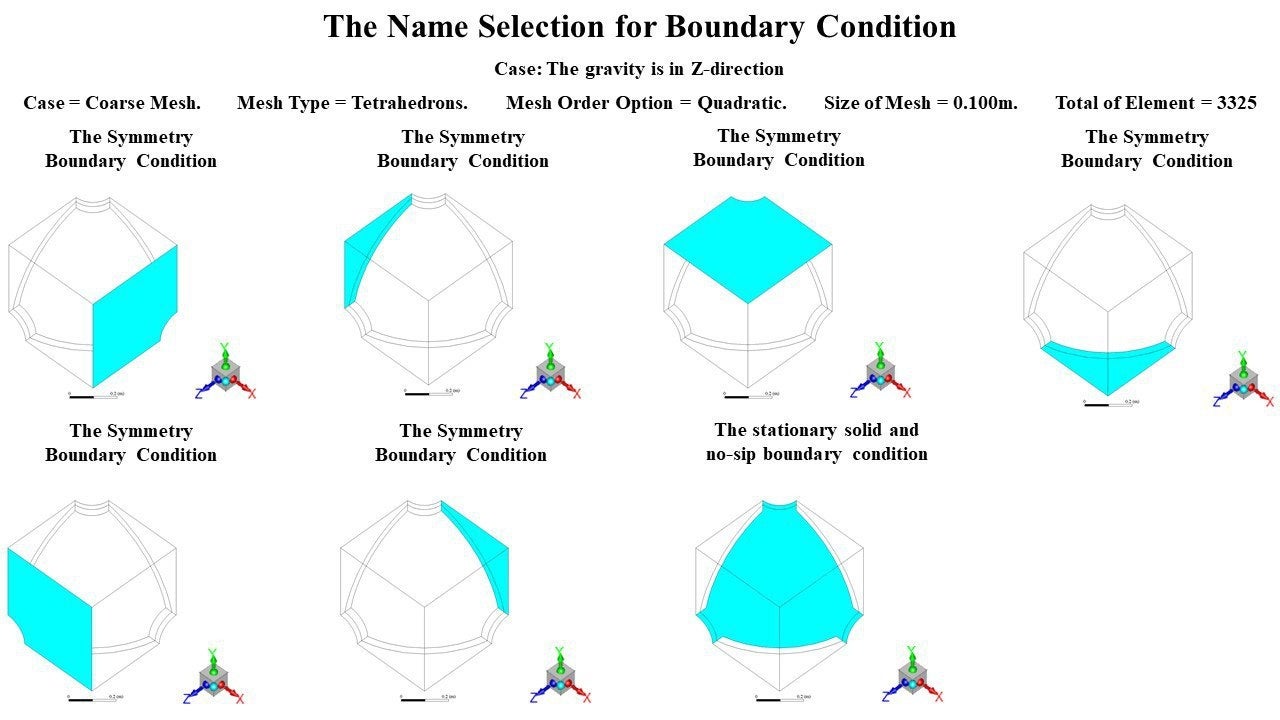
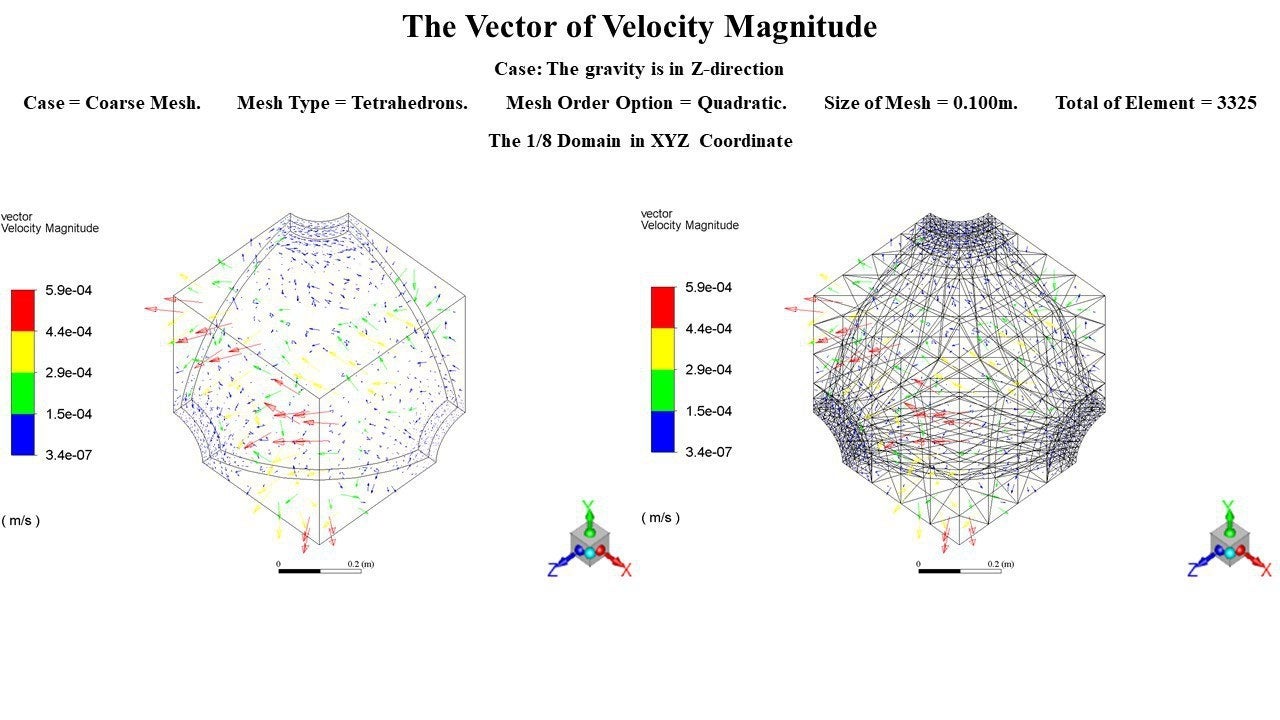
June 18, 2021 at 5:30 amSubscriber
Yes, I do.
I ever discuss about this with my professor but he still wants me to find the way to do it. Maybe, he have his own solution or something. I am not sure.
I agree with your idea. However, I will discuss with my professor again.
Thank you for your response.
My regards P. Heng.
June 18, 2021 at 6:26 amAnsys EmployeeWhat kind of periodic are you using the whole time? Circulating periodic or one with loss?
June 18, 2021 at 6:34 amSubscriber
I am sorry that I don't know the circulating periodic or one with loss.
When I create the periodic boundary condition, I see the Creation Method (option: Auto, conformal, Non- Conformal) and the Type of Periodic Boundary Condition (Option: Translational, Rotational).
My regards P. Heng.
June 18, 2021 at 9:56 amSubscriber
My professor said that, there is no inlet nor outlet. The flow field is produced by the gravity.
how do you think about this idea?
My regards P. Heng.
June 18, 2021 at 11:12 amAnsys EmployeeI do think that only with periodic boundary one would get it done but I won't use any periodic in this case and stick to full domain. It does not belong to the cases with forced flow but rather natural convection and here I do not impose any restriction on the domain. ?
June 18, 2021 at 1:45 pmForum ModeratorIf it's buoyant flow then you need to model the whole thing: it's definitely not periodic and even using symmetry planes is of marginal reliability. If the system is also porous you need to work out the coefficients, not adding them or using the defaults will just produce pretty pictures with little or no engineering data.
Buoyant flow also implies heat is being added into the domain, or that a heavier phase is draining through a structure. That's definitely not periodic.
June 18, 2021 at 1:47 pmAnsys EmployeeHopefully you can argument now with the Prof :) By the way: the full case is not really good resolved! You need to enhance the resolution and enlarge the domain.
June 20, 2021 at 2:13 amSubscriberThanks for your response and your time.
My regards P. Heng.
June 20, 2021 at 2:20 amSubscriberI still wait my professorÔÇÖs idea because I donÔÇÖt know why he think that the flow is produced by gravity.
Thanks for your time and response.
My regards P. Heng.
June 23, 2021 at 5:59 amSubscriberHello everyone
In the case that I use symmetry boundary condition and I want to ask you that why all the velocity vectors donÔÇÖt go only in z direction? Because I put the gravity in z direction.
Do you know how to make all velocity vectors go in z direction?
My regards P. Heng.
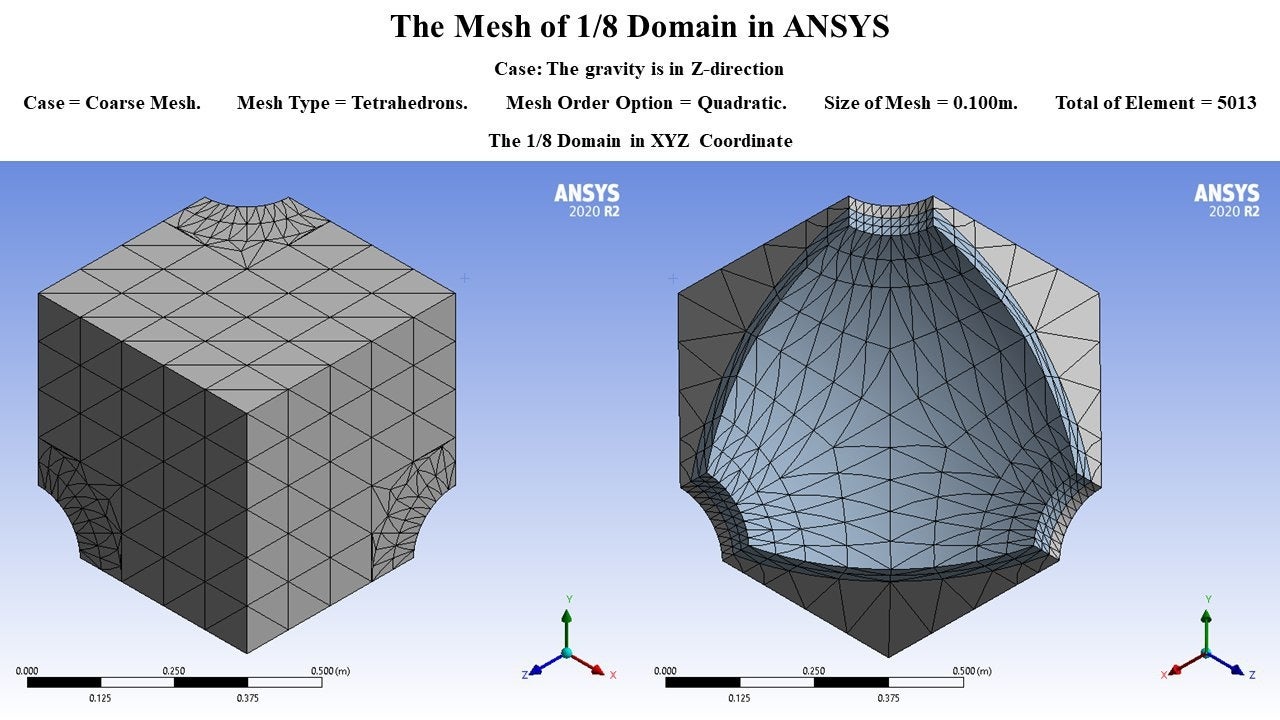
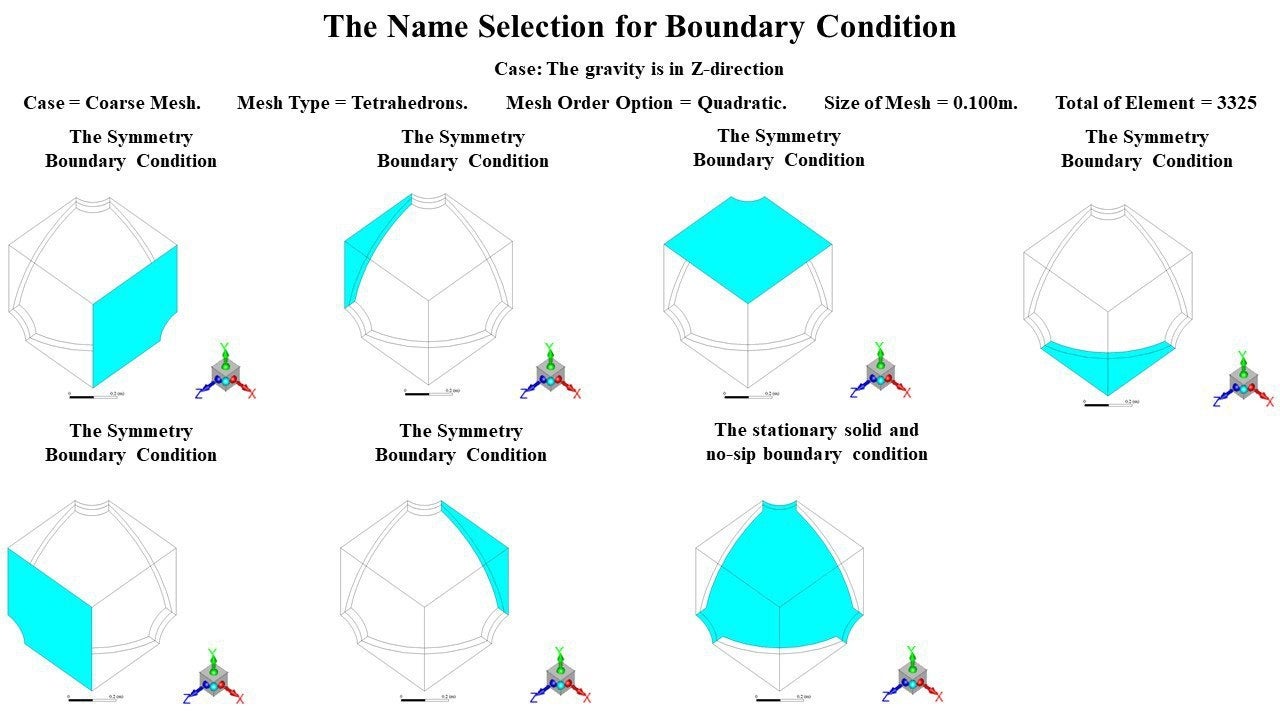
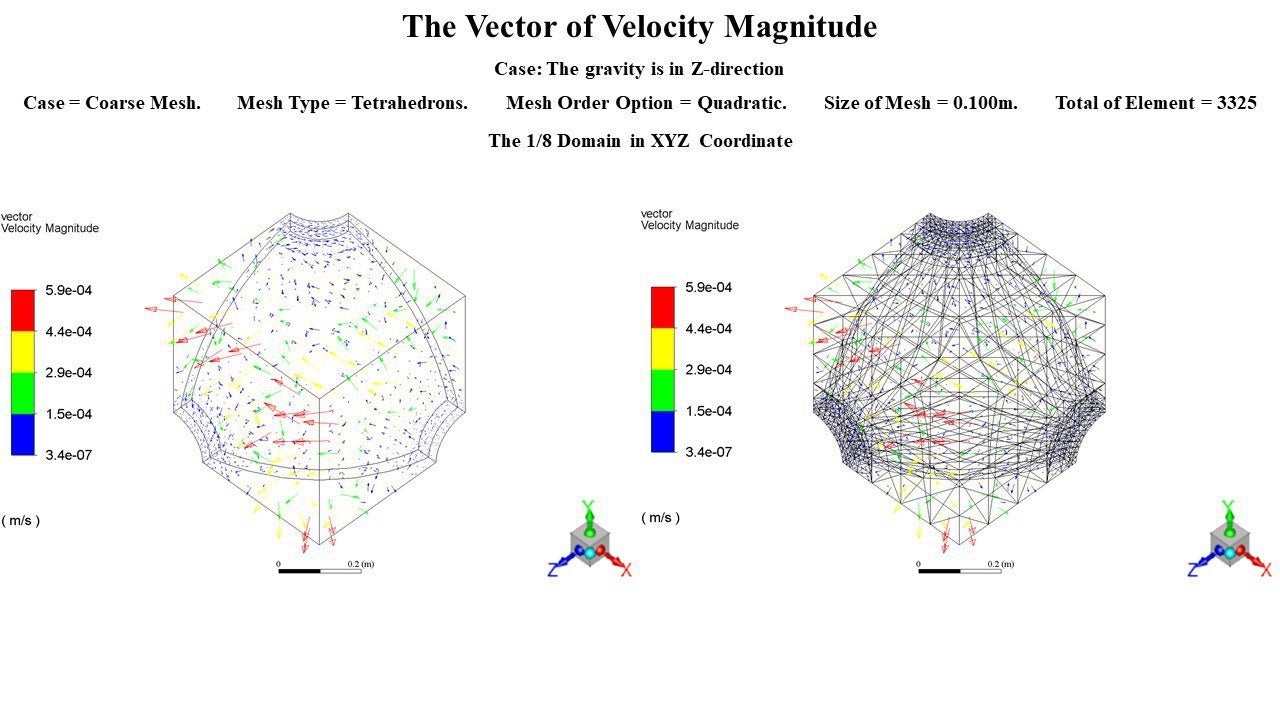
June 23, 2021 at 8:32 amAnsys Employeenatural plume flow the dominant direction in the gravity direction but you always have transversal motion due to fluids lumps being displaced by other fluid lumps. Also check the magnitude of those vectors you will that they very small compared to the ones in the z direction.
June 23, 2021 at 3:17 pmForum ModeratorAnd bear in mind that the mesh is awful so the results may be rubbish too.
June 24, 2021 at 4:54 amSubscriber
Yes, I see.
Thank you.
My regards P. Prosheng.
June 24, 2021 at 4:55 amSubscriber
Yeahh loll.
Thank you.
My regards P. Heng.
July 6, 2021 at 1:22 amSubscriberHello everyone
I want to ask all of you some questions.
I applied symmetry boundary condition for my domain and you can check the pictures below.
why are there velocity along the symmetry boundary condition? They should be zero because of symmetry boundary condition.
My regards P. Heng.
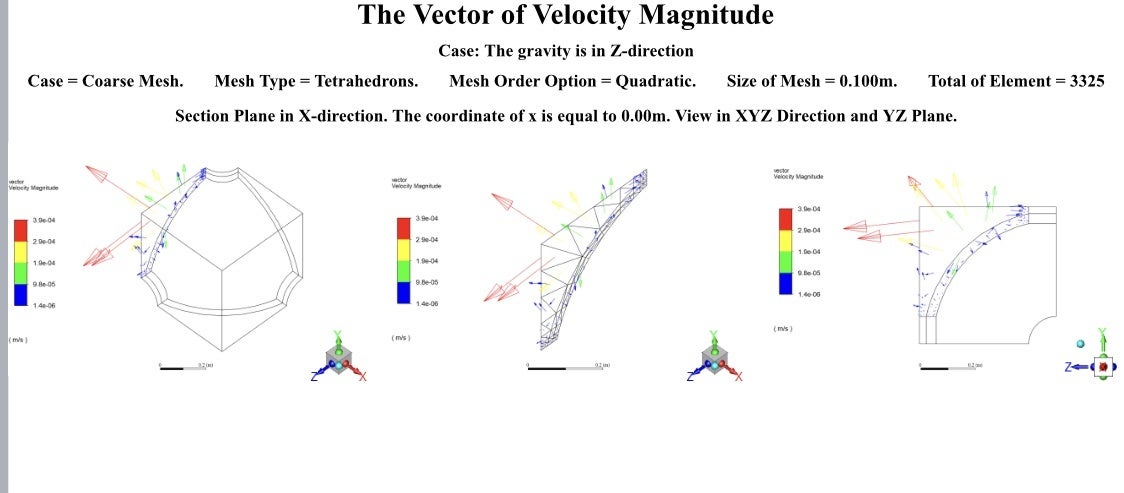
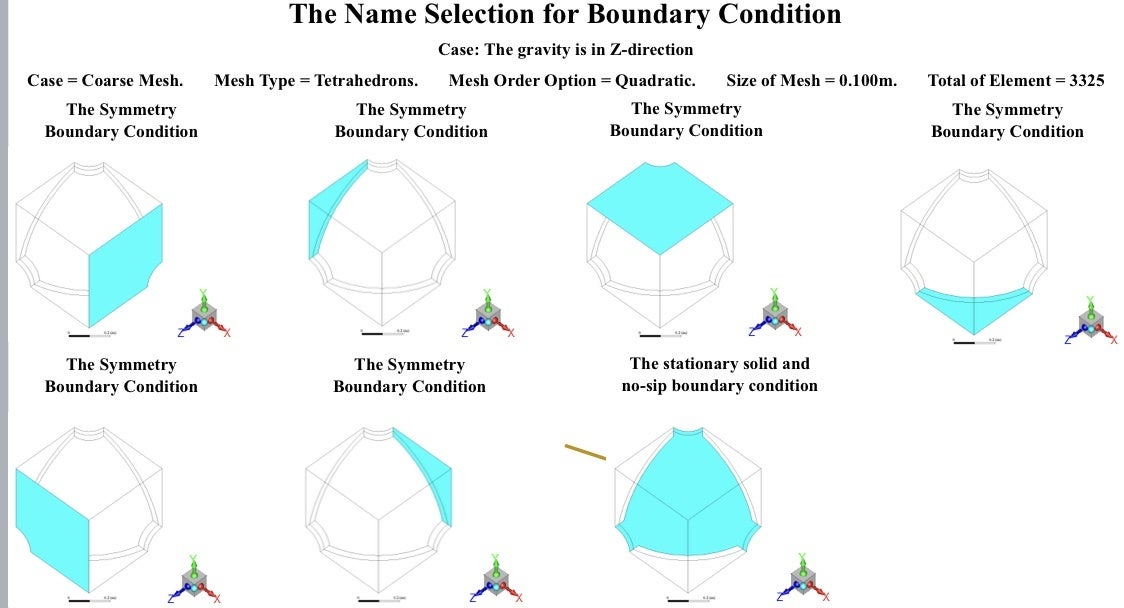
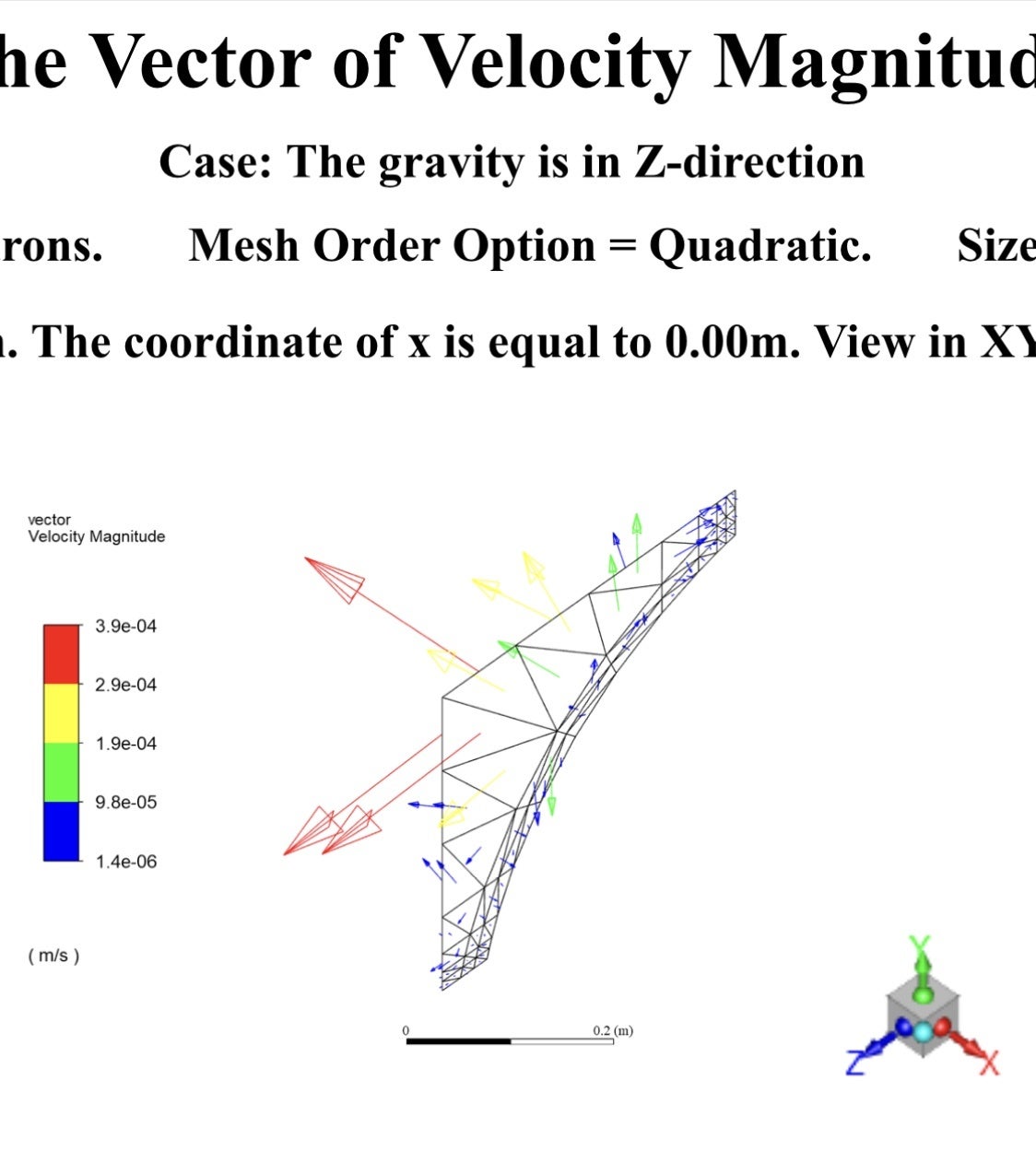
July 6, 2021 at 9:29 amAnsys EmployeeAnswered somewhere but I do not remember: but your mesh is awfull.. poor.. not appropriate any statement which I want to use is not valid here. Enhance your mesh and then we can discuss further. At symmetry velocity normal to the boundary is zero.
July 7, 2021 at 1:42 amSubscriber
I am happy to see your response again.
My professor didnÔÇÖt say anything relative to this mesh.
According to ansys manual, the velocity should be zero at symmetry boundary.
My regards P. Heng.
July 7, 2021 at 10:31 amForum ModeratorMesh the system properly, fully converge the solution and then see how it looks. Given the velocity is a fraction of a mm/s you may be seeing noise due to a nonsense result.
Viewing 50 reply threads- The topic ‘Boundary condition can be used instead of periodic boundary condition’ is closed to new replies.
Innovation Space Trending discussions
 Top Contributors
-
peteroznewman
 6465
6465 -
scabo
 1906
1906 -
Dennis Chen
 1458
1458 -
javat33489
 1308
1308 -
Shyam Prasad V Atri
1022
Top Rated Tags
© 2026 Copyright ANSYS, Inc. All rights reserved.
Ansys does not support the usage of unauthorized Ansys software. Please visit www.ansys.com to obtain an official distribution.
-


The Ansys Learning Forum is a public forum. You are prohibited from providing (i) information that is confidential to You, your employer, or any third party, (ii) Personal Data or individually identifiable health information, (iii) any information that is U.S. Government Classified, Controlled Unclassified Information, International Traffic in Arms Regulators (ITAR) or Export Administration Regulators (EAR) controlled or otherwise have been determined by the United States Government or by a foreign government to require protection against unauthorized disclosure for reasons of national security, or (iv) topics or information restricted by the People's Republic of China data protection and privacy laws.

 You are navigating away from the AIS Discovery experience