-
-
August 11, 2020 at 5:34 am
hardik2309
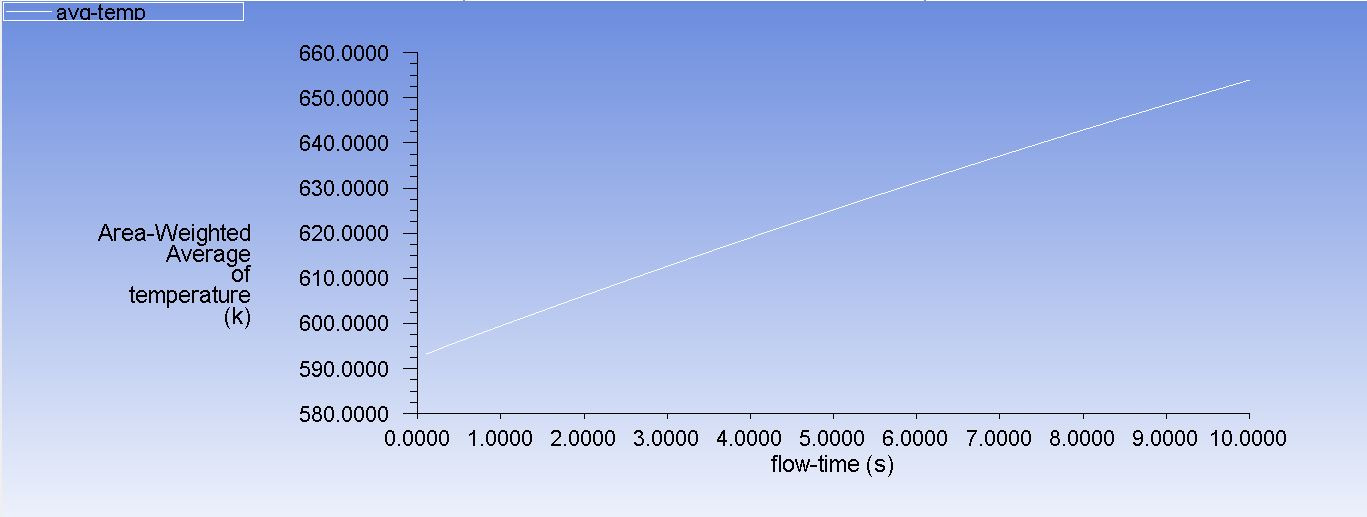
SubscriberHello,nI am solving transient heat transfer problem (in Fluent) between two solids using S2S radiation model.nSolid 1 is at fixed temperature of 1073 K. The initial temperature of Solid 2 is 300 K. (Fig 1)nThere is fluid body between two solids. Currently, I am comparing these results with Ansys thermal and hence I have used a fluid with very low thermal conductivity (1e- and low specific Heat (1e-5) so that is practically does not affect heat transfer. nIn this case, since the solid-1 is at high temp, radiative heat transfer should take place and temp of solid 2 should gradually increase.nThe problem is, no matter what the time step size is, the Area weighted average temp of solid 2 (surface) jumps to 590K just after first time step (Shown in image). This is unrealistic. The same setup in ANSYS Thermal shows gradual temp rise.nWhat can cause such sudden temperature increase? I would appreciate your assistance.nnSome other details of the problemnSolver : 2-D transient Fluent solver with S2S Radtiation modelnProperties of solid 2: Density : 1100 kg/m3, Cp : 1300 J/kg-K, Thermal Cond : 0.58 W/m-KnMesh : 2-D quad mesh mesh with size ~ 5mmnTime step : 0.1 sn
-
August 12, 2020 at 3:58 pm
Rob
Forum ModeratorHow did you initialise the system?n -
August 13, 2020 at 4:33 am
hardik2309
SubscriberI initialized from all zones and then patched 300 K on Solid-2 and Fluid Body.nn -
August 13, 2020 at 10:12 am
Rob
Forum ModeratorPlease plot images of the temperature field at t=0 and t=next time step. Has the step converged? n -
August 13, 2020 at 11:52 am
-
August 13, 2020 at 12:24 pm
Rob
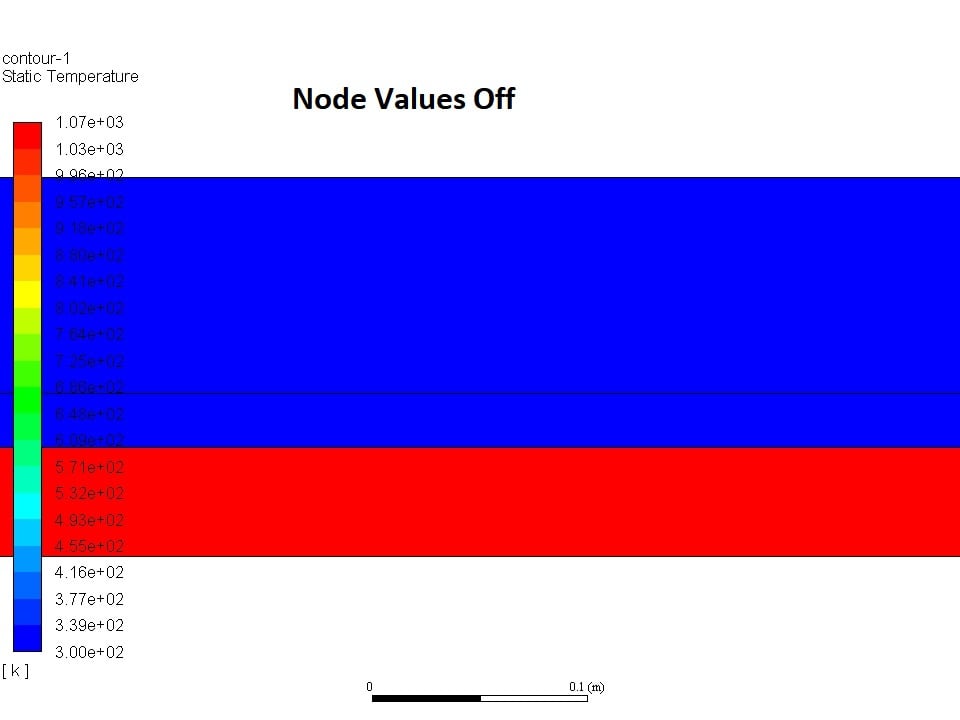
Forum ModeratorRe-plot with node values off: is it the fluid or solid that's got hot? If you work out the radiation load is that sensible? Remember that heat will travel VERY quickly as thermal radiation. n -
August 13, 2020 at 2:43 pm
hardik2309
SubscribernHere are two plots : one with Nodes values on and other with node values off.nThey show different values. High temperature at the solid-fluid interface is very high when using node values.nWhat causes this difference?nThe radiation flux has realistic values. (matching with analytical values)nYes, radiation travels very quickly. But, solids cannot get hot with such unrealistic rate.nAs I am writing report file of average temperature at the interface and it uses node values it shows the jump. Is there any way to use cell values in report?nn
nn
-
August 14, 2020 at 8:29 am
Rob
Forum ModeratorNot sure, change the range to see if the issue is graphics or there is a temperature rise at that location. n -
August 14, 2020 at 9:00 am
hardik2309
SubscribernIt shows the same results even after changing the temperature range. nAnd those high values are reported in the report file too.nn -
August 14, 2020 at 9:01 am
Rob
Forum ModeratorWith node values off? What are you reporting?n -
August 14, 2020 at 10:47 am
hardik2309
SubscribernStatic temperature.nIn the plot, I am reporting area weighted average of Static temperature. nWall temperature gives the same result.n -
August 14, 2020 at 10:59 am
Rob
Forum ModeratorWhat happens when you run the model on? Monitor wall and volume temperatures.n -
August 14, 2020 at 2:42 pm
hardik2309
SubscribernAs I mentioned, after sudden jump the average surface temp rises gradually. (Shown in the plot posted earlier)nVolume temperature rises gradually as it takes some time for the entire volume to get heated.n -
August 14, 2020 at 2:48 pm
Rob
Forum ModeratorSo given a surface is thin how long would it take to warm up if exposed to sunlight? n -
August 14, 2020 at 2:50 pm
hardik2309
SubscriberArrayHere is the case file.nI didnt get you point. nThere in no thin surface. Its just interface of fluid and solid.nn -
August 17, 2020 at 10:46 am
Rob
Forum ModeratorYou have a wall at that location, which is thin, and has to be there to separate the fluid & solid. nStaff aren't permitted to download or open files, so I'll leave that for someone else in the Community to have a look at your set-up. n -
August 18, 2020 at 11:13 am
hardik2309
SubscriberYes, ArraynThere is a wall -wall shadow with 0 thickness.nI hope this what you are asking.n -
August 25, 2020 at 1:53 pm
Rob
Forum Moderator
-
Viewing 17 reply threads
- The topic ‘Sudden temperature rise in transient heat transfer simulation with S2S radiation (Fluent)’ is closed to new replies.
Innovation Space
Trending discussions
Top Contributors
-
4939
-
1639
-
1386
-
1242
-
1021
Top Rated Tags
© 2026 Copyright ANSYS, Inc. All rights reserved.
Ansys does not support the usage of unauthorized Ansys software. Please visit www.ansys.com to obtain an official distribution.