TAGGED: ansys-cfx, ANSYS-Transient
-
-
October 27, 2025 at 6:59 pm
Kelsey O'Donnell
SubscriberI am simulating flow around and through (via their pumping behavior) a model mussel (the marine bivalve). I would like to simulate the consumption of dissolved oxygen within the fluid domain. I have the setup as follows:
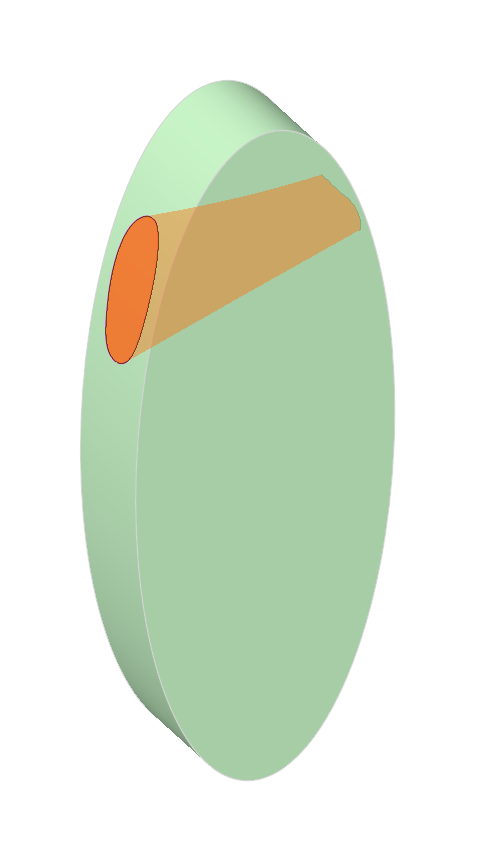
A model mussel with an internal volume that has all side walls set to a no-slip wall BC, the inlet face set to an outlet (for the surrounding enclosure) with a specified velocity and the outlet set to an inlet (again into the surrounding enclosure) with a specified velocity. These velocities match the ratio of inlet to outlet area in order to conserve mass.
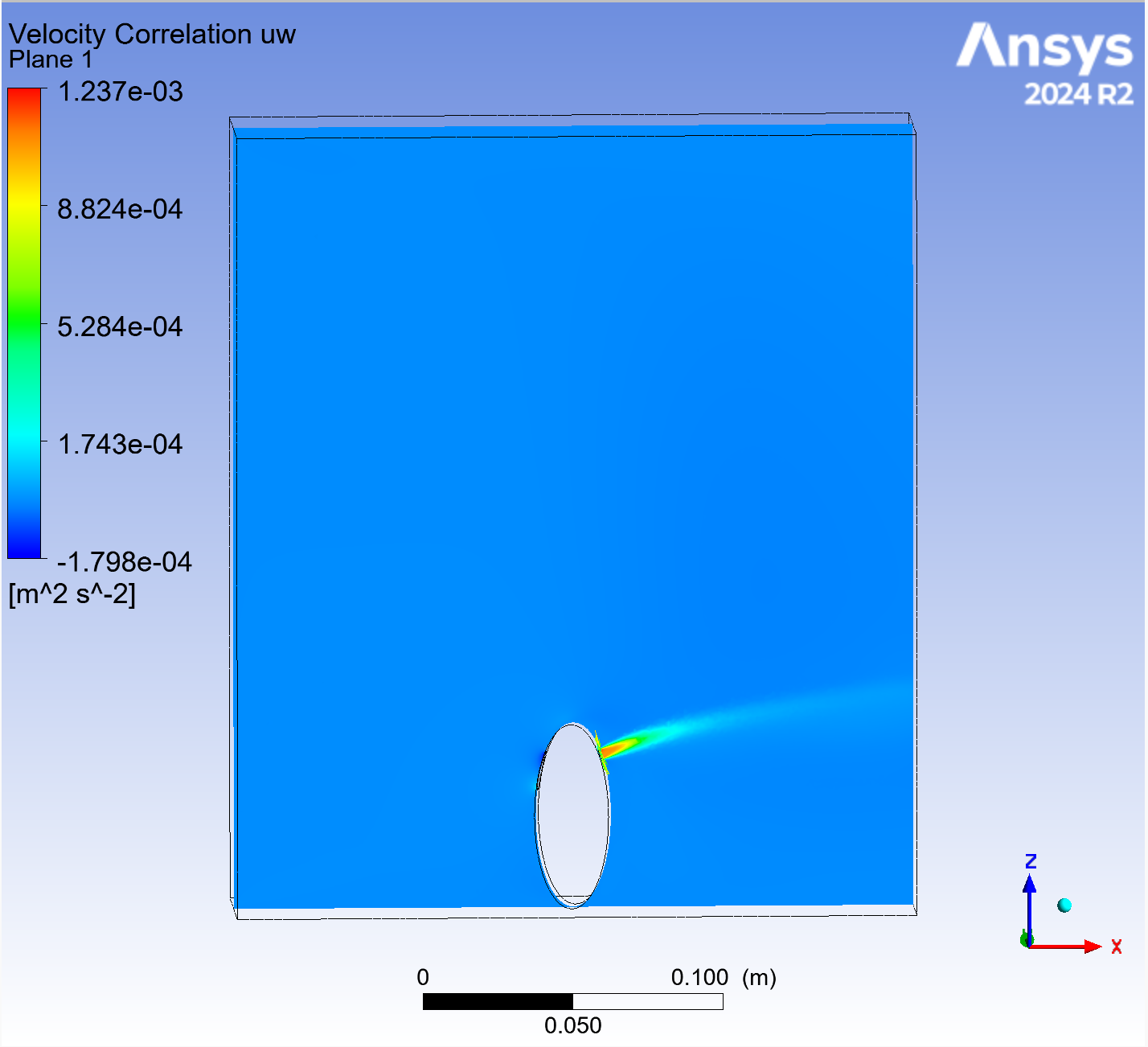
The following values that I would like to include in the model are that the base concentration within the fluid domain (enclosure) should be 0.0105 kg/m^3 and that the respiration rate (or removal of this concentration) is 1.67E-10 kg/s for the model mussel. I understand I should be doing a transient run and that I can (should?) add additional variable to use as my "oxygen" concentration. What I am confused on is how to best set my boundary conditions, initialization values, and/or what type of expression I should create and implement to simulate these processes. Any guidance would be much appreciated and I am happy to include and more details that might be helpful
-
October 28, 2025 at 11:58 am
Rob
Forum ModeratorStill modelling mussels?Â
I'd just use the species model as it's (probably) easier to deal with. Then use a source (sink) to account for the rate of oxygen depletion.Â
-
October 28, 2025 at 12:29 pm
Kelsey O'Donnell
SubscriberStill working on it (but in the last year of my PhD), thank you for your continued help! To clarify, do you mean the species transport model in fluent or the icepak species transport?Â
-
-
October 28, 2025 at 1:21 pm
Rob
Forum ModeratorSpecies in Fluent. Icepak is aimed at electronics cooling so not the sort of chips I'd eat with fish....Â
Fair enough, good luck with the write up.Â
-
October 29, 2025 at 3:29 pm
Kelsey O'Donnell
SubscriberThank you Rob. I wondered if you could give me a little more detail on setting up the species transport model in Fluent for my case. I see tutorials with combustion and such but I don't believe I need a reaction, I simply need a mixture of two species throughout the whole domain and then a sink at the mussel outlet faces that decreases the concentration of one of the species. I am not sure exactly which parameters/models I should and should not includeÂ
-
-
October 29, 2025 at 3:41 pm
Rob
Forum ModeratorIf you follow the combustion tutorial right up to the bit where they turn on reactions that'll cover most of what you need. Your mixture will be (I assume) dissolved_oxygen and water (water second) and you'll then patch in the dissolved_oxygen volume fraction. The sink term needs to remove dissolved_oxygen, and would that add something? Ie what do mussels breath out?Â
-
October 29, 2025 at 3:48 pm
Kelsey O'Donnell
SubscriberHi Rob,
Thanks for the quick reply! For the sink term, yes the mussels respire CO2. How would I add that to the simulation? Would that require a reaction? (i.e. H2O+O2 --> H2O+O2+CO2) I don't want to include all of the carbonate chemistry going on (i.e. where the carbon comes from). Due to this I was going to simplify and not include CO2, instead simply removing a certain concentration of dissolved O2 from ambient levels but I am happy to include it if it wouldn't crazily complicate things.Â
-
-
October 29, 2025 at 4:30 pm
Rob
Forum ModeratorIt just means your species mixture needs to include dissolved_co2 so if you use a sink of dissolved_o2 and source of dissolved_co2 into species sources then that's fine. Just set the molecular weights to be the same to keep the mass balance happy. Just one extra equation for the solver but nothing that should stress the hardware.Â
No need for a reaction as it'll be more complicated to control the rate: Fluent's chemistry is designed for faster reactions!Â
-
- You must be logged in to reply to this topic.
-
5824
-
1906
-
1420
-
1305
-
1021
© 2026 Copyright ANSYS, Inc. All rights reserved.