Hi everyone,
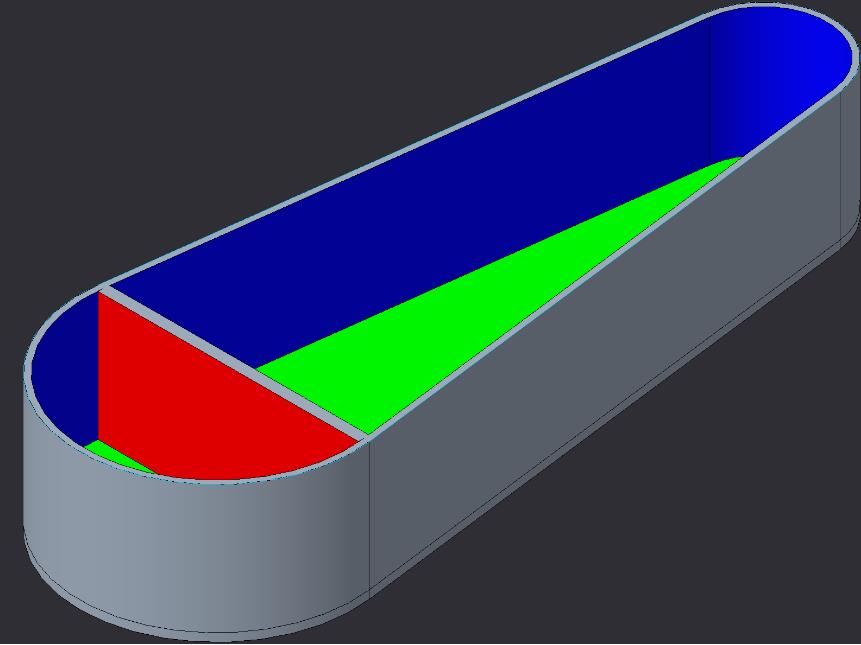
This forum's been very helpful to me in the past but I am (sort of) stuck on an issue that I haven't directly found an answer for yet. Suppose I have the following structure of a blue/green exterior tub that has a red panel that goes across the tub's width as shown below:
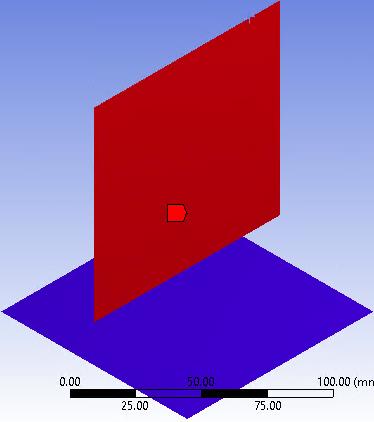
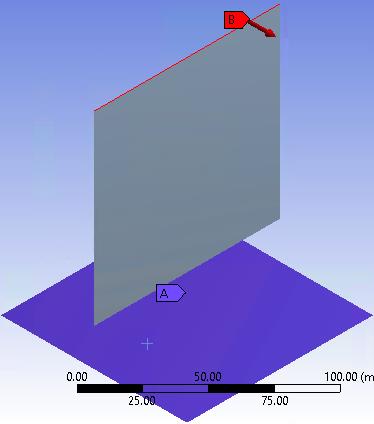
Currently the model is all solids but since all the objects are composite laminates, I will be using ACP and thus have the following shell/surface geometry to port into ANSYS Workbench from my CAD package:
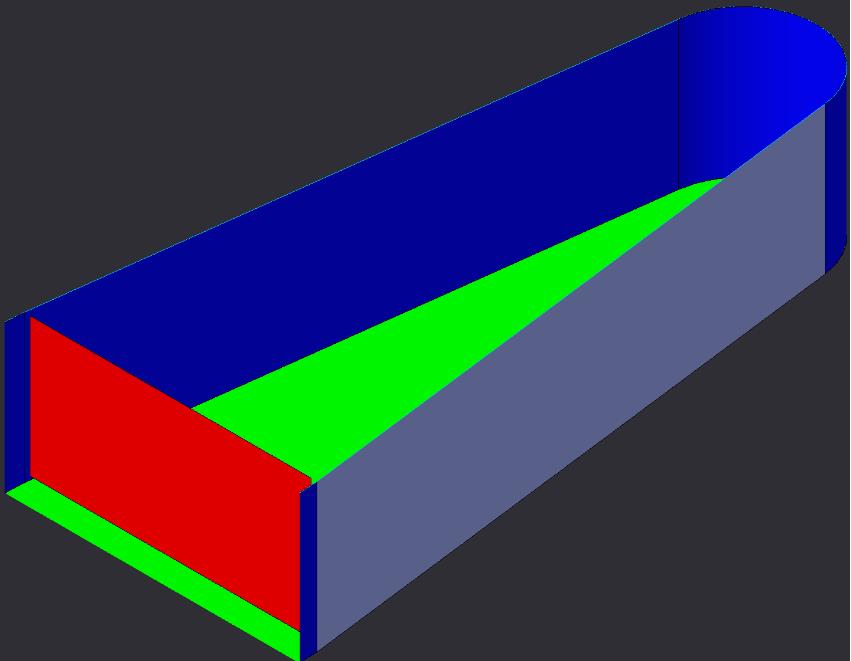
You'll notice that in the pictures above and below, modeled as all surfaces/shells, the red panel is not in contact with blue/green tub anymore like it had been when everything was a solid with thickness.This is because the tub shell model has been taken from the tub's external geometry because, for all intents and purposes, I can't model the tub from its internal geometry.
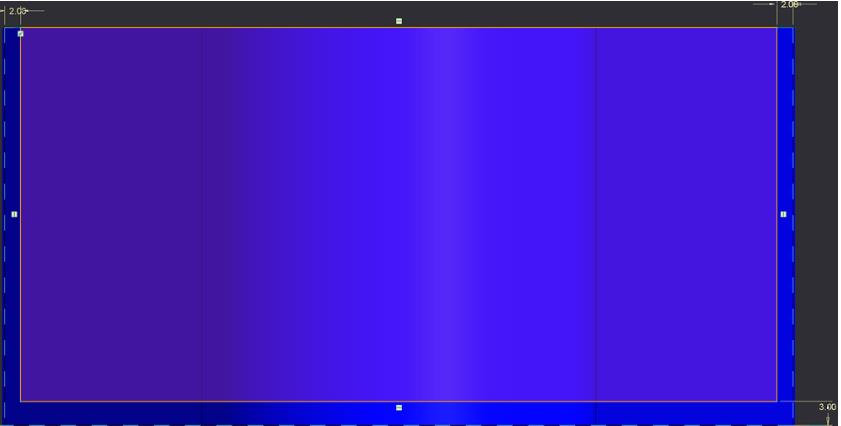
The above image is a cross section view normal to the panel showing the gap between the panel and the sides and bottom of the tub.
My first question is after building the model in ACP such that the gap between the tub and the panels is 0 (or close to it) by defining laminates to be the exact width of the gap, how can I set up the model (in Static Structural for example) so that the panel is bonded to tub? I'm making the assumption that the panel and tub are very rigidly bonded.
What I have tried:
- I've read and tried implementing a shared topology in SpaceClaim to no avail because the panel and tub aren't inherently touching as in this video . I was considering trying to merge the nodes between the panel and the tub, thus forcing them to act combined. But per this forum post, topology would theoretically do a better job as it is automatic.
- Used a bonded connection between the panel and the tub as in this article. I was only able to get the thickened shell models to bond when they shells were parallel to each other. In my scenario, the panel is effectively perpendicular to the tub sides and bottom.
- Joining the tub to the panel as a fixed joint between the two. This did actually get the model to run, though I'm skeptical of the results as I am unfamiliar with the general difference between a contact and a bonded connection.
Again the assumption I'd like to model is that the gap is a joint that is very rigid as in reality, a strong epoxy will be filling the very small gap between the panel and the tub.
Any help would be greatly appreciated.
Thanks,
Rafael


















 You are navigating away from the AIS Discovery experience