-
-
February 14, 2019 at 9:05 pm
Bibek Poudel
SubscriberHi,Â
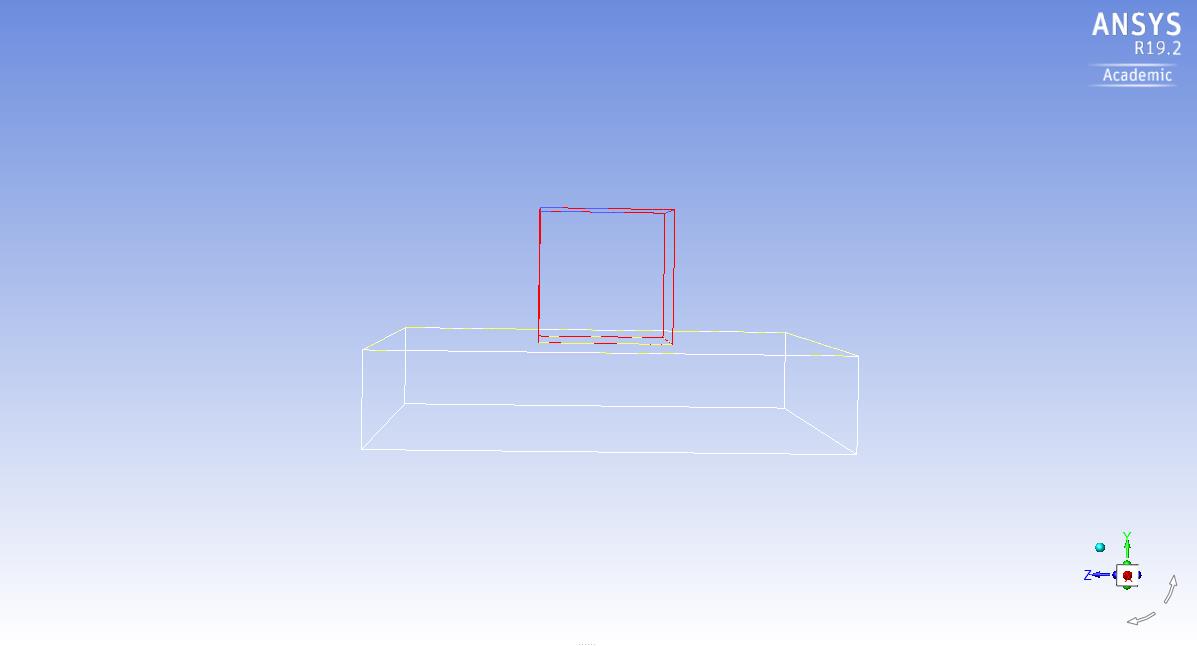
I am doing a simulation with two boxes like this:Â

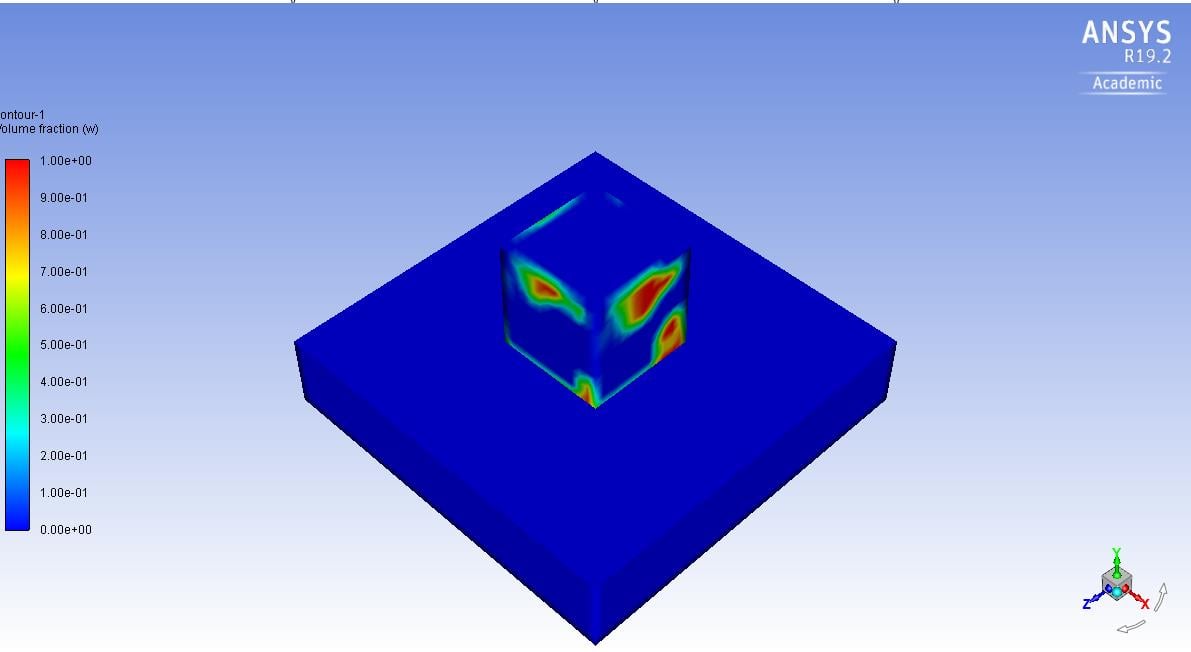
Here I have defined the top box to be fluid and bottom box to be solid. I am using multiphase VOF model and in the top box, I have patched the high viscous Silicon-liquid (viscosity= 1000 Pa.s ) to have volume fraction=1. I ran the my simulation for 1 second only where I rotated the frame of top box (i.e si-liquid fluid box). I was hoping as the viscosity of Si is too high, they would stick together. But after the simulation when plotted the contour of volume fraction of Si, it came out like this:Â

It looks as if there is no Si left in majority of the portion. Why is it so? Can anyone please elaborate this? Also, can anyone help me find a process where I can make this Si attached to the upper box throughout the simulation? And is this because I rotated the frame? The speed was not that much though, it was just 1.57 rad/s.Â
Thanks in advance,Â
Bibek -
February 15, 2019 at 5:45 am
Keyur Kanade
Ansys Employeecan you create a contour plot of vof just after you do patching and insert that image here.Â
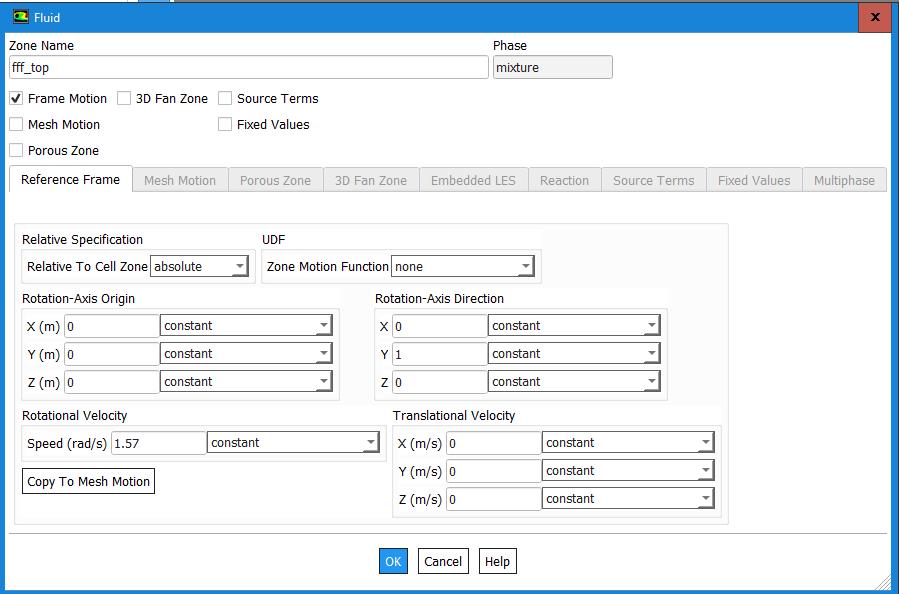
how did you rotate upper box? can you please insert images of cell zone setup.Â
-
February 15, 2019 at 5:45 am
Keyur Kanade
Ansys Employeealso please let us know which models you are using.Â
-
February 15, 2019 at 3:42 pm
Bibek Poudel
SubscriberHi kknade, Thanks for replying.Â
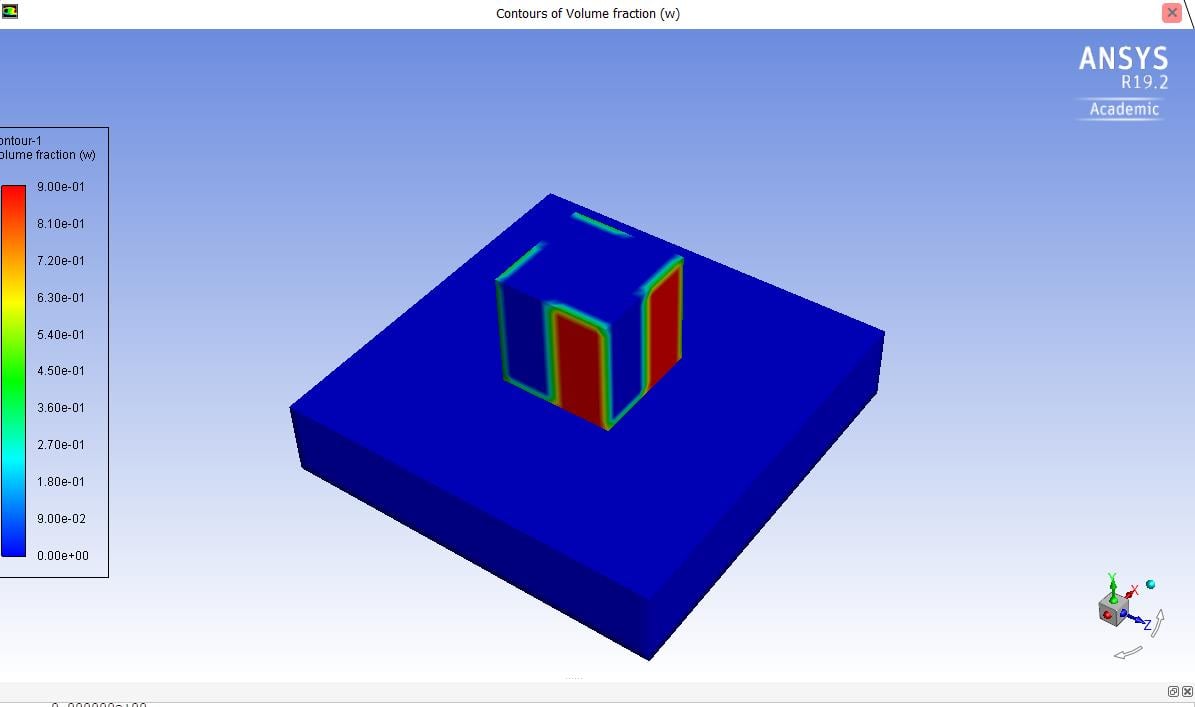
- The contour of VOF after I just patched is like this:Â
Â
I don't know why the contour is like this vertical area. And I used just the frame motion to rotate the upper box. The picture of cell zone setup is here:Â

Â
And I am using: Multiphase VOF, laminar, DPM injection model. If there is anything you want to ask, I am happy to provide additional info.Â
Thanks,
Bibek -
February 15, 2019 at 4:18 pm
Rob
Forum ModeratorThat looks odd: I'd expect the whole top box to be red (vol frac of 1). Did you patch the fluid zone? What boundary conditions have you got on the silicon container?
-
February 15, 2019 at 4:24 pm
Bibek Poudel
SubscriberYes, I patched the fluid zone. I also don't know why this happened. But when I tried patching without frame motion, it patched like this:Â

Â
Still when i inject just 1 particle for 1 second again the volume fraction contour changed to like this:Â

It seems like my fluid are all splatted out. Why is this so? I am using viscosity of 1000 PaS. It should be sticking together, right? Right now I am not even using the frame motion. Still the volume fraction shows such drastic change in after 1 second. Could you please help me understand this?Â
Thanks,
Bibek -
February 17, 2019 at 12:30 pm
Raef.Kobeissi
SubscriberSilly question but are you sending us the contour before you ran the simulation or after you've run it for some time?
-
February 18, 2019 at 4:21 pm
Bibek Poudel
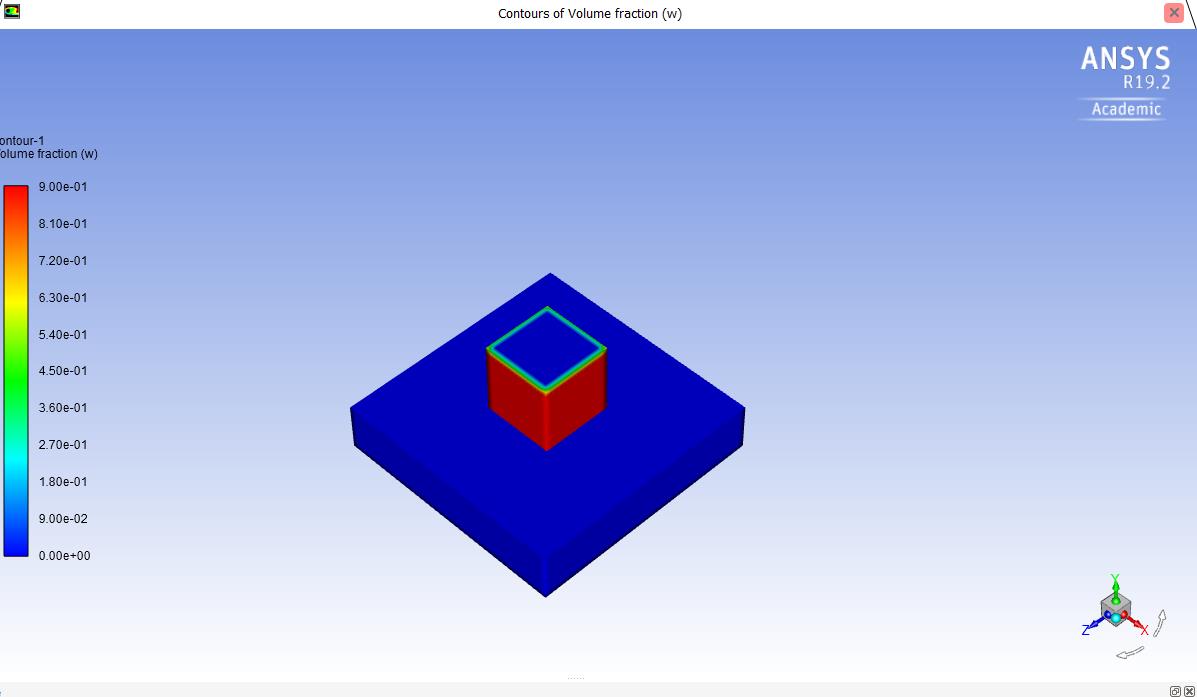
SubscriberNo, That's fine. Actually, I have uploaded here the both volume fractions: before simulation and after simulation. Still this is before simulation:Â

Â
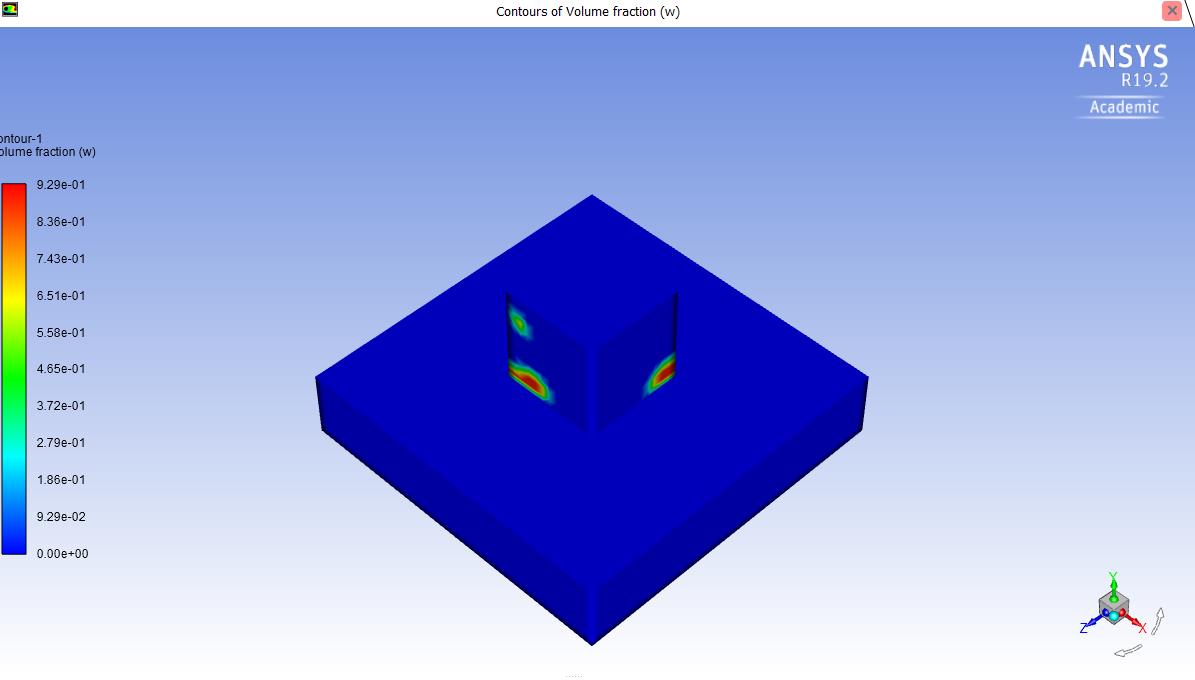
And this is after simulation:Â

I have used very high viscosity; so I expected the fluid to stick around; but it seems like they got splattered away. All I did was rotated the frame of top box with just 1.57 rad/s for 1 second only.Â
Can you please help me why this happened?Â
Thanks,
Bibek -
February 18, 2019 at 6:17 pm
Amine Ben Hadj Ali
Ansys EmployeeYou said droplet? Which droplet? Can you run without frame rotation at first to see whether this droplet erase the patched VOF?
-
February 19, 2019 at 3:42 pm
Bibek Poudel
SubscriberHi, I don't think I said droplet before but I am just injecting a iron particle in this fluid medium. And without rotation too, it changed like this:Â
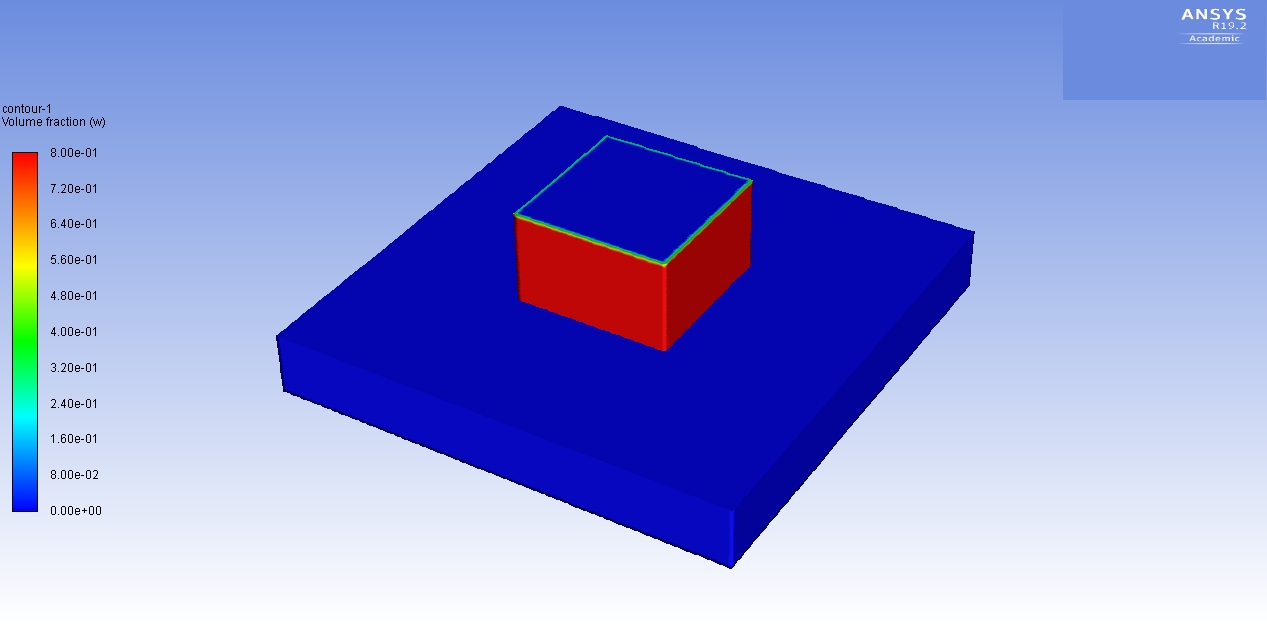
Before Simulation after patching:Â
Â
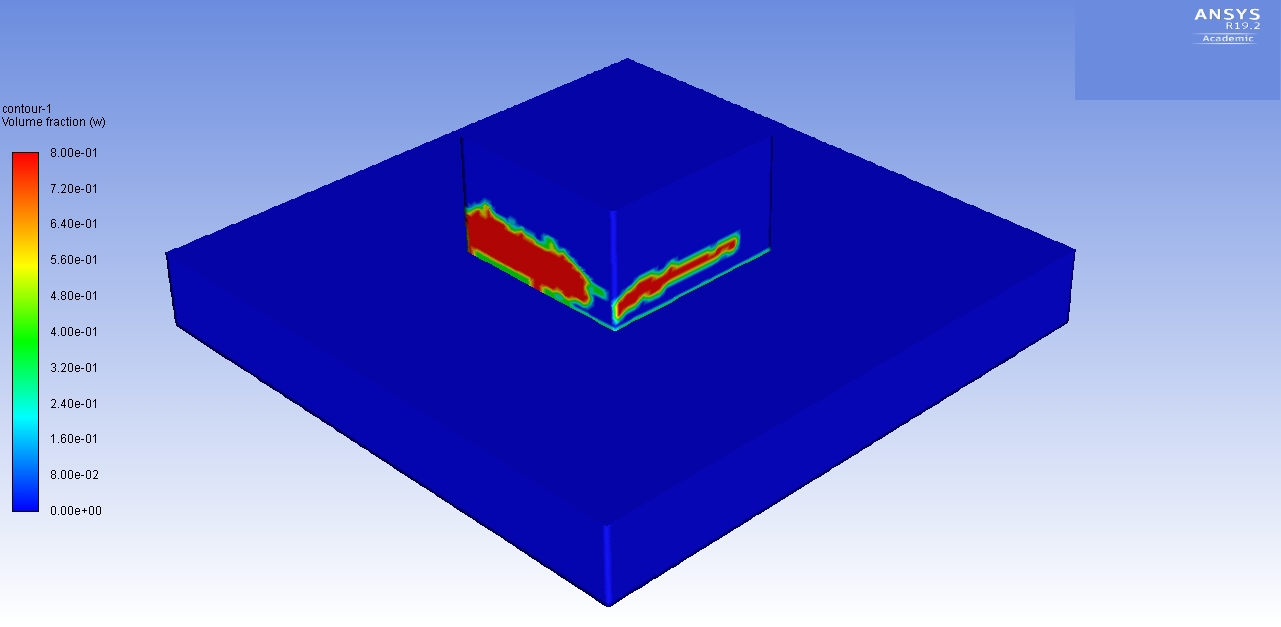
After simulation (just injection of 1 particle, no frame rotation, 1 second time, viscosity= 100 Pas):Â

Â
It changed like this. Can you please explain why this is happening? With that amount of high viscosity and no rotational force, shouldn't they stick together?Â
Thanks,
Bibek -
February 19, 2019 at 3:45 pm
Amine Ben Hadj Ali
Ansys EmployeeHow is this droplet injected (sorry If I am using droplet instead of particle)? How big is the viscosity ratio? Which schemes are you currently using for VOF? Is gravity enabled? How big is the CFL number?
-
March 5, 2019 at 7:11 pm
Bibek Poudel
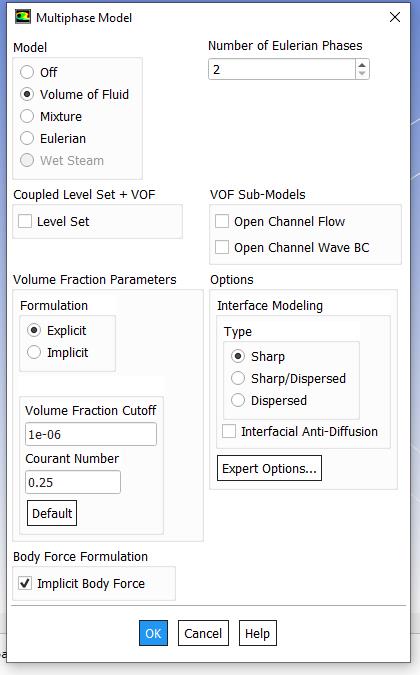
SubscriberI used the file injection to inject the particle. And I just used the patch volume after initialization to patch the liquid silicon to the container. The silicon has huge viscosity of 1000 Pas. And I am using 2-phase VOF model (I am not sure I answered you correctly here, what do you exactly want for scheme?). Anyway this is the setup:Â
Thanks,
Bibek -
March 5, 2019 at 8:10 pm
Amine Ben Hadj Ali
Ansys EmployeeI cannot follow sorry: either you provide a thorough description of your case and all stuff included in it otherwise we won't be able to help. Try to summarize a bit: What is the problem? What is included?
Moreover, try to track the mass of the secondary phase in the domain to see whether it is conserved or not.
-
- The topic ‘patch volume fraction’ is closed to new replies.
-
4949
-
1639
-
1386
-
1242
-
1021
© 2026 Copyright ANSYS, Inc. All rights reserved.