Hello everyone,
I am trying to compare the loss of a lumped LC resonator coupled to a shortened CPW line placed in different positions relative to the resonator.
First, I performed an Eigenmode simulation where I modeled the external loading by assigning a lumped RLC boundary of 50 Ω at the launcher of the CPW line. With this setup, I obtain a mode at approximately 5.717 GHz with a Q of about 5.47e5.
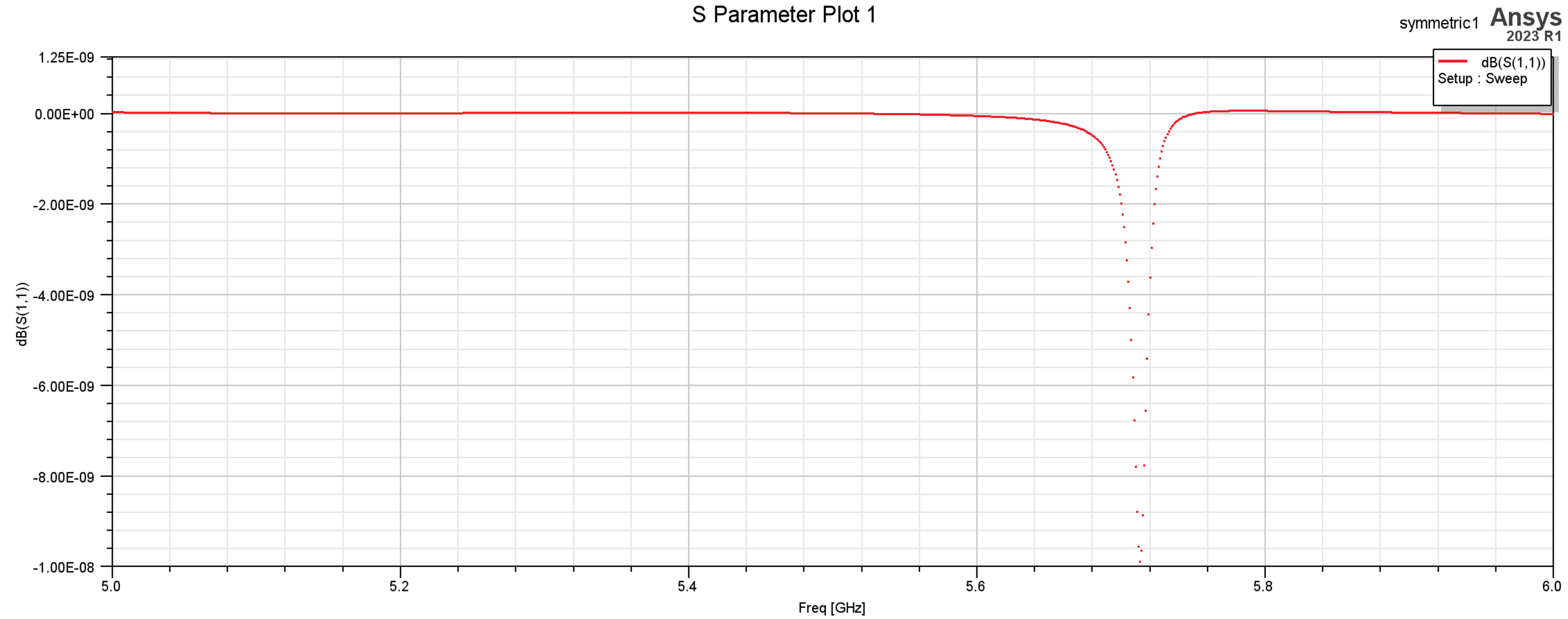
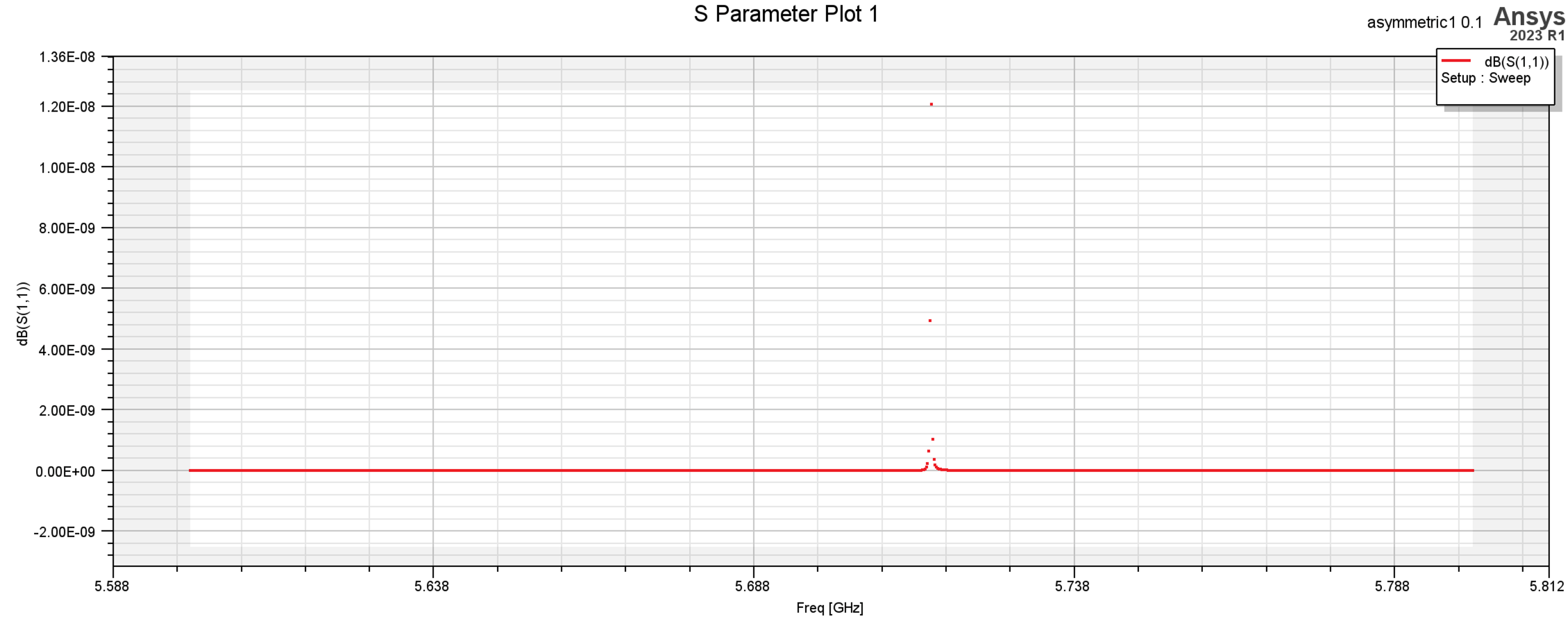
Then, I ran a Driven Modal (Modal Network) simulation by assigning a lumped port (50 Ω) for the Excitations at the same launcher and sweeping from 5 to 6 GHz. In this case, I observe a feature close to the expected frequency (~5.7 GHz), but the dip in S11 is extremely shallow (on the order of 1e-8). The result is also not very stable: depending on the parameter sweep, sometimes I see a dip, and sometimes even a peak instead.
I expected that by fitting the S11 feature I could extract a linewidth consistent with the Q obtained from the Eigenmode simulation, but this does not seem to be the case.
My questions are:
- Are Eigenmode and Driven Modal simulations directly comparable in this context?
- Should I expect to extract the same linewidth from S11?
- Or am I missing something in the Driven Modal setup or in how I am interpreting the results?
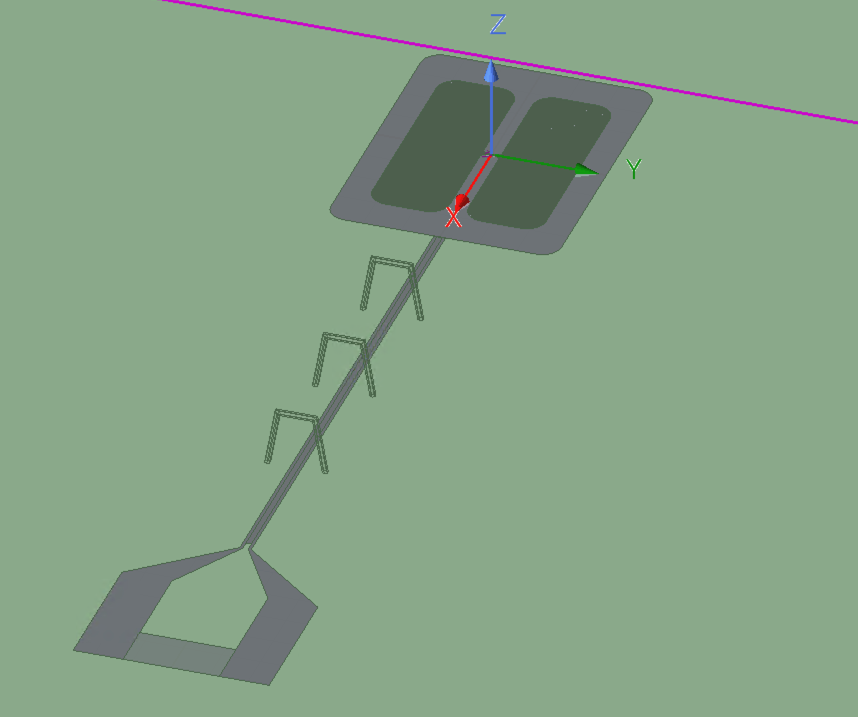
I attach here the design and two S11 profiles, as you can see, the structure is relatively simple: a resonator coupled to a shortened CPW line, with the launcher used as the boundary/excitation port.
Thanks in advance for any help or suggestions!






















 You are navigating away from the AIS Discovery experience