Hello everyone,
I try to simulate a convergent-divergent nozzle flow based on this subject https://ntrs.nasa.gov/search.jsp?R=19820006179
Following the method used by these people: https://tfaws.nasa.gov/TFAWS11/Proceedings/TFAWS2011-AE-001.pdf?fbclid=IwAR28cKI5Ghk_hSVQ5ckgZiXs3ibXEyAWBguCsy7cCUrd8aXHURRLa3gRX1E
The methods used are:
- Pressure Based Coupled Solver (PBCS) with 1/ 2nd order for all equations OR 2/ PRESTO for Pressure and QUICK for other equations
- Density Based Solver (DBNS) with 2nd order for all equations
Input parameters:
Material: Air (ideal-gas)
Model: SST k-omega (2 equ.)
Boundary conditions: 1 pressure inlet (2.5 atm), 1 pressure outlet (1 atm)
Solution method: ROE-FDS - Least square - 2nd order
Initialization method: Hybrid or Standard
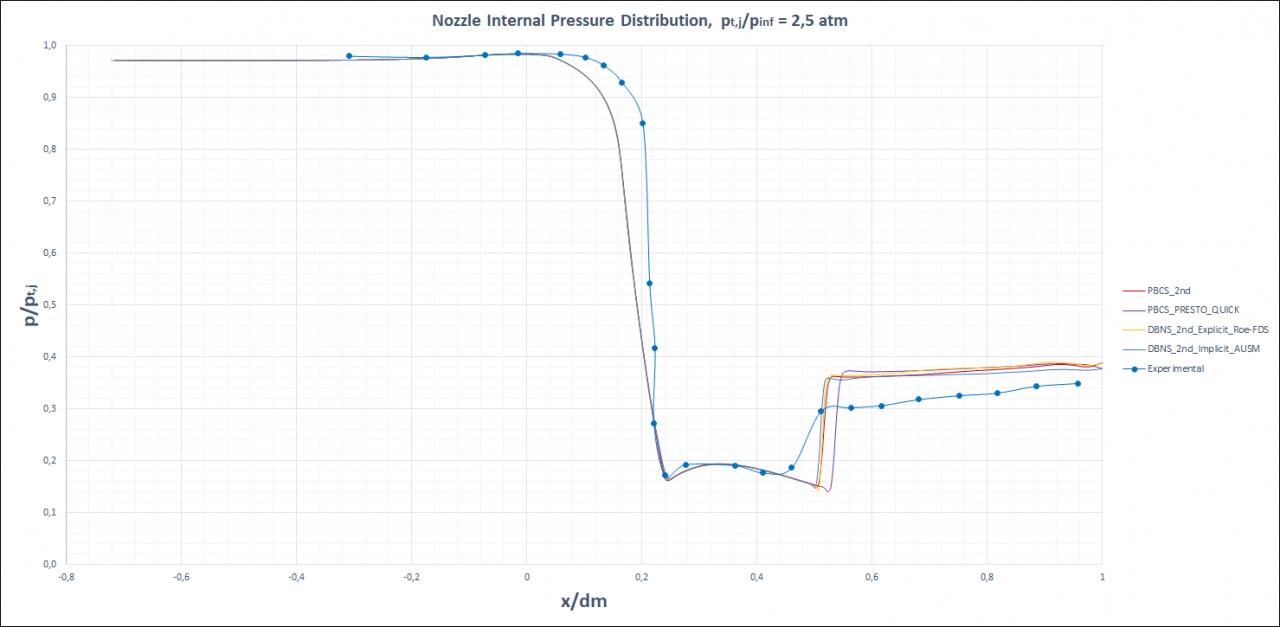
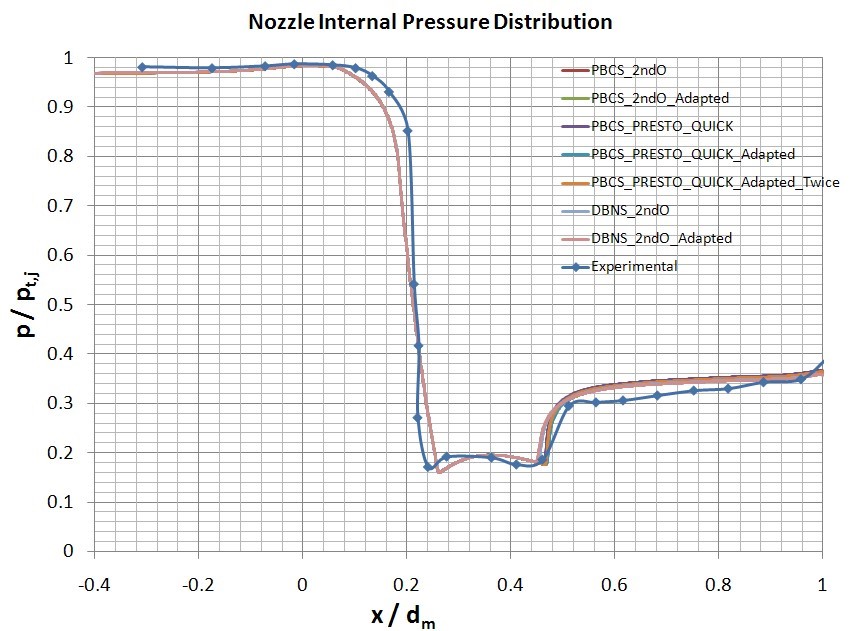
I successfully represented the model with the Pressure-based solver both for 2nd order and PRESTO/QUICK as you can see below:
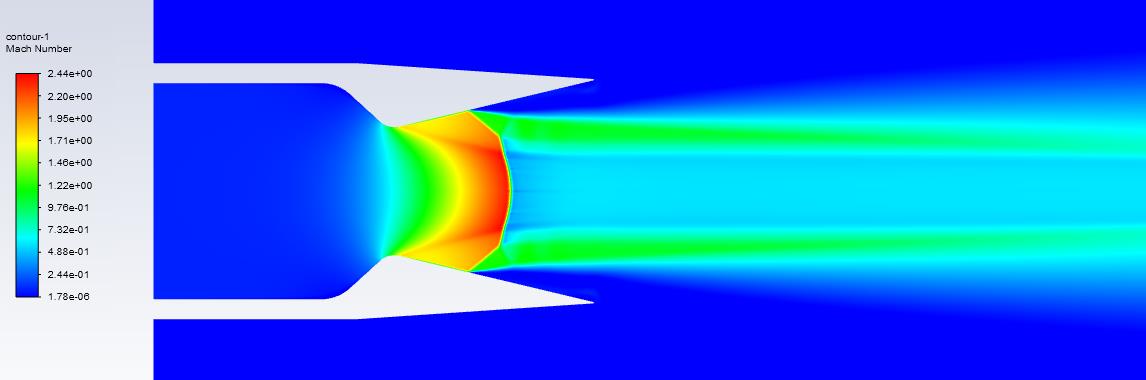
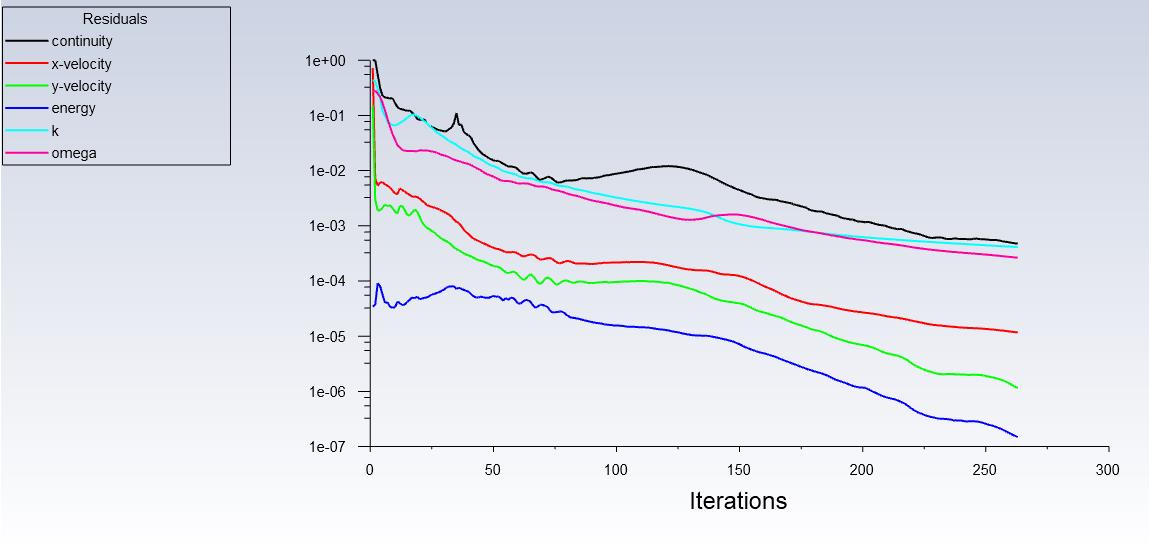
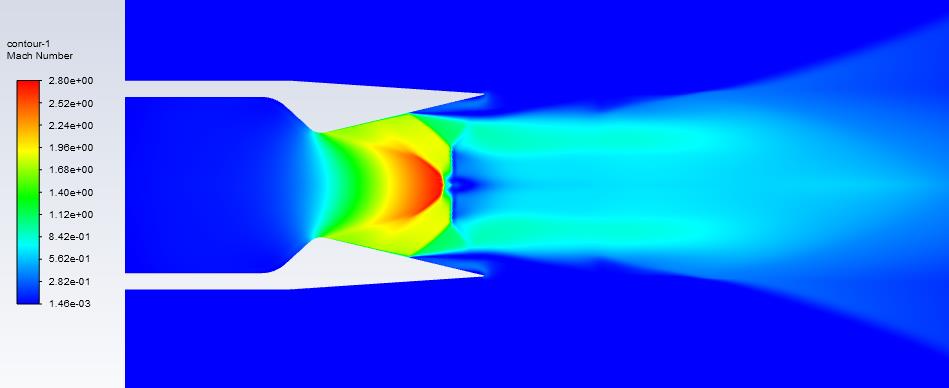
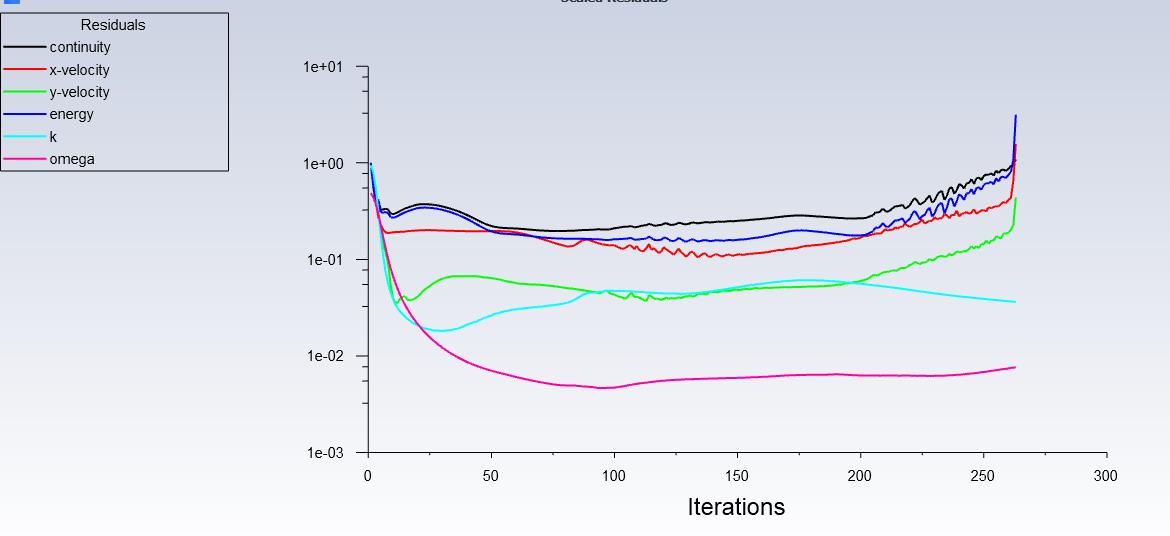
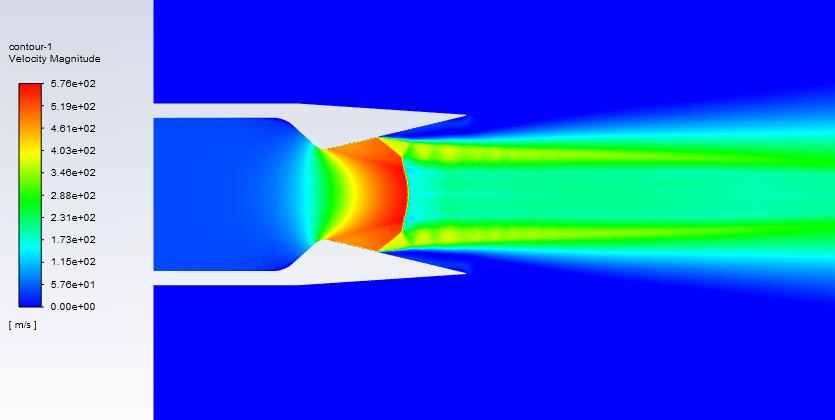
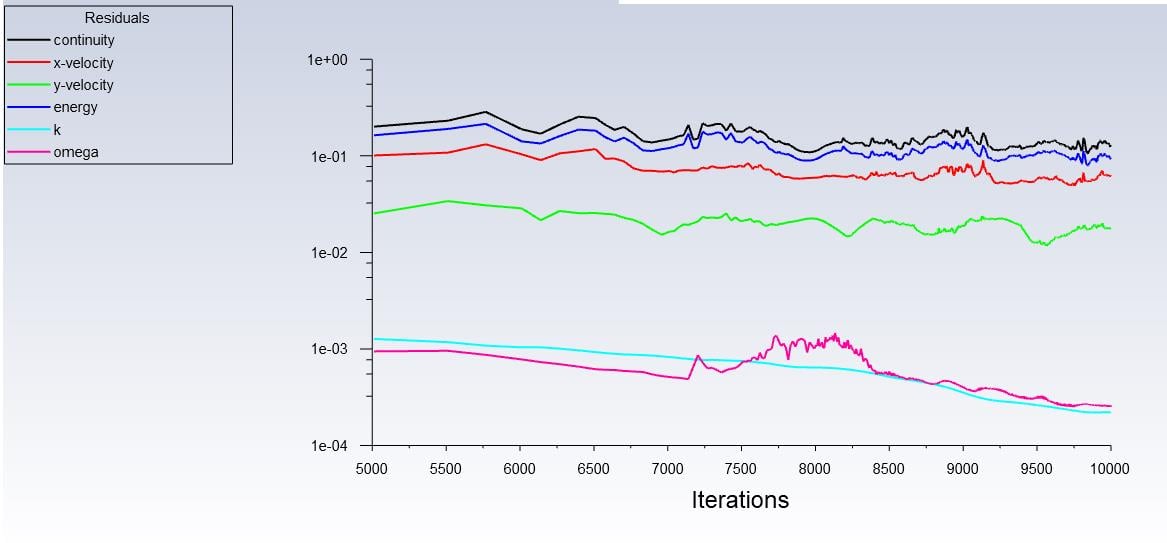
But as soon as I move to the Density based solver, I get a diverging solution, even if I change the Hybrid initialization to the Standard initialization. It always starts pretty well but diverges after around 250 iterations, when the mach disk appears. As you can see on these pictures (I stopped the simulation right before the divergence):
I tried to change settings such as turbulent model (going from k-omega to k-epsilon etc.) and also inlet pressure, pseudo transient on/off... but it always diverges. I have the same problem on other projects but here, I don't understand why I have good results with Pressure based solver and not with Density based solver.
At first, I thought it was related to Mesh quality but I tried on an other project (with good results on density based solver) to move from a good mesh (with a converged solution) to coarse mesh, and the solution still converges. I think the problem is related to the shocks, but I can't verify it.
Have you any thoughts about from where does the problem comes from?
Best regards,
Killian


















 You are navigating away from the AIS Discovery experience