-
-
January 11, 2023 at 6:35 pm
Biborka Boga
SubscriberHi. I am trying to simulate the G-L reactive flow in ANSYS Fluent. As a first approach I have considered H2O+O2 (L) and air (G).I am modeling a falling film flow (where the microchannel is situated at 35 degree from the horizontal position)I have selected the Mixture Multiphase model. I have set the O2 mass transfer from G to L (Henry's law).When the  Surface Tension Force Modeling >>Continuum Surface Force is enabled, I have Floating point exception and divergence problems.I have modified the convergence criteria, the under relaxation factor, however unfortunately the problem is still unsolved.ÂCan you please offer me some hints why this divergence issue occured?
Thank you in advance! -
January 12, 2023 at 11:27 am
Nikhil N
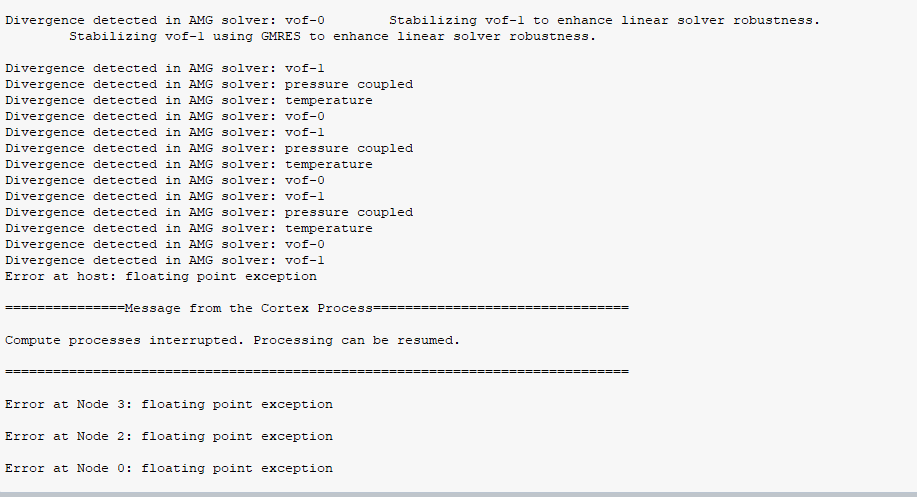
SubscriberCan you share the screenshot of the divergence message that you are getting in the console window?Â
Â
Nikhil
-
January 12, 2023 at 12:22 pm
-
January 12, 2023 at 12:33 pm
Biborka Boga
SubscriberFirst of all thank you very much your quick response. This divergence appears almost imediately after starting the simulation. I have also decreased the time step (1e-5), the Courant number and the under relaxation factors as it was suggested in the Ansys' Guide.
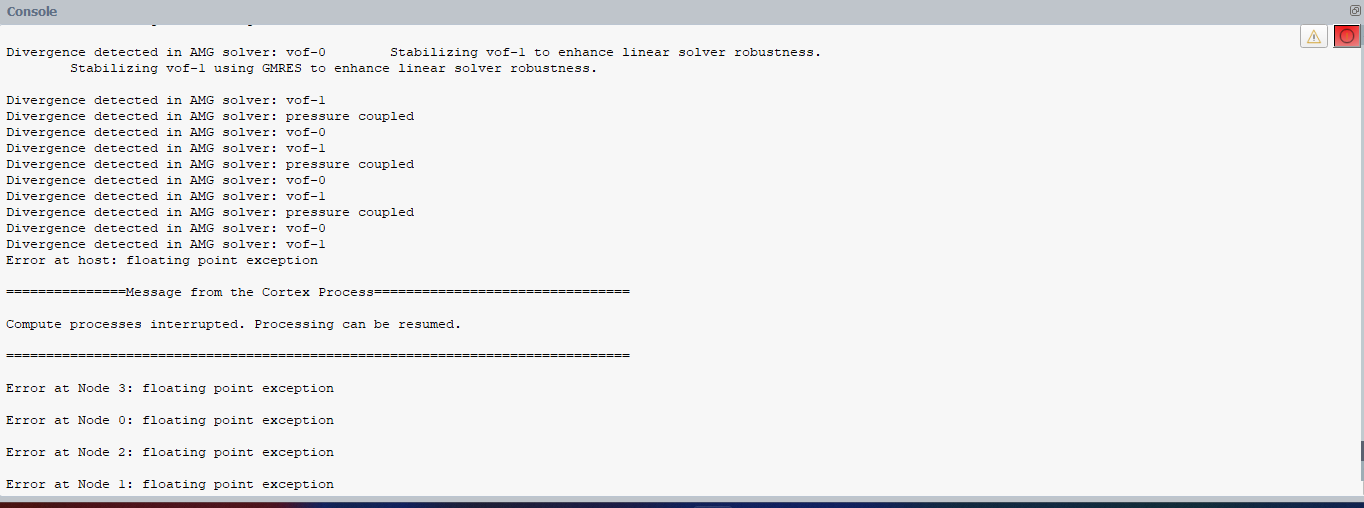
Furthermore, I have performed the simulation by disabling the surface tension force modeling. In this case no divergence issues appeared until a certain point, however afterwards the same error has appeared. Please find below. Thank you in advance your suggestion/help.


-
January 12, 2023 at 1:20 pm
SRP
Ansys EmployeeHi,
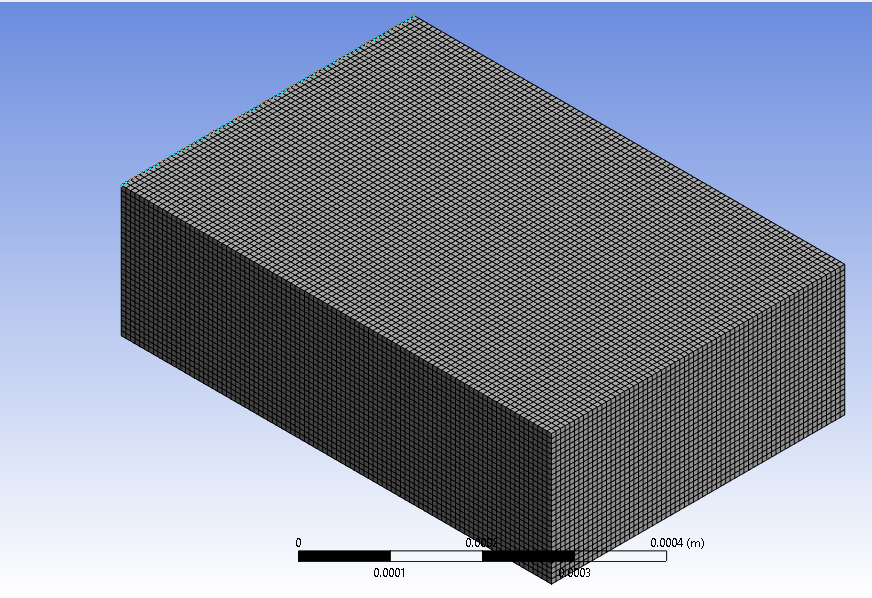
I suggest to please check your mesh (Please share screenshot of mesh) and share the mesh quality details too. Usually this error occurs when the mesh have small elements in contact with others bigger. The transitions of the elements must be soft to avoid instability in continuity and momentum balance equations.
Thank you
Saurabh
-
January 12, 2023 at 1:51 pm
-
-
January 12, 2023 at 2:10 pm
Rob
Forum ModeratorCan you post some images of the flow before it diverged?Â
-
January 12, 2023 at 3:01 pm
Biborka Boga
SubscriberBrief overview before the simulation result. I have created a cell register for the liquid film (phase2), and I have performed the patching of volume fraction of phase2 for that cell register = 0.99.
During standard initialization I have set the volume fraction for phase 2 equal to 0, and I have stopped simulation after 10 us (taking into account the number of time steps and time step size), so this is why the liquid film (with a height of 99 um) could not reach the outlet. The inclination of the channel has been set through the value of g vector.
Can you please let me know which would be the other information/results which I should provide? Thank you very much in advance!
Â
-
-
January 12, 2023 at 4:04 pm
Rob
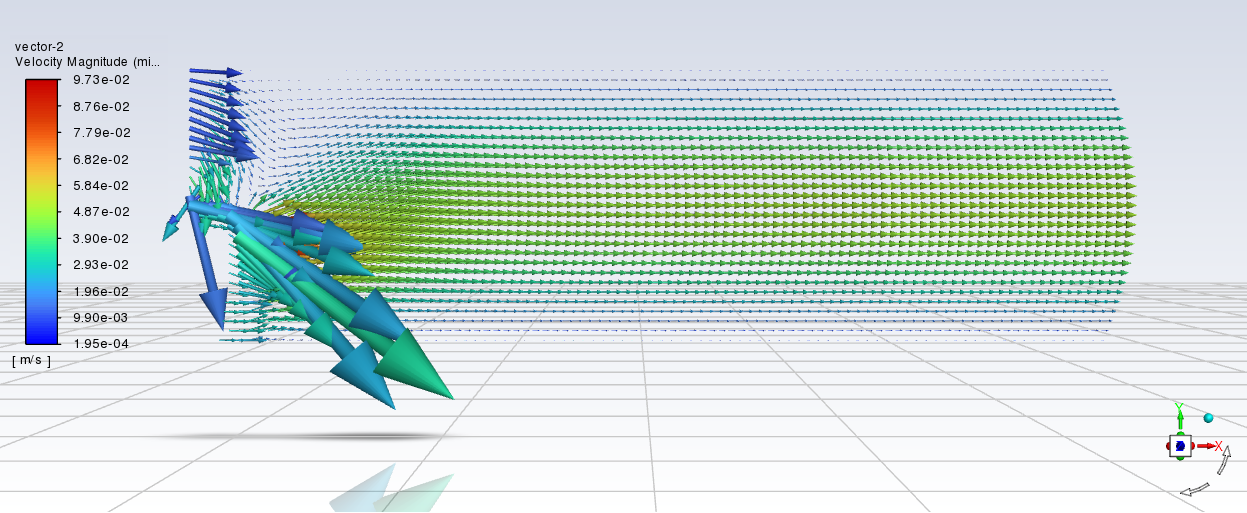
Forum ModeratorHow does the velocity look? You might need to patch in some liquid to help the solver in the boundary region. Â
-
January 12, 2023 at 8:34 pm
Biborka Boga
SubscriberThanks for your reply. Can you please let me know: should I perfrom the patching of the lq in the boundary region? Thank you in advance your response!
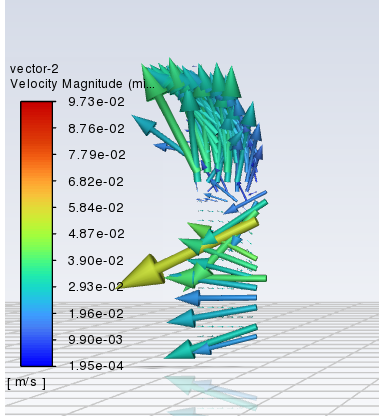
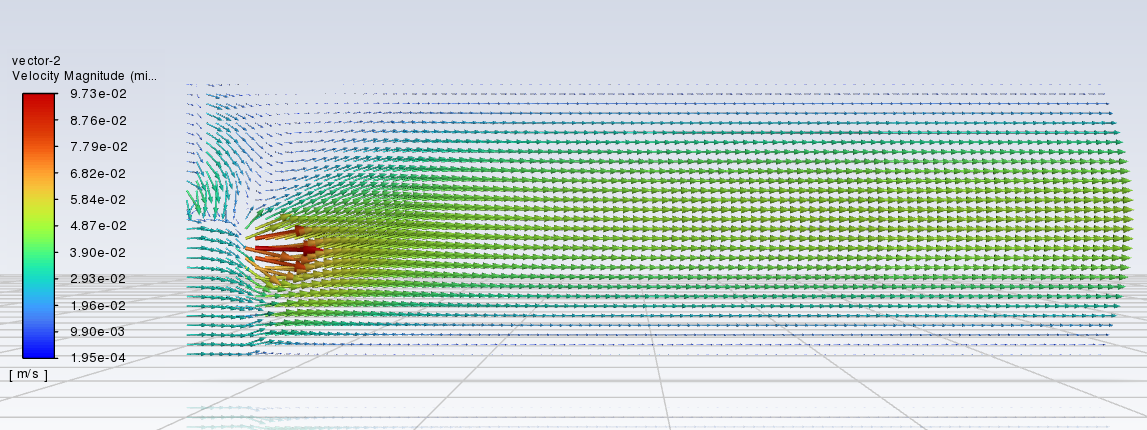
Please find below the velocity along the symmetry plane.
Velocity magnitude (phase 1) - airÂ
Â
Velocity magnitude - phase 2 (water). This I can't really interprete...Â
Â
Â
P.S. The velocity of the gas phase and liquid film was set to be equal (0.0294 m/s)
-
January 13, 2023 at 11:43 am
Rob
Forum ModeratorThat looks like the surface tension is causing an acceleration. With Mixture that could get interesting. Why not VOF?
-
January 13, 2023 at 2:12 pm
Biborka Boga
SubscriberI have to admit that initially I have used VOF. However, since in the next step I wanted to introduce the dissolvation of O2 from the gas phase into the lq phase (considering Henry's law), and since within the Mixture model this is possible via GUI (without UDF), I have considered that selecting the Mixture model is a better option.
Thank you very much for all your help, suggestions and hints! :)
-
-
January 13, 2023 at 2:27 pm
Rob
Forum ModeratorIf you want to do that have a look at Eulerian multifluid VOF. That may be more suitable. There's some stuff in 23R1 but I've done the update training yet so can't comment.Â
-
January 13, 2023 at 2:36 pm
Biborka Boga
SubscriberAlright. Thanks a lot for the suggestion. I will analyze also this option.
-
- The topic ‘Divergence – Mixture Multiphase model with Surface Tension Force Model enabled’ is closed to new replies.

-
4728
-
1565
-
1386
-
1242
-
1021
© 2026 Copyright ANSYS, Inc. All rights reserved.