Ansys Assistant will be unavailable on the Learning Forum starting January 30. An upgraded version is coming soon. We apologize for any inconvenience and appreciate your patience. Stay tuned for updates.
Electronics

Electronics

Topics related to HFSS, Maxwell, SIwave, Icepak, Electronics Enterprise and more.

Chaotic J-vectors and missing B-field using External Circuit Excitation in Eddy

    • dingkunf
      Subscriber

      Hello everyone, I am currently using the Maxwell 3D Eddy Current Solver to obtain the electromagnetic field of a coil, but I am running into a severe issue when trying to drive it with an External Circuit.

      My Setup:

        • Solver: Eddy Current.

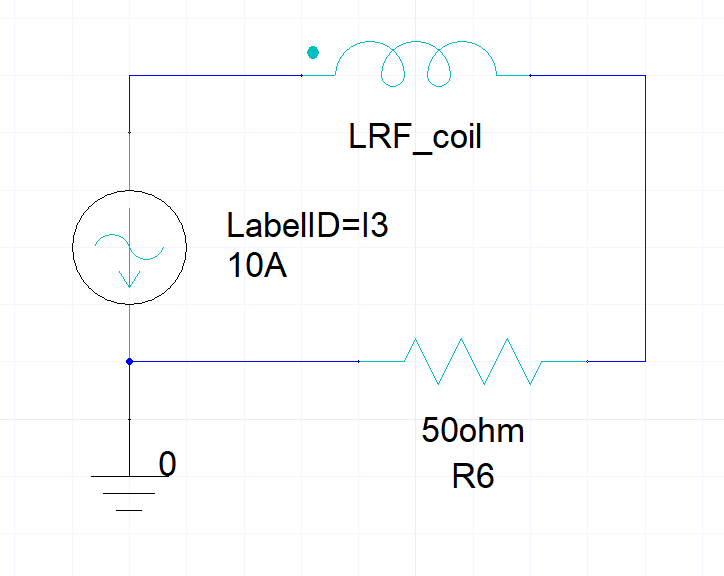
        • Excitation: External Circuit containing an AC current source (10A at 60 Hz, I plan to make this test case work then move to high frequency regime).

        • Geometry: I have set the coil terminals to be the two cross-sectional ends of the solid coil. I ensured these terminal faces are exposed (touching the boundary of the vacuum region) and assigned the solid body to a Winding.

        • Frequency: At 60 Hz, the skin depth is much larger than the thickness of my coil, so I expect a highly uniform current density flowing straight through the cross-section.

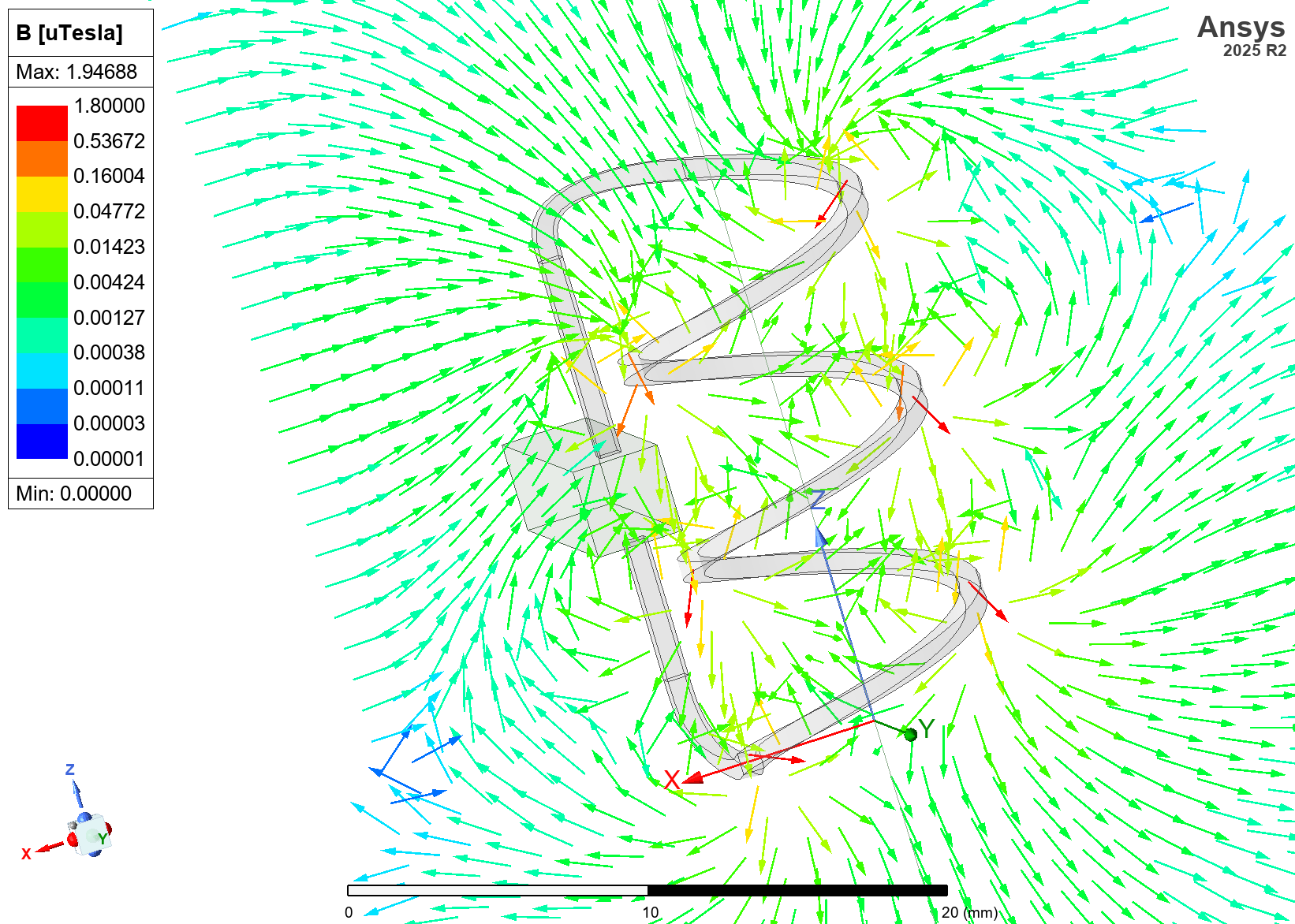
        The Problem: When I run the simulation using the External Circuit, the resulting magnetic field magnitude is significantly lower (almost non-existent) compared to a control test where I drove the coil using a direct 'Current' excitation on the faces.

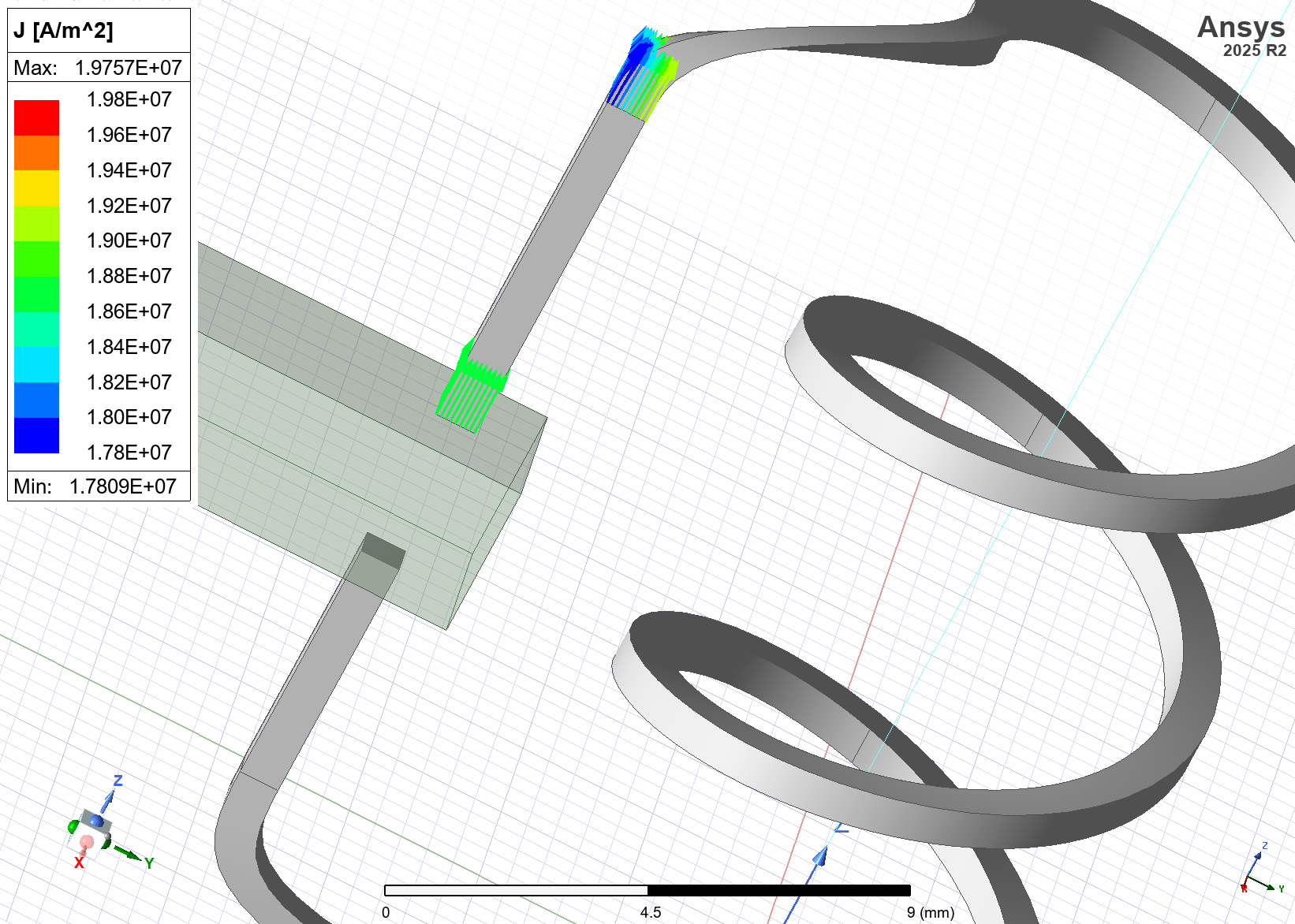
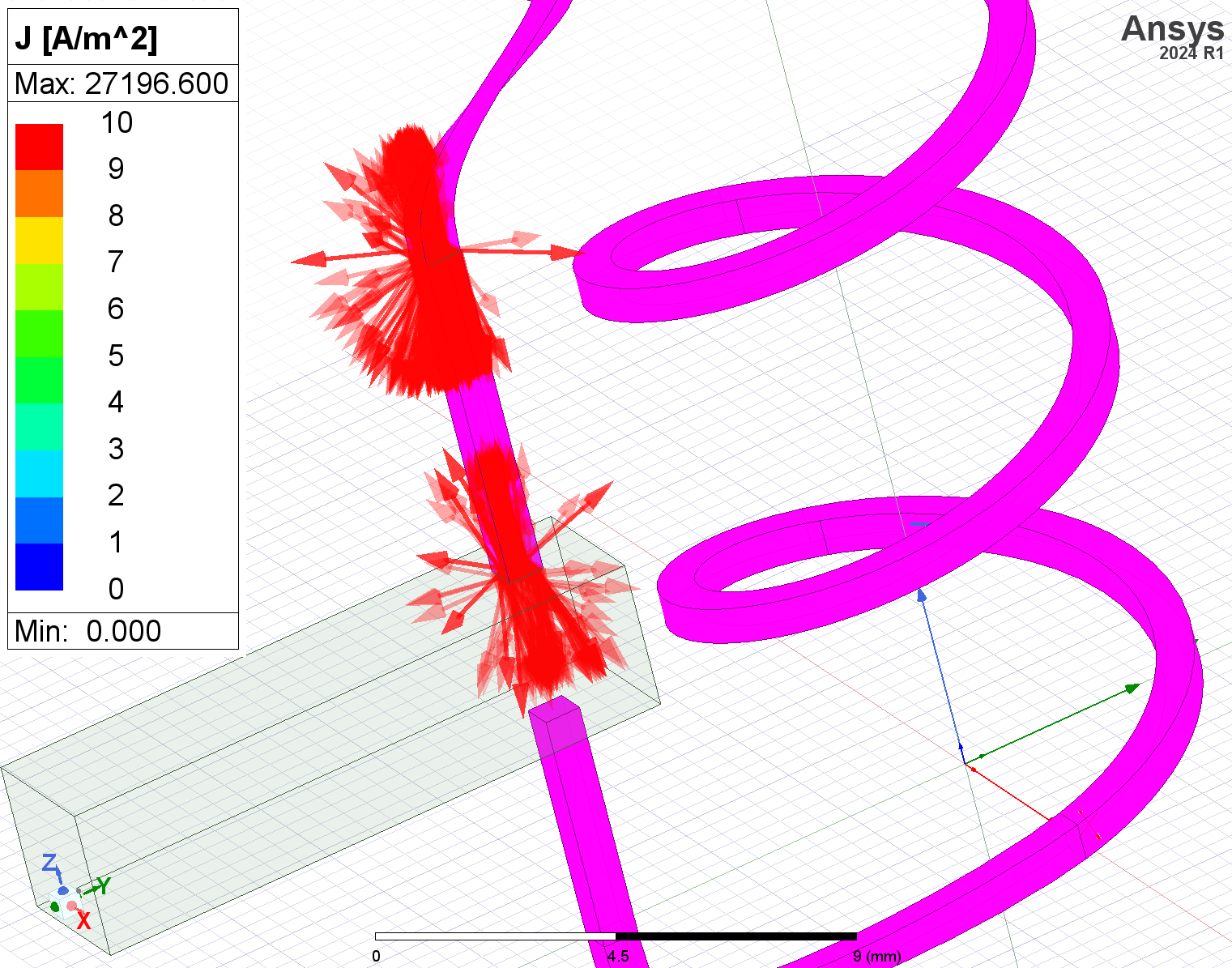
        To investigate, I plotted the instantaneous Current Density (J) vectors across the terminal cross-section.

          • Direct Current Excitation (Working): The J vectors are perfectly uniform and parallel, flowing straight into the coil as expected.

          • External Circuit Excitation (Failing): The J vectors are completely chaotic, pointing in all directions and forming swirling vortices on the terminal face.

          Because of this, I suspect the net current did not successfully entered the coil. However, the model could pass the Validation Check. I have also made sure that the vacuum region does not overlap the terminal faces (the terminal faces are coplanar with the outer boundary of the air box).

          Since the direct current excitation works perfectly but the external circuit yields these unphysical, swirling vectors at 60 Hz, what could be causing this? Is there any strict boundary alignment rule or a specific meshing requirement for External Circuit terminals that I might be missing?

          Any insights would be greatly appreciated!


Viewing 0 reply threads
  • You must be logged in to reply to this topic.
[bingo_chatbox]