I am trying to simulate a two-phase heat pipe in ANSYS Fluent and I am currently facing issues defining the porous wick region and achieving a stable convergence.


The heat pipe is modeled as an axisymmetric 2D geometry consisting of three regions:
Boundary Conditions
Thermal boundary conditions are applied on the outer wall:
Evaporator: constant temperature (heat source)
Adiabatic section: insulated wall
Condenser: constant temperature (heat sink)
Multiphase Model
I selected the VOF multiphase model with:
Phase 1: liquid water
Phase 2: water vapor
The wick region should behave as porous media so that the liquid return flow is driven by capillary forces and pressure gradients.
Therefore I want to assign:
to the wick cell zone.
Problem
I am unable to correctly define the porous wick region:
When the cell zone is defined as mixture, Fluent does not allow me to set the viscous resistance parameters for the porous region.
When I change the zone phase (e.g., to water vapor or liquid), I can access the porous parameters, but this obviously breaks the multiphase setup.
Changing the phase definition in one cell zone also changes it for the other zones.
This makes it impossible to correctly model the wick as porous media within the multiphase system.
Convergence Issue
Whenever I try to run the simulation, It give a non-physical result. 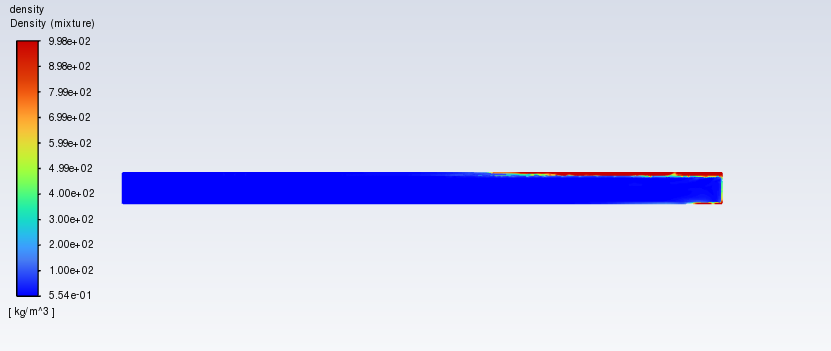
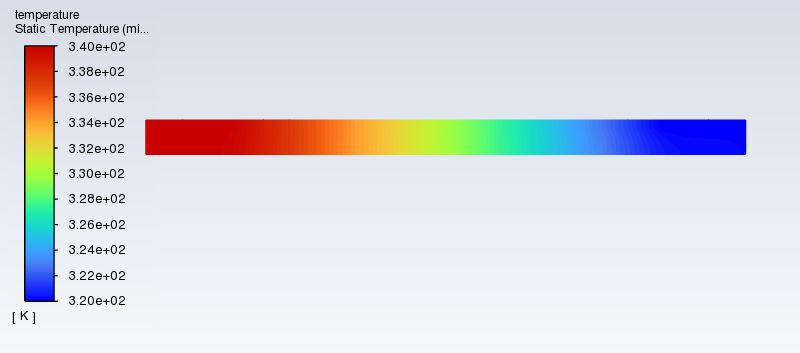
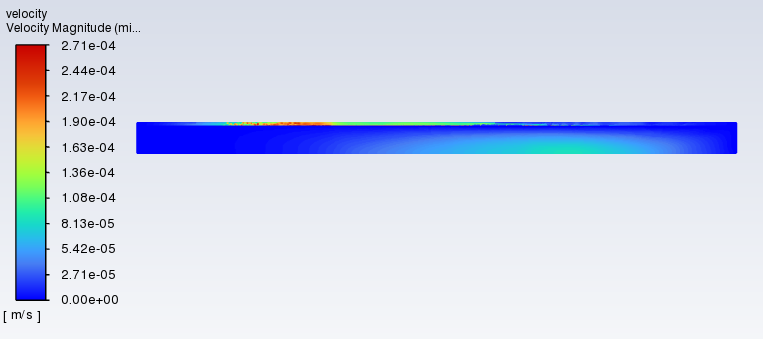
Main Questions
How should the porous wick region be defined in a VOF multiphase heat pipe simulation?
Should the wick be a separate porous fluid zone, or should it be modeled differently?
Is the VOF model appropriate for this type of heat pipe simulation, or would another multiphase model be more suitable?
Are there recommended initialization strategies for liquid/vapor distribution in heat pipe simulations?
Any advice or references to similar Fluent heat pipe models would be greatly appreciated.

















 You are navigating away from the AIS Discovery experience