-
-
April 3, 2020 at 1:08 pm
Oguzhansevim
SubscriberHi dear members,
I am working on a graduation design project which is about aircraft seat designing.
For seat certification there are some tests that defined by FAA/CS. Does anyone have any idea, please give a feedback?
I am trying to build up a model in Workbench but not sure how to do.Â
Basically I need to create some G forces upon the seat geometry in diffferent directions. There are not only static load scenario but also dynamic load scenario.
Thanksin advance
-
April 3, 2020 at 2:15 pm
peteroznewman
SubscriberDo you have a link to the tests defined by FAA/CS?
-
April 3, 2020 at 2:27 pm
Oguzhansevim
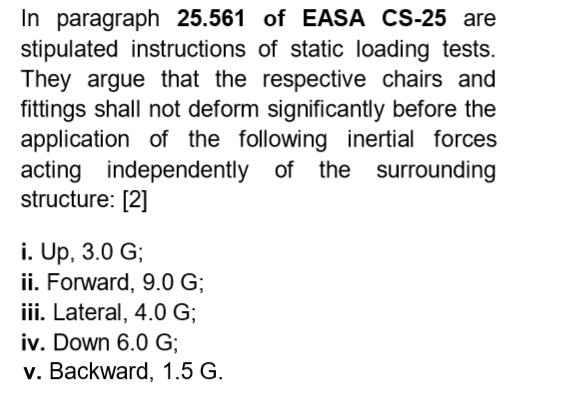
SubscriberThis is explanation for static
Â
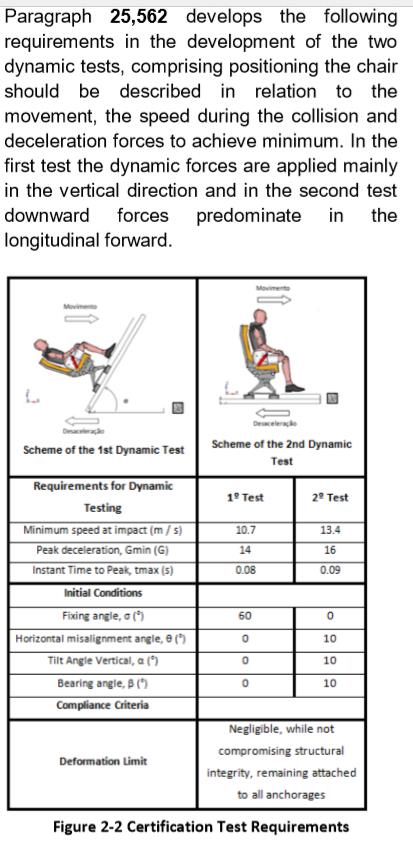
This is for dynamic
Also
https://www.easa.europa.eu/document-library/certification-specifications/cs-25-amendment-24
-
April 3, 2020 at 2:49 pm
Wenlong
Ansys EmployeeHi,Â
Ansys LS-DYNA has been widely used in collision simulation. I haven't done such seat safety simulation, but here are some links that can give you an idea what this type of simulation can look like:Â
https://www.dynamore.de/de/download/papers/forum05/aspects-of-simulation-of-automobile-seating-using
https://www.dynaexamples.com/implicit/implicit_seatpull
https://www.youtube.com/watch?v=On8Ioq6mcT0
https://www.youtube.com/watch?v=W3_zw1gU3a0
Regards,
Wenlong
Â
-
April 3, 2020 at 3:58 pm
peteroznewman
SubscriberHow long do you have to work on the project? Looks like you will need a crash test dummy modeled, with straps to hold it to the seat. Start looking for a model for a body that you can use.
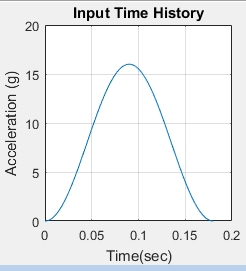
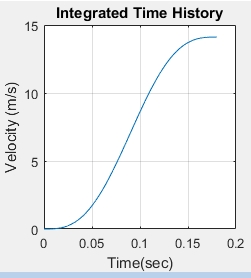
If you have a versed sine pulse of acceleration with a 16 g peak at 0.09 s that ends at 0.18 s, when you integrate that, it comes out to a change in velocity of 14 m/s.
-
April 3, 2020 at 7:45 pm
Oguzhansevim
SubscriberOne and a half month I have.
Yeah it is right, I need to imply those inputs.
By the way what about static conditions. I guess using static structural with constant force inputs will be enough, am I right?Â
-
April 3, 2020 at 9:22 pm
peteroznewman
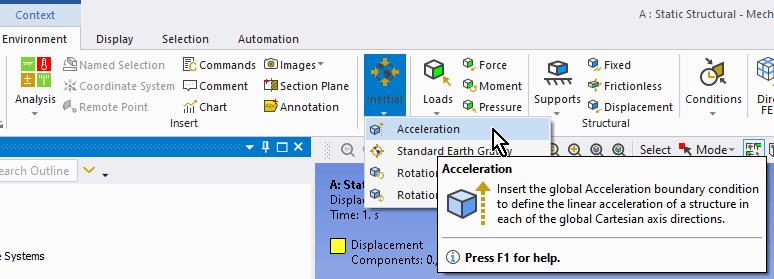
SubscriberThe static load is simple to apply. It is not a force, it is an acceleration and is found under the Inertial category.
-
April 4, 2020 at 10:47 am
Oguzhansevim
SubscriberSir, can you please give me more information. What do you mean by Inertial category?
For example; Forward 9g case
(total mass of design)* (9,81) * (9) = 24kNÂ Â how to apply this effect
You mean inserting 24kN force in static structural won't be correct, right?  -
April 4, 2020 at 2:06 pm
peteroznewman
SubscriberIn preparation, all your materials in Engineering Data must have the correct Density assigned as a Physical Property.
The Inertial category button is next to the Loads button.Â
Click on Acceleration and then type in the value in the correct units. 1 G = 9.8806 m/s^2.
In this example, the units are in meters so type type the multiplication right into the field.
If the seat is facing in the +X direction, a negative value in the X Component will be the "forward" acceleration value. A positive value in the X component will be a "backward" acceleration. If your Y component is up, then a positive value will be "downward" acceleration while a negative value will be a "upward" acceleration. The Z component will be the lateral acceleration.
Â
-
April 4, 2020 at 2:23 pm
-
April 13, 2020 at 3:52 pm
peteroznewman
SubscriberOguzhansevim, once you click Is Solution, the Discussion is marked as Solved and many members and ANSYS staff who look for discussions to read and answer will not open a discussion marked as Solved.
If you want people to read your last question, I recommend you delete the post above that, which has the green check mark indicating that the discussion is solved. Once you delete the post, the discussion will show as active and not Solved.
Finally, when you choose a post to click the Is Solution link, it is better to click that link under the post that has the best answer to the question asked.

-
- The topic ‘Aircraft seat’ is closed to new replies.
-
4934
-
1638
-
1386
-
1242
-
1021
© 2026 Copyright ANSYS, Inc. All rights reserved.